 Anacortes Exterior
 Roofing in March Point: What the Climate Actually Demands
March Point sits close to the water on Fidalgo Island, which means homes here take a different kind of weather beating than houses further inland in Skagit County. The salt air off the bay accelerates corrosion on exposed metal fasteners and flashing. Wind-driven rain off the water doesn't just fall straight down — it gets pushed sideways under poorly lapped shingles and around loose flashing details that would hold up fine in a calmer, drier climate. And the long, wet moss season common to the Anacortes area means anything installed without moss prevention in mind is fighting a losing battle within a few years.
A new roof installation done right in March Point isn't just "install shingles and move on." It's a system — decking, underlayment, flashing, ventilation, and surface material — chosen and installed to work together against salt exposure, sustained rain, and moss growth specific to this stretch of coastline.
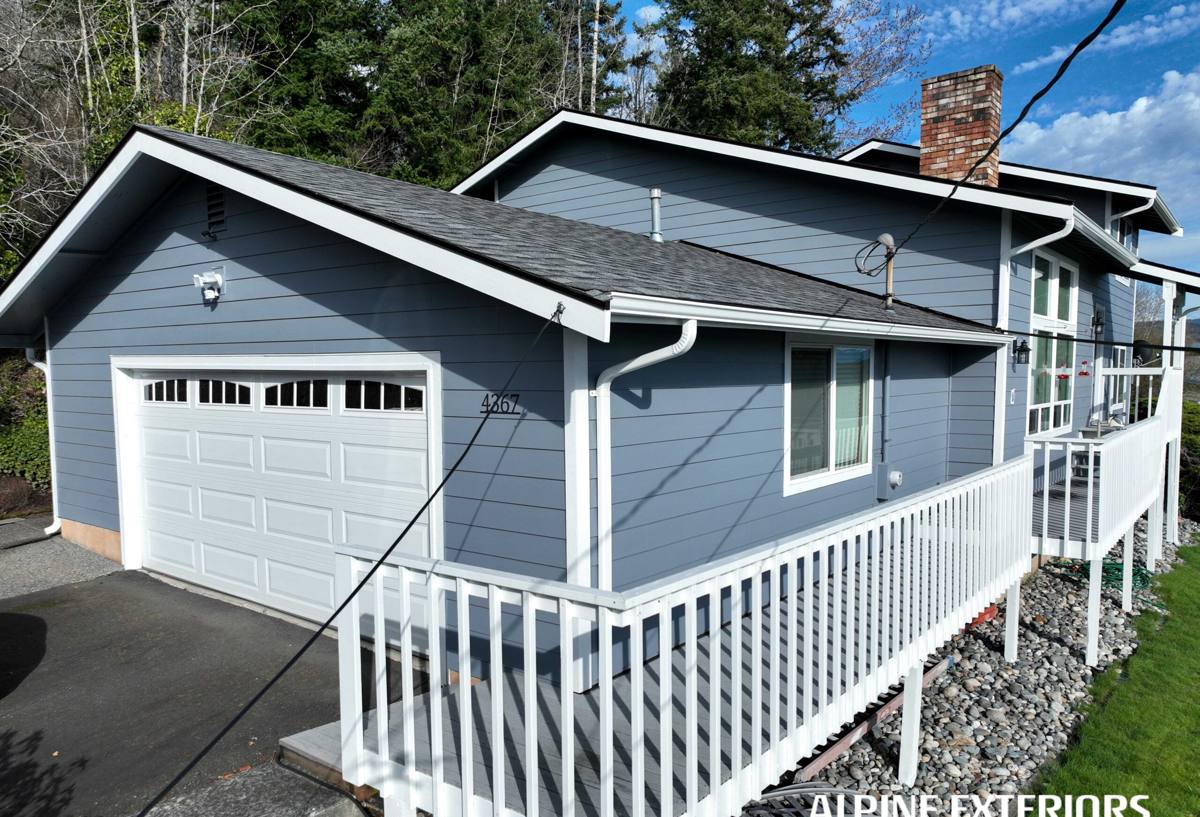
Signs Your March Point Home Actually Needs a New Roof
Not every roofing problem calls for full replacement, but there's a point where repairs stop making financial sense. Homeowners in this area should watch for:
- Shingles that are cupping, curling, or losing granules faster than normal — common where salt air and UV exposure combine
- Moss or algae streaking that keeps coming back even after cleaning, especially on north-facing slopes that stay damp longer
- Soft spots in the decking you can feel when walking the roof, a sign moisture has already gotten past the surface layer
- Rust staining or visible corrosion around flashing, vents, or metal fasteners
- Daylight visible through the attic roof deck, or water stains on interior ceilings after a wind-driven rain event
- A roof nearing or past the manufacturer's expected service life, especially if it was installed without upgraded underlayment
If you're seeing two or more of these, it's worth having someone look at the whole system rather than patching one spot at a time.
What a Correct New Roof Installation Involves
Tear-Off and Deck Inspection
A proper install starts with a full tear-off, not a layover. Layering new shingles over old ones traps moisture, hides deck damage, and voids most manufacturer warranties. Once the old roofing is off, the decking gets inspected board by board. Any wood that's soft, delaminated, or water-stained gets replaced before anything new goes down — skipping this step is the single most common cause of early roof failure we see when we're called out to fix someone else's work.
Underlayment and Water Protection
Given how much wind-driven rain this area sees, underlayment choice matters more here than in drier parts of the state. Self-adhered ice-and-water membrane at the eaves, valleys, and around every penetration gives a second line of defense if wind ever drives moisture past the top layer. Synthetic underlayment across the rest of the deck holds up better than old-style felt paper under sustained damp conditions.
Flashing Details
Flashing is where most leaks actually start, not in the field of the roof. Step flashing at walls, counter-flashing at chimneys, and properly lapped valley flashing all need to be installed in the correct sequence with the underlayment and shingle courses — not caulked on as an afterthought. In a salt-air environment, we favor corrosion-resistant flashing materials and fasteners over standard galvanized where budget allows.
Ventilation
A roof that can't breathe traps moisture in the attic, which shortens the life of the decking from underneath and feeds the exact conditions moss and algae need to take hold on the surface. Balanced intake at the eaves and exhaust at the ridge keeps air moving and moisture out, which matters more here than in drier inland climates.
Choosing the Right Roofing Material for This Area
There's no single "best" roofing material for every house — it depends on your roof's slope, your budget, and how much long-term maintenance you're willing to do. Here's how the common options stack up for a home exposed to salt air and heavy moss pressure:
| Material | Moss/Algae Resistance | Salt Air Durability | Typical Lifespan |
|---|---|---|---|
| Architectural asphalt shingle | Good with algae-resistant granules | Solid with corrosion-resistant fasteners | 25–30 years |
| Standard 3-tab shingle | Fair, more prone to moss uptake | Fair | 15–20 years |
| Standing seam metal | Excellent, moss struggles to grip | Very good with proper coating | 40–50+ years |
| Cedar shake | Poor without diligent upkeep | Fair, needs regular treatment | 20–30 years with maintenance |
For most March Point homes, we steer people toward architectural asphalt shingle or standing seam metal. Both handle sustained moisture and moss pressure well when installed with the right underlayment and ventilation. Cedar shake can look great, but in a damp, salt-influenced climate it demands more upkeep than most homeowners want to sign up for long term — that's a maintenance-burden call, not a knock on the material itself.
Moss, Algae, and Salt Air: Building Prevention Into the Install
You can't eliminate moss risk on a coastal Skagit County roof, but you can install in a way that slows it down significantly. Zinc or copper strips near the ridge release trace metal ions with every rain, which discourages moss and algae growth across the whole roof over time. Choosing shingles rated for algae resistance, keeping tree cover trimmed back where it shades the roof, and making sure valleys and low-slope sections shed water quickly instead of holding it all reduce the conditions moss needs to establish. None of this replaces periodic cleaning, but it means you're not fighting the roof's own design every moss season.
Our Installation Process, Start to Finish
- On-site inspection and honest assessment of whether repair or full replacement makes sense
- Written estimate covering material options, scope, and timeline — no vague allowances
- Material selection walkthrough so you understand the trade-offs, not just a color chart
- Protection of landscaping, siding, and gutters before tear-off begins
- Full tear-off and deck inspection, with any damaged decking replaced and documented
- Underlayment, flashing, and ventilation installed to code and manufacturer spec
- Final roofing material installed with attention to nailing pattern and exposure — details that affect wind and warranty performance
- Full site cleanup, including a magnetic sweep for stray nails
- Final walkthrough so you can see the finished work before we consider the job done
What Affects the Cost of a New Roof
Every roof is priced based on its own specifics, so we won't quote a number without seeing the job — but these are the factors that move the price up or down:
| Factor | Why It Matters |
|---|---|
| Roof size and number of stories | More square footage and access difficulty mean more labor and material |
| Roof pitch and complexity | Steep or heavily cut-up roofs with many valleys and penetrations take longer and use more flashing material |
| Existing deck condition | Rotted or soft decking found during tear-off adds material and labor to replace it properly |
| Material choice | Standard asphalt shingle costs less upfront than metal or premium shingle lines |
| Underlayment and flashing upgrades | Full ice-and-water coverage and corrosion-resistant flashing cost more but pay off in this climate |
| Tear-off layers and disposal | Removing multiple old roofing layers adds labor and disposal cost |
Why Hiring a Crew That Already Works in March Point Matters
Roofing crews who mostly work drier inland regions sometimes underbuild for what this stretch of Skagit County actually throws at a roof — lighter underlayment, standard fasteners instead of corrosion-resistant ones, or ventilation that's technically to code but not generous enough for how damp it stays here. A crew that regularly works homes near the water in and around Anacortes knows to spec for wind-driven rain and salt exposure by default, not as an upsell. That familiarity shows up in fewer callbacks and a roof that's still performing well well past year ten.
Questions Worth Asking Any Contractor Before You Sign
- Are you licensed and insured to work in Washington State, and can you provide proof?
- Will decking replacement be itemized separately, or is it a vague allowance buried in the bid?
- What underlayment and flashing materials are included, and why were they chosen for this house specifically?
- How will you handle ventilation to balance intake and exhaust?
- What's covered under workmanship warranty versus manufacturer material warranty, and for how long?
- Do you have experience working on homes in this specific area, and can you speak to what that's taught you?
If your March Point home is due for a new roof, we're happy to come take a look, walk the roof, and give you a straightforward assessment — no pressure, no inflated urgency, just an honest read on what your home actually needs. Reach out using the form below to schedule a free estimate.