 Anacortes Exterior
 Why March Point Puts Windows to the Test
March Point sits out on the water, and that changes what "good windows" means. Homes here take wind and moisture straight off the bay, not filtered through blocks of other buildings the way a lot of inland Anacortes properties are. Salt-laden air accelerates corrosion on hardware and fasteners, wind-driven rain finds gaps that would never leak on a calmer lot, and the long, wet Skagit County winter keeps wood trim and sills damp for months at a stretch. Add a moss season that runs longer here than in drier parts of the state, and you've got a set of conditions that will expose a mediocre window — or a rushed installation — within a few years instead of a decade or two.
None of that means March Point is an impossible place to keep windows performing well. It means the product and the installation both have to be matched to the exposure, not just picked off a showroom floor because they looked good in a brochure.
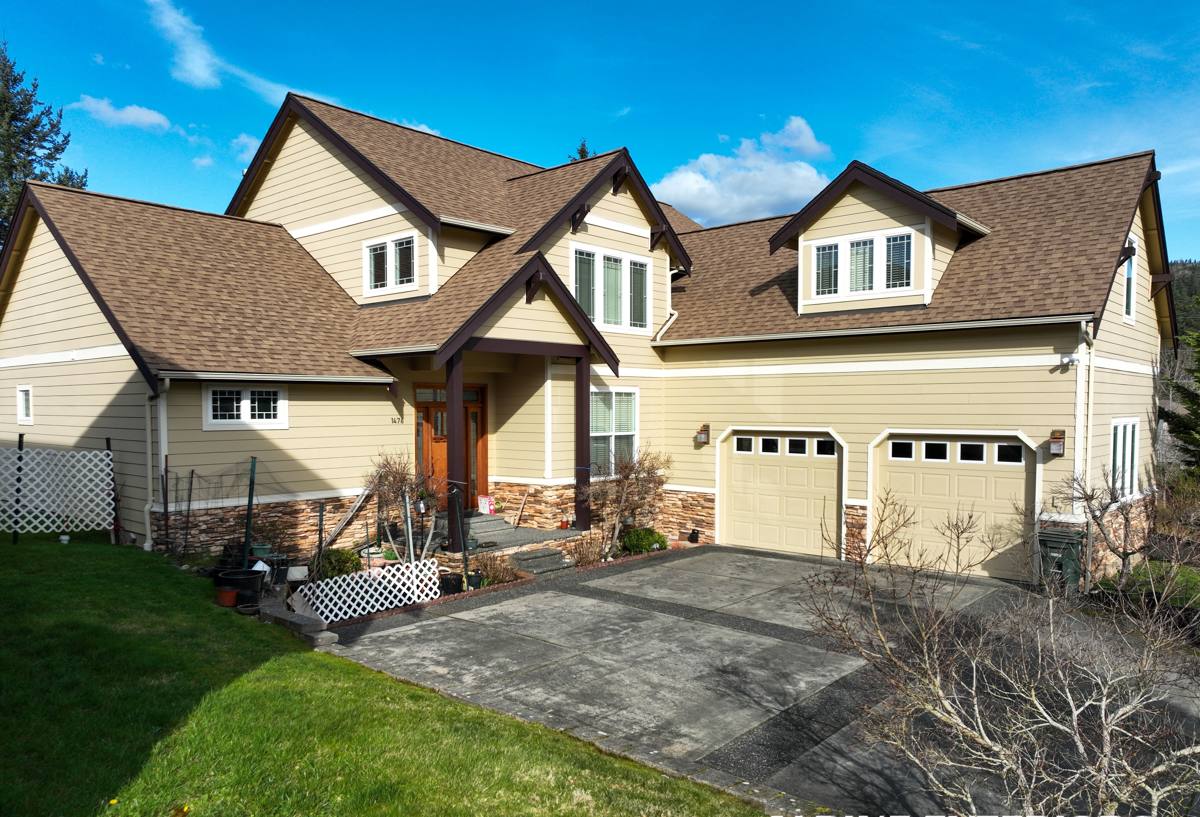
What "Energy-Efficient" Actually Means Here
A lot of window marketing leans on glass ratings alone — U-factor, SHGC, that kind of thing — and those numbers matter. But in a climate like ours, energy efficiency is just as much about air sealing and moisture control as it is about the glass package. A window with excellent lab-rated performance will still leak heat and let in drafts if the flashing, sill pan, and perimeter seal weren't done correctly. On an exposed peninsula lot, a poorly sealed window doesn't just cost you on the heating bill — it lets water intrude behind the siding, which is a much more expensive problem to fix later.
For March Point specifically, we look at three things together:
- Glass performance — low-E coatings and gas fills appropriate for our marine climate, not a desert or continental spec
- Frame material behavior in salt air — how the frame and hardware hold up to airborne salt and constant moisture cycling
- Installation detail — flashing sequence, sill pans, and sealant that actually shed wind-driven rain instead of just resisting a light drizzle
Skip any one of those and the "energy-efficient" window underperforms its rating within a few winters.
Signs Your Current Windows Are Losing the Battle
Homeowners in this area usually notice a handful of tells before a window fully fails:
- Condensation forming between the panes, not just on the surface — a sign the seal between the glass layers has broken down
- Visible fogging or a cloudy band around the glass edges
- Cold drafts near the frame even when the sash is fully latched
- Soft or discolored wood at the sill or bottom corners, often from long-term moisture intrusion
- Moss or dark streaking building up on the exterior trim faster than on the rest of the siding
- Hardware that's stiff, corroded, or hard to operate — common with metal components exposed to salt air over time
Any one of these on its own isn't an emergency. Several together, especially on the sides of the house that face open water, usually mean it's time to plan a replacement before the surrounding framing starts to take damage too.
Frame Material Comparison for Salt-Air Exposure
There's no single "best" window material for every home — it depends on exposure, budget, and how the house is built. Here's how the common options hold up under March Point conditions specifically:
| Frame Material | Salt-Air Durability | Maintenance | Best Fit |
|---|---|---|---|
| Vinyl | Good — won't corrode or rot | Low; occasional cleaning | Most homes; strong value for exposed sites |
| Fiberglass | Very good — dimensionally stable in temperature swings | Low | Homes wanting a longer-term, higher-end option |
| Aluminum-clad wood | Fair — cladding protects wood, but joints need monitoring | Moderate | Homeowners prioritizing interior wood appearance |
| Bare wood | Weakest in this exposure — prone to moisture damage over time | High | We generally steer March Point clients away from this on water-facing walls |
We're not against wood windows as a category — they have real appeal — but on a peninsula lot with constant moisture cycling, the maintenance burden and moisture risk usually outweigh the look, especially on elevations that catch the weather directly. That's a trade-off we'll walk through honestly rather than sell around.
Hardware and Fasteners Matter Too
It's easy to focus on the frame and glass and forget the hardware. Locks, hinges, and even the fasteners holding trim in place are exposed to the same salt air as everything else. We spec corrosion-resistant hardware on March Point jobs as a matter of course — it costs a little more up front and saves a service call two or three years down the road.
What a Correct Installation Involves
The window itself is maybe half the job. The other half is how it's tied into the wall assembly, and this is where a lot of problems start on exposed sites:
- Remove and inspect — pull the old unit and check the rough opening framing for hidden rot or moisture damage before anything new goes in
- Sill pan flashing — a properly sloped, sealed sill pan so any water that does get past the window sheds outward instead of pooling
- Weather-resistive barrier integration — flashing tape and building paper lapped correctly so water is directed down and out, following proper drainage sequencing
- Set and shim the window plumb, level, and square — a window that's slightly out of square will never seal or operate correctly, no matter how good the product is
- Seal and insulate the perimeter gap — low-expansion foam or backer rod and sealant, sized correctly so it doesn't bow the frame
- Exterior trim and finish sealant — the visible caulk line, but only after the structural sealing underneath is done right
- Interior finish work — trim, sills, and paint or stain matched to the rest of the room
If a contractor's process skips straight from "remove old window" to "caulk the trim," that's a red flag. The flashing and sill pan work is invisible once the job is done, but it's what determines whether the window is still performing well in ten years or letting water into your wall cavity by year three.
Our Process for March Point Projects
1. On-Site Assessment
We start by looking at the whole opening, not just the window — checking for existing moisture damage, evaluating which elevations take the most weather, and talking through which rooms matter most for comfort and energy use.
2. Product Recommendation
Based on exposure and budget, we recommend frame material, glass package, and hardware — with the reasoning explained, not just a single option handed to you.
3. Scheduling Around Skagit County Weather
We plan installs to minimize the time your wall is open, and we watch the forecast closely. Rushing a window install into a wet system is exactly how leaks get built into a house.
4. Installation and Flashing
Full sill pan and flashing sequence on every unit, regardless of whether it's one window or a whole-house replacement.
5. Walkthrough and Cleanup
We review the finished work with you, confirm operation and seals, and clean up the site before we consider the job done.
Cost Factors Homeowners Should Understand
Window replacement pricing varies a lot based on specifics, and we'd rather explain the variables than quote a number that doesn't hold up:
| Factor | Why It Affects Cost |
|---|---|
| Frame material | Vinyl is typically the most budget-friendly; fiberglass and clad-wood run higher |
| Number of windows | Per-unit cost usually drops on larger jobs due to shared labor and setup |
| Opening condition | Hidden rot or framing damage found during removal adds repair scope |
| Elevation and access | Upper-floor or hard-to-access water-facing windows take more time to flash correctly |
| Glass package | Upgraded low-E coatings or gas fills add cost but improve long-term comfort |
We give written, itemized estimates so you can see where the money is going, and we'll always flag if we find something during removal that changes the scope — before we proceed, not after.
A Quick Checklist Before You Call Anyone
- Note which rooms feel drafty or have condensation issues, and which side of the house they're on
- Check for soft wood or discoloration at window sills, especially on water-facing walls
- Ask any contractor you're considering to walk you through their flashing and sill pan process specifically
- Get quotes that specify frame material, glass package, and hardware — not just "vinyl window, installed"
- Ask about warranty coverage for both the product and the labor/installation separately
Why Local Experience Matters on This Job
Window installation isn't a one-size-fits-all trade. A crew that mostly works drier, inland parts of Washington may not think twice about details that are non-negotiable on a March Point lot facing open water. We work throughout Anacortes and Skagit County, and the exposure differences between a sheltered inland street and a peninsula property facing the bay show up in how we spec and install every single job. That's not a sales pitch — it's the difference between a window that's still performing well after a decade of salt air and moss season, and one that needs attention again in three or four years.
If you're weighing whether it's time to replace windows on a March Point home, we're happy to take a look and give you a straightforward, no-pressure estimate — including what we'd actually recommend for your specific exposure, and why. Use the form below to get started.