 Anacortes Exterior
 Why March Point Decks Wear Out Faster Than People Expect
March Point sits close to the water, and that proximity is exactly what makes deck replacement here a different job than it is a few miles inland. Salt-laden air settles into wood grain and around fastener heads, driving rain drives moisture horizontally into ledger boards and rim joists, and the long, damp Skagit County winter keeps everything wet for months at a stretch. A deck that would last two decades in a drier climate can start showing structural trouble in half that time out here if it wasn't built with this exposure in mind.
We see the same failure pattern again and again on March Point properties: a deck that looks fine from a distance but has soft framing underneath, corroded fasteners, or a ledger connection that's been quietly absorbing water for years. Replacement isn't just about swapping old boards for new ones — it's about correcting whatever let the moisture in and the corrosion take hold in the first place.
What the Climate Actually Does to a Deck
- Salt air accelerates corrosion on nails, screws, joist hangers, and post bases — even galvanized hardware degrades faster near the water
- Driving rain pushes past poorly flashed ledger boards and into the house rim joist, rotting framing from the inside out
- Moss and algae hold moisture against decking surfaces through the wet season, softening wood and making boards slick and unsafe
- Freeze-thaw cycles, even mild ones, widen small cracks in aging boards and around fastener holes
- UV exposure during the drier summer months dries and checks wood that stayed saturated all winter, accelerating splitting
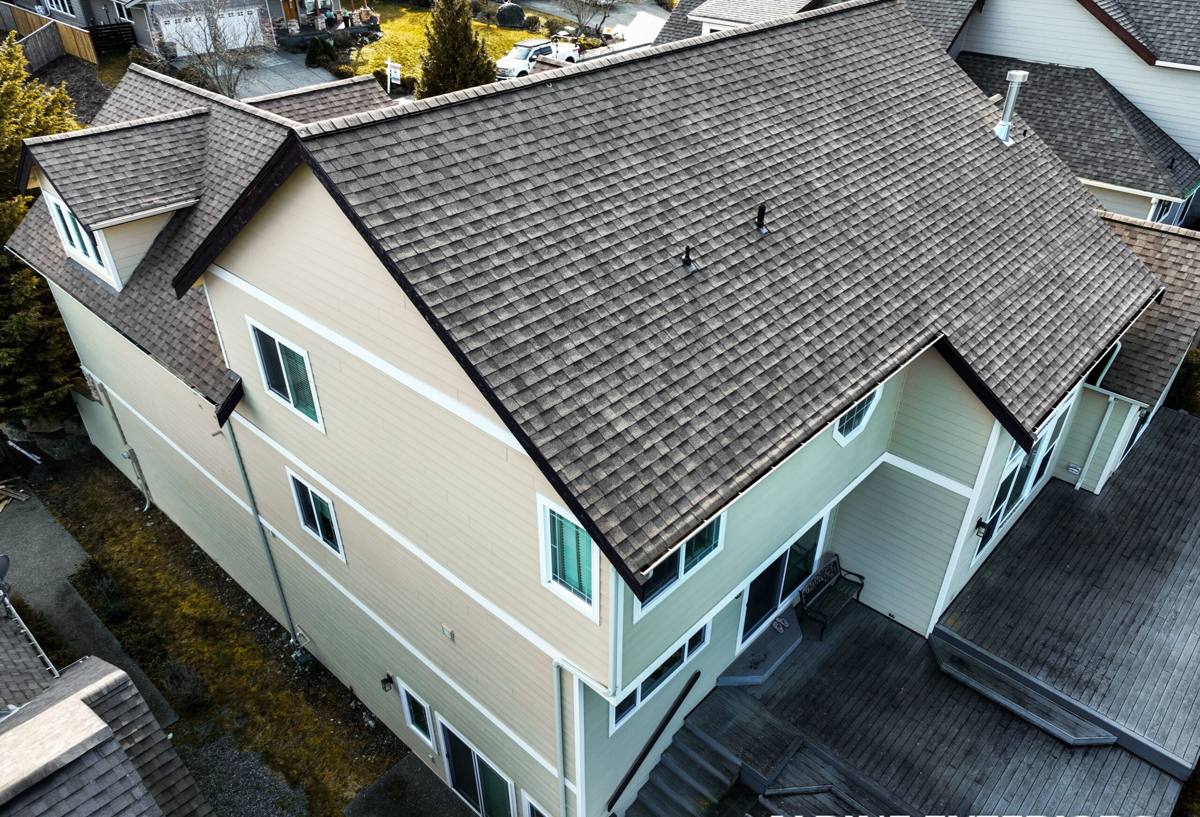
Signs a March Point Deck Needs Full Replacement, Not Repair
Not every deck problem calls for a full tear-off. But there's a point where patching individual boards is just delaying an expense while covering up a bigger issue. We look at the whole structure — not just the visible decking — before we recommend a direction.
- Soft or spongy spots when you walk the deck, especially near the house or around post locations
- Visible rot or discoloration at the ledger board where the deck meets the house
- Rust staining running down from fasteners or joist hangers
- Gaps opening up between boards, or boards cupping and pulling away from joists
- Railings that flex or feel loose under normal weight
- A deck more than 15-20 years old that has never had the framing inspected
If most of what's failing is surface-level — a few cracked boards, worn finish, loose railing balusters — repair can make sense. If the framing, ledger connection, or footings are compromised, replacement is the honest recommendation, and we'll tell you which situation you're in before any work starts.
What a Correct Deck Replacement Involves Here
Starting With the Ledger and Flashing
The single most common failure point on any deck near Anacortes' waterfront neighborhoods is the ledger connection — where the deck attaches to the house. If flashing was missing, undersized, or installed without proper drainage, water has likely been getting behind it for years regardless of how the decking above looks. A proper replacement means removing the old ledger, inspecting and repairing the rim joist behind it if needed, and installing flashing correctly the second time, sloped and layered so water sheds away from the house instead of into it.
Framing and Fasteners Rated for the Exposure
Given the salt air March Point deals with, we don't use standard interior-grade fasteners on framing or ledger connections. Stainless steel or heavy hot-dip galvanized hardware costs more up front but avoids the corrosion cycle that eats through lighter coatings within a few seasons this close to the water. Joist hangers, structural screws, and post bases all get selected with that exposure in mind, not just whatever is cheapest at the yard.
Footings and Post Bases
Ground contact is another spot where moisture does long-term damage. We check existing footings for frost depth and drainage, and set post bases up off the ground on proper standoffs rather than letting posts sit in standing water after a wet week. On older decks, undersized or shifted footings are a common reason the whole structure has developed a lean or bounce.
Decking Material Choice
Homeowners near March Point generally land in one of three camps: pressure-treated wood for value, composite for low maintenance, or cedar for appearance. Each has real trade-offs given the local climate, and we'll walk through them honestly rather than pushing whatever has the best margin.
| Material | Moss/Moisture Behavior | Maintenance | Typical Lifespan Here |
|---|---|---|---|
| Pressure-treated wood | Absorbs moisture; needs sealing to resist moss and staining | Annual cleaning, re-sealing every 2-3 years | 10-15 years with upkeep |
| Cedar | Naturally moisture-resistant but still needs finish maintenance in this climate | Regular cleaning, periodic staining/sealing | 15-20 years with upkeep |
| Composite | Doesn't absorb water or rot, but still needs cleaning where moss and algae can grow on the surface | Occasional washing, no sealing | 25-30 years |
Composite carries a higher material cost but a lower total cost of ownership for homeowners who don't want a recurring maintenance schedule. Wood costs less up front but only holds up if someone actually keeps up with cleaning and sealing on a Skagit County timeline, not a drier-climate one. We'll size this decision to your budget and how much upkeep you actually want to do, not steer you toward one answer.
Fastener and Hardware Corrosion — Why It's a Bigger Deal Near the Water
This is worth its own section because it's the failure we see homeowners underestimate most. A deck can have solid lumber and still be unsafe because the fasteners holding it together have corroded. Standard coated screws and nails, rated for typical inland use, don't hold up as well against the salt content in the air this close to Anacortes' waterways. When we replace a deck on March Point, we spec hardware for the exposure it's actually going to face, not the exposure a generic building supply catalog assumes.
Handling Moss and Long-Term Surface Maintenance
Moss isn't just cosmetic — a moss-covered deck surface holds moisture against the boards through the entire wet season, which shortens the life of whatever material is underneath it, wood or composite. Part of doing this job right is building in surface drainage (proper board spacing and slope) so water doesn't pool and give moss a place to establish. We'll also walk you through a simple seasonal cleaning routine so the new deck doesn't develop the same moss buildup within a couple of winters.
Our Process for March Point Deck Replacement Projects
- On-site assessment — we inspect the decking, framing, ledger connection, footings, and hardware to determine what's actually failing versus what's cosmetic
- Honest scope and material conversation — we explain what needs replacing, what materials fit your budget and maintenance preference, and give you a straightforward cost range
- Tear-off and structural correction — removal of the old deck, repair of any rot behind the ledger or in the rim joist, and correction of any drainage or flashing issues found underneath
- Rebuild with climate-appropriate materials and hardware — framing, fasteners, and decking selected for salt air and moisture exposure, not generic specs
- Final walkthrough — we go over the finished deck, the hardware and materials used, and what maintenance (if any) it will need going forward
Why Local Experience on March Point Specifically Matters
A deck built to a generic inland spec sheet is the deck that ends up back on our schedule for repair in eight years instead of twenty. Crews that already work in this specific Anacortes waterfront area know which ledger and flashing details fail first, which hardware actually holds up against the salt air, and how aggressive the moss season really gets on north-facing surfaces. That's not something you get from a one-size-fits-all deck-building approach — it comes from having done this work, on this kind of property, in this climate, repeatedly.
We also know that March Point homes vary — some sit right along the water with heavier salt exposure, others are set back with more tree cover and a heavier moss problem instead. We adjust material and hardware recommendations to the specific conditions of your property rather than applying the same spec to every job in Skagit County.
What Affects the Cost of a Deck Replacement
Every deck is different, but the main cost drivers on a March Point replacement tend to be the same handful of factors:
| Factor | Why It Matters |
|---|---|
| Deck size and layout | More square footage and complex shapes (multiple levels, angles) mean more material and labor |
| Ledger and framing condition | Hidden rot behind the ledger or in the rim joist adds repair scope beyond the visible decking |
| Material choice | Pressure-treated, cedar, and composite carry different upfront costs and different long-term maintenance costs |
| Railing and stair work | Code-compliant railings and stairs add labor, especially on multi-level decks |
| Footing and post condition | Undersized or shifted footings may need to be repoured, which adds time and cost |
We give you a real number after the on-site assessment, not a phone-quote guess — the hidden framing condition is often the deciding factor and that's only visible once the old decking comes off or is inspected from underneath.
Ready to Talk About Your Deck
If your March Point deck is showing soft spots, rust stains, or just years of moss buildup, it's worth having someone look at the framing before deciding between repair and replacement. Fill out the form below for a free, no-pressure estimate — we'll walk the deck with you, explain what we find in plain terms, and give you an honest recommendation for your budget and the way you actually use the space.