 Anacortes Exterior
 Building New in La Conner? The Windows Have to Match the Climate
La Conner sits low, close to the water, and squarely in the path of everything Skagit County weather throws at a house. If you're framing a new home or a major addition here, the window package you choose and how it gets installed will do more to determine your long-term comfort and maintenance load than almost any other exterior decision. This isn't a page about windows in general. It's about what new-construction window installation needs to look like specifically for a home going up in La Conner, where salt air off the slough and bay, driving rain, and a long moss season are simply part of the deal.
New construction gives you an advantage that retrofit work never fully replicates: the window opening isn't finished yet. Flashing, sheathing, and water management can be built correctly from the studs out, instead of adapted around existing trim and siding. That advantage is worth taking seriously, because the mistakes made at this stage are the ones that show up as rot, stains, and leaks five or ten years down the road — usually after the framing crew and the window supplier are long gone.
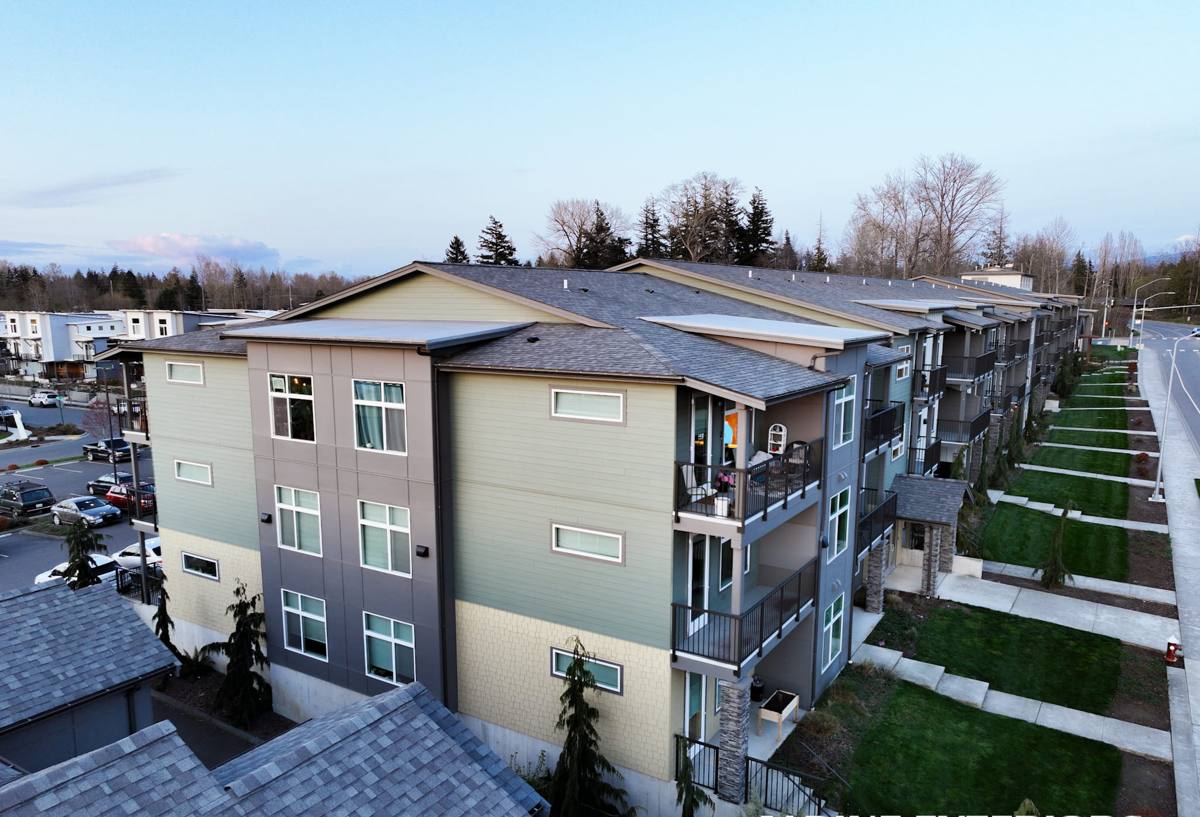
What La Conner's Climate Actually Does to a Window Opening
Salt Air
La Conner's proximity to Swinomish Channel and the bay means airborne salt is a real factor, not a coastal cliché. Salt accelerates corrosion on fasteners, hinges, and lower-grade metal components, and it degrades some finishes faster than manufacturers' inland warranty testing accounts for. This matters most at hardware, cladding, and any exposed metal flashing — details a new-construction crew has full control over before the walls are closed in.
Driving Rain
Wind-driven rain off the water doesn't fall straight down — it gets pushed sideways into wall assemblies, which is exactly the condition that exposes weak flashing details. A window that would perform fine in a sheltered inland yard can leak here if the sill pan, head flashing, and water-resistive barrier integration aren't done in the right order and with the right laps.
Moss Season
Skagit County's wet season runs long, and anywhere moisture sits — sills, sight lines, low-slope trim caps above openings — moss and algae will eventually try to take hold. On a new build, that's addressed with detailing that sheds water fast and doesn't give organic growth a flat, shaded ledge to start on.
What a Correct New-Construction Window Job Includes
"New construction" installation is a different discipline from replacement work, and it should be treated that way. Done right, it includes:
- Rough openings framed square, plumb, and sized correctly to the window unit's actual dimensions — not "close enough"
- A properly sloped sill pan flashing at every opening, so any water that gets past the window drains back out, not into the wall cavity
- Correct flashing sequence integrated with the house wrap or water-resistive barrier — bottom-up, shingle-style laps, no reverse laps that funnel water inward
- Nailing fin or flange installation per the manufacturer's instructions, with fasteners and sealants rated for coastal exposure
- Head flashing that extends beyond the jambs and directs water clear of the opening, not just down the face of the siding
- Backer rod and compatible sealant at the interior and exterior perimeter, sized and installed to actually flex with the building rather than crack out in a season or two
- Insulation of the gap between the rough opening and window frame — done, not skipped, and not overstuffed to the point of bowing the frame
Every one of these steps is easier and more reliable to get right during new construction than after the siding is already up. That's the entire case for hiring a crew that treats this stage with the attention it deserves, rather than rushing to "get the windows in" so drywall can start.
Choosing a Window Package for This Location
There's no single "best" window brand for La Conner — there's a best fit for your home's design, budget, and exposure. What we look at with clients building here:
| Factor | Why It Matters in La Conner |
|---|---|
| Frame material | Vinyl, fiberglass, and clad-wood all handle coastal moisture differently — fiberglass and quality vinyl resist swelling and corrosion better than bare wood exposed to salt air |
| Hardware and fastener finish | Corrosion-resistant hardware matters more here than in a drier, inland part of the county |
| Glazing package | Double-pane, low-E glass is standard for our climate; the right coating balances winter heat retention against summer glare off the water |
| Water management design | Some window lines have deeper sill designs and built-in weep systems that perform better under driving rain |
| Warranty structure | Read the fine print on coastal/marine exposure exclusions — some manufacturer warranties limit coverage within a certain distance of saltwater |
We'll walk you through the real trade-offs for your specific build rather than pushing one line because it's what we happen to have on hand. Our job is to match the window to the house and the site, not the other way around.
Our Process for New-Construction Window Installation
1. Plan Review and Opening Verification
We review the framing plans and, once framing is up, verify every rough opening against the actual window schedule before a single unit arrives. Catching a sizing mismatch on paper is a lot cheaper than catching it after delivery.
2. Flashing and Water Management Layout
Before windows go in, we plan the flashing sequence at every opening — sill pans, WRB integration, head flashing — so the whole building envelope works as one connected system, not a collection of individually sealed holes.
3. Installation
Units are set square and plumb, shimmed correctly, fastened per manufacturer spec, and flashed in the proper shingle-lap order. We don't rely on sealant alone to do a flashing detail's job — caulk is a backup layer, not the primary defense.
4. Insulation and Interior Air Sealing
The gap between frame and rough opening gets insulated and air-sealed properly, which matters for both energy performance and preventing condensation inside the wall cavity.
5. Final Check
Every opening gets a final inspection for operation, seal, and flashing integrity before we consider the install complete and before siding closes it all in.
Why the Timing With Siding and Trim Matters
Window installation on a new build doesn't happen in isolation — it has to be sequenced correctly with the house wrap, siding, and trim work that follows. If windows go in before the water-resistive barrier is properly lapped around them, or if siding gets installed without the right clearances and kickout flashing at window heads, you can end up with a technically "correct" window that still leaks because of what was built around it. A crew that handles both window installation and exterior work on the same job has an easier time keeping that sequence right, because there's no handoff gap where one trade assumes the other already covered a detail.
What Homeowners Should Ask Before Hiring
New construction is a one-shot opportunity to get window installation right before the walls close up. A short list worth going through with any contractor bidding the work:
- Will you install sill pan flashing at every opening, and can you describe how?
- What's your flashing lap sequence relative to the house wrap?
- Who is actually on the crew doing the install — is it subbed out, and to whom?
- What happens if a rough opening is out of square or mis-sized when the windows arrive?
- Does the window manufacturer's warranty have any coastal or marine exposure exclusions I should know about?
- Will you coordinate directly with the siding and trim crew, or do I need to manage that handoff myself?
A contractor who answers these clearly and specifically — without vague reassurances — is one who's actually done this work in a coastal Skagit County environment before.
Why Local Experience in La Conner Specifically Matters
La Conner's exposure isn't identical to inland Mount Vernon or even parts of Anacortes proper that sit slightly higher or more sheltered. A crew that regularly works this specific stretch of Skagit County waterfront knows which details need extra attention here — how tight the flashing laps need to be given the wind-driven rain patterns off the channel, which fastener and hardware finishes hold up under salt exposure, and where moss tends to establish itself first on a new build. That's knowledge you build by doing the work in this exact environment repeatedly, not by reading a manufacturer's install manual once.
If you're planning a new build or major addition in La Conner and want window installation done right the first time, we'd be glad to talk through your plans. Reach out for a free, no-pressure estimate — we'll review your framing timeline, walk through window options suited to your site, and give you a straight answer on what the job should cost and how long it should take.