 Anacortes Exterior
 Why La Conner Decks Wear Out Faster Than the Manual Says
La Conner sits right on the Swinomish Channel, which means every deck in the area lives with a combination most manufacturers' warranty language never quite accounts for: salt-laden air off the water, long stretches of driving rain through fall and winter, and a shoulder season where everything outdoors stays damp enough to grow moss for weeks at a time. None of that is exotic weather. It's just Skagit County. But it adds up differently on a deck than it does on siding or roofing, because a deck is horizontal, it's walked on, and its structural framing is often hidden underneath boards where nobody looks until there's a problem.
We replace decks all over the Anacortes area, and the La Conner decks we get called out to tend to fail in patterns you can predict once you've seen enough of them: ledger boards rotting where they meet the house, joists softening from the top down under boards that were never gapped right, and railing posts that look fine from six feet away but wiggle when you lean on them. None of that is a design failure of wood or composite decking as a product — it's what happens when a deck built for a drier climate, or built without enough attention to water management, sits in this one for fifteen or twenty years.
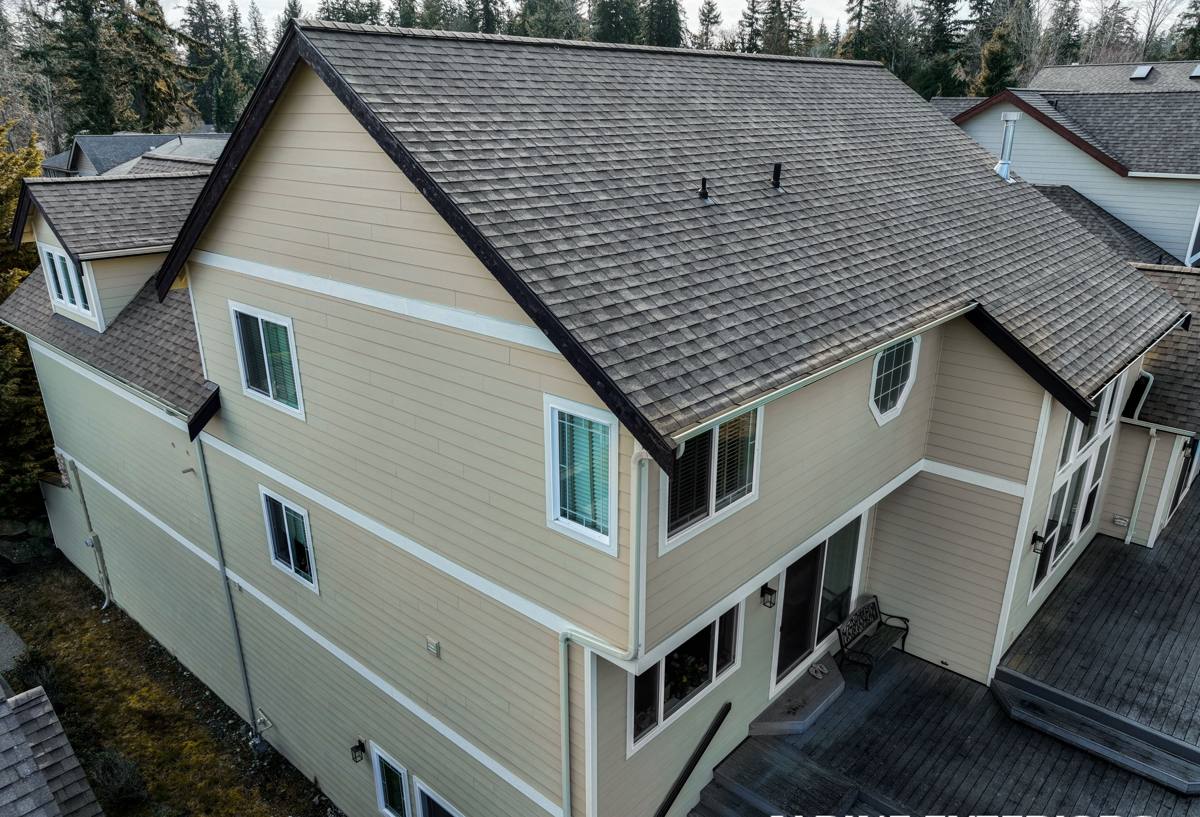
What Actually Fails First on Older Decks Here
Before we talk about what a correct replacement looks like, it helps to know what we're replacing it because of. On tear-offs in this area, the damage almost always starts in the same handful of places:
- The ledger board connection. Where the deck attaches to the house is the single most common rot point. If flashing wasn't installed correctly — or wasn't installed at all — water works its way behind the ledger and into the house band board over years, hidden by the decking above it.
- Joist tops. Water that sits on top of a joist, rather than shedding off it, will eventually soften the wood even under boards that look solid from underneath.
- Fastener corrosion. Salt air accelerates corrosion on standard fasteners and hardware. We regularly find rusted-through joist hangers and screws on decks that are otherwise structurally salvageable, simply because the original hardware wasn't rated for a coastal environment.
- Post bases and footings. Ground contact, splash-back, and moss holding moisture against the base of a post all shorten the life of the connection between deck and footing.
- Board spacing that's too tight. Boards installed with little to no gap trap moisture, debris, and moss between them, which keeps the wood wet far longer than it should be after a storm.
A deck replacement that doesn't correct these underlying causes just resets the clock on the same failure. That's the difference between a deck that gets re-decked again in ten years and one that holds up for thirty.
What a Correct Deck Replacement Actually Involves
Structure First, Boards Second
The decking boards are the part everyone sees, but the framing underneath is what determines whether the deck is safe and how long it lasts. A proper replacement means sizing joists and beams to current span tables for the actual load and spacing, not just matching whatever was there before — older decks in this area were sometimes built to standards that have since been tightened, particularly around guardrail strength and stair geometry.
Flashing and Water Management
Ledger flashing, done correctly, sheds water away from the house band board rather than letting it wick behind the siding. We also pay attention to how water moves off the deck surface as a whole — proper board spacing, correct fastener placement, and in some cases a drainage system under the deck if the space below is meant to stay usable and dry.
Hardware Rated for Coastal Air
Given the salt exposure this close to the water, we use corrosion-resistant fasteners, connectors, and joist hangers rated for the environment rather than standard interior-grade hardware. It costs a little more up front and it's not optional in our book — replacing hardware later means tearing into a deck that otherwise still has years of life left in it.
Railings and Stairs Built to Current Code
Guardrail height, baluster spacing, and stair rise/run all have to meet current Skagit County building code, which isn't always what an older deck was built to. Replacement is the natural point to bring these up to standard.
Choosing a Decking Material for This Climate
There's no single "best" decking material — there's a best material for your budget, your maintenance appetite, and how much sun versus shade the deck gets. Here's how the common options actually compare once you factor in the moss-and-moisture reality of La Conner:
| Material | Moisture Behavior Here | Maintenance | Typical Lifespan |
|---|---|---|---|
| Pressure-treated wood | Handles wet-dry cycling well if sealed regularly; prone to moss and mildew staining in shade | Needs cleaning and re-sealing every 1–2 years | 15–20 years with upkeep |
| Cedar | Naturally rot-resistant but still needs sealing to hold color and resist moss in damp shaded spots | Regular cleaning, periodic sealing | 15–25 years with upkeep |
| Capped composite | Doesn't absorb water or feed moss growth the way wood does; still needs periodic washing where algae can film on the surface | Occasional washing, no sealing/staining | 25–30+ years |
| Uncapped composite (older generation) | Can absorb moisture at cut edges and in shaded, poorly ventilated areas | Periodic cleaning; more prone to mold in constant shade | 15–25 years |
In a climate with this much moss pressure, capped composite tends to be the easiest long-term choice for shaded or low-airflow decks, while wood remains a solid, honest option for owners who don't mind the maintenance rhythm and want a traditional look. We'll walk through the real trade-offs for your specific deck's sun exposure and airflow rather than push one product across the board.
Our Deck Replacement Process
- On-site assessment. We check the ledger connection, framing condition, footings, and any moisture damage before quoting anything, so the estimate reflects what's actually there, not a guess.
- Permit and code review. We handle the Skagit County permitting requirements that apply to deck replacement and rebuild, including guardrail and stair code items on older structures.
- Careful demo. Removing the old deck without damaging siding, gutters, or the area underneath, and taking a real look at the band board and house connection once the old ledger is off.
- Framing and flashing. New joists, beams, and posts sized correctly, ledger flashing installed to shed water away from the house, and corrosion-resistant hardware throughout.
- Decking installation. Boards installed with correct spacing for drainage and airflow, using fastening methods appropriate to the material.
- Railings and stairs. Built and installed to current code, matched to the look of the deck and the house.
- Final walkthrough and cleanup. We walk the finished deck with you, confirm everything is solid, and clear the site.
Permits and Local Considerations Near the Channel
Deck replacement in La Conner and the surrounding Anacortes area typically requires a permit through Skagit County, and properties closer to the water can carry additional considerations around setbacks or shoreline regulations depending on the parcel. We handle the permitting process as part of the job rather than leaving it to the homeowner to sort out, and we'll flag early if your property has any wrinkle worth knowing about before work starts — better to catch that during the estimate than mid-project.
What Drives the Cost of a Deck Replacement
Every deck is different, but the same handful of factors move the price up or down on most jobs we quote in this area:
| Factor | Why It Matters |
|---|---|
| Deck size and shape | Square footage and the number of angles, levels, or stairs directly affect material and labor |
| Decking material chosen | Composite and PVC cost more up front than pressure-treated wood but need far less maintenance |
| Framing condition found underneath | Rotted joists, a compromised ledger, or failing footings add scope once the old boards come off |
| Height and railing requirements | Taller decks and code-required guardrails add material and labor |
| Site access | Tight side yards or water-adjacent lots can slow material staging and demo |
We give straightforward estimates without pushing upgrades you don't need — if a mid-range material is the honest right fit for your budget and how you'll use the space, we'll say so.
Keeping a New Deck Healthy in This Climate
A well-built deck still needs some seasonal attention in a climate that stays damp as much of the year as this one does. A short maintenance routine goes a long way toward protecting the investment:
- Sweep off leaves and debris regularly, especially in fall — trapped organic matter holds moisture and feeds moss.
- Rinse or lightly scrub surfaces that stay shaded through the wet months to keep moss and algae from getting a foothold.
- Check that gaps between boards stay clear so water can drain rather than pool.
- Inspect railings and stair connections once a year for looseness.
- For wood decks, plan on cleaning and re-sealing on a regular cycle rather than waiting until the finish visibly fails.
- Keep an eye on the area where the deck meets the house — any staining or soft spots near the ledger are worth a look sooner rather than later.
Why Hire a Crew That Already Works in La Conner
Deck framing and flashing details that work fine in a drier inland climate don't always hold up the same way this close to the water. A crew that's already replaced decks around La Conner and the rest of the Anacortes area knows which connections tend to fail first here, which hardware actually holds up to the salt air, and how to size and flash a deck so moss and driving rain don't undo the work in a few short seasons. That local pattern recognition is worth more than a lower bid from a crew unfamiliar with the area — the goal is a deck you don't have to think about again for a long time, not one that needs revisiting in five years.
If you're weighing a deck replacement in La Conner, we're happy to take a look and give you a straightforward, no-pressure estimate — just fill out the form below to get started.