 Anacortes Exterior
 Building Decks That Hold Up in La Conner
La Conner sits right where the Swinomish Channel meets the tidal flats, which means homes here take on a specific combination of punishment: salt-laden air drifting off the water, long stretches of driving rain through fall and winter, and shade pockets under evergreens that never quite dry out. A deck built to a generic spec — the kind you'd see in a drier inland town — starts showing problems within a few seasons out here. Fasteners bloom with rust, framing traps moisture instead of shedding it, and north-facing boards grow a slick coat of moss before summer even arrives.
We build and repair decks for homeowners throughout La Conner and the surrounding Skagit County waterfront, and the approach is different from what you'd use inland. It starts with material selection and doesn't stop there — fastener grade, framing ventilation, drainage detailing, and a maintenance rhythm that actually fits how this climate behaves all matter just as much as what the decking looks like on day one.
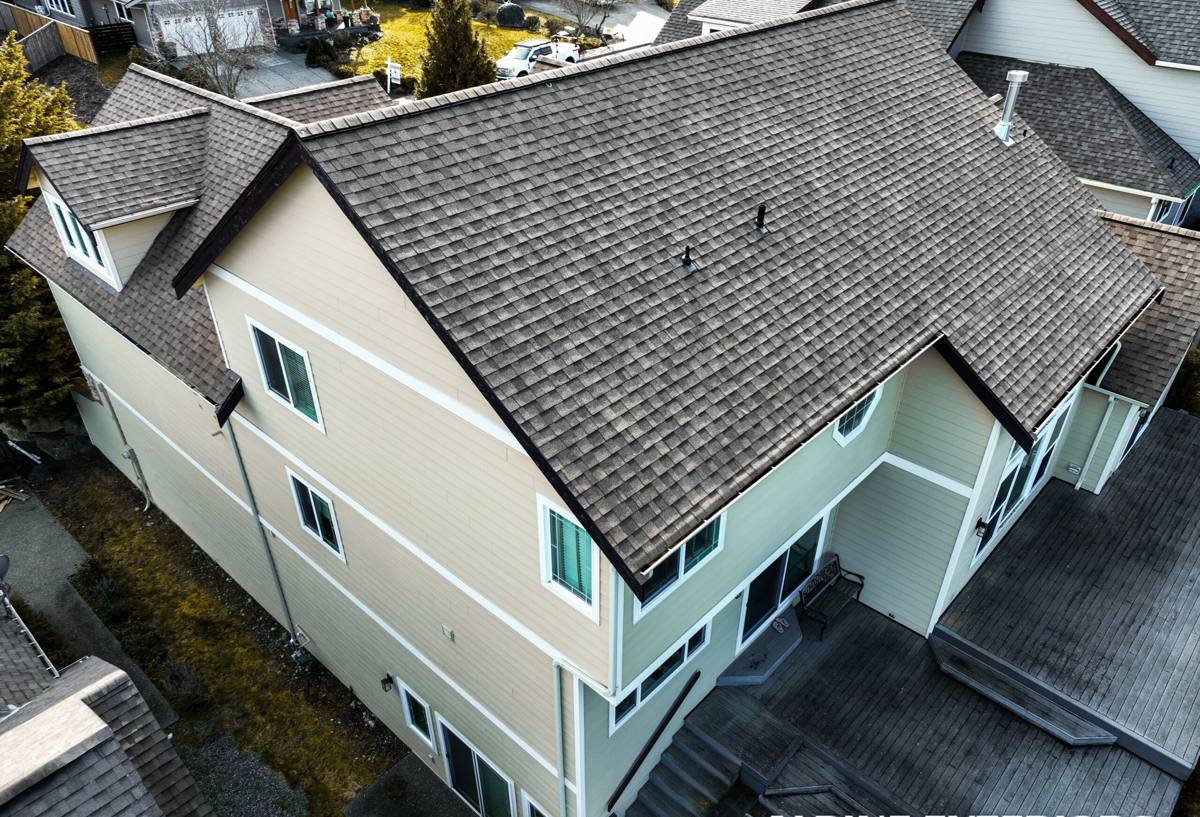
What Salt Air and Moisture Actually Do to a Deck
Corrosion Where You Can't See It
The most common failure we find on older La Conner decks isn't the decking boards — it's the hardware underneath. Standard zinc-coated screws and joist hangers corrode faster near tidal water than most manufacturers' ratings assume. Once fasteners start losing strength, ledger boards and joist connections weaken quietly, and a homeowner often doesn't know until a board deflects or a railing feels loose.
Moss, Algae, and the Shade Problem
La Conner's tree cover and marine humidity mean shaded deck sections stay damp far longer after a rain than a deck would in a sunnier, drier part of the state. That extended dampness is exactly what moss and algae need to establish. Beyond being a slip hazard, moss holds moisture directly against the wood surface, which accelerates rot in untreated or poorly finished boards.
Driving Rain and Water Intrusion
Wind-driven rain off the channel doesn't just fall on a deck — it gets pushed sideways into ledger connections, under poorly flashed rim joists, and into end grain that isn't sealed. Most of the structural rot we find in this area starts at a ledger board attachment or a post base that was never properly flashed or elevated off a wet slab.
Decking Materials: What Actually Performs Here
There's no single "best" decking material for every La Conner project — it depends on budget, sun exposure, and how much upkeep a homeowner actually wants to do. Here's how the common options hold up under this specific climate:
| Material | Moisture/Salt Resistance | Moss Susceptibility | Maintenance |
|---|---|---|---|
| Composite decking | Very good — doesn't absorb water or corrode | Low, especially with textured/capped boards | Occasional wash; no staining or sealing |
| Cedar | Good natural resistance, but end grain and fasteners are vulnerable | Moderate in shaded areas without upkeep | Re-stain or seal every 2-3 years |
| Pressure-treated fir/pine | Adequate if detailing and drainage are correct | Higher in shaded, low-airflow areas | Regular sealing; more attention needed near grade |
| Tropical hardwoods | Excellent density and rot resistance | Low | Periodic oiling to maintain color; otherwise low |
For decks with meaningful shade or proximity to the water, we lean toward composite or hardwood options because they simply ask less of the homeowner over time. Cedar and treated lumber can still be the right call on a budget or for a homeowner who wants a specific traditional look — as long as the framing and fastener choices underneath are matched to the exposure, not just the decking on top.
Framing and Fasteners: The Part That Actually Determines Lifespan
We treat the substructure as the priority on every La Conner deck, because that's what fails first in this climate, not the visible boards. Our standard for this area includes:
- Stainless steel or heavy hot-dip galvanized fasteners and hardware rated for coastal/marine exposure, not standard interior-grade coatings
- Joist tape or a similar water-shedding barrier on top of framing members to keep standing water off structural wood
- Proper ledger flashing where the deck attaches to the house, so wind-driven rain can't work its way behind the siding
- Post bases set above grade and off concrete contact, so posts aren't wicking moisture from the ground
- Joist spacing and blocking sized for the actual span and load, not just minimum code
None of this is visible once the deck is finished, which is exactly why it gets skipped on lower-bid jobs. It's also exactly what determines whether a deck is solid at year 15 or needs structural repair at year 6.
Design Considerations Specific to La Conner Properties
Water Views and Wind Exposure
Decks oriented toward the channel or open water get more direct wind-driven rain and salt exposure than a deck tucked against a house on the leeward side. We factor orientation into material and fastener recommendations rather than applying the same spec to every deck regardless of exposure.
Grading and Site Drainage
Skagit County's flat, low-lying terrain near La Conner means water doesn't always drain away from a foundation or deck footing as readily as it would on sloped ground. We check existing grading and drainage before finalizing footing placement so the deck isn't sitting in a spot that holds water after heavy rain.
Railing and Guard Height
Elevated decks — common on waterfront or view lots — need railings that meet current guard height and baluster spacing requirements. We handle this as part of design, not as an afterthought once the deck is already framed.
How We Approach a Custom Deck Project
- On-site assessment: we look at sun/shade exposure, wind direction relative to water, existing drainage, and any structural issues if this is a rebuild.
- Material and layout discussion: we walk through decking, railing, and fastener options with honest trade-offs for cost and maintenance — no upselling toward whatever has the best margin.
- Permitting: most new decks and significant rebuilds in Skagit County require a permit; we handle that process so the homeowner isn't navigating it alone.
- Framing first, inspected before covering: ledger flashing, post bases, and joist hardware get installed and, where required, inspected before decking goes down.
- Decking, railing, and finish work: final surface materials and railings are installed to the agreed spec.
- Walkthrough and care guidance: we go over what maintenance actually looks like for the specific materials chosen, so there are no surprises a year in.
Deck Repair vs. Replacement
Not every aging deck in La Conner needs to be torn out. We evaluate repair candidates honestly:
- Surface-level board rot or splintering with sound framing underneath is often a decking-only replacement
- Soft spots near the ledger board or around post bases usually point to a structural issue that needs to be opened up and inspected, not just patched
- Persistent moss in shaded sections can sometimes be addressed with cleaning, better airflow, or a material change in just that area — not a full rebuild
- Railings that feel loose or springy should be checked immediately; that's a safety issue, not a cosmetic one
If a deck's framing is still sound, replacing just the surface decking and hardware is usually the more cost-effective path. If we find rot at structural connections, we'll say so plainly and explain what a proper repair involves before any work starts.
A Practical Maintenance Checklist for La Conner Decks
- Sweep debris and standing organic matter off the deck surface regularly, especially in shaded corners where moss takes hold
- Rinse salt residue off decking and railings periodically if the deck faces open water or gets regular wind exposure
- Check fastener heads and railing connections once a year for rust staining or looseness
- Keep gutters and downspouts near the deck clear so runoff isn't draining directly onto or under the structure
- Reseal or re-stain wood decking on the schedule appropriate to the product — don't wait until it visibly needs it
- Address moss growth early with a gentle wash rather than letting it establish and hold moisture against the wood
Why Local Deck-Building Experience Matters
A crew that builds decks across different climates learns to default to generic specs. A crew that works La Conner and the rest of Skagit County regularly knows which corners of a property hold moisture longest, which orientations take the worst of the wind-driven rain, and which fastener grades actually last near the water instead of just meeting a minimum code requirement. That knowledge shows up in decisions a homeowner never sees — the flashing detail behind the ledger, the hardware grade in the joist hangers — but it's exactly what determines whether a deck is still solid in fifteen years or needs early repair.
If you're planning a new deck, replacing an aging one, or just want an honest read on whether yours needs repair or replacement, we're happy to take a look. Reach out for a free, no-pressure estimate using the form below.