 Anacortes Exterior
 La Conner's Waterfront Climate Puts Real Stress on Siding
La Conner sits right on the Swinomish Channel, and that waterfront location shapes everything about how a home's exterior ages. Homes here take on a combination of conditions that inland Skagit County properties simply don't deal with in the same way: salt-laden air moving off the water, wind-driven rain that hits siding at an angle instead of falling straight down, and long stretches of shade and dampness that keep exterior surfaces wet far longer than a sunny afternoon would suggest. Any one of these on its own is manageable. Together, over years, they're what separates siding that still looks sharp at year fifteen from siding that's cupping, staining, or rotting at year eight.
Salt Air and Corrosion
Airborne salt doesn't just affect boats and railings. It settles on exterior surfaces, accelerates the breakdown of paint films, and corrodes fasteners and trim hardware that aren't rated for coastal exposure. Siding materials that rely on a surface-applied paint job — rather than a factory-baked finish — tend to chalk, fade, and need repainting sooner near the water than they would a few miles inland.
Driving Rain and Wind-Driven Moisture
Wind off the channel doesn't let rain fall politely. It pushes water sideways into laps, seams, and trim joints, which is exactly where a siding system either does its job or doesn't. Water management — flashing, lap spacing, caulking at the right joints and not others — matters more here than it does on a sheltered inland lot.
Moss, Shade, and Trapped Moisture
Between the marine layer, tree cover common around La Conner properties, and the region's long wet season, moss and algae growth is a fact of life. Siding that holds moisture against its surface, or that swells and softens when wet, gives moss and mildew a foothold. Siding that sheds water and dries out between storms doesn't.
Why James Hardie Fiber Cement Holds Up Where Other Sidings Struggle
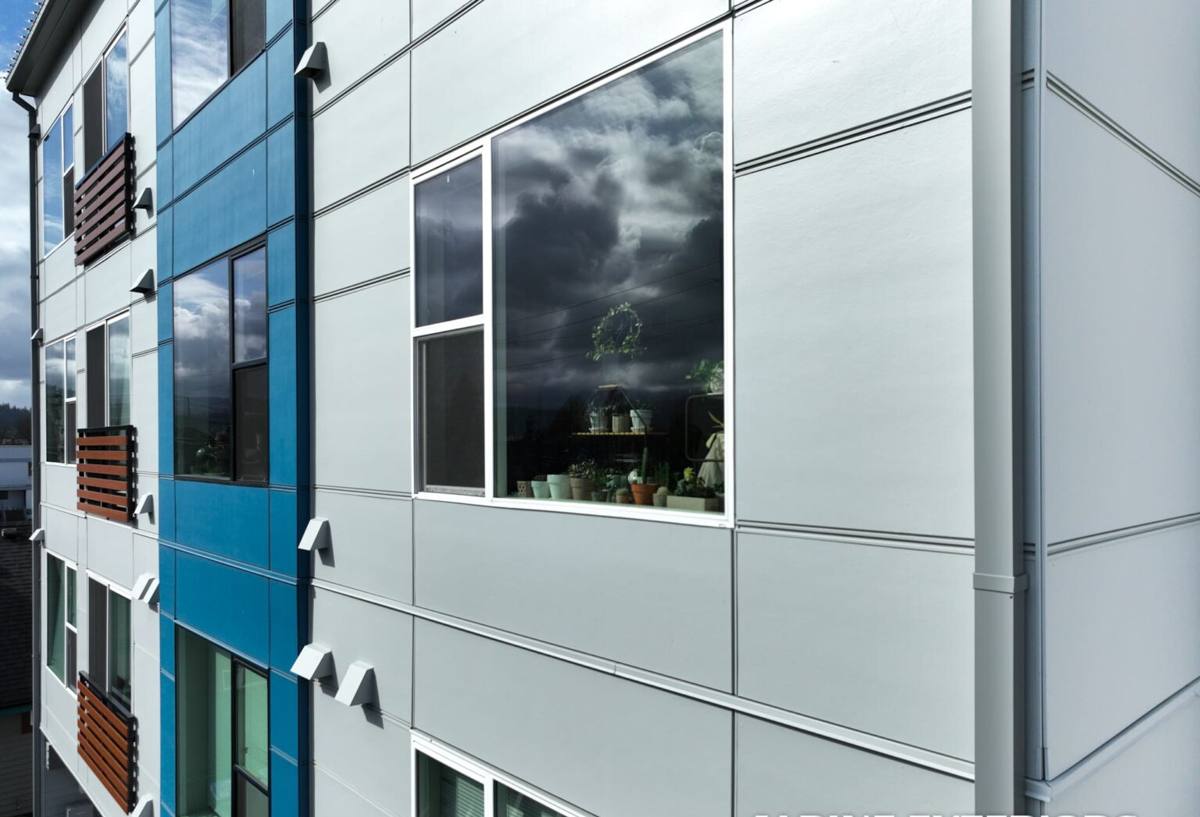
We install James Hardie fiber cement siding exclusively. That's not a marketing preference — it's a standard we set after weighing how different siding materials actually perform under exactly the conditions described above. Fiber cement is made from cement, sand, and cellulose fibers, which gives it a dimensional stability that wood-based and polymer products can't match. It doesn't expand and contract with humidity the way wood does, and it doesn't soften or warp in prolonged wet weather the way some engineered wood products can.
Non-Combustible Core
James Hardie siding is non-combustible, which matters for insurance considerations and for straightforward peace of mind, especially as wildfire smoke and dry-season risk have become a bigger part of the conversation across Washington in recent years.
ColorPlus Factory Finish
Rather than relying on field-applied paint, Hardie's ColorPlus finish is baked on in a controlled factory process, cured in multiple coats. In a salt-air, high-moisture environment like La Conner's, that factory finish resists fading, chipping, and chalking far longer than a job-site paint job typically does — and it means touch-up work, when it's ever needed, is minimal rather than a recurring maintenance cycle.
HZ5 Engineered for the Pacific Northwest
James Hardie makes climate-specific product lines, and the HZ5 formulation is engineered for regions with significant moisture exposure — exactly the profile of Skagit County's marine climate. It's built to resist moisture-related damage better than a generic, one-size-fits-all fiber cement product.
What Correct Installation Looks Like on a La Conner Home
James Hardie siding is only as good as the installation behind it. The material itself is excellent, but poor flashing, wrong fastener placement, or careless caulking will undermine even the best product — and in a wind-driven-rain environment, those mistakes show up faster than they would somewhere drier.
Flashing and Water Management
Every window, door, and roof-to-wall intersection needs flashing that directs water out and away from the wall assembly, not just decorative trim over the top. Weather-resistive barrier (house wrap) needs to be lapped correctly behind that flashing so water sheds down and out rather than working its way behind the siding.
Fastening Pattern and Clearances
Hardie specifies exact nailing patterns, fastener types, and minimum clearances from grade, roof lines, and decking. Skipping these — using the wrong fastener spacing, or letting siding sit too close to the ground or a deck surface — creates entry points for moisture and voids warranty protection.
Caulking and Joint Treatment
Not every seam should be caulked, and that surprises a lot of homeowners. Butt joints and certain trim details are designed to be sealed; others are designed to allow drainage and shouldn't be sealed shut. Caulking the wrong joint traps water instead of releasing it.
Cost Factors for a La Conner James Hardie Project
Every home is different, but the line items that actually move the price on a La Conner siding job are consistent. Here's what typically factors into an estimate:
| Factor | Why It Matters |
|---|---|
| Home size and wall complexity | More square footage, more corners, and more dormers mean more material and labor time |
| Existing siding removal | Tear-off of old wood, vinyl, or aluminum siding adds labor and disposal cost |
| Sheathing and moisture damage | Rot found once old siding comes off needs repair before new siding goes on |
| Trim and detail work | Window casings, corner boards, and fascia details add finish carpentry time |
| Siding profile and accessories | Lap width, shingle-style panels, and trim accessories vary in material cost |
| Site access | Waterfront lots, tight setbacks, or limited staging space can affect labor efficiency |
We won't quote a price without seeing the home, but these are the factors that separate a straightforward re-side from a more involved project — and they're worth understanding before you compare bids.
Our Process, Start to Finish
Assessment and Measurement
We start with an on-site look at the home's current siding, trim, and any visible moisture damage, plus a discussion of which Hardie product line and color fit the home and the site conditions.
Tear-Off and Prep
Old siding comes off, and we inspect the sheathing underneath for rot or damage before anything new goes up. This is the step that gets skipped by crews in a hurry, and it's the one that determines whether the new siding has a sound wall to attach to.
House Wrap, Flashing, and Installation
We install or repair the weather-resistive barrier, set flashing at every penetration and transition, then install the Hardie siding to manufacturer fastening specifications — not shortcuts, not guesswork.
Final Walkthrough
We walk the finished job with the homeowner, point out the detail work, and make sure everything meets both our standard and yours before we call it done.
What to Look For in a La Conner Siding Contractor
A crew that's worked waterfront and near-waterfront homes in this area already understands the flashing details and product choices that matter here — that's not something every contractor picks up working inland. A few things worth checking before you hire anyone:
- Are they James Hardie-focused or certified, with real installation experience — not just occasional Hardie jobs mixed in with vinyl and other materials?
- Will they walk you through the flashing and water-management plan specific to your home, not just the siding color?
- Do they carry proper licensing and insurance for exterior work in Washington?
- Will they inspect and address sheathing or framing damage before installation, not after problems show up?
- Can they explain which HardiePlank or panel profile and HZ product line fits a coastal Skagit County property?
- Do they provide a clear, written scope — not just a total price with no breakdown?
Why We Only Install James Hardie
We get asked from time to time why we don't offer vinyl, LP SmartSide, or other fiber cement brands. The honest answer is that after years of exterior work in this climate, James Hardie is the product we trust to perform — non-combustible, dimensionally stable, backed by a factory finish that holds up to salt air and rain, and supported by a strong transferable warranty. Standardizing on one product means our crews install it correctly every time, rather than juggling different fastening rules, flashing details, and failure points across multiple brands.
Living With Hardie Siding in Skagit County
Once it's installed correctly, James Hardie siding is genuinely low-maintenance — but "low-maintenance" doesn't mean "zero-maintenance," especially in a climate prone to moss. A periodic rinse to clear off accumulated grime and moss spores, particularly on shaded north- and west-facing walls, keeps the ColorPlus finish looking like new for years longer. Keeping gutters clear and vegetation trimmed back from the siding also goes a long way toward preventing the kind of trapped moisture that shortens the life of any exterior material, Hardie included.
If you're weighing a siding project for a La Conner home, we're happy to take a look, walk you through what your home actually needs, and put together a straightforward, no-pressure estimate using the form below.