 Anacortes Exterior
 Guemes Island Puts Different Demands on Siding Than the Mainland
Guemes Island sits in Skagit County just across the ferry channel from Anacortes, and that short stretch of water changes the exposure profile on a home more than most owners expect. Island homes catch wind-driven salt spray off the water, take on more direct weather from open exposures with fewer windbreaks than a sheltered mainland lot, and spend a good part of the year in the damp, low-light conditions that let moss and algae get a foothold on north- and west-facing walls. Add in the reality that any contractor working on the island has to plan around ferry schedules for materials, crew, and equipment, and siding work here is genuinely different from a typical in-town Anacortes job.
None of that means island homes need exotic materials. It means the siding, the fasteners, the flashing details, and the finish all need to be chosen and installed with that exposure in mind — because a mistake that might take a decade to show up on a sheltered lot can show up in three or four years on an exposed island wall.
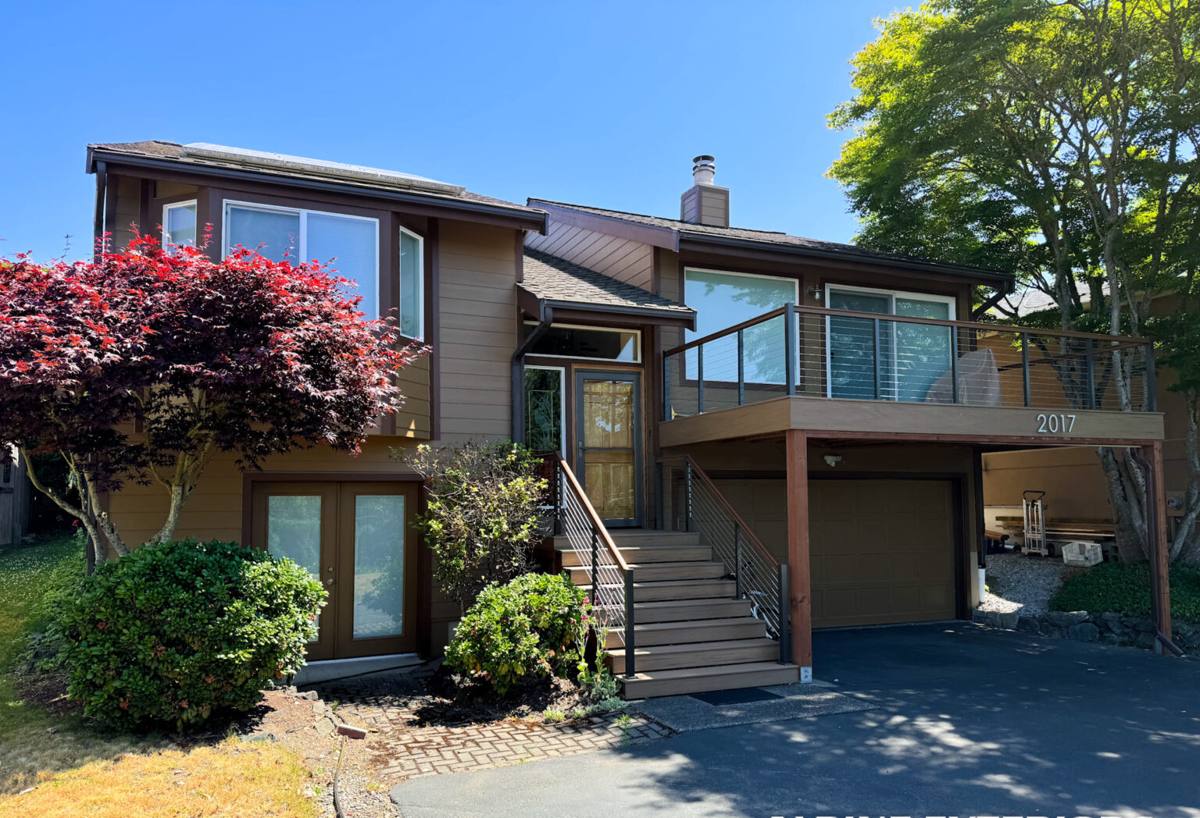
What Salt Air, Driving Rain, and Moss Actually Do to Siding
Salt Air
Airborne salt is corrosive to exposed metal — fasteners, trim flashing, and hardware — and it accelerates the breakdown of some paint and coating systems over time. On wood-based and engineered wood siding, salt-laden moisture also speeds up the cycle of the material absorbing water, swelling, and drying out, which is where edge damage and delamination tend to start.
Driving Rain
Wind-driven rain doesn't just fall on a wall, it gets pushed sideways and upward into laps, seams, and penetrations. A siding system with generous, correctly installed overlaps and properly flashed windows, doors, and penetrations sheds that water. A system installed to minimum tolerances, or with caulk doing the job that flashing should be doing, eventually lets water behind the cladding — and once water gets behind siding, the sheathing and framing pay the price, not just the siding.
Moss and Algae
Skagit County's damp, mild climate is close to ideal for moss and algae growth on shaded or north-facing walls, gutters, and trim. Beyond the cosmetic streaking, sustained moisture held against a wall by moss growth keeps that section of siding wetter, longer, which matters a lot on materials that are sensitive to sustained moisture exposure.
Why We Install Only James Hardie Fiber Cement Siding
We don't install LP SmartSide, vinyl, Cemplank, Allura, primed spruce, or cedar, and on an exposure like Guemes Island the reasons matter more than usual, not less.
- Vinyl handles rain fine but becomes brittle and prone to cracking in sustained wind exposure, and it can fade or warp under intense sun and temperature swings over the years — a real consideration on an open waterfront lot.
- Wood products (cedar, primed spruce) look great new but require an ongoing maintenance commitment — recoating, caulking, and moisture monitoring — that only gets more demanding in a salt-air, high-moss environment. Skip a maintenance cycle and the clock on rot and insect damage starts moving faster than it would inland.
- Engineered wood (LP SmartSide) and other fiber-cement alternatives (Cemplank, Allura) are reasonable products in the right hands, but we've standardized on one system so every install, warranty, and maintenance conversation is consistent — and we've chosen the one built specifically to resist moisture, insects, and fire without a wood core.
James Hardie fiber cement is non-combustible, doesn't have a wood core to rot or attract insects, and holds up to sustained damp exposure better than wood-based alternatives when it's installed correctly. Its ColorPlus factory finish is baked on under controlled conditions rather than field-applied, which matters directly for salt-air and UV exposure — it resists fading and chipping far better than a job-site paint job, and it comes with a warranty structure that follows the product rather than depending on how well a field coat was applied.
Hardie's HZ5 Product Line: Built for This Exposure
James Hardie engineers its siding by climate zone, and the Pacific Northwest — including the Skagit County coastline — falls into their HZ5 zone, formulated for wet, temperate climates with significant moisture exposure. That's a meaningful distinction from siding engineered for a dry or hot climate and shipped everywhere. For an exposure like Guemes Island's, that climate-specific engineering is exactly the margin you want.
| Factor | What Matters on Guemes Island | How Hardie HZ5 Addresses It |
|---|---|---|
| Salt air exposure | Corrosion of fasteners/trim, coating breakdown | Factory ColorPlus finish resists fading and chipping; correct fastener spec prevents corrosion streaking |
| Driving rain | Water intrusion at laps, windows, penetrations | Proper lap and flashing installation sheds wind-driven rain; fiber cement doesn't swell or wick like wood |
| Moss/algae season | Sustained moisture held against siding | Non-organic cement composition doesn't feed rot the way a wood-based product can |
| Wind exposure | Cracking, warping, fastener pull | Rigid fiber cement panel with engineered fastening pattern rated for exposure |
| Long-term maintenance | Ferry-access limits on how often a crew can return | Factory finish reduces recoat frequency versus field-painted wood |
What a Correct Siding Replacement Involves Here
Replacing siding isn't just swapping old panels for new ones. On an exposure like this, the work underneath the visible surface is what determines whether the job holds up.
Tear-Off and Sheathing Inspection
Once the old siding is off, we inspect the sheathing and framing for existing moisture damage — a step that's especially important on older island homes where a marginal original install may have let water in for years without anyone knowing.
Weather-Resistive Barrier and Flashing
A correctly lapped weather-resistive barrier, along with properly integrated flashing at every window, door, and penetration, is what actually keeps driving rain out — the siding itself is the second line of defense, not the first.
Fastening to Spec
James Hardie has specific fastener type, spacing, and penetration requirements. In a corrosive salt-air environment, using the correct fastener material and following the manufacturer's fastening schedule is not optional — it's the difference between trim that stays tight for decades and fasteners that streak and fail early.
Lap and Clearance Details
Correct lap dimensions and ground/roof clearances keep wind-driven rain from working its way behind the siding, and keep the bottom edge of the siding away from splashback and sustained moisture — both of which matter more on an exposed or damp lot than a sheltered one.
Trim, Caulking, and Paint Lines
Factory-finished ColorPlus panels reduce the amount of field painting needed, which reduces the number of joints depending on caulk quality to stay watertight — a real advantage anywhere, and a bigger one on an island where a callback means another ferry crossing.
Why Hiring a Crew That Already Works Guemes Island Matters
Guemes Island is accessible by ferry, and that single fact shapes how a siding job actually gets scheduled and run. A crew and material delivery both need to work around ferry sailings, which means a contractor unfamiliar with that rhythm can turn a straightforward job into a drawn-out one — extra trips, missed sailings, materials staged on the wrong side of the water. A crew that already works the island builds that logistics reality into the schedule from day one, so the job moves at the pace it should instead of the pace the ferry schedule punishes.
There's also a practical service argument: if a warranty question or a minor adjustment comes up two years after the install, you want a contractor who already has a working rhythm for getting a crew to the island — not one who treats it as a special trip every time.
What to Check Before You Hire for Island Siding Work
- Do they have a specific plan for material delivery and crew scheduling around ferry sailings, or is it an afterthought?
- Are they installing a climate-engineered product (like Hardie's HZ5 line) or a generic siding shipped the same way everywhere?
- Will they inspect and address sheathing/framing condition before re-siding, not just cover it up?
- Do they follow manufacturer fastening and flashing specs, or treat those as flexible?
- Is the finish factory-applied (like ColorPlus) or dependent on a field paint job holding up to salt air?
- Do they have experience with other island or waterfront-exposure projects, not just typical in-town siding?
Getting Started
If your Guemes Island home has siding that's cupping, showing moss staining that won't wash off, or letting moisture through at seams and trim, it's worth having it looked at before another wet season adds to the damage. We install James Hardie fiber cement siding specifically because it's engineered for exposures like this one, and we plan our island work around the ferry schedule so the job runs efficiently instead of dragging out. Reach out for a free, no-pressure estimate — we'll take a look at your home's specific exposure and walk you through what a correct replacement involves.