 Anacortes Exterior
 Guemes Island Puts Extra Demands on Siding
Guemes Island sits just across the Guemes Channel from Anacortes, and while it's only a short ferry ride from the mainland, the exposure homes get out there is a different animal. Shoreline and near-shoreline properties take direct salt air off Rosario Strait and the Guemes Channel, wind-driven rain comes in sideways during winter storms, and the tree cover on the interior of the island keeps north- and east-facing walls damp and shaded for weeks at a time. That combination — salt, driving rain, and shade-fed moss — is exactly the mix that wears down siding faster than almost anywhere else in Skagit County.
None of that means siding on Guemes Island is doomed. It means repairs have to be done with an honest read on what's actually causing the damage, not just a patch over the visible symptom. A cracked board on a wind-exposed gable end and a soft, moss-covered panel under a stand of fir trees are two different problems with two different fixes, even though they can look similar from the ground.
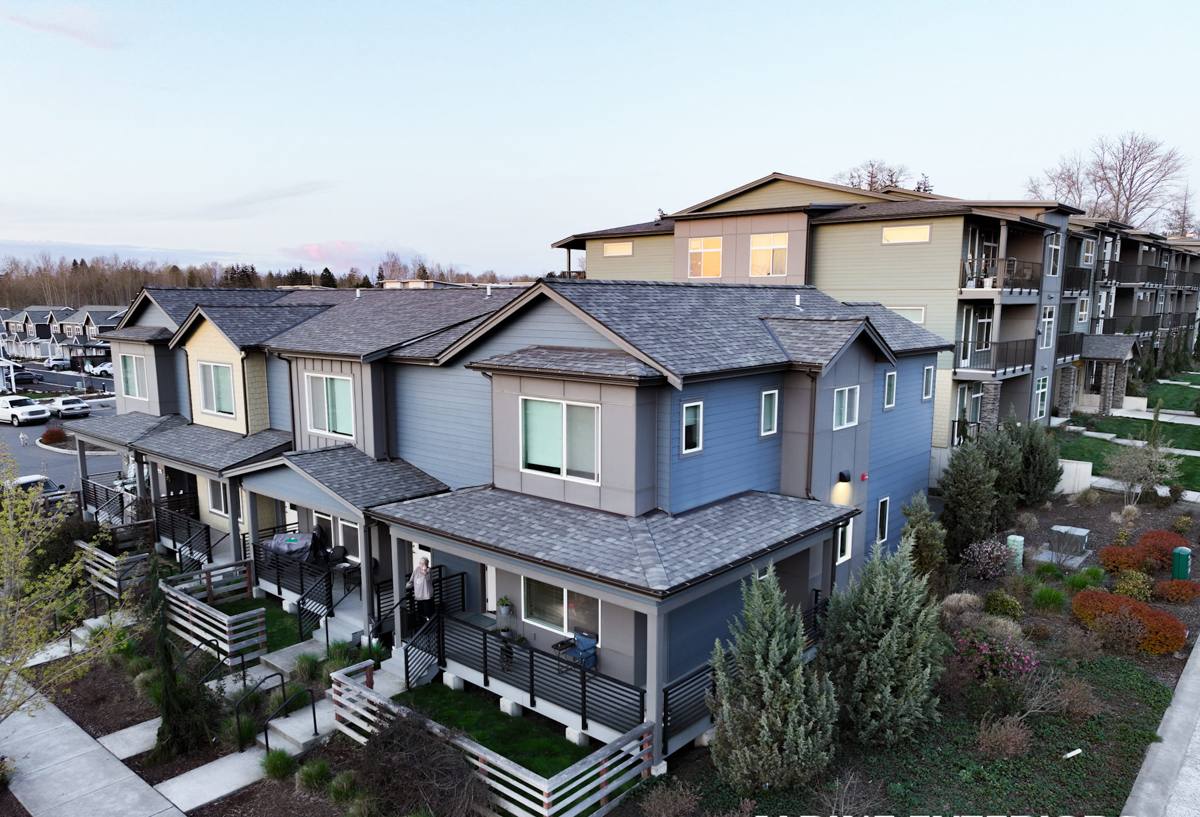
What This Climate Does to Siding Over Time
Salt Air and Fasteners
Airborne salt accelerates corrosion on nail heads, staples, and any exposed metal trim. Once fasteners start rusting, they can streak the siding, work loose, and eventually stop holding the board tight to the wall — which lets water get behind it.
Driving Rain
Storms moving through the Salish Sea often push rain sideways rather than straight down, and that changes where water actually hits a wall. Butt joints, corner boards, and window trim that would stay dry in a calm rain take on water during a wind event, and if the flashing detail underneath isn't right, that water finds its way behind the cladding.
Moss and Shade
Guemes Island's tree cover keeps a lot of siding in shade for large parts of the day, especially on north and east elevations. Shaded, damp siding grows moss and algae faster, and once moss establishes itself it holds moisture against the surface almost permanently — which is hard on any siding material, but especially hard on anything with exposed wood grain or a coating that isn't fully sealed.
Signs Your Siding Needs Repair
Most siding problems out here show up gradually. Catching them early is the difference between a targeted repair and a much larger job. Walk your exterior and look for:
- Soft or spongy spots when you press on a board, especially near the bottom courses or under windows
- Visible cracking, splitting, or buckling, particularly on wind-exposed gable ends
- Moss or dark streaking concentrated on shaded walls or under roof overhangs
- Rust staining below nail heads or metal trim
- Gaps opening up at butt joints, corner boards, or trim where caulking has failed
- Peeling or bubbling paint, which often signals moisture trying to escape from behind the siding
- Any interior signs — stained drywall, musty smell, warped baseboards — on exterior walls
If you're only seeing one or two of these in isolated spots, that's typically a repair. Widespread soft spots, or moisture showing up on the interior, usually means the problem has moved past the siding itself.
What a Correct Repair Actually Involves
A siding repair that's done right isn't just about making the wall look good again. The steps that matter most happen where you can't see them:
1. Find the Real Source
Before anything gets pulled off the wall, we trace where water is actually getting in. Damaged siding is often a symptom — bad flashing above a window, a failed kick-out flashing at a roofline, or a gap at a penetration — and if that source isn't fixed, new siding will fail again in the same spot.
2. Check What's Behind the Cladding
Once siding is removed from the damaged area, we inspect the water-resistive barrier and sheathing underneath. On a driving-rain coastline like this, it's common to find some degree of moisture staining or soft sheathing even when the siding itself looked fine from a distance. Any compromised sheathing or house wrap gets replaced, not just covered over.
3. Correct the Flashing Details
Repairs are a chance to fix the detail that caused the failure in the first place — proper head flashing over windows and doors, correct laps in the weather barrier, and drip edges that actually direct water away from the wall instead of behind it.
4. Match Material and Reattach Correctly
New siding gets fastened per manufacturer spec, with corrosion-resistant fasteners, and joints are sealed with a sealant rated for exterior exposure rather than whatever's on the shelf. Color and profile are matched so the repair blends into the surrounding wall.
Repair or Replace: How We Make the Call
| Factor | Points Toward Repair | Points Toward Replacement |
|---|---|---|
| Extent of damage | Isolated to one or two elevations or a small area | Recurring problems across multiple walls |
| Sheathing condition | Solid, dry sheathing found once siding is opened up | Soft, delaminating, or rotted sheathing found broadly |
| Siding material age | Siding is mid-life and otherwise sound | Siding is at or past its expected service life |
| Root cause | A single, fixable flashing or fastener issue | Systemic moisture issues tied to the original installation |
| Material match | Discontinued product can still be reasonably matched | Original product is no longer available in a matching profile or color |
Most of the time, a well-timed repair on Guemes Island buys years of additional service life for a fraction of a full re-side. But we'll tell you plainly if what we find once the wall is opened up points toward replacement instead — patching over failing sheathing or a chronic moisture problem just delays a bigger repair later.
Why We Repair with James Hardie Fiber Cement
When a repair calls for new siding — whether that's a few boards or a full elevation — we install James Hardie fiber cement, not vinyl, not LP SmartSide, not primed wood. This is a standard we hold across every job, repairs included, and it's worth explaining why in a climate like this one.
Fiber cement is non-combustible and doesn't absorb water the way wood-based products can, which matters directly on shaded, moss-prone walls where moisture sits against the siding for extended periods. Hardie's ColorPlus factory finish is baked on and warranted against fading and peeling, so a repaired section holds its color and finish the same way the rest of the wall does — no repainting cycle to keep it matched. Hardie also engineers specific product lines for different climate conditions, which is relevant on an island where salt exposure and moisture load vary a lot from a waterfront wall to a shaded interior wall.
We won't patch a failing wood or vinyl section back in just because it's what was there originally. If the existing siding is a different material, we'll talk through options honestly — sometimes that means repairing in-kind for a small cosmetic fix, and sometimes it means the repair is a good opportunity to transition that section, or eventually the whole elevation, to a product built to hold up better long-term.
Our Process for Guemes Island Jobs
Working on an island adds a logistics layer that a mainland Anacortes job doesn't have, and we plan for it rather than treating it as a surprise:
- Site visit and diagnosis — we assess the damage, check surrounding areas for related issues, and identify the water source before quoting anything
- Material staging — siding, flashing, fasteners, and sealants are ordered and staged in Anacortes ahead of the ferry crossing so the crew isn't making return trips for parts
- Ferry-aware scheduling — we build the job around ferry schedules and tide-dependent access where relevant, so the crew's time on-site is spent working, not waiting
- Repair execution — removal, sheathing inspection, flashing correction, and reinstallation, in that order, with photos of anything found behind the wall before it's closed back up
- Final walkthrough — we go over what was found, what was fixed, and what to watch for going forward
Cost Factors for Guemes Island Siding Repair
| Factor | Why It Matters Here |
|---|---|
| Ferry and travel logistics | Crew and material transport adds planning time compared to a mainland Anacortes job |
| Extent of hidden damage | Sheathing or framing repair found once siding is opened adds scope |
| Access and elevation | Waterfront and elevated sites can require additional staging or equipment |
| Material matching | Matching an existing profile or color versus a straightforward Hardie install |
| Scope of the repair | A single section versus a full elevation changes both labor and material needs |
We give straightforward, honest estimates after seeing the actual damage in person — not a phone-quote guess, since what's behind the siding often changes the scope more than what's visible from the yard.
Keeping Repaired Siding in Good Shape
Once a repair is done, a little upkeep goes a long way on Guemes Island specifically:
- Keep tree branches and brush trimmed back from siding to cut down on shade and moss growth
- Rinse salt residue off exterior walls periodically, especially on waterfront-facing elevations
- Check caulking at trim and penetrations annually, since UV and salt exposure both break down sealants faster here
- Keep gutters clear so overflow doesn't run down the wall face during heavy rain
- Address moss as soon as it appears rather than letting it establish and hold moisture against the wall
Why Local Experience on Guemes Island Matters
A contractor who hasn't worked on the island before is guessing at ferry timing, tide-dependent access, and how much extra planning a "simple" repair actually needs once you factor in getting a crew and materials on and off the island efficiently. We've done that planning already. We also know what Skagit County's coastal exposure does to different siding materials over time, which shapes how we diagnose damage and what we recommend once we're inside the wall.
If you're seeing cracked, soft, or moss-covered siding on your Guemes Island property, we're happy to take a look and give you a clear, no-pressure read on what's going on and what it would take to fix it right. Reach out using the form below to schedule a free estimate.