 Anacortes Exterior
 Decks on Guemes Island Take a Different Kind of Beating
A deck on Guemes Island lives a harder life than one twenty miles inland. The island sits right in the path of Rosario Strait weather — salt-laden air off the water, driving rain that comes in sideways during winter storms, and long stretches of gray, damp months where surfaces barely get a chance to dry out before the next system rolls through. Add tree cover on many lots and you get moss and algae that hold moisture against wood and composite decking for weeks at a time. None of that is a defect in your deck. It's just what this stretch of Skagit County does to anything built outdoors, and it's why deck repair here needs to be handled differently than a repair job in a drier part of the county.
We work on Guemes Island regularly, and the failures we see are consistent: fasteners corroding faster than expected, ledger connections that trapped moisture against the house band board, decking boards that cupped or split where moss held water against the grain, and railings that loosened as posts absorbed water at the base. A repair that doesn't account for this climate tends to fail again in a season or two. One that does account for it can add years of service life.
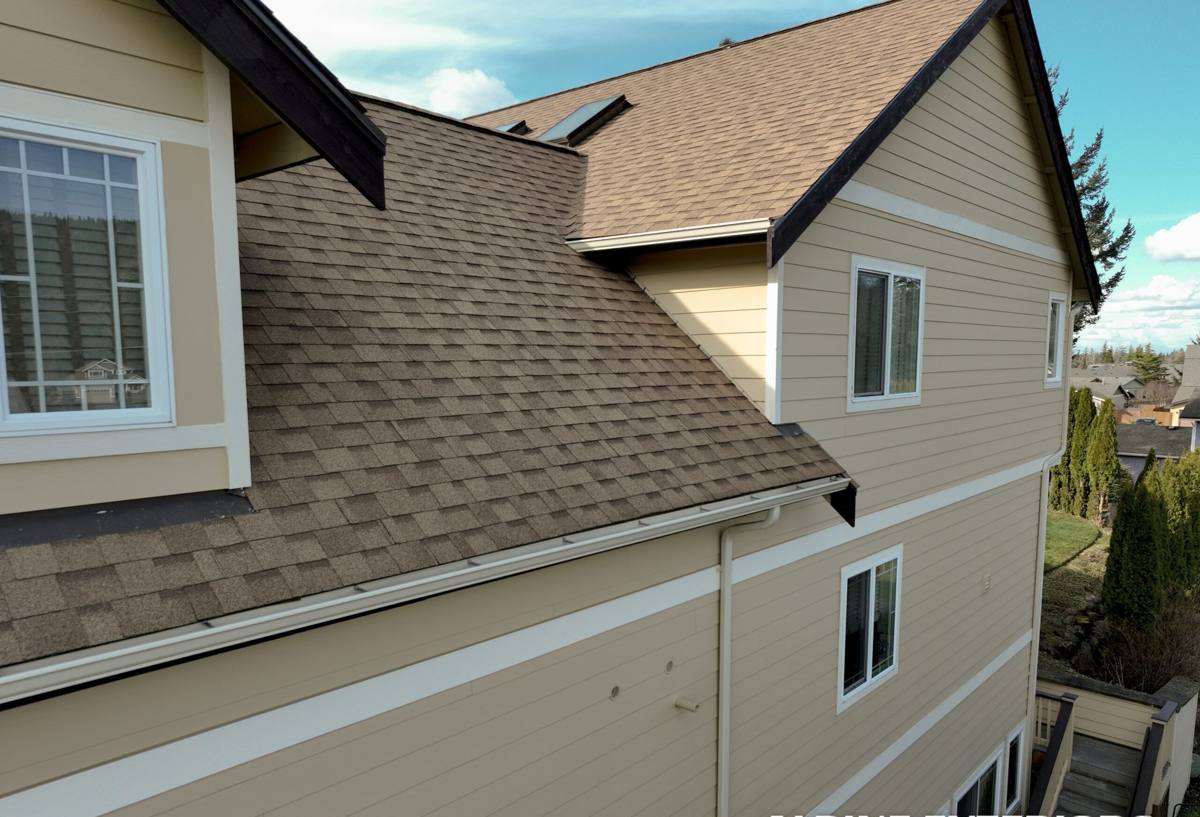
Signs Your Deck Needs Repair — Not Just a Cleaning
Homeowners often call us thinking they need a pressure wash when the deck actually has structural issues underneath the surface grime. A few minutes of checking can tell you which situation you're in.
- Soft, spongy, or springy spots underfoot, especially near the house or stair landings
- Boards that have cupped, crowned, or split along the length
- Rust streaks bleeding out from screws or nails, or fastener heads that have popped up
- Gaps opening between the deck and the house siding, or daylight visible at the ledger board
- Railing posts that wiggle when pushed, or top rails that feel loose
- Green or black staining that doesn't scrub off, particularly on north-facing or shaded boards
- Visible gaps or checking in stair stringers, or stairs that feel uneven
- Musty smell coming from underneath the deck, which usually means trapped moisture below the joists
Any one of these on its own might be minor. Several at once, or anything involving structural framing, means it's worth a proper inspection before someone gets hurt or the damage spreads further than it needs to.
What a Correct Deck Repair Actually Involves
Starting Below the Surface
A repair that only replaces the boards people can see is treating the symptom. We start underneath — checking joists, beams, and the ledger board connection to the house for rot, corrosion, and moisture trapped by inadequate flashing. On an island climate like this, the ledger-to-house connection is one of the most common failure points we find, because it's the joint most exposed to wind-driven rain and the hardest to inspect without pulling boards.
Fasteners Matter More Here Than People Expect
Salt air accelerates corrosion on standard fasteners noticeably faster than it does inland. Screws and structural hardware that would hold up fine in a drier part of Skagit County can start rusting and weakening within a few seasons this close to the water. We use hot-dip galvanized or stainless structural connectors and coated deck screws rated for coastal exposure, and we check existing hardware for corrosion as part of every repair — replacing anything that's compromised even if it wasn't the reason for the original call.
Managing Moisture, Not Just Patching Around It
Moss and standing moisture are the two biggest long-term threats to a Guemes Island deck. A correct repair addresses drainage and airflow underneath the structure — not just the boards on top — so water has somewhere to go instead of sitting against framing. Where moss has been a recurring problem, we'll talk through practical steps to reduce shade and improve air circulation where that's realistic, since no repair holds up long if the same conditions that caused the damage are left unchanged.
Repair or Replace? What Actually Decides It
Not every deck problem calls for a full rebuild, and not every deck is worth patching indefinitely. The honest answer depends on a few factors we walk through with every homeowner before recommending either path.
| Factor | Favors Repair | Favors Replacement |
|---|---|---|
| Framing condition | Joists and beams are sound, damage is isolated | Widespread rot or soft spots in the structural frame |
| Age of deck | Under 15-20 years, built to a reasonable standard | Original construction is old, undersized, or non-compliant with current practice |
| Ledger connection | Solid, properly flashed | Chronic leaking, rot at the house band board |
| Fastener corrosion | Isolated, easily replaced | Widespread rust affecting structural connections |
| Scope of damage | Concentrated in a few boards or one area | Spread across most of the deck surface and substructure |
| Budget goals | Extend usable life at lower cost now | Willing to invest once for a longer-term, lower-maintenance result |
We'll give you a straight answer on which category your deck falls into. If a repair is the honest recommendation, that's what we'll propose — we don't push a rebuild on a deck that has years of life left in it.
Materials We Work With, and Why
Guemes Island's combination of salt exposure, rain, and moss narrows down what actually performs well over time. We'll talk through the trade-offs honestly rather than pushing whatever's easiest to install.
Pressure-Treated Framing
For structural repairs — joists, beams, ledger replacement — properly rated pressure-treated lumber remains the standard, paired with corrosion-resistant hardware sized for the treatment chemicals used today, since older-style fasteners corrode fast in contact with modern treated wood.
Wood Decking
Cedar and other wood decking boards look great and are common on the island, but they demand real maintenance in this climate — regular cleaning to keep moss from establishing, and refinishing on a schedule to keep water from penetrating the grain. We're upfront that this is a maintenance commitment, not a one-time install.
Composite Decking
Composite boards handle moisture and moss resistance better with far less upkeep, which is a real advantage in a climate this wet. The trade-off is a higher upfront material cost and the need for correct installation — proper spacing, ventilation underneath, and manufacturer-specified fastening — since composite that's installed without attention to expansion and drainage can develop its own problems. We install it carefully specifically because those installation details matter more here than in a dry climate.
Our Deck Repair Process
- On-site inspection — we check the surface, framing, ledger connection, fasteners, and drainage, not just the boards that prompted the call
- Honest assessment — a clear explanation of what's actually wrong, what's causing it, and whether repair or replacement makes sense
- Written scope and estimate — specific about what's being replaced, what hardware and materials we're using, and why
- Repair work — structural fixes first, then decking, railings, and stairs, using coastal-rated fasteners and materials throughout
- Final walkthrough — we check the repair together and go over any maintenance steps that will extend its life in this climate
Working on an Island: Access and Scheduling
Guemes Island is served by a vehicle and passenger ferry, and any contractor working here needs to plan around that reality — materials, crew, and equipment all move on the ferry's schedule, not a truck's. We build that into how we plan and schedule island jobs so a repair isn't delayed by logistics nobody accounted for upfront. It also means we try to batch trips efficiently, both for our own scheduling and to keep costs reasonable for island homeowners rather than passing along inefficient back-and-forth trips.
Why Hire a Crew That Already Works Guemes Island
A contractor who mostly works mainland jobs in Anacortes and the rest of Skagit County can still do decent work here, but they're often seeing island-specific conditions — the corrosion rate, the moss regrowth pattern, the ferry logistics — for the first time on your project. We've done repair work on the island enough to know which fasteners actually hold up, which ledger details tend to fail first, and how to schedule a job so a delayed ferry sailing doesn't turn into a delayed project. That familiarity shows up in fewer surprises and a repair that's built for the conditions it actually has to survive.
Keeping a Repaired Deck Healthy Afterward
A good repair buys you years, but a little seasonal attention buys you more. A few habits make a real difference in this climate:
- Sweep debris and fallen needles off the deck regularly, especially in fall — trapped organic matter feeds moss
- Rinse or lightly scrub moss and algae off the surface before it gets established, rather than after
- Check underneath periodically for standing water or blocked drainage paths
- Reseal or refinish wood decking on the schedule the finish product actually calls for, not just when it looks faded
- Look at fastener heads once a year for early rust staining, which is easier to catch early than after it's spread
None of this requires a contractor visit — it's just the kind of upkeep that keeps a repaired deck from needing the same repair again in three years.
If you're dealing with a soft spot, a loose railing, moss that won't quit, or you just want an honest read on what shape your Guemes Island deck is really in, we're glad to come take a look. The estimate is free, there's no pressure attached to it, and you'll get a straight answer either way.