 Anacortes Exterior
 Why Guemes Island Is a Different Kind of Window Job
Guemes Island sits just across the water from Anacortes, reachable only by a short ferry ride, and that separation shapes almost everything about how exterior work gets done there. Homes on the island run the full range — waterfront cottages exposed to open water on one side, older farmhouses tucked into the trees, newer builds designed around the view. What they share is direct exposure to Skagit County's marine climate with none of the buffering that mainland neighborhoods sometimes get from surrounding development. Salt air moves freely off the water, driving rain comes in sideways during winter storms, and the shaded, damp pockets around tree-lined lots grow moss on anything that holds still long enough. Windows take the brunt of it, and a window job done without that context in mind tends to fail early.
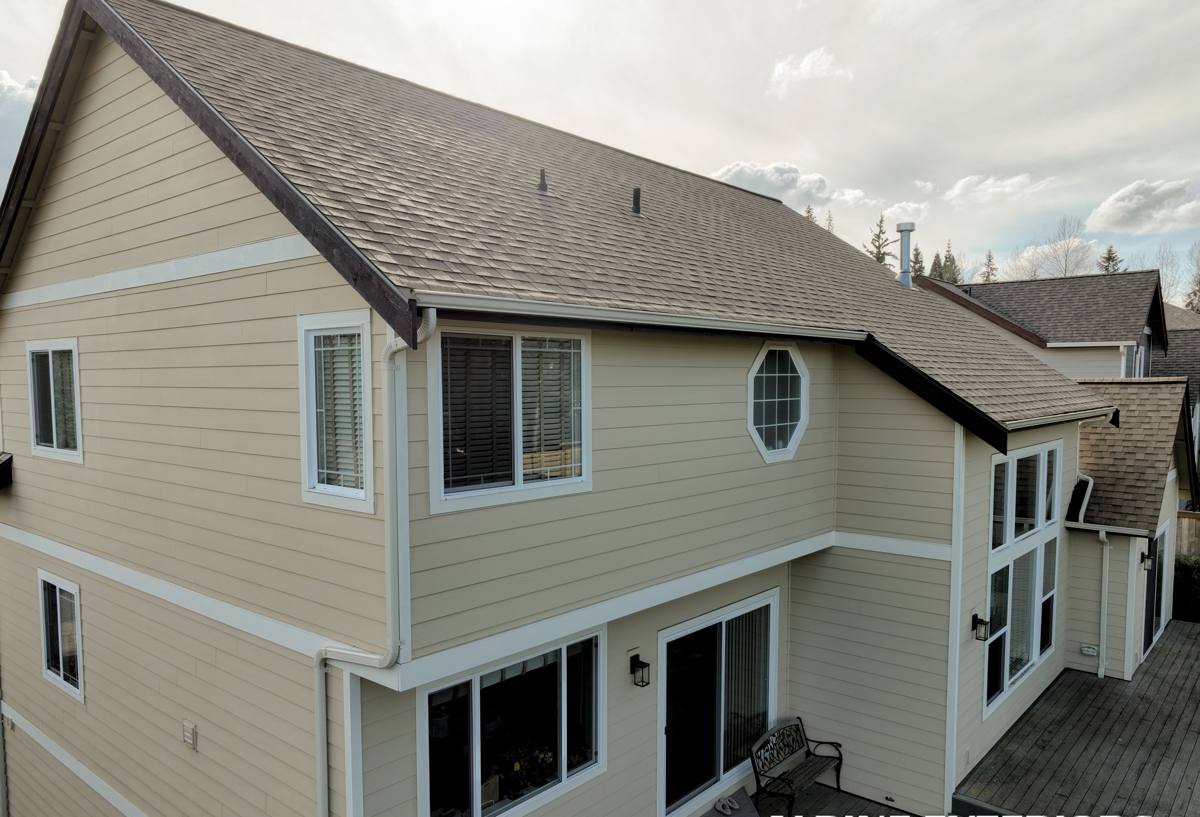
What Salt Air, Driving Rain, and Moss Actually Do to a Window
Salt Air and Metal Components
Salt in the air isn't just a coastal cliché — it's a slow chemical process. It settles on hardware, screens, and metal cladding, and over years it accelerates corrosion on anything that isn't rated for a marine environment. Cheap fasteners, low-grade weep hole covers, and unprotected aluminum trim are usually the first things to show pitting or white corrosion on an island property. It's not dramatic, but it adds up.
Driving Rain and Wind-Driven Water
Water that falls straight down is easy to shed. Water that's being pushed sideways by wind off open water is a different problem — it finds its way behind poorly flashed trim, under improperly lapped house wrap, and into any gap where a window unit wasn't sealed to the rough opening correctly. On an exposed island lot, wind-driven rain during a winter storm can test a window's water resistance far harder than the same window would ever face a few miles inland.
Moss, Shade, and Trapped Moisture
Moss doesn't damage glass, but it damages what's around it. On shaded or north-facing walls, moss and algae hold moisture against wood trim, sills, and siding long after a storm has passed. That constant dampness is what actually rots wood window components and breaks down caulk and sealant faster than manufacturers plan for.
Signs Your Guemes Island Home's Windows Are Losing the Battle
Most window failure on the island is gradual, and homeowners often don't notice until a problem has been building for a season or two. Watch for:
- Fogging or a hazy film between panes of double-glazed glass — a sign the seal has failed and the insulating gas has leaked out
- Soft or spongy wood at the sill or bottom corners of the frame, especially on shaded elevations
- Visible moss or dark green-black staining creeping up from the sill or along the bottom of the trim
- Drafts or a noticeable temperature difference near the window on windy days
- Difficulty opening, closing, or locking a window that used to operate smoothly
- Peeling or bubbling paint on wood trim, which usually points to moisture trapped underneath
- Corrosion or a chalky white residue on hardware, hinges, or metal cladding
Any one of these on its own might just need attention. Several together, especially on the same wall, usually means the window and its surrounding flashing need a real look, not a caulk-gun patch.
What "Custom" Actually Means for This Job
Replacement (Pocket) vs. New Construction Framing
"Custom" doesn't mean expensive or unusual — it means the window is sized and installed to fit the actual opening in your house, not a generic stock size. On older Guemes Island homes, that matters a lot. Rough openings shift over decades as a structure settles, and pre-1980s construction often used dimensions that don't match anything sold off the shelf today. A pocket replacement reuses the existing frame when it's still structurally sound, which is faster and less invasive. A full-frame, new-construction-style install removes everything down to the rough opening, which costs more and takes longer but is the right call when the old frame, sill, or surrounding sheathing has water damage — which we see more often on island properties than on more sheltered mainland sites.
Non-Standard Openings in Older Homes
Bay windows, oddly proportioned openings from additions built over the years, and hand-framed original construction all show up regularly on the island. Custom work means measuring each opening individually and ordering to that measurement, rather than forcing a stock size to fit and papering over the gaps.
Frame and Glass Choices That Hold Up Near Salt Water
There's no single "best" frame material for every home — it depends on exposure, budget, and how much upkeep you want to take on. Here's how the common options actually compare in a salt-air, high-moisture climate like Guemes Island's:
| Frame Material | Salt-Air Durability | Maintenance | Typical Lifespan |
|---|---|---|---|
| Vinyl | Good — won't corrode or rot, holds up well in most exposures | Low — occasional cleaning, no painting | 20-30 years |
| Fiberglass | Very good — dimensionally stable, resists warping in temperature swings | Low — durable finish, minimal upkeep | 30-40+ years |
| Wood-clad | Fair — the cladding protects the exterior, but any breach exposes wood to rot | Higher — interior wood may need periodic finishing; cladding seams need inspection | 20-30 years with upkeep |
| Bare wood | Poor to fair in direct salt exposure without diligent upkeep | High — regular painting/sealing, most vulnerable to the moss-and-moisture cycle | Varies widely with maintenance |
For glass, the bigger factor on the island is usually orientation and exposure rather than brand. West- and southwest-facing units that catch storm winds off the water benefit from a dual-pane, low-E package with a well-sealed spacer system, since spacer failure is exactly what causes the fogging problem described above. We size and spec glass to each elevation's actual exposure rather than using one package for the whole house.
Working on an Island: How Ferry Logistics Shape the Job
Anyone who's worked on Guemes Island for a while learns to plan differently than for a mainland job. Materials, crew, and equipment all move by ferry on a schedule, which means the trip has to be planned around sailing times rather than just "whenever." A few things that change in practice:
- Custom windows are ordered and confirmed on-site with exact measurements before the manufacturing lead time starts, so there's no need for a second trip to re-measure
- Materials — units, flashing tape, trim stock, fasteners rated for marine exposure — are staged and loaded as a single trip whenever possible, since running back for a forgotten item costs real time on an island job
- Install day is scheduled around tide and weather windows when the job involves removing a wall's weather barrier, so an opening isn't left exposed if a storm rolls in
- Crews plan for full work days on-island rather than partial days, since travel time eats into a short visit
None of this changes the quality of the work, but it does change how the job is scheduled and quoted, and it's a big part of why a crew unfamiliar with island logistics can end up taking longer or costing more than expected.
Our Process From Estimate to Final Walkthrough
- On-site assessment. We walk the exterior, check existing frames and trim for water damage or rot, and measure every opening individually rather than assuming stock sizes.
- Recommendation and quote. Based on exposure — which wall faces open water, which gets shade and moss buildup — we recommend frame material, glass package, and install method (pocket vs. full-frame) for each window, not a blanket spec for the whole house.
- Ordering and lead time. Custom units are manufactured to the confirmed measurements. We build the ferry schedule into the project timeline up front so there are no surprises.
- Removal and inspection. Once the old window comes out, we inspect the rough opening, sill, and sheathing for hidden water damage before anything new goes in — this is often where real problems get caught early.
- Flashing and sealing. Proper flashing tape, sill pans, and sealant sequencing are what actually keep wind-driven rain out over the long run — this step matters more than the window unit itself.
- Installation and adjustment. The new unit is set, shimmed, and adjusted so it operates smoothly and seals tightly, then trimmed to match the house.
- Final walkthrough. We test operation, check seals, and walk the job with the homeowner before we call it done.
Cost Factors for Custom Window Projects on Guemes Island
Every project is different, but the main variables that move the price on an island job are consistent. Broad ranges below are for context, not a quote — your actual number depends on the specifics of your home.
| Factor | Why It Matters |
|---|---|
| Frame material | Vinyl is generally the most budget-friendly; fiberglass and wood-clad cost more upfront but shift the maintenance and lifespan equation |
| Pocket vs. full-frame install | Full-frame replacement costs more and takes longer, but is necessary when the existing frame or sheathing has water damage |
| Number and size of openings | Larger units and multi-window projects have more material and labor per job, though per-unit costs typically improve with volume |
| Existing damage found on removal | Rot in the sill, framing, or sheathing discovered once the old window is out adds repair scope that can't always be quoted in advance |
| Access and site logistics | Ferry scheduling, staging, and site access on an island project factor into labor time compared to a mainland job |
| Trim and finish work | Matching existing trim profiles or upgrading exterior trim material adds to the scope beyond the window unit itself |
Maintaining Your Investment in a Salt-Air Climate
A well-installed custom window on Guemes Island can last decades, but it still needs some seasonal attention given what the climate throws at it. A short annual routine goes a long way:
- Rinse salt residue off frames and hardware a few times a year, especially on water-facing walls
- Clear moss and organic debris from sills, tracks, and weep holes before it holds moisture against the frame
- Check caulk and sealant lines around the trim each fall before the wet season sets in, and re-seal any cracked or gapped areas
- Test that weep holes are clear and draining, not blocked by debris or paint
- Look for early soft spots in wood trim or sills and address them before they spread
- Lubricate hardware and tracks annually to keep operation smooth despite salt exposure
Why Hire a Crew That Already Works Guemes Island
None of this is complicated in isolation — it's the combination of marine-climate know-how and island work logistics that trips up crews who mostly work sheltered mainland neighborhoods. A contractor who already understands how salt air, driving rain, and moss behave on this specific stretch of Skagit County, and who has the ferry logistics figured out, tends to plan tighter timelines, catch hidden damage earlier, and spec materials that are actually right for the exposure instead of a generic recommendation. That local familiarity is worth asking about directly when you're comparing bids.
If you're weighing whether your windows need attention or you're ready to plan a project, we're happy to take a look and walk you through what we're seeing — no pressure, no obligation. Use the form below to request a free estimate.