 Anacortes Exterior
 Why Flounder Bay Roofs Wear Differently
Flounder Bay sits close enough to the water that the air itself works against a roof every single day. Homes here don't fail the same way a roof does twenty minutes inland in Mount Vernon or Burlington. The combination of salt-laden marine air, wind-driven rain coming off the bay, and a moss season that can run eight or nine months of the year means roofs take on damage from several directions at once. A repair that only addresses the obvious leak and ignores the conditions that caused it tends to fail again within a season or two.
We work on roofs throughout Anacortes and Skagit County, and the properties closest to the water — Flounder Bay included — consistently need a different level of attention to flashing, fastener choice, and ventilation than homes further from the shoreline. This page focuses specifically on repair work for that kind of exposure, not a general rundown of roofing services.
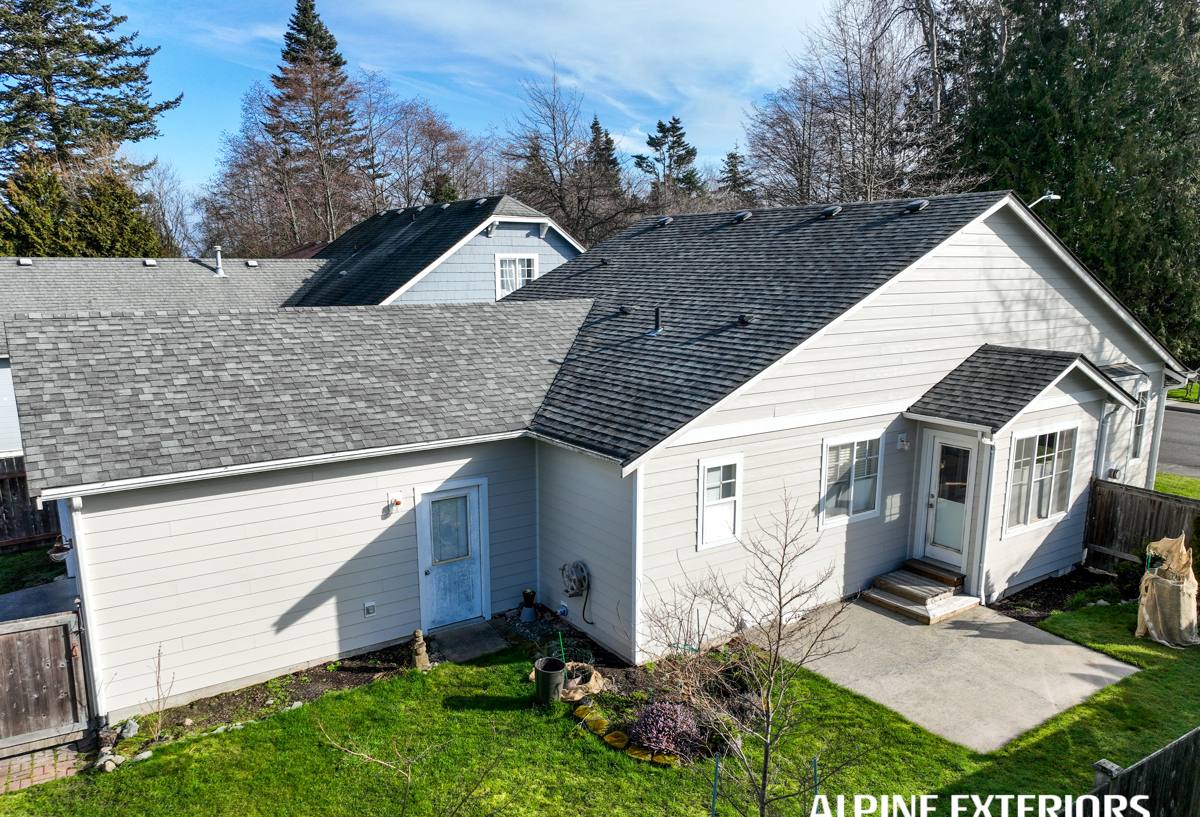
The Three Things Working Against Your Roof
Salt Air and Corrosion
Airborne salt doesn't just affect boats and rails. It settles on metal flashing, exposed fasteners, gutters, and vent caps, and over years it accelerates corrosion in anything that isn't rated for coastal exposure. A nail or flashing piece that would last decades inland can start showing rust streaks and pinholes much sooner this close to the bay. Once flashing corrodes, water finds a path underneath it, and that's where most "mystery" leaks in this neighborhood actually start.
Driving Rain and Wind Exposure
Flounder Bay catches wind off the water that pushes rain sideways into roof edges, valleys, and anywhere shingles or panels overlap. Standard installation is built around water running downhill — driving rain forces it sideways and sometimes upward under the shingle tab. Roofs here need extra attention at eaves, rakes, and any transition point where wind-driven water can work its way past the surface layer.
Moss and Constant Moisture
Western Washington's damp climate already favors moss, and the shaded, moisture-holding conditions common on bay-facing lots make it worse. Moss isn't just cosmetic. It holds water against the roofing material, lifts shingle edges as it grows, and its root structure works into granules and seams over time. A roof that looks intact from the ground can have moss quietly compromising the surface underneath.
What a Correct Repair Actually Involves
A proper roof repair isn't just sealing the spot where water is showing up inside the house. Water often travels along the underlayment or decking before it drips through the ceiling, so the visible leak and the actual entry point can be several feet apart. Doing this right means finding the real source, not just the symptom.
- Locating the actual point of water entry, which may be upslope from where the leak shows indoors
- Checking flashing at every penetration — chimneys, vents, skylights — for corrosion or gaps
- Inspecting the underlayment condition around the damaged area, not just the surface shingles
- Confirming attic and roof ventilation is working, since trapped moisture accelerates every other problem
- Matching replacement materials so the repair doesn't stand out or create a new weak seam
- Clearing moss and debris from the surrounding area so it doesn't undermine the fresh work
Skipping any of these steps is how a "fixed" roof leaks again in the next storm. It's also how a $400 patch turns into a $4,000 decking replacement a year later, because moisture kept working underneath the surface the whole time.
Diagnosis Before Materials
We start every repair call with a full assessment, not a quote based on a phone description. Two roofs with the same visible symptom — a stain on the ceiling — can have completely different causes, and the fix has to match the actual problem, not the most common one.
Common Problems We See on Flounder Bay Roofs
| Symptom | Likely Cause | What the Repair Involves |
|---|---|---|
| Ceiling stain near an exterior wall | Corroded step or wall flashing | Remove and replace flashing, check adjacent decking for softness |
| Granules collecting in gutters | Wind and moss wear on shingle surface | Section repair or shingle replacement, moss treatment |
| Dark streaks or green patches on the roof | Moss and algae holding moisture | Gentle removal, zinc or copper control strips, ventilation check |
| Leak only during wind-driven storms | Wind uplift at eaves or rake edges | Re-secure or replace edge fastening, upgrade sealant at transitions |
| Rust-colored streaks below vents or flashing | Corroding metal from salt air exposure | Replace with coastal-rated metal, reseal penetration |
Repair or Replace? What Actually Drives That Decision
Not every roof problem near the water means a full replacement, and not every leak is a simple patch. The honest answer depends on a few specific factors, and we'll walk through them plainly rather than defaulting to the bigger job.
| Factor | Leans Toward Repair | Leans Toward Replacement |
|---|---|---|
| Age of roofing material | Under 15 years, isolated issue | Nearing or past expected lifespan |
| Extent of damage | Localized to one section or penetration | Multiple areas or widespread granule loss |
| Decking condition underneath | Solid, dry decking | Soft spots or rot from long-term moisture |
| History of past leaks | First occurrence, clear single cause | Recurring leaks in different spots |
| Salt air corrosion on metal components | Isolated flashing pieces | Widespread corrosion across vents, gutters, flashing |
We'll tell you honestly which category your roof falls into. If a repair will genuinely hold up given the exposure Flounder Bay gets, that's what we'll recommend — there's no benefit to either of us in replacing a roof that doesn't need it.
How Our Repair Process Works
- Inspection. We walk the roof, check the attic where accessible, and trace the water path rather than assuming it matches the interior stain.
- Written explanation. You get a plain description of what's actually wrong, not just a price. If there's a repair option and a replacement option, we explain both honestly.
- Material selection. We choose fasteners, flashing, and sealants suited to marine air exposure, not generic inland-grade components.
- The repair itself. We address the root cause first — flashing, ventilation, decking — then restore the surface so it matches and performs like the surrounding roof.
- Cleanup and moss treatment. If moss contributed to the problem, we address it as part of the job so the repair isn't undermined again within a year.
- Follow-up. We tell you what to watch for and when it's worth a follow-up look, especially after the first heavy wind-driven rain event of the season.
Materials That Actually Hold Up This Close to the Water
Our standard for bay-adjacent repairs is to use flashing and fasteners rated for coastal or marine exposure rather than standard-grade hardware, even though it costs more upfront. The reasoning is simple: standard galvanized fasteners and lightweight aluminum flashing corrode faster in salt air, and a repair built with the wrong-grade materials often needs redoing within a few years. Stainless steel or heavy-gauge, coated fasteners and properly rated flashing metal cost more per piece, but the labor to install them is the same — so the long-term value strongly favors doing it right the first time. We'll always explain the material choice and the trade-off, rather than just defaulting to whatever is cheapest.
Moss and Debris: A Maintenance Checklist
Between repairs, a few habits make a real difference in how long a Flounder Bay roof holds up. None of this requires climbing on the roof yourself — most of it is about knowing what to watch for and when to call.
- Look for dark green or black patches after the wet months — early moss is easier and cheaper to address than established growth
- Keep gutters clear so water isn't sitting against the lower edge of the roofline
- Watch for granules building up in gutters or at downspout outlets, a sign of surface wear
- Trim back overhanging branches that keep sections of roof shaded and slow to dry
- After a strong windstorm off the bay, do a visual check from the ground for lifted or missing shingles
- Have flashing and penetrations checked every couple of years, since corrosion here often starts before it's visible from below
Why Local Experience in Flounder Bay Matters
A roofer who mostly works inland can misdiagnose bay-exposure problems — treating salt corrosion like ordinary wear, or missing how much wind-driven rain changes where water actually enters. Crews who regularly work Flounder Bay and the rest of Anacortes' waterfront know which flashing details fail first here, which materials are worth the upgrade, and how aggressive the moss season really gets on shaded, water-facing roof slopes. That familiarity shows up in fewer callbacks and repairs that actually last through the next wet season, not just until the weather turns again.
Skagit County's coastal exposure is a known quantity to a crew that works it regularly. We're not learning your neighborhood's specific challenges on your roof — we already know what to look for before we climb the ladder.
If you're dealing with a leak, moss buildup, or damaged flashing on a Flounder Bay home, we're happy to take a look and give you a straight answer about what it actually needs. Use the form below to request a free, no-pressure estimate.