 Anacortes Exterior
 Flounder Bay's Marine Climate Is Hard on a Deck
Flounder Bay sits close enough to the water that homes here deal with a different set of conditions than decks built a few miles inland. Salt-laden air moves through the neighborhood off the water, driving rain comes in sideways during winter storms, and the tree cover and shoreline humidity around Anacortes keep everything damp for long stretches of the year. Add in a moss season that can run from fall through spring in Skagit County, and you've got a deck environment that punishes anything with weak spots — soft wood, unsealed fasteners, or a substructure that doesn't drain.
None of this means a deck in Flounder Bay is doomed to rot or fail early. It means the details matter more here than they would in a drier, more sheltered location. The right material, installed the right way, holds up. The wrong choices — or the right material installed carelessly — show problems within a couple of seasons.
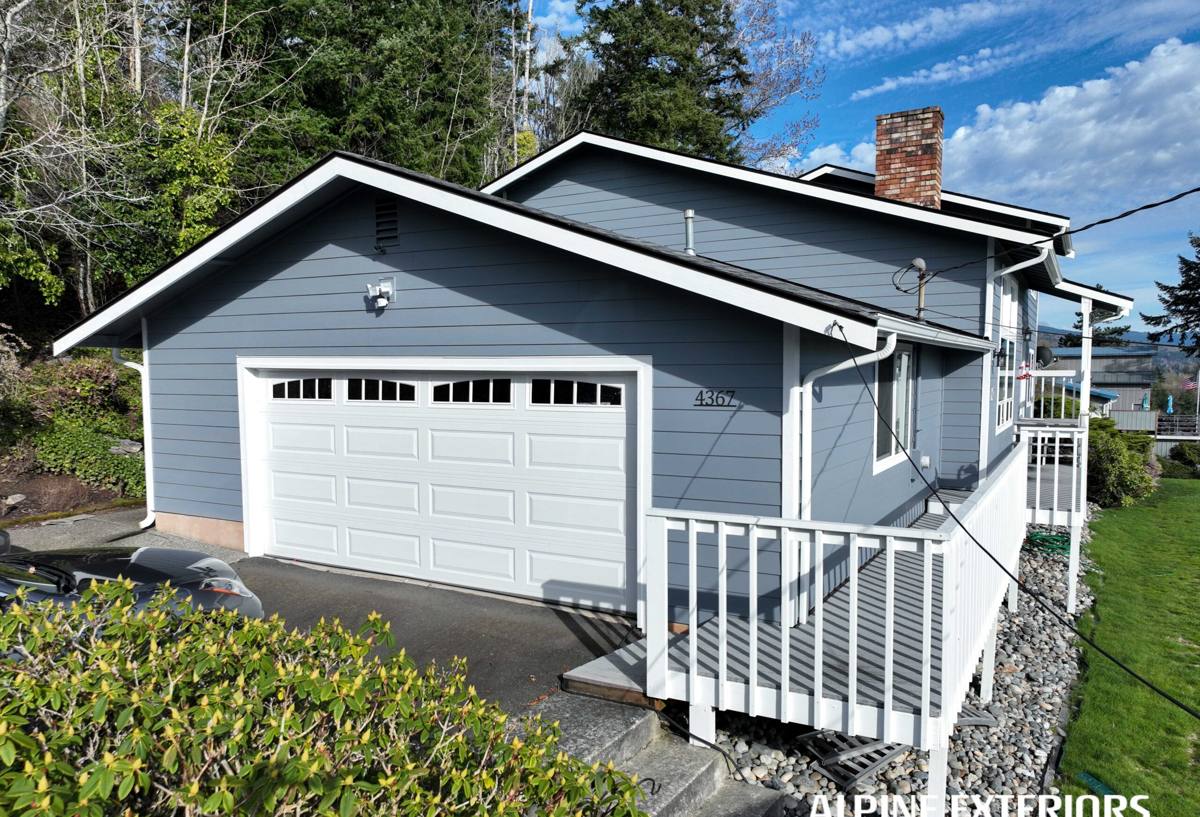
Why Composite Decking Makes Sense for This Neighborhood
Composite decking is a blend of wood fiber and plastic, engineered specifically to resist the things that wear out a deck near the water: moisture absorption, splintering, and rot. For Flounder Bay homes, that translates into a few practical advantages over solid wood:
- It doesn't soak up water the way cedar or pressure-treated lumber does, so it isn't constantly swelling and drying out as rain moves through
- It won't rot, split, or host insects the way untreated or under-maintained wood eventually will in a damp coastal setting
- It doesn't need annual staining or sealing to keep salt air and moisture from working into the surface
- Color and texture stay consistent over time instead of graying and roughening the way wood does
Composite isn't maintenance-free, and we won't tell a homeowner it is — more on that below. But compared to wood in this specific climate, it removes a lot of the recurring upkeep that Flounder Bay homeowners get tired of by year three or four.
What a Correct Composite Deck Installation Actually Involves
Composite boards are only as good as what's underneath them. Most of the composite deck problems we get called out to look at aren't a material failure — they're a framing, fastening, or drainage mistake made during installation. Here's what we pay attention to on every job.
Framing and Substructure
The joists and beams under a composite deck need to be sized and spaced for the specific board product going on top — composite has different span ratings than dimensional lumber, and using standard wood-deck joist spacing under composite boards can lead to noticeable bounce or premature sagging. In a wet climate like ours, we also make sure the substructure has a way to shed water instead of trapping it against the framing, since trapped moisture is what eventually rots joists even when the decking above them is doing its job.
Fasteners and Hardware
Salt air corrodes standard fasteners faster than most homeowners expect, especially on decks with any water exposure or coastal wind. We use stainless steel or coated fasteners rated for corrosion resistance, and we're careful about mixing metals — dissimilar metals in contact with each other near salt air can accelerate corrosion on both. Hidden fastener systems, when compatible with the board profile, also reduce the number of surface penetrations where water and salt residue can work into a board over time.
Board Layout, Spacing, and Ventilation
Composite boards need consistent gapping for drainage and for seasonal expansion and contraction, which is more pronounced in composite than in wood. Too tight, and boards can buckle or trap debris that holds moisture against the surface. Too loose, and the deck looks unfinished and sheds more debris underneath. We also make sure there's enough airflow beneath the deck structure itself — a low-clearance deck with poor ventilation stays damp longer after every rain, which feeds the moss and algae growth this area is prone to.
Composite Still Needs Some Care: Moss, Algae, and Salt Residue
We're upfront with every homeowner about this: composite decking resists rot, but it doesn't resist surface growth. In a shaded, damp spot near the water, moss and algae can still take hold on a composite surface, especially on boards with a heavily textured finish that holds moisture. It's a surface issue, not a structural one, and it comes off with routine cleaning rather than sanding, sealing, or replacement.
Salt air also leaves a fine residue on any exterior surface near the water, composite included. It doesn't damage the board, but it can dull the finish and give algae something to cling to if it's never rinsed off. A simple seasonal rinse — plain water, occasionally with a mild deck cleaner — keeps a composite deck in Flounder Bay looking like it did on installation day. We walk every customer through a realistic care routine at handoff so there are no surprises the first winter.
Composite vs. Other Decking Materials: What It Costs Over Time
Homeowners in Flounder Bay usually ask us to weigh composite against pressure-treated wood and against higher-end PVC or capstock boards. There isn't a single right answer for every project — budget, how the deck will be used, and how much upkeep a homeowner wants to take on all factor in. Here's how the three compare on the things that matter most in this climate.
| Factor | Pressure-Treated Wood | Composite | PVC / Capstock |
|---|---|---|---|
| Upfront cost | Lowest | Mid-range | Highest |
| Moisture resistance | Requires regular sealing to hold up | Strong — won't absorb and swell | Excellent — fully synthetic |
| Maintenance | Annual staining/sealing recommended | Occasional cleaning only | Occasional cleaning only |
| Moss/algae resistance | Prone to growth if not sealed | Can grow on surface, cleans off easily | Least prone, very smooth surface |
| Fastener sensitivity | Standard fasteners usually fine | Needs corrosion-resistant, board-rated fasteners | Needs corrosion-resistant, board-rated fasteners |
| Typical lifespan (installed correctly) | 15–20 years with upkeep | 25–30+ years | 25–30+ years |
For most Flounder Bay homeowners, composite lands in a sweet spot: a meaningfully longer, lower-maintenance lifespan than wood, at a lower upfront cost than full PVC. We'll walk through the honest trade-offs for your specific deck rather than push one product across the board.
Our Process for a Flounder Bay Composite Deck Project
Every deck we build or replace in this neighborhood follows the same sequence, adjusted for the specific site:
- Site visit and assessment — we look at exposure to wind and water, existing drainage, shade patterns, and the condition of any existing structure being replaced
- Framing plan — joist spacing and beam sizing matched to the composite product selected, not generic wood-deck spacing
- Drainage and ventilation check — grading beneath the deck and airflow underneath are addressed before a single board goes down
- Installation — corrosion-resistant fasteners, proper board gapping, and manufacturer-specified expansion clearances at every edge and transition
- Final walkthrough — we cover the care routine that actually matters in this climate, so you know what to expect from the deck through your first wet season
Why Hiring a Crew That Already Works This Area Matters
A lot of composite deck problems we get asked to fix started with a crew that installed the boards correctly but didn't account for the site — wrong joist spacing for the span, standard fasteners that started corroding within a year, or a substructure with nowhere for water to go. That's the kind of mistake that's easy to make if you're not used to building decks that face driving rain and salt air on a regular basis.
Working in and around Anacortes and Skagit County means we're already accounting for wind exposure off the water, the moss season that follows every wet stretch, and the drainage challenges that come with a shoreline-adjacent lot. It's not a different skill set than decking anywhere else — it's the same skill set applied with the right defaults for this specific environment.
What to Ask Before You Hire Anyone for a Composite Deck
Whether you go with us or another contractor, these are worth confirming before work starts:
- Is the framing plan matched to the specific composite product's span rating, or is it just standard wood-deck spacing?
- What fastener type is being used, and is it rated for corrosion resistance near salt air?
- How is drainage handled underneath the deck, and is there enough clearance for airflow?
- What expansion gap does the manufacturer require at butt joints and against the house, and will the crew follow it?
- What does the manufacturer's warranty actually cover, and does it require a specific fastening method to stay valid?
- Is the contractor licensed and insured to work in Washington, and can they show it?
If a contractor can't answer these clearly, that's worth noticing before boards go on the ground.
If you're weighing composite decking for a home in Flounder Bay, we're happy to take a look and talk through what makes sense for your site — no pressure, no pushy sales pitch. Use the form below to request a free estimate.