 Anacortes Exterior
 Fidalgo Island Roofs Take a Different Kind of Beating
Fidalgo Island sits right where the Salish Sea meets Skagit County's rain patterns, and that combination is hard on a roof. Homes here deal with a mix most inland Washington properties never see: salt-laden air off the water, wind-driven rain that gets pushed sideways under poorly flashed edges, and long stretches of shade and dampness that turn into a moss problem almost every fall through spring. A roof replacement done right on this island isn't the same job as one done fifty miles inland, and the materials, ventilation, and detailing all need to reflect that.
We replace roofs across Anacortes and the surrounding Fidalgo Island area, and the patterns repeat house after house — moss buildup on the north-facing slopes, corrosion on exposed metal fasteners and flashing near the water, and underlayment that failed years before the shingles on top of it did. This page walks through what actually matters for a roof replacement out here, so you know what to look for whether you hire us or someone else.
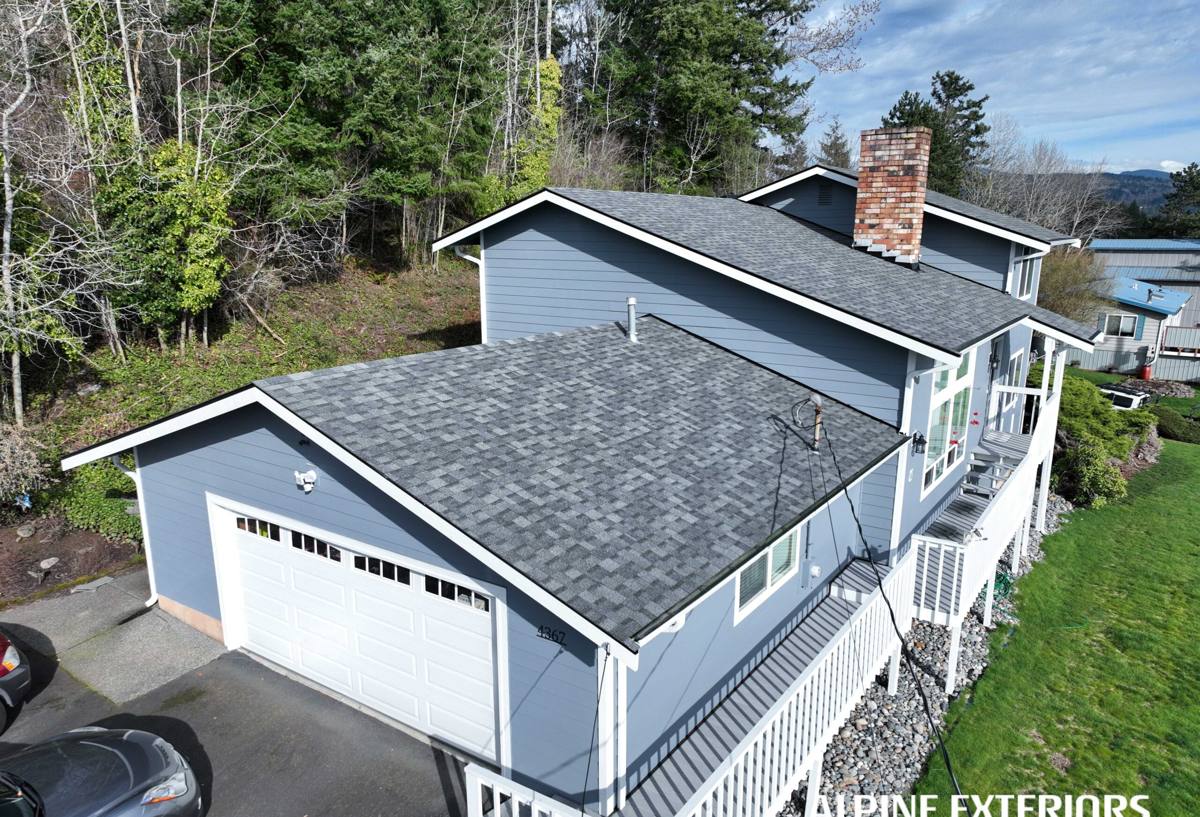
The Climate Factors That Actually Drive Roof Failure Here
Salt Air and Corrosion
Properties closer to the water take on airborne salt that accelerates corrosion of exposed metal — nails, flashing, vent stacks, and gutter hardware. Standard electro-galvanized fasteners can start rusting years before the roofing material itself is due for replacement, and once fasteners weaken, shingles or panels start lifting in wind. On the island, we treat corrosion-resistant fastener and flashing choices as standard practice, not an upgrade.
Driving Rain
Storms off the Salish Sea tend to arrive with wind behind them, which pushes rain sideways into laps, valleys, and wall-to-roof transitions that would stay dry in a calm, straight-down rain. This is why flashing detail and underlayment coverage at valleys, chimneys, skylights, and roof-to-wall intersections matter more here than the shingle brand on the field of the roof. A roof can have a great shingle warranty and still leak if the driving-rain details were rushed.
Moss and Shade
Fidalgo Island has plenty of tree cover and a long damp season, and moss doesn't just sit on the surface — its root structure lifts shingle edges and holds moisture against the roof deck. Left unaddressed, that moisture leads to soft decking and premature rot underneath perfectly good-looking shingles. Moss resistance is a real, practical consideration in material selection here, not a nice-to-have.
What a Correct Roof Replacement Actually Involves
A roof replacement is more than swapping old shingles for new ones. Done properly, it includes a full evaluation of everything underneath the surface layer:
- Complete tear-off to bare decking — never a layover on top of old, moisture-compromised roofing
- Deck inspection for soft spots, rot, or delamination, with damaged sheathing replaced before anything new goes down
- Ice-and-water shield or high-quality synthetic underlayment at valleys, eaves, and penetrations
- Corrosion-resistant flashing at all roof-to-wall, chimney, and skylight transitions
- Balanced intake and exhaust ventilation so the attic can actually dry out between wet stretches
- Proper nailing pattern and fastener spacing rated for the wind exposure of the specific site
- Gutter and drip-edge integration so water is directed off the roof, not behind the fascia
- Final walkthrough covering warranty terms, maintenance expectations, and what moss-prevention steps the homeowner can do going forward
Skipping any of these steps to save time or money almost always shows up as a callback within a few years — usually as a leak at a detail that was never really the shingle's fault to begin with.
Material Options for Fidalgo Island Conditions
There's no single "best" roofing material for every home on the island — the right choice depends on how exposed the site is to wind and salt, how much shade and moss pressure the roof sees, and the homeowner's budget and maintenance appetite. Here's how the common options generally compare for this specific climate:
| Material | Moss Resistance | Wind/Salt Performance | Typical Lifespan | Maintenance |
|---|---|---|---|---|
| Architectural asphalt shingle (algae-resistant granules) | Good with periodic cleaning | Solid when properly nailed and flashed | 25-30 years | Low to moderate |
| Standing seam metal | Very good — little for moss to grip | Excellent, handles wind-driven rain well | 40-50+ years | Low |
| Basic 3-tab asphalt shingle | Fair — more prone to moss lift at edges | Adequate but less margin in high wind | 15-20 years | Moderate |
| Cedar shake | Poor without diligent upkeep | Sensitive to sustained moisture | 20-25 years with maintenance | High |
We generally steer homeowners here toward algae-resistant architectural shingles or standing seam metal, not because other materials are bad products, but because untreated wood shake in a shaded, damp, salt-air environment asks for a maintenance commitment most homeowners underestimate — and once moisture gets past the surface, drying out is slow. That's a professional judgment call about fit for this climate, not a knock on the material itself.
Our Roof Replacement Process
1. On-Site Inspection and Honest Quote
We walk the roof and the attic, not just the ground-level view. That's how we catch soft decking, inadequate ventilation, or flashing problems before they turn into surprise costs mid-project. The quote reflects what we actually find.
2. Property Protection
Landscaping, siding, windows, and driveways get covered or protected before tear-off starts. Nail and debris cleanup with magnetic sweeps is standard, not optional.
3. Tear-Off and Deck Repair
Full removal down to the deck, with any rotted or soft sheathing replaced on the spot — not patched over.
4. Underlayment, Flashing, and Ventilation
This is where the driving-rain and moss issues get addressed directly, with underlayment coverage and flashing detail matched to how exposed the specific roof plane is.
5. Material Installation
Installed to manufacturer specification and to the wind exposure of the site — a waterfront-facing slope and a sheltered, tree-covered slope on the same house may warrant different fastening patterns.
6. Cleanup and Walkthrough
Full site cleanup, a walkthrough of the finished roof, and a clear explanation of warranty coverage and what upkeep (if any) is recommended.
Ventilation and Moisture Control
Anacortes and the rest of Fidalgo Island don't deal with the deep-freeze ice dams you'd see east of the mountains, but the moisture problem here is arguably more persistent: long stretches of damp, mild weather that never really dry the roof deck out. Poor attic ventilation compounds this — trapped moisture condenses on the underside of the decking, which accelerates rot and gives mold and moss more to work with from both directions. Balanced intake (typically at the eaves) and exhaust (ridge or roof vents) ventilation isn't a cosmetic add-on; it's one of the bigger factors in how long a new roof actually lasts out here.
Signs You're Due for Replacement, Not Repair
- Granule loss heavy enough to see bald patches or find granules pooling in gutters
- Shingles curling, cupping, or lifting at the edges, especially on north-facing or shaded slopes
- Moss established in mats rather than light surface growth
- Daylight visible through the roof deck from inside the attic
- Soft or spongy spots when walked on decking
- Repeated leaks at the same location despite prior repairs
- Roof age approaching or past the material's expected lifespan, especially with visible wear
If a roof is showing one or two of these signs early in its life, a targeted repair may still make sense. Multiple signs together, or a roof already near the end of its expected lifespan, usually means repair costs start competing with replacement costs without buying much extra time.
Why a Crew That Already Works Fidalgo Island Matters
Roofing crews unfamiliar with the island tend to treat every job like a generic Puget Sound roof. A crew that works Fidalgo Island regularly already knows that wind exposure can change dramatically from a waterfront lot to a sheltered, tree-lined interior lot a few minutes away, and adjusts fastening and flashing accordingly. They also know the permitting expectations for the City of Anacortes and unincorporated Skagit County, and they've already seen how moss and salt exposure actually play out on real roofs here over multiple seasons — not just in a manufacturer's spec sheet. That local pattern recognition is what keeps a roof replacement from being a one-size-fits-all install.
It also matters for scheduling and follow-up. A crew based here isn't driving in from out of the area for a warranty check or a quick post-storm inspection — they're already local, which makes the relationship after installation day a lot more practical.
Get a Straightforward Estimate
If your roof is showing wear, holding onto moss, or you're just planning ahead, we're happy to take a look and give you a clear, no-pressure estimate for a Fidalgo Island roof replacement. Use the form below to get started.