 Anacortes Exterior
 Building a Deck That Actually Holds Up on Fidalgo Island
Fidalgo Island sits right where the Salish Sea weather meets the trees, and that combination is tougher on outdoor structures than most homeowners expect until they've lived with a deck here for a few years. Salt-laden air off the water accelerates corrosion on fasteners and hardware. Driving rain off Rosario Strait and Guemes Channel finds every gap in flashing and framing. And the long, wet stretch from October through April turns north-facing and shaded decks into moss farms if they're not built to shed water and dry out. A deck designed for inland Skagit County or a dry-climate spec sheet is not automatically the right deck for a lot on Fidalgo Island — the site conditions here call for specific choices in fasteners, decking material, framing detail, and drainage.
This page is about what a custom deck built specifically for Fidalgo Island conditions actually requires — not generic deck-building advice, but the details that matter for this stretch of Anacortes.
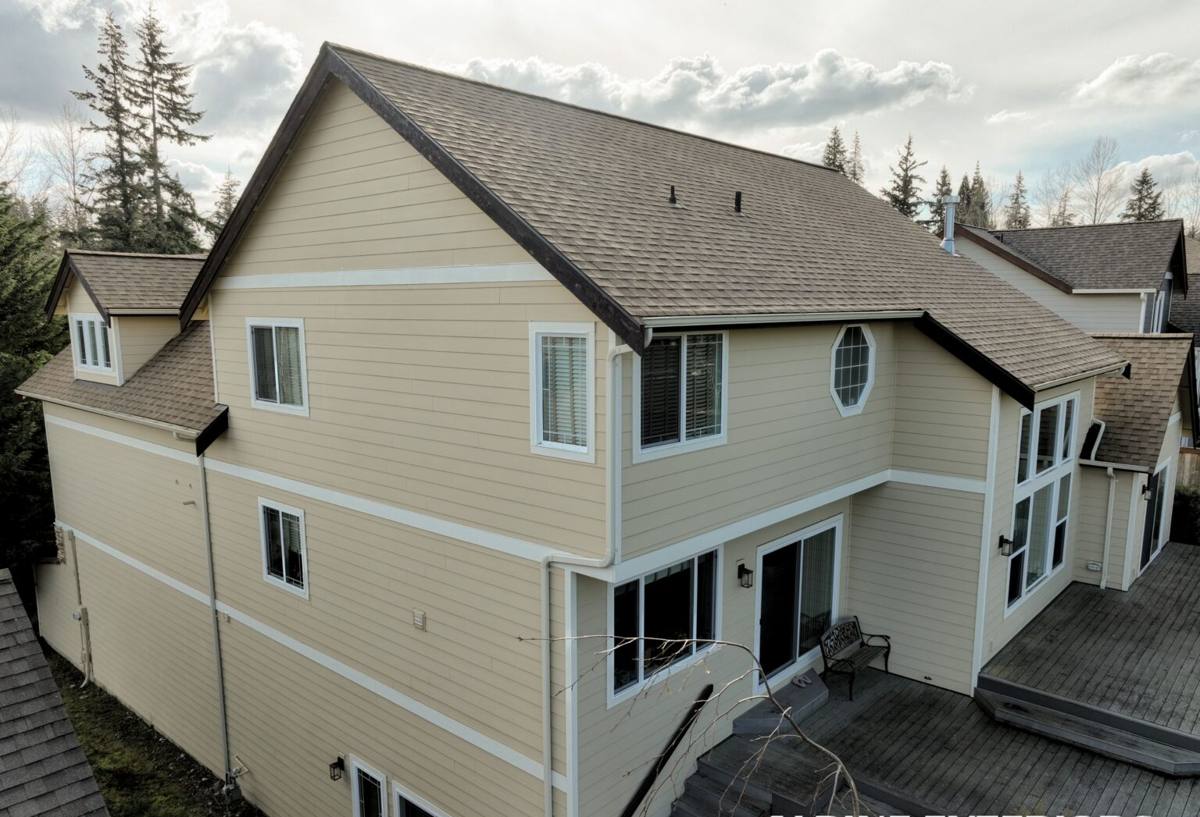
What Fidalgo Island's Climate Does to an Ordinary Deck
Salt Air and Corrosion
Even homes that aren't waterfront on Fidalgo Island get salt-bearing air moving through regularly. Over time, that air corrodes standard galvanized fasteners, joist hangers, and structural screws faster than it would twenty or thirty miles inland. The failure isn't usually dramatic — it's slow, hidden rust inside a joist hanger or around a ledger bolt that a homeowner never sees until a board feels spongy or a railing post wiggles.
Driving Rain and Water Intrusion
Anacortes gets weather that comes sideways as often as it comes straight down, especially in fall and winter storms. Any gap in ledger flashing, any undersized drip edge, any decking laid without proper spacing becomes a place for water to collect against the house or inside the structure itself. Water that gets trapped rather than shed is the single biggest cause of deck framing rot in this region.
Moss, Shade, and Slow Drying
Fidalgo Island's tree cover and long overcast stretches mean many decks — particularly those on the north or east side of a house, or tucked under fir and cedar canopy — simply don't get enough sun and airflow to dry out between rains. Moss and algae take hold on decking boards, and on wood surfaces that moss retains moisture against the board, which speeds up decay underneath a surface that still looks intact.
What a Correctly Built Fidalgo Island Deck Requires
None of the problems above are unsolvable — they just require building to the site instead of building to a generic plan. A deck done right for this area includes:
- Stainless steel or coated fasteners rated for coastal/marine exposure — not standard galvanized, which corrodes faster in salt air.
- Full ledger flashing with proper step and kick-out details where the deck meets the house, so water is directed away from the wall assembly, not into it.
- Correct board spacing and airflow underneath so decking can actually dry between rain events instead of staying damp for days.
- Footings sized and set for local soil and frost conditions, not a minimum-code guess.
- Material selection that matches how much sun and airflow the specific spot on the lot actually gets — a shaded, tree-covered deck needs different material and maintenance planning than one that gets afternoon sun.
- Railing hardware and connections that won't loosen from repeated wet/dry and freeze/thaw cycling over a Skagit County winter.
Choosing a Decking Material for Fidalgo Island Conditions
There's no single "best" decking material for every lot — the right choice depends on how much shade and moisture exposure the deck will see, how much upkeep the homeowner wants to do, and the budget. Here's how the common options actually perform under Anacortes conditions:
| Material | How It Handles Rain & Moss | Maintenance | General Cost Position |
|---|---|---|---|
| Pressure-treated wood | Needs regular sealing to resist moisture; moss and mildew show quickly in shaded spots without upkeep | Annual cleaning and re-sealing recommended | Lowest upfront cost |
| Cedar | Naturally more rot-resistant than pine, but still needs sealing and cleaning to fight moss in shaded, damp areas | Periodic sealing; regular cleaning | Mid-range |
| Composite decking | Doesn't absorb water the way wood does, but surface algae and moss can still form on shaded boards and need periodic washing | Occasional washing; no sealing or staining | Higher upfront, lower long-term labor |
| PVC/capped composite | Best moisture resistance of the common options; still benefits from occasional cleaning in heavy shade | Lowest ongoing maintenance | Highest upfront cost |
We'll walk through these trade-offs against your specific lot — sun exposure, tree canopy, and how the deck will actually be used — rather than defaulting to whatever's easiest to install. A shaded deck under fir trees on the north side of a Fidalgo Island lot is a very different decision than an open, south-facing deck with water views.
Why We're Selective About Certain Products
Some lower-grade composite and wood-alternative products on the market are more sensitive to installation technique and moisture cycling than their marketing suggests — gaps that are too tight, fasteners that aren't matched to the manufacturer's spec, or substructure ventilation that's skipped can shorten their service life significantly, especially in a wet climate like ours. We install to manufacturer specification and match material choice to what the site conditions actually demand, rather than pushing whichever product has the best margin. That's a maintenance-burden and moisture-behavior decision, not a brand endorsement or a knock on any one product line.
Framing and Structure: The Part Nobody Sees
The decking boards get all the attention, but the framing underneath is what determines whether a deck lasts 10 years or 30. For Fidalgo Island specifically, we pay close attention to:
Ledger Attachment and Flashing
The ledger board — where the deck attaches to the house — is the single most common failure point on decks in wet climates. It has to be properly bolted (not just nailed), flashed correctly above and behind the siding, and detailed so any water that reaches it drains away instead of pooling against the house framing.
Joist Hangers and Hardware
We use hardware rated for the exposure level the deck will actually see. On or near Fidalgo Island's saltier air pockets, that often means stepping up from standard galvanized to a coating or stainless-steel option built for coastal exposure.
Footings
Footing depth and sizing need to account for local soil conditions and frost depth, not just the minimum the code allows. We size footings for the actual structure and site, not a generic template.
Airflow Underneath
A deck built low to the ground with poor ventilation underneath will trap moisture regardless of what decking material sits on top. Proper clearance and, where needed, ventilation gaps keep the structure drying out between storms instead of staying wet.
Our Process for a Fidalgo Island Deck Project
- On-site assessment. We look at sun exposure, tree cover, existing drainage, soil, and how the space connects to the house before recommending material or layout.
- Design and material selection. We walk through the trade-offs in the table above against your budget and how much maintenance you actually want to do.
- Permitting. Deck permitting requirements vary by jurisdiction and structure size; we handle the paperwork so the project is built to code from the start.
- Demo and framing. Old structure removal (if needed), footings, ledger, and framing — the part that determines long-term durability.
- Decking, railing, and finish work. Installed to manufacturer spec with fastener and spacing choices matched to our climate.
- Final walkthrough. We go over the finished deck and what maintenance it will need going forward, honestly, based on the material you chose.
Maintaining a Deck Through a Skagit County Winter
Even a correctly built deck needs some seasonal attention to stay ahead of moss, moisture, and wear. This isn't complicated, but it does need to actually happen:
- Clear leaves and needles off the deck surface regularly in fall — trapped organic debris holds moisture and feeds moss growth.
- Sweep or rinse shaded areas more often than sunny ones; they dry out slower and moss establishes faster there.
- Check railings and stair connections once a year for looseness — hardware works its way loose faster with repeated wet/dry cycling.
- For wood and cedar decks, plan on re-sealing on the schedule the product calls for, not "whenever it looks bad."
- Keep gutters and downspouts near the deck clear so roof runoff isn't dumping extra water onto or under the structure.
- Inspect the ledger board area at the house connection periodically — this is the spot most likely to show early signs of a flashing problem.
Why a Crew That Already Works Fidalgo Island Matters
Deck-building fundamentals are the same everywhere, but the details that separate a deck that lasts from one that needs early repair are local. A contractor who works Fidalgo Island and the broader Anacortes area regularly already knows which fastener grade holds up here, how to detail flashing for our rain patterns, which lots need extra attention to shade and moss, and what local permitting actually requires — instead of learning those lessons on your project. That local knowledge is the difference between a deck that needs attention in year three and one that's still solid well past year fifteen.
Get a Straightforward Estimate
If you're planning a new deck or replacing one that's showing its age on Fidalgo Island, we're glad to come take a look, walk the site with you, and put together a clear, no-pressure estimate based on your specific lot and how you want to use the space. Use the form below to get started.