 Anacortes Exterior
 Guemes Island sits just across the water from Anacortes, and getting there only by ferry changes more about a siding project than most homeowners expect. Every board, batten, starter strip, and box of fasteners has to be staged on the mainland, loaded, and hauled across before a crew can even start work. That's on top of a climate that's genuinely harder on exterior materials than much of the Anacortes mainland — open water on multiple sides, little of the tree cover or terrain shelter that softens conditions elsewhere in Skagit County, and a damp season that runs long and feeds moss and algae growth on anything that doesn't dry out quickly. This page covers one thing specifically: what it takes to do fiber cement siding right on a Guemes Island home, and why both the product and the crew installing it matter more out here than almost anywhere else in the area.
What Guemes Island Homes Are Up Against
Island lots don't get the buffering that a lot of in-town Anacortes properties get from neighboring buildings, mature windbreaks, or simply being set back from open water. Homes here — especially anything close to the shoreline — take wind and salt spray more or less directly, and that combination accelerates corrosion on fasteners and flashing, breaks down coatings that aren't formulated for it, and pushes moisture into every seam and joint that isn't detailed correctly. Add in the region's long stretch of wet, low-sun months, and north- and east-facing walls in particular stay damp long enough for moss and algae to get a foothold and keep coming back year after year.
None of that is exotic — it's the same Pacific Northwest coastal pattern you'd find anywhere along the Salish Sea. What's different on Guemes is the degree of exposure on a typical lot, and the fact that once a problem starts, it's not a quick trip back out to fix a small thing. Getting the installation right the first time matters more here than it does on a sheltered in-town lot where a callback is a five-minute drive.
Common Problems We Find on Island Exterior Inspections
- Caulking and joint sealant that's opened up or gone brittle from repeated wet-dry cycling and salt exposure
- Moss and algae staining on shaded or north-facing walls that never fully dries between rain events
- Corroded fasteners, trim screws, or flashing on older installations that weren't rated for direct coastal exposure
- Cracked, delaminating, or warped siding — common on wood and lower-grade fiber cement products that weren't engineered for this level of moisture cycling
- Chalking, fading, or peeling field-applied paint on trim and siding that's taken years of UV and salt air with no factory-grade protection
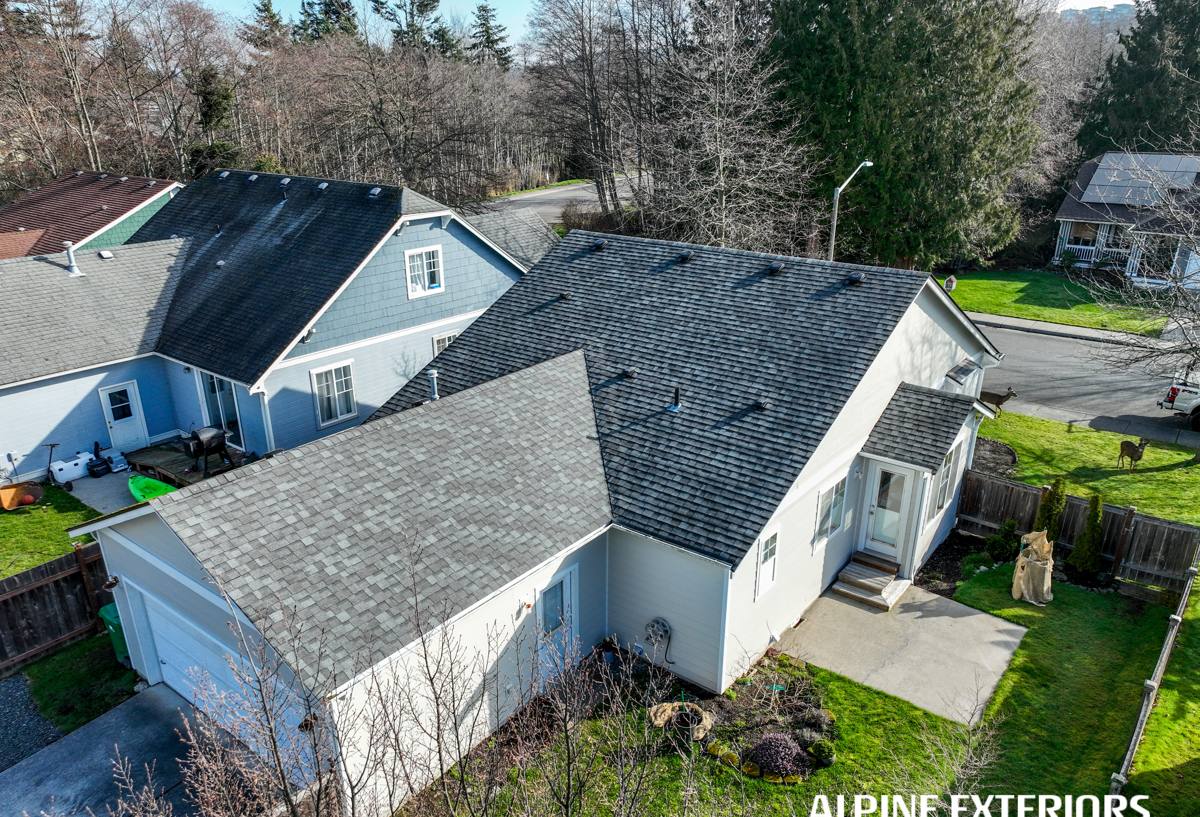
Why Fiber Cement Is the Right Call for an Island Home
We install James Hardie fiber cement siding exclusively — no vinyl, no LP SmartSide, no Cemplank, no Allura, no primed spruce or cedar. That's a standard we hold to everywhere we work, but a Guemes Island property is about as demanding a proving ground as this region offers, and it's exactly the kind of site that exposes the weaknesses in materials that aren't built for sustained coastal exposure.
What Other Materials Give Up Out Here
Vinyl siding isn't a weather barrier on its own — it depends entirely on what's behind it, and it can go brittle with age and UV exposure, which matters more on a site that gets constant wind and sun off open water. Wood and wood-composite products need consistent repainting or resealing to stay protected, and once moisture gets behind them, rot can spread before it's visible from outside — a hard maintenance cycle to keep up with on a property that isn't a quick trip to check on. Other fiber cement brands vary in their factory finish quality and warranty structure, and we've found the difference shows up over time, not on day one. James Hardie's fiber cement is non-combustible, dimensionally stable, and finished at the factory with ColorPlus coating engineered to resist fading, chipping, and cracking under exactly the UV and salt conditions an island home deals with year-round.
The James Hardie System We Install Here
We spec Hardie's HZ10 climate-engineered product line for most Guemes Island jobs — it's formulated for wetter, harsher exposure zones, which describes this part of Skagit County well. The table below covers the products we use most and where each one fits.
| Product Line | Best For | Why It Fits an Island Home |
|---|---|---|
| HardiePlank Lap Siding (HZ10) | Most full siding replacements | Climate-engineered formulation and ColorPlus finish built for sustained wind and moisture exposure |
| HardiePanel Vertical Siding | Modern designs, gable ends, accent walls | Clean vertical lines that pair well with lap siding on mixed-style homes |
| HardieTrim Boards | Window/door surrounds, corners, fascia | Resists the swelling and rot that plague wood trim in constant damp conditions |
| ColorPlus Factory Finish | All exposed siding and trim | Baked-on finish that holds color and resists chipping far better than field-applied paint |
What Correct Installation Involves
Fiber cement performs the way it's supposed to only when it's installed to spec, and on an exposed island lot, shortcuts show up faster than they would somewhere more sheltered. Proper installation means the right fastener type and spacing driven flush (not overdriven, which crushes the material and opens a path for water), correct clearance from grade, roofing, and decking so water can't wick up into the bottom edge of the siding, and cut edges back-primed before they go up so raw fiber cement isn't left exposed to weather.
Details That Matter Most in a Marine Climate
Joint and butt-seam caulking has to be a sealant that's actually compatible with ColorPlus finish, not just whatever's on the truck — the wrong sealant fails early and takes the warranty with it. Flashing at windows, doors, and any wall penetration needs to tie into the water-resistive barrier correctly, since that's the detail that determines whether wind-driven rain stays outside or finds its way into the wall assembly. On a site that gets this much direct weather, we treat these as the details that decide whether a job lasts twenty years or five.
The Logistics of Doing This Work on an Island
A Guemes Island siding job starts with the same inspection and estimate process as any other, but everything after that runs on ferry time. We take a full material takeoff before the crew ever loads a trailer, because a forgotten box of trim screws isn't a quick run to the hardware store — it's another ferry crossing. Crews and equipment get scheduled around ferry sailings and tide-dependent access where it applies, and we plan installation days around weather windows rather than pushing through wind and rain that would compromise a fresh install anyway. Debris and job-site waste get consolidated and hauled back off the island on the same trips, not left to pile up waiting for a separate haul day.
Why a Crew That Already Works Guemes Island Matters
None of that logistics planning is difficult once you've done it a few times — but the first time, it's a real source of delay, missed sailings, and jobs that run longer than they should. A crew that already works Guemes Island has the ferry timing, material staging, and weather planning built into how they scope a job from the start, instead of learning it on the homeowner's timeline. We also know which sides of an island property tend to take the worst of the wind and spray, which shapes where we're extra careful with flashing and fastening before a problem ever shows up.
What We Sort Out Before the Crew Sets Foot on the Ferry
- Full material takeoff and staging in Anacortes so nothing gets forgotten on the mainland
- Ferry scheduling that accounts for crew, trailer, and equipment capacity
- A weather-driven installation window, since exposed island sites don't forgive a rushed install ahead of a storm
- A debris and haul-off plan built into the schedule from day one
Our Process for a Guemes Island Fiber Cement Project
- On-site inspection and honest assessment of your current siding, trim, and any water damage or moss issues
- A written estimate that spells out product, scope, and timeline — including how ferry logistics factor into scheduling
- Material takeoff, ordering, and staging on the mainland ahead of the install date
- Installation to manufacturer spec, with attention to fastening, flashing, and sealant details suited to direct coastal exposure
- A final walkthrough, cleanup, and warranty registration before we head back to the ferry
Cost Factors for a Guemes Island Siding Project
Pricing on any siding job depends on the specifics of the home, but a few factors show up consistently on island projects and are worth understanding going in.
| Factor | Why It Matters |
|---|---|
| Ferry and logistics time | Material transport and crew scheduling around sailings add planning time that a mainland job doesn't require |
| Home size and wall complexity | More corners, dormers, and trim detail mean more labor and material regardless of location |
| Tear-off vs. new construction | Removing and disposing of old siding — especially anything with hidden moisture damage — adds time and haul-off logistics |
| Exposure level | Direct waterfront or unshielded lots often call for the HZ10 line and extra attention to flashing, which affects material and labor |
| Trim and detail work | Window and door surrounds, corner boards, and fascia add finish-carpentry time beyond the flat wall area |
What to Expect From Your Estimate
- A full walk-around of your home's siding, trim, and any visible moisture or moss issues
- A straight read on what's failing from age versus what's failing from exposure or a past installation shortcut
- A clear explanation of why we recommend James Hardie fiber cement for a site with this level of exposure
- A written scope and estimate that accounts for ferry and scheduling logistics up front — no surprises mid-project
If you own a home on Guemes Island and you're seeing moss buildup, cracked or fading siding, or water staining near windows and trim, we're happy to take a look. Reach out for a free, no-pressure estimate — we'll give you a straight answer about what your home needs and why, ferry logistics included.