 Anacortes Exterior
 Why Edison's Climate Is Hard on Siding
Edison sits low in the Skagit Valley, close to the tidal flats near Samish Bay, surrounded by open farmland and a lot of moisture in the air most months of the year. That combination is rough on exterior siding in three specific ways: salt-laden air moving in off the bay, driving rain that comes in sideways during fall and winter storms, and a long, damp moss season that starts early and doesn't let up until summer. Homes here don't get a break the way siding does in drier inland parts of Washington.
Salt air accelerates corrosion on fasteners and trim, and it breaks down cheaper paint finishes faster than manufacturers advertise. Wind-driven rain finds every gap in flashing, caulking, and butt joints, and once moisture gets behind a siding panel it often has nowhere to go because Skagit County's humidity keeps things from drying out quickly. And moss and algae don't just grow on roofs here — they take hold on north-facing and shaded siding too, holding moisture against the wall and slowly degrading whatever's underneath. Any siding product installed in Edison has to be chosen and installed with all three of these working against it at once, not just one.
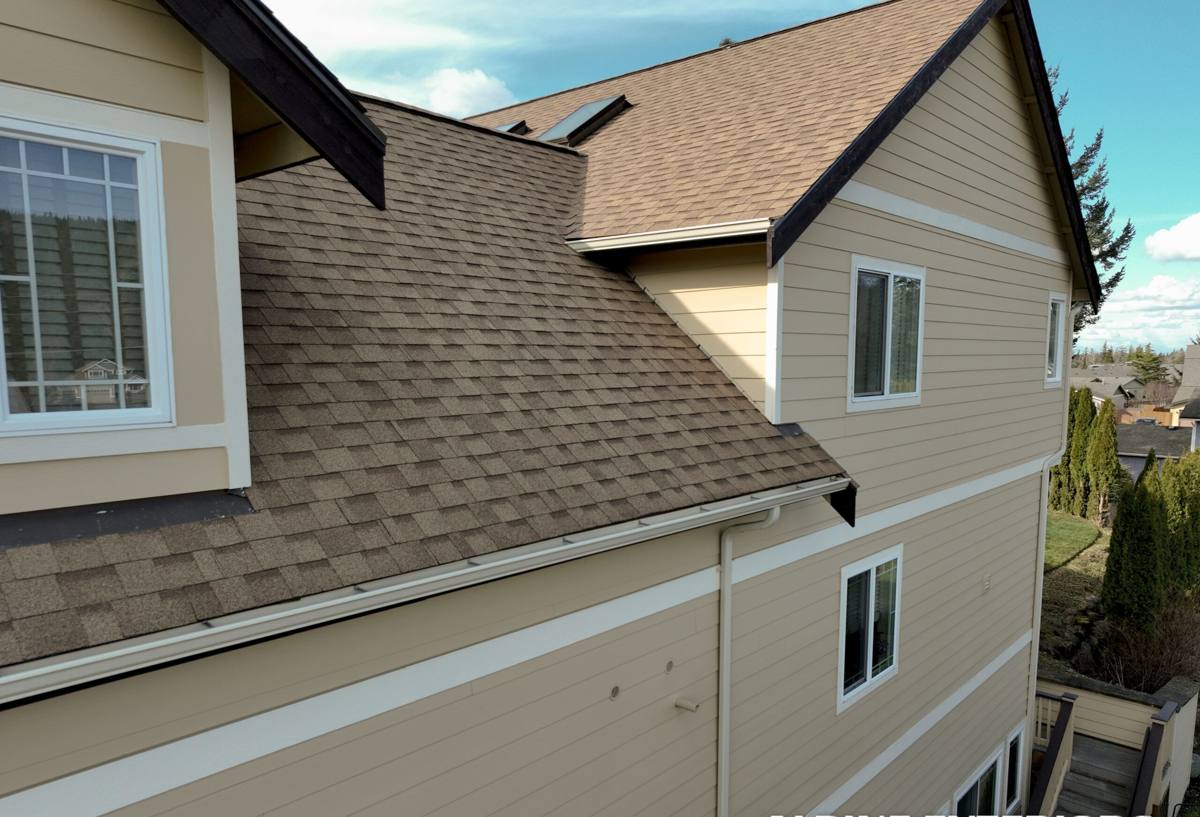
What James Hardie Fiber Cement Delivers in This Climate
We install James Hardie fiber cement exclusively, and Edison is a good example of why. Fiber cement is a blend of cement, sand, and cellulose fibers — it doesn't rot, it doesn't feed moss the way wood fiber does, and it holds its shape through repeated wet-dry cycles far better than wood-based or vinyl alternatives.
Engineered for This Region
Hardie manufactures its siding in climate-specific formulations, and the Pacific Northwest falls into their HZ5 engineered zone, built around the reality of high moisture exposure and freeze-thaw swings. That's a meaningfully different product than what gets shipped to a dry climate, and it's part of why we only install the version specified for our region rather than treating siding as one-size-fits-all.
A Finish That Doesn't Rely on a Painter
Hardie's ColorPlus finish is baked on at the factory under controlled conditions, not brushed or sprayed on-site. In a place like Edison, where field-applied paint has to cure in unpredictable, often damp weather, a factory finish is a real advantage — it resists fading and chipping far longer than a site-applied coat, and it means the color and sheen are consistent across the whole house instead of varying with the day it was painted.
Hardie vs. Other Siding Options Near Samish Bay
We get asked fairly often why we don't offer vinyl, LP SmartSide, or cedar as alternatives. Here's how they stack up against fiber cement specifically for a salt-air, high-moisture, moss-prone environment like Edison:
| Material | Behavior in Salt Air & Driving Rain | Moss & Moisture Resistance |
|---|---|---|
| James Hardie fiber cement | Non-combustible, dimensionally stable, holds factory finish well | Doesn't rot; moss can be cleaned off without damaging the substrate |
| Vinyl siding | Can warp or become brittle with temperature swings and UV exposure | Seams and laps trap moisture; moss and mildew build up in low spots |
| LP SmartSide (engineered wood) | Wood-based core is vulnerable if the factory seal is ever compromised | More susceptible to moisture intrusion at cut edges and fastener points |
| Cedar / primed spruce | Natural material moves with moisture; requires ongoing refinishing | Feeds moss and algae growth directly; needs regular treatment |
None of these are junk products — vinyl is inexpensive, cedar looks great when it's maintained, and engineered wood has its fans. But for the maintenance burden and moisture behavior we see in this part of Skagit County, fiber cement is what we're willing to put our name behind and warranty.
What a Correct Installation Involves
Fiber cement performs the way it's supposed to only when it's installed correctly. Most of the siding failures we get called out to inspect in this area trace back to installation shortcuts, not the material itself. A correct job on an Edison home includes:
- A properly lapped weather-resistant barrier behind the siding, with all seams taped and integrated with window and door flashing
- Correct fastener type, spacing, and depth — over-driven or under-driven nails are one of the most common causes of early failure
- Minimum clearance between the bottom of the siding and grade, decks, or roof lines so wicking moisture never sits against the board
- Butt joints and trim caulked with a flexible, paintable sealant rated for exterior use, not construction adhesive
- Panels and planks cut and hung with manufacturer-specified gaps to allow for expansion and contraction
- Careful treatment around penetrations — hose bibs, vents, light fixtures — where most water intrusion actually starts
None of this is exotic. It's disciplined, unglamorous installation work, and skipping any one of these steps is how a product rated for decades of service ends up with problems inside five years.
Our Process for Edison Projects
When we take on a siding project out in Edison, we start with a walk-around of the home to check the condition of the existing siding, sheathing, and trim, and to look for signs of moisture already trapped behind the wall — soft spots, staining, or bubbling paint are the usual tells. From there we plan for proper removal and disposal of the old material, inspect and repair sheathing where needed before anything new goes up, and install the weather barrier and flashing details before the first piece of Hardie siding is ever hung.
We also account for the site itself — Edison properties often sit close to farmland or have mature trees and hedgerows nearby, which affects staging, debris control, and how much shade a given wall gets (which matters for moss planning). We keep the work area clean and protect landscaping and outbuildings during tear-off and installation, and we walk the finished job with the homeowner before we consider it done.
What Drives the Cost of a Siding Job
Every home is different, so we don't quote sight-unseen, but these are the factors that actually move the price on a fiber cement project:
| Factor | Why It Matters | Typical Cost Impact |
|---|---|---|
| Home size and wall area | More square footage means more material and labor | High |
| Condition of existing sheathing | Rot or moisture damage found during tear-off requires repair before new siding goes on | Medium to High |
| Trim and architectural detail | Dormers, multiple gables, and detailed trim take more time to fit and finish | Medium |
| Number of siding layers to remove | Some older homes have siding installed over previous layers, adding tear-off labor | Medium |
| Access and site conditions | Landscaping, slopes, or tight setbacks affect staging and scaffolding needs | Low to Medium |
| Profile and finish selection | Lap width, texture, and color all carry different material costs | Low |
The only way to know where a specific home lands is a walk-through, which is exactly what a free estimate is for.
Living With Fiber Cement in Edison: Maintenance
One of the real advantages of fiber cement in a moss-heavy environment is that it can be cleaned without damaging the material. A gentle wash once or twice a year — more often on shaded, north-facing walls — keeps moss and algae from getting a foothold, and a soft-wash approach is enough; fiber cement doesn't need the aggressive pressure-washing that can wear down softer materials. Because the ColorPlus finish is baked on rather than field-applied, touch-ups are rarely needed, and when they are, Hardie's touch-up paint is formulated to match. Keeping gutters clear and vegetation trimmed back from walls also goes a long way in this climate, since standing moisture and shade are what let moss take hold in the first place.
Why Local Experience Matters
Edison isn't a big town, and it doesn't get the volume of contractor attention that Anacortes or Mount Vernon do — which means it's easy for outside crews to treat it as an afterthought or apply installation practices that were designed for a drier climate. A crew that already understands the salt air off Samish Bay, the amount of rain this stretch of Skagit County gets, and how aggressively moss grows on shaded walls here is going to make different, better calls on flashing details, fastener choice, and where to add extra protection — decisions that don't show up on a quote but absolutely show up ten years later.
If you're weighing a siding replacement on an Edison home and want a straight answer about what your house actually needs, we're happy to walk the property with you. There's no pressure and no obligation — just a free estimate and an honest look at what correct fiber cement installation would involve for your specific home.