 Anacortes Exterior
 Deck Repair Built for Similk Beach's Coastal Conditions
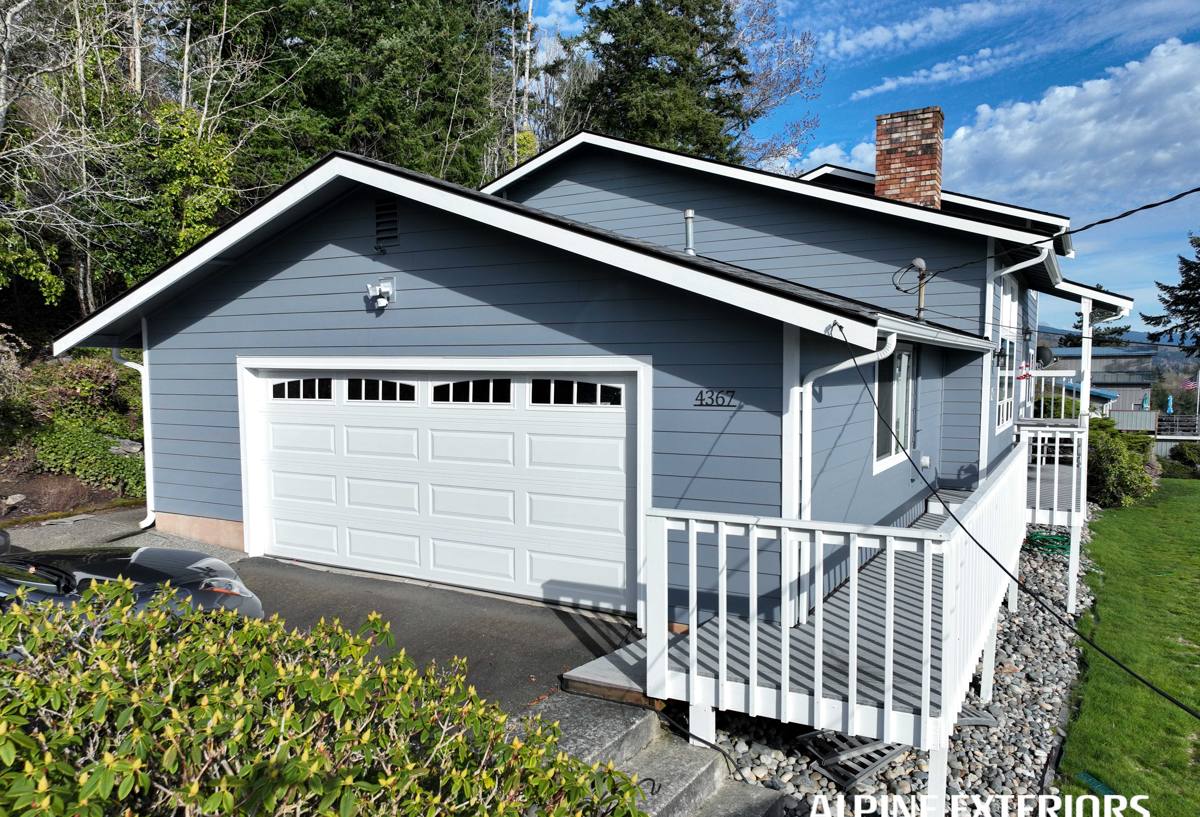
Similk Beach sits close enough to the water that its homes take a different kind of weather beating than a deck ten miles inland in Skagit County. The salt air moves through fasteners and framing connectors year-round, the rain comes in sideways more often than straight down, and the shoulder seasons bring long stretches of moss and algae growth that most homeowners never think about until a board feels soft underfoot. Deck repair out here isn't a one-size-fits-all job. It has to account for what this specific stretch of Fidalgo Island does to wood, metal, and fasteners over time.
We work on decks throughout Anacortes and the surrounding Skagit County waterfront communities, and Similk Beach decks show a recognizable pattern of wear. Knowing that pattern before we pull the first board is what separates a repair that actually holds up from one that just covers the problem for a season.
What Salt Air, Rain, and Moss Do to a Deck
Salt Air and Fastener Corrosion
Airborne salt doesn't need direct ocean spray to cause damage — it travels on the wind and settles on every exposed surface, including the screws, nails, and joist hangers holding your deck together. Standard galvanized fasteners that would last decades further inland can start corroding noticeably faster this close to the water. Once a fastener weakens, the connection it's holding weakens with it, often long before the surrounding wood shows any obvious damage.
Moss, Algae, and Trapped Moisture
Western Washington's damp, low-light stretches from fall through spring give moss and algae plenty of time to establish themselves on decking, especially in shaded areas or spots that don't get direct sun. Beyond making the surface slippery, moss holds moisture against the wood far longer than open air ever would. That constant dampness is what drives rot — not a single storm, but months of a deck board staying wet when it should be drying out between rains.
Rain-Soaked Wood Movement
Wood that repeatedly swells with rain and shrinks as it dries goes through more stress than most people realize. Over years, that cycle opens up checking and cracks, loosens fasteners, and creates small gaps where water collects instead of running off. It's a slow process, which is exactly why it tends to go unnoticed until a board or railing post has already lost real structural integrity.
Signs Your Similk Beach Deck Needs Repair, Not Just Cleaning
Some deck problems are cosmetic and some are structural, and it's not always obvious which is which from the surface. A few signs worth taking seriously:
- Boards that feel spongy, springy, or noticeably softer than the boards around them
- Railings or posts that wiggle or flex when you lean on them
- Rust streaks running down from screw heads or metal connectors
- Gaps opening up where the deck meets the house, or discoloration on the siding above the ledger board
- Persistent moss or dark staining that keeps coming back no matter how often it's cleaned
- Stairs that feel less solid than they used to, especially near the base of the stringers
- Visible daylight or soft wood where support posts meet their footings
Any one of these on its own might be minor. Several together usually mean the deck has been quietly losing structural capacity for a while.
What a Correct Deck Repair Involves
Diagnosing Beyond the Surface
A repair that only replaces the boards you can see from the top is a repair that misses the point. We check the framing underneath — joists, beams, ledger connection, and posts — because that's where the structural failures that actually matter tend to start. A deck can look presentable on top while the framing underneath has been absorbing moisture damage for years.
Ledger Board and Flashing
The ledger board, where the deck attaches to the house, is one of the most common failure points on older decks in this climate. If it was installed without proper flashing, or if the flashing has failed over time, water gets driven behind it by wind-driven rain and rots the framing from the inside — often invisibly until the damage is advanced. Correcting this is not optional; it's the difference between a deck that's actually safe and one that only looks safe.
Framing, Posts, and Footings
Rotted or undersized joists get sistered or replaced, not just patched. Posts showing rot at the base, especially where they meet concrete footings, get evaluated for whether the connection itself needs upgrading — post bases that keep wood from sitting directly on wet concrete make a real difference in a climate this damp.
Decking and Fasteners
We match replacement decking to the existing material where that makes sense, and we're honest with you when it doesn't — sometimes a partial repair with mismatched material isn't worth doing, and a broader resurfacing is the better long-term move. Fasteners get chosen for this environment specifically, not just whatever is standard elsewhere.
Repair or Replace? Weighing the Factors
Not every deck problem needs a full rebuild, and not every repair is worth doing on its own. Here's how we think through it:
| Factor | Repair Usually Makes Sense | Replacement Usually Makes Sense |
|---|---|---|
| Framing condition | Isolated rot in one or two joists or a section of ledger | Widespread rot across multiple framing members |
| Age of the deck | Deck is relatively young with a clear, contained problem | Deck is decades old and multiple systems are failing together |
| Ledger flashing | Flashing is intact or repairable without disturbing the whole ledger | Flashing was never installed correctly and has caused hidden damage |
| Decking surface | Most boards are sound, a few are damaged or worn | Boards are uniformly weathered, cracked, or moss-stained throughout |
| Budget priorities | You want to extend the deck's life a number of years affordably | You want to stop dealing with recurring problems for good |
We'll walk you through where your deck falls on this table honestly, including telling you when a repair is the smarter money even if a bigger job would be easier for us to sell.
Our Deck Repair Process
- On-site inspection. We look at the deck surface, framing, ledger connection, posts, and footings — not just what's visible from the top.
- Honest assessment. You get a clear explanation of what's actually wrong, what's driving it, and what your realistic options are.
- Written scope and estimate. No vague line items — you know what's being repaired and why before work starts.
- Repair work. Framing and structural issues get addressed first, then decking, railings, and finish work.
- Final check. We confirm connections are solid, fasteners are seated correctly, and drainage is doing what it should before we call the job done.
Materials and Fasteners That Hold Up Near the Water
Material choice matters more here than in a lot of inland projects. Pressure-treated lumber, cedar, and composite decking all perform differently once salt air and constant moisture cycling are part of the equation — and each comes with real trade-offs, not just a "better" and "worse" option.
- Pressure-treated fir or hem-fir — affordable and strong, but needs consistent maintenance (cleaning, sealing) to keep moss and moisture from taking hold
- Cedar — naturally more rot-resistant and handles the damp climate well, but is softer and shows wear from foot traffic and weather faster than treated lumber
- Composite decking — low maintenance and resists moisture well, but comes with a higher upfront cost and needs proper spacing and fastening to avoid its own moisture issues underneath
Whatever material we're working with, fastener choice matters just as much. Stainless steel fasteners cost more than standard galvanized ones, but they resist the corrosion that salt air accelerates far better — and a repair is only as good as the fasteners holding it together.
Keeping Your Repaired Deck Ahead of the Weather
A good repair buys you years, but a little seasonal attention buys you more. After we finish a repair, this is what we tell homeowners to keep an eye on:
- Sweep off standing leaves and debris before fall rains set in — trapped organic matter feeds moss and holds moisture
- Clean visible moss or algae off the surface before it spreads, rather than waiting until it's established
- Check railings and stair connections for looseness once or twice a year
- Look at the ledger-to-house connection during your regular home checks for any staining or gaps
- Reseal wood decking on the schedule appropriate to that product, not just "when it looks dry"
- Make sure gutters and downspouts near the deck aren't dumping extra water onto or under it
Why Local Experience on Similk Beach Matters
A contractor who mostly works drier, inland jobs can still do competent framing work, but they may not think to ask about ledger flashing history, may default to standard fasteners instead of ones suited to salt exposure, or may not recognize early moss damage for what it is. Working regularly in Anacortes and along the Skagit County waterfront means we've seen how decks in this specific environment actually fail over time — not in general, but here. That's what lets us diagnose a Similk Beach deck accurately instead of guessing and hoping the repair holds.
If you're noticing soft boards, loose railings, or moss that won't quit, we're happy to take a look. Reach out for a free, no-pressure estimate using the form below, and we'll give you a straight answer about what your deck actually needs.