 Anacortes Exterior
 Window Replacement Built for Conway's Conditions
Conway sits low in the Skagit River delta, close enough to Skagit Bay that salt-laden air rides inland on the wind most days of the year. Add in the driving rain that comes off the water during fall and winter storms, plus a moss season that can stretch from October through May in the shaded, moisture-heavy pockets around the valley, and you have one of the tougher climates in Skagit County for exterior building materials to survive. Windows take the brunt of it. They're the first thing to show water intrusion, the first to fog between panes, and often the last thing homeowners think to check until a draft or a soft spot in the wall gives it away.
A window replacement in Conway isn't just about swapping out old glass for new. It's about choosing materials and installation methods that can handle sustained moisture exposure, salt corrosion on hardware, and the freeze-thaw cycles that hit low-lying farmland harder than they hit higher, drier ground nearby.
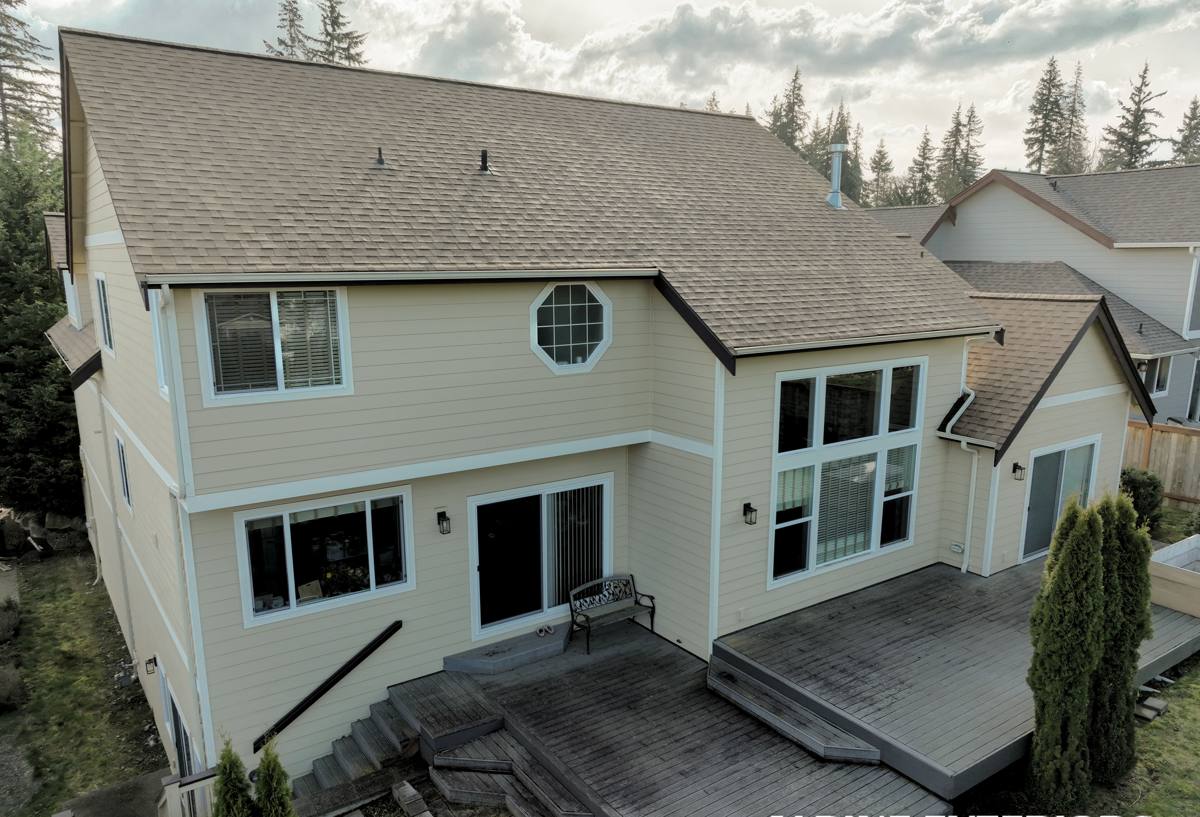
Why This Climate Is Hard on Windows
Salt Air and Corrosion
Proximity to tidal water means airborne salt settles on everything, including window frames, hardware, and fasteners. Over years, salt exposure accelerates corrosion on lower-grade metal components, pits aluminum finishes, and breaks down cheaper sealants faster than in drier inland areas. Homeowners in Conway often see hardware failure and finish degradation well before the glass itself becomes a problem.
Driving Rain and Wind-Driven Moisture
Wind off the delta doesn't just bring rain straight down — it pushes it sideways into siding and window openings. That means flashing details, sill pans, and sealant joints have to do real work here, not just meet a minimum code standard. A window that would perform fine in a sheltered inland neighborhood can leak in Conway if it's installed with shortcuts.
Moss, Mildew, and Sustained Humidity
Long moss seasons come with long periods of ambient humidity. Wood trim and sills that stay damp for extended stretches are more prone to rot, and older single-pane or early double-pane windows in the area often show interior condensation and mildew growth on frames well before any visible glass failure.
Signs a Conway Home Needs Window Replacement
Not every drafty window needs full replacement, but certain signs point to a problem that repair or re-caulking won't fix:
- Fogging or moisture between panes on double-pane windows — the seal has failed and can't be restored
- Soft, spongy, or discolored trim and sill wood around the window opening
- Visible daylight or air movement around the sash when the window is closed and locked
- Hardware that's corroded, stiff, or no longer latches securely
- Consistent moss or dark staining building up on the exterior sill or lower frame
- A noticeable difference in indoor temperature near the window compared to the rest of the room
What a Correct Window Replacement Involves
Anyone can pull an old window and set a new one in the opening. Doing it correctly for this climate means paying attention to details that don't show up until years later, when a poorly installed window starts leaking into the wall cavity.
Proper Removal and Opening Inspection
Before a new window goes in, the opening should be inspected for hidden rot, water staining, or damaged framing that the old window may have been masking. Skipping this step is the single most common reason a "new" window still leaks — the problem was never in the glass, it was in the wall behind it.
Flashing and Water Management
A correctly flashed window directs water down and out, away from the framing, using a sill pan and properly lapped flashing tape integrated with the house's water-resistive barrier. In a driving-rain climate like this one, this step matters more than the window brand.
Sealing and Insulation
Gaps around the new frame need to be sealed with the right materials — not just caulk on the exterior trim, but proper low-expansion foam or backer rod and sealant in the cavity, so the window is both weathertight and properly insulated.
Fit and Level
A window that's out of square or not properly shimmed will bind, won't seal evenly, and will wear out its own weatherstripping faster. Correct installation takes the time to get this right on every unit, not just the ones visible from the street.
Choosing Frame Materials for a Salt-Air, High-Rain Climate
Material choice matters more in Conway than in a dry, inland part of the state. Here's how the common options hold up against sustained salt air and moisture:
| Material | Moisture/Salt Performance | Maintenance | Typical Lifespan |
|---|---|---|---|
| Vinyl | Good — won't rot or corrode; hardware quality varies by brand | Low — occasional cleaning | 20–30 years |
| Fiberglass | Very good — dimensionally stable, resists warping in wet-dry cycles | Low | 30–40 years |
| Wood (unclad) | Poor in this climate without diligent upkeep — prone to rot near sills | High — regular painting/sealing | Varies widely with maintenance |
| Wood-clad (vinyl or aluminum exterior) | Good — exterior shell protects the wood core | Moderate | 25–35 years |
| Aluminum | Fair — prone to pitting/corrosion near salt air unless well-finished | Moderate | 20–25 years |
We generally steer Conway homeowners away from unclad wood exteriors facing prevailing weather, not because wood is a bad material, but because the maintenance burden in this specific climate is high, and a missed repaint cycle can lead to rot faster here than in drier parts of the county. That's a maintenance and moisture-behavior tradeoff we're honest about upfront, not a knock on any manufacturer.
Glass Package Considerations
Beyond frame material, the glass package affects both comfort and condensation resistance. Double-pane with a low-E coating and argon fill is the practical baseline for this region. Triple-pane adds cost and weight but can be worth it for rooms facing prevailing wind and rain, or for homeowners specifically trying to cut down on interior condensation during the wettest months.
Our Process, Start to Finish
- On-site assessment — we look at existing windows, framing condition, and any signs of past water intrusion before recommending anything.
- Honest options — we walk through material and glass choices with real tradeoffs, not just an upsell to the most expensive option.
- Written estimate — clear scope, materials, and timeline so there are no surprises.
- Careful removal — old units come out with attention to protecting existing siding and interior finishes.
- Opening repair if needed — any rot or damage found behind the old window gets addressed before the new one goes in, not covered up.
- Proper flashing, sealing, and installation — done to standards suited for driving rain and salt air, not just minimum code.
- Final check and cleanup — operation, seal, and site cleanup confirmed before we consider the job done.
Cost Factors for Window Replacement in Conway
Every home is different, but the following factors typically move the price up or down on a Conway project:
| Factor | Effect on Cost |
|---|---|
| Number of windows replaced at once | Per-window cost usually drops with larger projects |
| Frame material selected | Fiberglass and clad-wood typically cost more upfront than vinyl |
| Hidden rot or framing repair | Adds labor and material cost, but is essential to fix, not optional |
| Window size and configuration | Large picture windows, bays, or custom shapes cost more than standard sizes |
| Access and second-story work | Harder-to-reach openings add labor time |
| Glass package (double vs. triple-pane) | Triple-pane adds cost but improves comfort and condensation resistance |
We won't quote a number without seeing the home, but we're glad to walk through rough ranges and what drives them during an on-site visit.
Why It Matters to Hire a Crew That Already Works This Area
Window installation standards that work fine in a sheltered, dry neighborhood aren't automatically enough for a low-lying, salt-air, high-rain area like Conway. A crew that regularly works Skagit County's coastal and delta communities already knows which details can't be skipped — flashing integration, sill pan use, hardware selection that resists corrosion — because they've seen what happens when those steps are shortcut here specifically. That familiarity translates into fewer callbacks and a longer service life for the windows themselves.
Maintaining New Windows in This Climate
Even correctly installed windows benefit from some seasonal attention in a climate like this one:
- Rinse salt residue off exterior frames periodically, especially after dry windy spells
- Check and clear weep holes on vinyl and vinyl-clad frames so water can drain properly
- Inspect exterior caulking annually and touch up any cracked or shrinking sealant
- Clear moss or debris buildup from sills and tracks before it holds moisture against the frame
- Operate hardware periodically through the wetter months to keep it from seizing
- Watch for condensation between panes, which signals a seal failure even on a newer unit
None of this is heavy maintenance — it's the difference between a window that reaches the top end of its expected lifespan and one that starts showing problems early because the climate wasn't accounted for.
Get a Straightforward Estimate
If your windows in Conway are showing fog, drafts, soft trim, or corroded hardware, it's worth getting an honest, no-pressure look before deciding what to do. We'll tell you plainly what we see, what your real options are, and what it will take to get it done right for this climate. Use the form below to request a free estimate.