 Anacortes Exterior
 The Climate Conway Homes Are Up Against
Conway sits in the low-lying, tree-shaded part of Skagit County, close enough to Skagit Bay and the Salish Sea that salt-laden air is a regular part of the weather, not an occasional visitor. Add in the region's long wet season, driving rain off the water, and a landscape shaded enough to grow moss on nearly any north-facing surface, and you have a climate that is genuinely hard on exterior building materials. Siding here isn't just cosmetic — it's the one layer standing between your framing and a combination of moisture, salt, and shade that doesn't let up for much of the year.
Homes in Conway and the surrounding Skagit County lowlands tend to show wear in specific, predictable places: north and west-facing walls that stay damp longer, lower courses of siding near grade where splashback and moss take hold first, and trim details where water can collect if flashing wasn't done right the first time. Any siding replacement here has to be planned around those realities, not just around what a product looks like on a showroom sample.
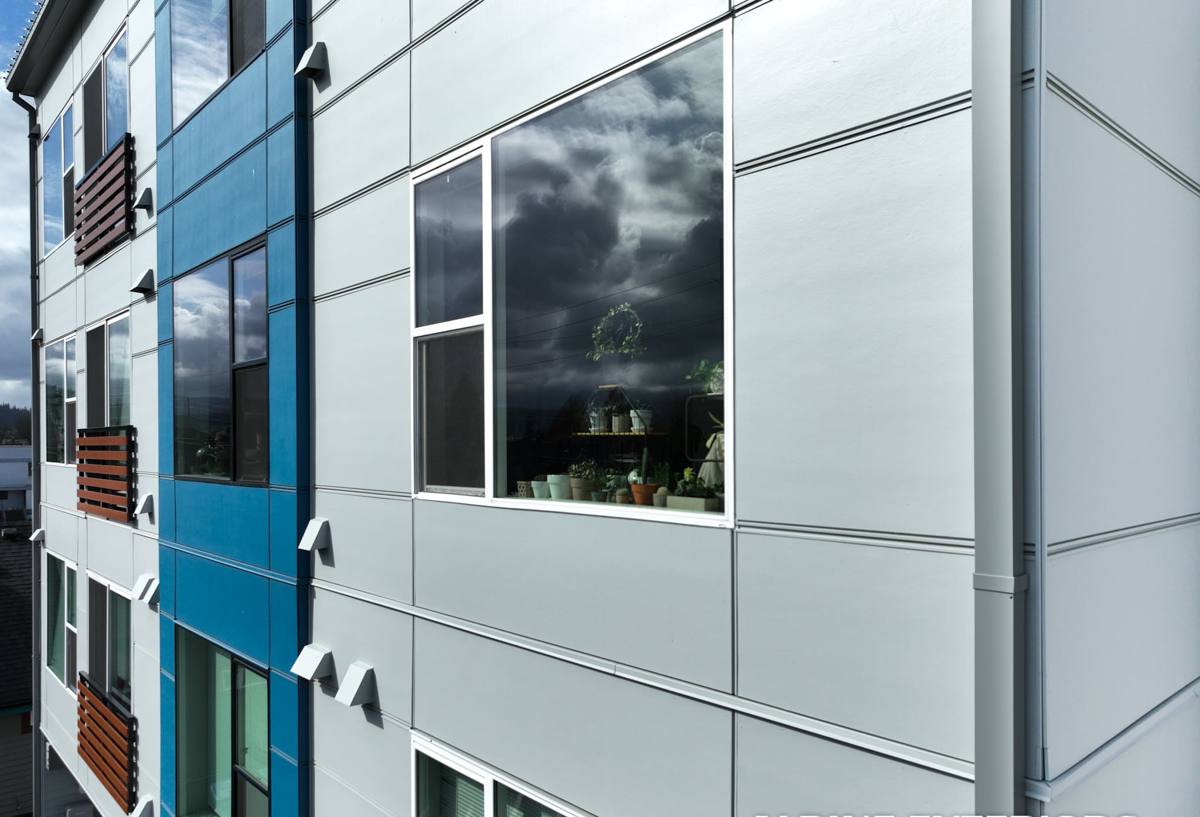
How Salt Air, Rain, and Moss Affect Different Siding Materials
Not all siding responds to this climate the same way. Some materials tolerate damp, salty air reasonably well. Others need constant upkeep to avoid problems, and a few can develop issues that aren't visible until they're already serious.
| Material | Response to Salt Air / Moisture | Moss & Algae Behavior | Long-Term Maintenance |
|---|---|---|---|
| James Hardie fiber cement | Non-combustible, dimensionally stable, holds up well in coastal-adjacent air | Factory-finish resists staining better than raw wood; still needs periodic washing | Low — repainting isn't required with ColorPlus finish |
| Vinyl siding | Can become brittle and fade faster with salt exposure and UV over years | Moss and mildew can grow in seams and J-channels | Low cost upkeep, but panels can warp or crack and are hard to color-match if replaced later |
| Primed spruce / cedar | Absorbs moisture readily; salt air accelerates checking and rot at end grain | Prone to moss and algae growth, especially in shaded areas | High — repainting and caulk maintenance every few years |
| LP SmartSide (engineered wood) | Better than raw wood but still wood-based; edges and cuts are moisture-sensitive if not sealed correctly | Can support moss/algae growth similar to other wood-based products | Moderate — relies heavily on correct field sealing at every cut and seam |
This is the core reason our company standardized on James Hardie fiber cement and stopped installing vinyl, LP SmartSide, Cemplank, Allura, primed spruce, or cedar. Each of those products has legitimate uses elsewhere, but in a climate that combines salt air, sustained rain, and heavy shade, we found the trade-offs weren't worth it for the homes we're putting our name behind.
Signs Your Conway Home's Siding Needs Replacement, Not Just Repair
Repair makes sense when damage is isolated. Replacement becomes the honest answer when the problems are systemic — spread across multiple walls, tied to the original installation, or affecting the sheathing underneath. Some signs worth taking seriously:
- Soft or spongy spots when you press on the siding, especially near the bottom courses
- Moss or dark staining that returns within months of cleaning
- Paint that's peeling or bubbling rather than just fading
- Visible gaps, warping, or buckling panels, particularly on walls facing prevailing weather
- Cracked caulking at seams, corners, and trim that keeps failing after re-caulking
- Interior signs — musty smells, discoloration on interior walls, or drafts near exterior walls
If you're seeing more than one or two of these, it's usually a sign the water-resistive barrier or original installation is compromised, not just the surface material.
What a Correct Siding Replacement Actually Involves
Siding replacement done right is not simply removing old panels and nailing up new ones. In a climate like Conway's, the parts you don't see afterward matter more than the parts you do.
Tear-Off and Sheathing Inspection
Once the old siding comes off, the sheathing underneath gets inspected for rot, delamination, or moisture damage — problems that are common on homes that have dealt with years of driving rain and shaded, slow-drying walls. Any compromised sheathing gets replaced before anything new goes back up. Skipping this step is one of the most common ways a siding job fails early.
Water-Resistive Barrier and Flashing
A correctly lapped water-resistive barrier, along with properly integrated flashing at windows, doors, and penetrations, is what actually keeps water out — the siding itself is the second line of defense, not the first. This detail work is where a lot of siding jobs are rushed, and it's exactly where damp, salt-heavy climates punish shortcuts fastest.
Installation to Manufacturer Spec
James Hardie products are engineered with specific fastening patterns, gaps, and clearances for a reason — those specs are what the warranty is actually built around. Installing to spec means correct nail placement, proper clearance from grade and roof lines, and factory-recommended gaps at butt joints, not shortcuts that might look fine on installation day but cause problems two winters later.
Why We Install Only James Hardie Fiber Cement
We don't install vinyl siding, LP SmartSide, Cemplank, Allura, primed spruce, or cedar, and that's a deliberate standard, not a limitation in what we're capable of doing. Here's the reasoning:
Built for This Climate
James Hardie's HZ10 product line is engineered specifically for the Pacific Northwest's wet, moderate climate — cold winters, heavy rain, and the constant damp that comes with living near the water. Fiber cement doesn't absorb moisture the way wood-based products do, and it won't warp, rot, or support insect damage.
ColorPlus Factory Finish
Hardie's ColorPlus finish is baked on at the factory under controlled conditions, which gives it better fade and moisture resistance than field-applied paint. That matters in a place like Conway where UV, salt, and rain all work against a painted surface simultaneously.
Non-Combustible
Fiber cement doesn't burn, which is a meaningful advantage regardless of the immediate wildfire risk profile of a given neighborhood — it's simply a safer material to put on a home.
Warranty That Transfers
James Hardie backs its products with a strong, transferable warranty — a real asset if you sell the home down the road, and a sign of how confident the manufacturer is in the product's longevity when installed correctly.
Our Process for Conway Siding Replacement Projects
- On-site assessment — we walk the exterior, check for moss patterns, moisture damage, and problem areas specific to your home's orientation and exposure.
- Scope and product selection — we determine which Hardie plank, panel, or shingle profile and color fit the home, and lay out a clear, written scope.
- Tear-off and sheathing repair — old siding comes off, sheathing is inspected, and any damaged material is replaced before moving forward.
- Water-resistive barrier and flashing — a new barrier is installed and lapped correctly, with flashing integrated at every window, door, and penetration.
- Hardie installation to spec — panels are installed following James Hardie's fastening, gapping, and clearance requirements.
- Final detail and cleanup — caulking, touch-up painting where needed, and a full site cleanup before we walk the job with you.
What Siding Replacement Costs Depend On
We won't quote a number without seeing the home, but the main factors that move the price on a Conway siding replacement are consistent from job to job:
| Factor | Why It Matters |
|---|---|
| Extent of sheathing damage found at tear-off | Rot or moisture damage discovered underneath the old siding adds repair scope before new siding can go on |
| Home size and wall complexity | More corners, dormers, and trim details mean more labor and material cuts |
| Siding profile chosen | Lap siding, panel systems, and shingle-style Hardie products vary in material and labor cost |
| Accessibility | Steep sites, limited staging area, or difficult access can affect labor time |
| Trim and detail work | Window and door trim, fascia, and corner details add scope beyond flat wall replacement |
Questions to Ask Before You Hire
Because siding replacement is a significant investment and hard to fully inspect once it's closed up, it's worth vetting a contractor carefully before signing anything:
- Are you licensed and insured to do exterior work in Washington State?
- Are you a certified James Hardie installer, and can you explain their installation spec?
- Will you inspect and repair sheathing if damage is found, and how is that priced?
- What water-resistive barrier and flashing details do you use around windows and doors?
- Do you provide a written scope of work and a clear warranty on labor, separate from the manufacturer's product warranty?
- Can you provide references from other siding replacement projects in Skagit County?
Why Hiring a Crew That Already Works in Conway Matters
Conway's combination of salt-adjacent air, sustained rainfall, and shaded, slower-drying lots isn't universal — it's a specific microclimate that plays out differently than siding jobs on the drier east side of the state or even parts of Anacortes proper that get more direct sun and wind exposure. A crew that already works this part of Skagit County knows which walls tend to hold moisture, where moss shows up first, and how to sequence a tear-off around the area's weather rather than fighting it. That local pattern recognition, paired with correct installation to James Hardie's spec, is what actually determines whether a siding replacement holds up for decades or becomes a repeat problem in five years.
If your Conway home's siding is showing its age, we're happy to take a look and walk you through what we're seeing — no pressure, no obligation. Reach out below for a free estimate.