 Anacortes Exterior
 Roof Repair Built for Conway's Weather
Conway sits low in the Skagit River delta, close enough to Puget Sound and Skagit Bay that salt-laden air, wind-driven rain, and heavy shade from surrounding timber all show up in how roofs age here. A roof that would last two decades in a dry inland climate can develop real trouble in half that time if it was installed without this area's conditions in mind. We do roof repair work throughout Anacortes and the surrounding Skagit County communities, and Conway's combination of moisture, salt exposure, and moss pressure is one we see constantly.
This page is about roof repair specifically — not a full tear-off and replacement, though we'll talk honestly about when repair stops making sense. If your roof has a leak, damaged flashing, lifted or cracked shingles, or a moss problem that's gone past cosmetic, this is the service you need.
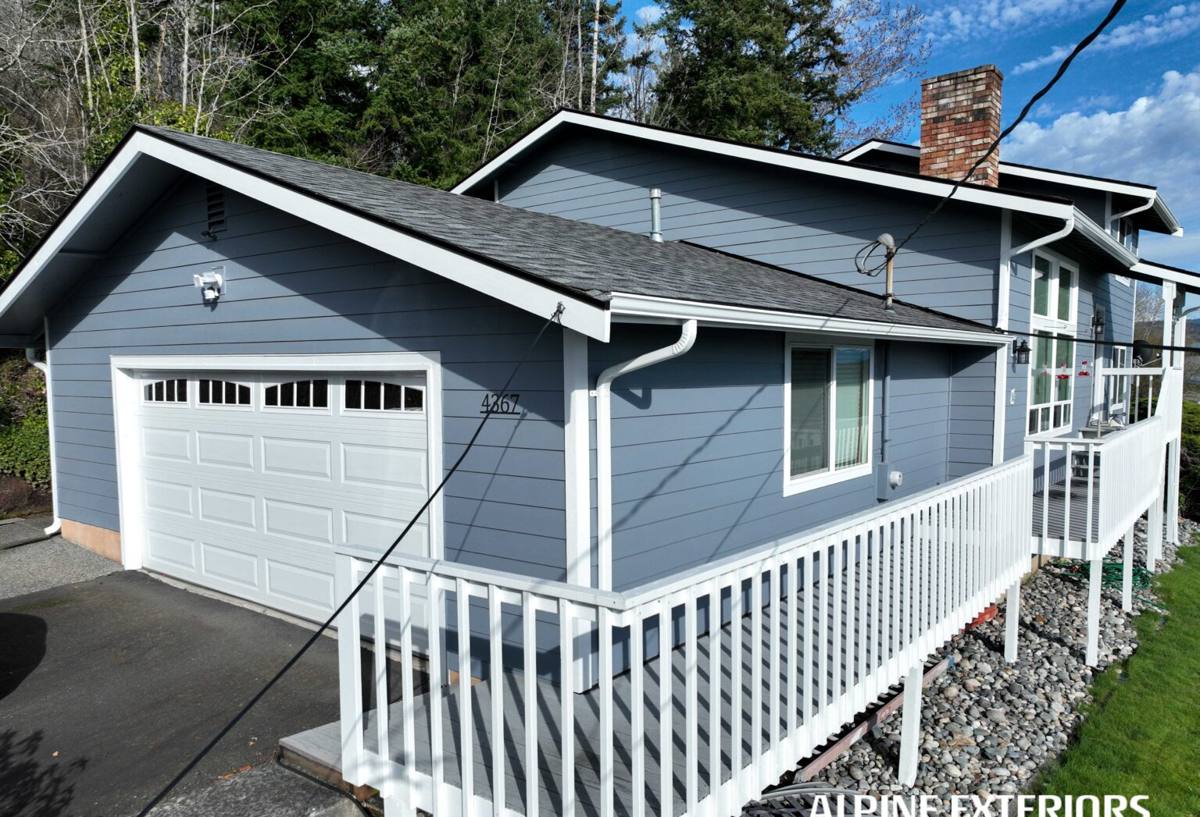
What Actually Goes Wrong on Conway Roofs
The failures we get called out for in this part of Skagit County follow a pattern. It's rarely one dramatic storm — it's slow, repeated exposure wearing down the weak points in a roof system.
Moss and Organic Growth
Conway's tree cover and near-constant fall-through-spring dampness give moss everything it needs. Moss doesn't just look bad — it holds moisture against the roofing surface, works its way under shingle tabs and shakes, and lifts material as it grows. Left alone through a full moss season, it can shorten the life of an otherwise sound roof by years.
Salt Air Corrosion
Being close to tidal water means airborne salt reaches farther inland than people expect. Metal flashing, fasteners, gutter hardware, and any exposed metal roofing components corrode faster here than they would even twenty miles inland. Corroded flashing is one of the most common sources of roof leaks we trace back on repair calls — it's rarely the shingle field itself that fails first.
Wind-Driven Rain and Flashing Failures
Storms coming off the water don't just drop rain straight down — wind pushes it sideways, up under shingle edges, and into any gap around chimneys, skylights, vents, and wall-to-roof transitions. Flashing that was installed correctly for straight-down rain can still leak under driving, angled rain if it wasn't detailed for this specific exposure.
Moisture Trapped by Poor Ventilation
A roof that can't breathe holds condensation underneath the decking, which rots sheathing from the inside even when the surface looks fine. This is a slower, quieter failure, and it's one of the reasons a roof can look repairable from the ground but reveal soft, spongy decking once we're actually up there.
What a Correct Repair Involves (Not Just a Patch)
A roof repair done right is a diagnosis first, a fix second. Slapping new shingles or sealant over a symptom without finding the actual entry point is the single most common reason a "repaired" roof leaks again within a season.
- Tracing the leak to its actual source, which is often several feet from where the water stain shows up inside
- Checking the condition of the decking underneath, not just the roofing surface
- Inspecting and, where needed, replacing flashing around penetrations — chimneys, vents, skylights, and roof-to-wall junctions
- Matching replacement shingles or roofing material as closely as possible in type, profile, and weathering, so the repair doesn't stand out or perform differently than the surrounding roof
- Confirming attic or roof ventilation is adequate, since a repair on a poorly ventilated roof can fail again from trapped moisture regardless of how well the surface work is done
- Clearing moss and organic debris from the repair area and treating for regrowth where appropriate
Any one of those steps skipped is how a repair turns into a callback. We treat all of them as part of the job, not optional add-ons.
Our Repair Process, Start to Finish
We keep the process straightforward because homeowners dealing with an active leak don't need extra complexity added on top of an already stressful situation.
- Inspection. We get on the roof (not just a look from the ground) and check the full roof system near the problem area, not only the spot where water is showing up inside.
- Diagnosis and explanation. We tell you what's actually wrong, in plain terms, before any work starts — including whether this is a straightforward repair or something that points toward a bigger issue.
- Written estimate. You get a clear scope of work and a price before we touch anything.
- The repair itself. This includes removing damaged material, addressing the decking if needed, correcting flashing, installing matched replacement material, and re-securing everything to hold up against wind-driven rain.
- Moss and debris cleanup. We clear the surrounding area of moss, needles, and debris so the repaired section isn't immediately undermined by the same buildup that likely contributed to the original problem.
- Final check. We confirm the fix from both the roof surface and, where relevant, from inside the attic space.
Repair or Replace? How We Help You Decide
Not every roof problem in Conway calls for a full replacement, and not every leak is fixable with a simple patch. We give you an honest read on which side of that line your roof is on.
| Situation | Repair usually makes sense | Replacement is usually the honest answer |
|---|---|---|
| Roof age | Well within expected lifespan for the material | At or past expected service life for the material and exposure |
| Extent of damage | Isolated to one section, flashing point, or penetration | Spread across multiple areas or the whole roof plane |
| Decking condition | Solid, no rot found during inspection | Soft or rotted decking discovered in more than one spot |
| Moss/moisture history | Recent, addressed before causing structural damage | Long-term, with signs of decking or structural moisture damage |
| Material matching | Original material still available or a close match exists | Original material discontinued or badly mismatched with age/fading |
We'd rather tell you a repair will hold and save you the cost of a full roof than talk you into replacement work you don't need — and we'll also tell you plainly when a repair is just delaying an expense that's coming either way.
Materials We Use — and the Trade-offs We're Honest About
Repair material choice matters more in this climate than in drier parts of the state, because salt exposure and moss pressure punish the wrong choice faster.
Asphalt Composition Shingles
The most common roofing material we repair and match in this region. Quality varies by product line, and we favor shingles with algae-resistant granules, which matter given how much moss and algae pressure this area sees. The trade-off is that even good asphalt shingles are a wear item — they're not a one-time investment the way some other materials can be, and they need periodic moss treatment to reach their full expected life.
Metal Roofing and Flashing
Metal holds up well structurally but is exactly what salt air attacks first if it isn't the right grade or coating for coastal exposure. When we repair or replace flashing, we choose materials rated for corrosion resistance rather than whatever is cheapest, because flashing failure is the single most common leak source we trace on repair calls.
Cedar Shakes
Cedar has real appeal and can perform well, but it demands more maintenance in a wet, moss-prone climate than most other options — moisture retention and organic growth are an ongoing concern rather than a one-time install decision. We're upfront that cedar in a location like Conway is a higher-maintenance choice, not a lower-maintenance one, and we price and plan repairs accordingly rather than pretending otherwise.
Sealants and Underlayment
We don't rely on surface sealant as a standalone fix for flashing or penetration leaks. Sealant is a supporting layer, not a substitute for correct flashing geometry and properly lapped underlayment — a repair that leans on caulk alone tends to fail again within a wet season or two.
Keeping a Repaired Roof Ahead of Moss and Moisture
A good repair buys you time, but Conway's moss season doesn't take a year off. These are the basics that keep a repaired roof performing between professional inspections.
- Keep overhanging branches trimmed back to cut down shade and debris buildup on the roof surface
- Clear gutters and downspouts before the fall rains arrive so water isn't backing up under the roof edge
- Watch for dark streaking or green growth on north-facing or shaded slopes, since that's usually where moss establishes first
- Address small moss patches early rather than waiting for a full moss season to pass
- Check attic ventilation isn't blocked by insulation, since blocked vents trap the moisture that causes decking rot from underneath
- Have flashing points — chimneys, vents, skylights — checked periodically, since these fail well before the shingle field usually does
Why Local Experience in Conway Matters
Roofing crews that mainly work drier, inland areas don't always think in terms of salt air corrosion or moss pressure as a first-order design concern — because where they work, it isn't one. A crew that regularly works Conway and the rest of Anacortes and Skagit County treats those factors as standard, not exceptions. That shows up in small decisions: which flashing grade gets specified, how much moss clearing happens as part of the repair rather than as an afterthought, and how ventilation gets evaluated even on a repair that's nominally just about a leak.
It also means we're not guessing at how this specific area's weather behaves. We've seen how driving rain off the water finds gaps that straight-down rain never would, and we plan repairs with that in mind rather than applying a generic approach and hoping it holds.
What Roof Repair Typically Costs Here
Every repair is different, and we won't quote a number without inspecting the roof — but these are the honest factors that move the price up or down.
| Cost Factor | Tends to lower cost | Tends to raise cost |
|---|---|---|
| Size of damaged area | Small, isolated section | Multiple sections or spread-out damage |
| Decking condition | Sound decking, no replacement needed | Rotted decking requiring replacement |
| Access and roof pitch | Low-pitch, easily accessible roof | Steep pitch or difficult access |
| Material matching | Common, readily available material | Discontinued or specialty material requiring sourcing |
| Flashing scope | Single penetration point | Multiple flashing points or full valley replacement |
Simple, isolated repairs are often a modest job. Repairs involving decking replacement, extensive flashing work, or hard-to-match material naturally cost more. We'll walk you through exactly what's driving your number before any work begins.
Get a Straight Answer on Your Conway Roof
If you've got a leak, a moss problem that's gotten out of hand, or damage from a recent storm, we're happy to take a look and give you an honest read on what it actually needs — repair, and nothing more, if that's genuinely the right call. Reach out for a free, no-pressure estimate using the form below.