 Anacortes Exterior
 Roofing a Home in Conway's Delta Climate
Conway sits on low, flat delta land near the Skagit River, tucked between Mount Vernon and Stanwood and not far from Skagit Bay and the open water of Puget Sound. That location makes for good farmland and quiet living, but it's a tough spot for a roof. Moist air moves in off the water, farmland and river bottoms hold humidity long after a storm passes, and tree cover along the edges of the valley keeps many roofs shaded and damp for weeks at a stretch. If you own a home in or around Conway, your roof works harder than one thirty miles inland.
The three things that wear out a roof here fastest are salt-laden air, wind-driven rain, and moss. None of them show up as a dramatic event — they're slow, steady damage that adds up over years. A new roof installation done right accounts for all three from the start, not as an afterthought.
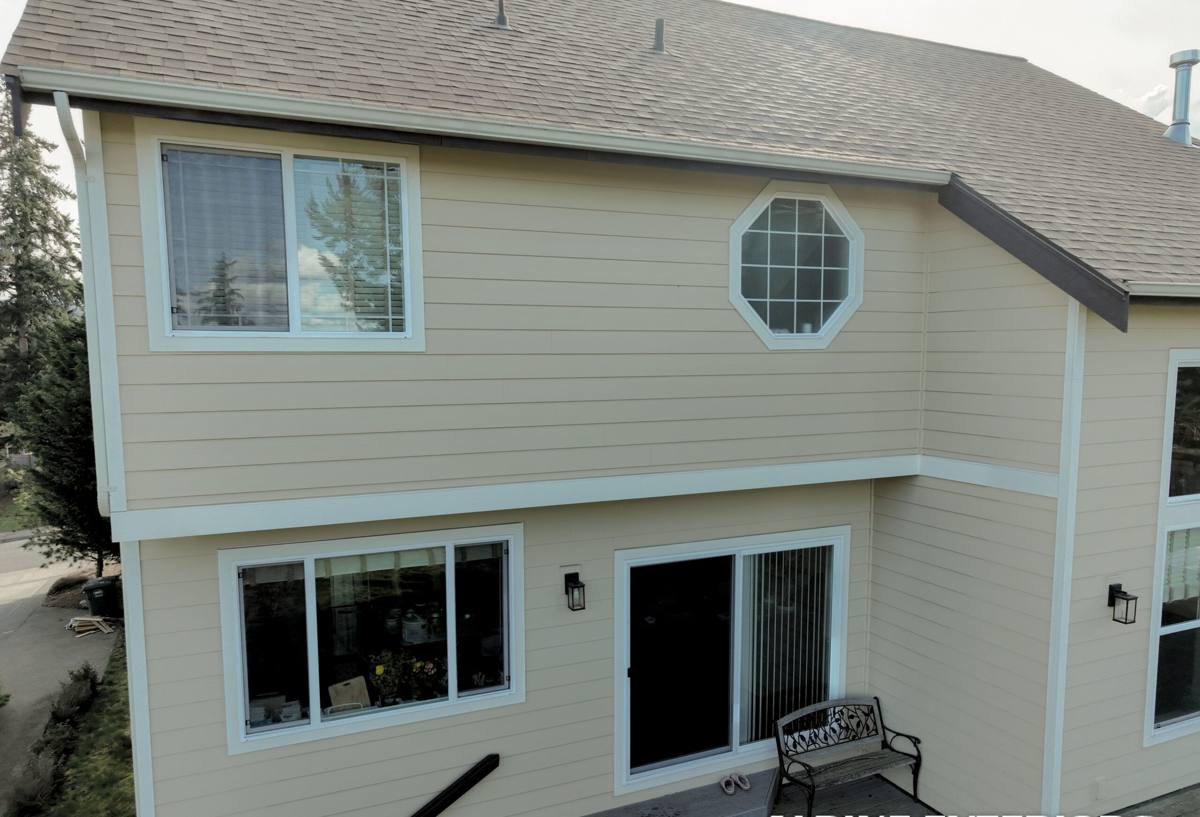
What Salt Air, Rain, and Moss Actually Do to a Roof
Salt air
Airborne salt from Skagit Bay and the Sound corrodes exposed metal faster than it would inland — nail heads, flashing, gutter fasteners, and any exposed screws on a metal roof. Cheap or under-spec fasteners rust and stain the roof, and eventually the metal thins enough that water finds a way through. This is a fastener and flashing-grade issue as much as it is a roofing-material issue.
Driving rain
Storms here rarely come straight down. Wind pushes rain sideways up under shingle edges, around chimneys, and into valleys and step flashing that weren't sealed with enough overlap. A roof that would hold up fine in a calm climate can leak here simply because the flashing details were built for less wind-driven exposure.
Moss
Conway's tree cover and river-bottom humidity mean moss and algae get a long growing season — often nine months of the year or more on north-facing and shaded slopes. Moss holds moisture against the roof surface, lifts shingle edges as it grows, and can work its way under laps over a few seasons. A roof installed without moss-resistant granules or without attention to airflow and shade will show moss faster than the same roof installed a few miles away in full sun.
What a Correct New Roof Installation Involves
A new roof is more than stripping old shingles and nailing down new ones. For a Conway-area home, we treat these steps as non-negotiable:
- Full tear-off — layering new shingles over old ones traps moisture and voids most manufacturer warranties. We remove the roof down to the deck.
- Deck inspection and repair — soft, delaminated, or water-stained sheathing gets replaced before anything new goes down. This is where hidden moss and leak damage usually shows up.
- Ice-and-water barrier at vulnerable areas — eaves, valleys, and roof-to-wall transitions get a self-adhering membrane, not just felt, because that's where driving rain and moss-related backup cause the most leaks.
- Synthetic underlayment across the full deck for a second line of defense against wind-driven rain.
- Corrosion-resistant flashing and fasteners at chimneys, walls, skylights, and valleys — sized and detailed for a marine climate, not a generic inland install.
- Balanced intake and exhaust ventilation so the attic doesn't trap the moisture that feeds moss and rot from underneath.
Choosing a Roofing Material for Conway Conditions
There's no single "best" roofing material — the right choice depends on your home's exposure, budget, and how much upkeep you want to take on. Here's how the common options hold up against Conway's specific conditions:
| Material | Moss resistance | Salt air / coastal performance | Maintenance |
|---|---|---|---|
| Architectural asphalt shingle (algae-resistant) | Good with treated granules; needs periodic cleaning on shaded slopes | Good — no exposed metal to corrode on the field | Low to moderate |
| Standard 3-tab asphalt shingle | Fair — shorter lifespan under heavy moss load | Good | Moderate |
| Standing-seam metal | Very good — moss struggles to grip smooth metal | Depends heavily on fastener and coating quality; needs marine-grade hardware | Low, but coastal-grade materials cost more upfront |
| Cedar shake | Poor without diligent maintenance — shaded, damp roofs feed moss and rot fastest here | Fair | High — regular treatment needed |
We install algae-resistant architectural shingles and quality metal roofing for Conway homes, and we're upfront when a material isn't a good match for a shaded, low-lying lot. Cedar shake in particular carries a real maintenance burden in this specific climate — not because it's a bad product everywhere, but because Conway's shade and moisture make it a high-upkeep choice that many homeowners don't want to sign up for long-term.
A note on impact and wind ratings
Skagit County sees real windstorms off the water, and roofing near the delta is exposed with fewer windbreaks than a wooded inland lot. We check wind and impact ratings against your home's actual exposure rather than defaulting to the cheapest rated product, since a marginal wind rating is the kind of thing that only matters on the one night it matters most.
Ventilation: The Part of the Job You Don't See
Most moss and rot problems that look like a "bad roof" are actually a ventilation problem. A humid attic pushes moisture up into the underside of the deck, which keeps the roof damp from below at the same time salt air and rain are working on it from above. Correct new roof installation includes:
- Continuous or adequately sized ridge venting matched to intake at the soffits
- Baffles to keep insulation from blocking soffit airflow
- Sealed, insulated attic access to stop conditioned indoor air from adding to attic humidity
Skipping this step is one of the most common shortcuts in cheap roof installs, and it's invisible until moss or sheathing rot shows up two or three years later.
Our Installation Process
- On-site inspection and estimate — we look at your current roof, deck condition, attic ventilation, and sun/shade exposure, and give you a written, itemized estimate.
- Material selection — we walk through the tradeoffs above based on your home, not a one-size-fits-all recommendation.
- Permitting — we handle the Skagit County permit paperwork for the job.
- Tear-off and deck repair — old roofing removed, deck inspected, any damaged sheathing replaced and documented before we cover it up.
- Underlayment, flashing, and ventilation installation — the details that determine whether the roof holds up to driving rain and salt air.
- Final roofing material installation — installed to manufacturer spec, not just "close enough."
- Walkthrough and cleanup — magnetic sweep for stray fasteners, full site cleanup, and a final walkthrough with you before we consider the job done.
What a New Roof Costs — and What Drives the Price
Every roof is different, but these are the main factors that move the price up or down for a Conway-area home:
| Factor | Why it matters here |
|---|---|
| Roof size and pitch | Steeper, larger roofs take more labor and material, and steep pitches need extra fall-protection setup |
| Deck condition | Hidden moisture or moss damage found during tear-off means sheathing replacement, which isn't visible until we open the roof up |
| Material choice | Standard architectural shingle costs less upfront than standing-seam metal, but metal often costs less over its longer lifespan |
| Flashing and ventilation detail | Homes with multiple roof planes, chimneys, or skylights need more custom flashing work, which is where leaks start if it's rushed |
| Access and site conditions | Tree cover, driveway access, and roof height all affect setup time and labor |
We give a real, written number after seeing your roof — not a phone-quote guess — because deck condition alone can swing a bid significantly once we're up there.
Signs Your Conway Home May Need a New Roof
- Shingles that are cupping, curling, or losing granules in the gutters
- Dark streaking or thick moss growth on north-facing or shaded slopes
- Soft spots or sagging when walked on the roof surface
- Rusted, lifted, or missing flashing around chimneys, vents, or walls
- Daylight visible through the attic roof deck
- Water stains on interior ceilings, especially after wind-driven storms
- A roof approaching or past 20-25 years old (asphalt) or showing widespread wear regardless of age
Any one of these on its own isn't necessarily an emergency, but a few together usually means it's time to stop patching and start planning a replacement before a bigger leak forces the decision for you.
Why Hire a Crew That Already Works in Conway
A roofer based elsewhere in Skagit County or coming up from Seattle can install a roof, but they haven't necessarily built up a feel for how Conway's specific mix of delta humidity, salt exposure, and shaded tree cover behaves over a full year of seasons. We work this area regularly, which means we already know to size ventilation for the humidity, spec fasteners for the salt air, and detail flashing for wind-driven rain rather than treating this as a generic install. We're also familiar with Skagit County's permitting process, so that part of the job doesn't slow you down.
If your roof is showing its age, or you just want an honest read on how many years you've got left, we're happy to come take a look. The estimate is free, there's no pressure, and you'll get a straight answer about what your roof actually needs — use the form below to get started.