 Anacortes Exterior
 Roof Repair Built for Cap Sante's Exposure
Cap Sante sits high above the Anacortes waterfront, looking out over the marina and Guemes Channel. That elevation and water exposure is part of what makes the neighborhood desirable, but it's also what puts extra stress on a roof. Homes up here take wind off the water more directly than roofs tucked into inland Skagit County, and that wind carries salt, rain, and moisture in ways that wear on roofing materials faster than most homeowners expect. A roof repair here isn't just patching a leak — it's addressing conditions that are specific to this stretch of the Anacortes waterfront.
We work on roofs throughout Cap Sante regularly, which means we're not guessing at how this microclimate behaves. We know which slopes hold moss longest, which flashing details fail first in wind-driven rain, and where salt air tends to do its damage. That local pattern recognition is a big part of what separates a repair that actually holds up from one that leaks again in a year.
What Salt Air, Rain, and Moss Do to a Cap Sante Roof
Salt Air and Metal Components
Salt-laden air off the channel accelerates corrosion on any exposed metal — nail heads, flashing, drip edge, and fasteners on roof vents or satellite mounts. Once a fastener starts to corrode, it loses its grip and its seal at the same time, which is how small leaks start at points that look fine from the ground. This is a bigger factor for homes closer to the water and at higher elevation, both of which describe much of Cap Sante.
Driving Rain and Wind-Driven Water
Anacortes gets plenty of rain that falls more or less straight down, but the storms that do damage are the ones that push rain sideways. Wind-driven rain finds gaps that vertical rain never would — under shingle tabs, behind step flashing, and through vent boots that have started to crack. A repair that only addresses the visible drip point without checking how water is actually traveling under the roofing material tends to fail again in the next windstorm.
Moss on Shaded, North-Facing Slopes
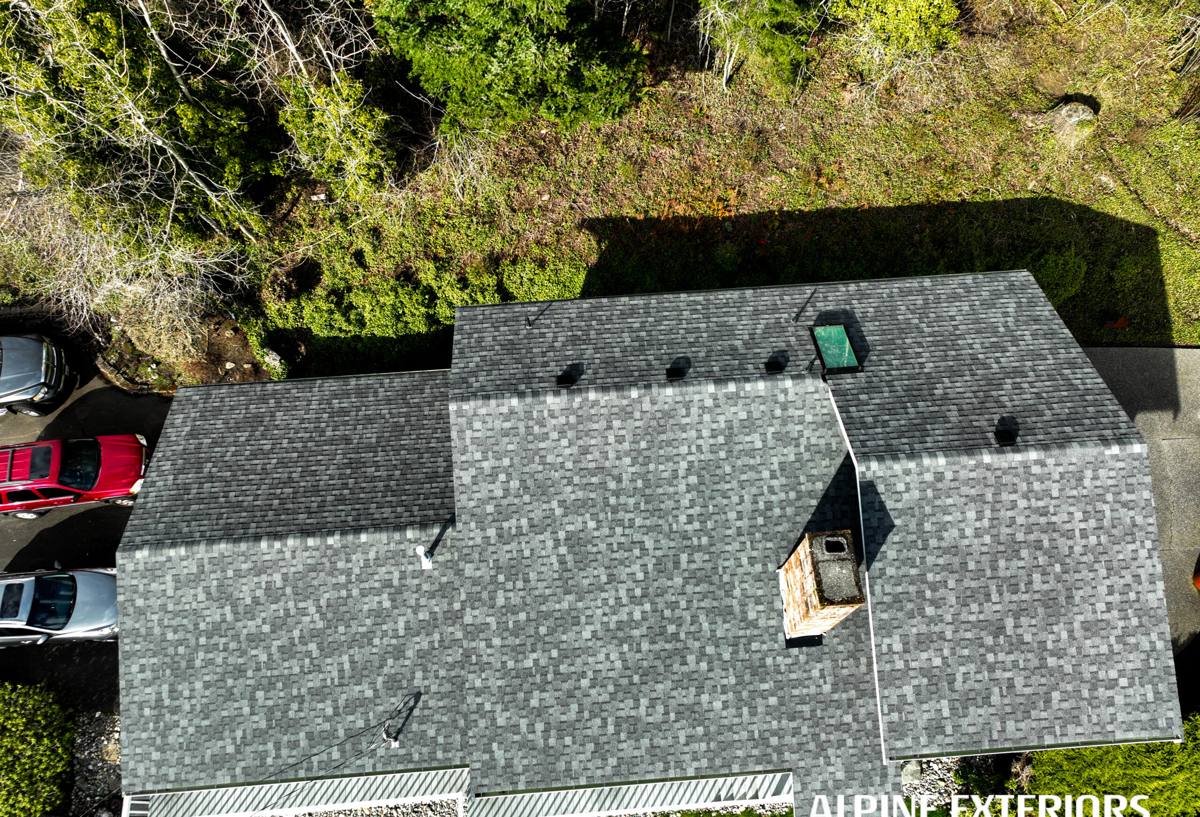
Anacortes' long wet season and the tree cover common around Cap Sante properties create ideal moss conditions on north-facing and shaded slopes. Moss holds moisture against the roofing surface far longer than open sun-exposed areas dry out, and as it grows it physically lifts shingle edges and granule surfaces. Left alone through a full moss season, it will work its way under the shingle line and create a leak path that wasn't there when the moss started.
Common Repair Calls We See in This Neighborhood
Most of the repair work we do in Cap Sante falls into a handful of recurring categories:
- Lifted, cracked, or missing shingles from sustained wind exposure, especially on the water-facing side of a roof
- Flashing failures around chimneys, skylights, and roof-to-wall transitions where wind-driven rain gets pushed sideways
- Moss-related leaks on shaded slopes where growth has lifted shingles or held moisture against the roof deck
- Corroded or loosened fasteners and metal flashing from long-term salt air exposure
- Clogged valleys and gutters from needle and leaf debris, backing water up under the lowest courses of roofing
- Cracked or brittle pipe boots and vent seals, which are usually the first component to fail on an otherwise sound roof
None of these are unusual roofing problems on their own. What's specific to Cap Sante is how often they show up together, and how much faster they progress when salt air and shade are both in play.
What a Correct Roof Repair Actually Involves
A repair that's done right starts well before any material gets replaced. We look at more than the spot where water is showing up inside the house, because water almost never travels in a straight line — it follows the roof deck, gets diverted by a stud or joist, and shows up on a ceiling or wall well away from where it entered the roof. Chasing the actual entry point matters more than patching the visible symptom.
Once the source is confirmed, the repair itself has a few non-negotiables:
- Matching materials appropriately. Shingle color and profile match where it's visible, but more importantly, matching the underlying compatibility — you don't mix incompatible metals in flashing, and you don't use a lower-grade underlayment patch under premium roofing.
- Correct flashing detail, not just sealant. Caulk and roofing cement are a short-term patch, not a repair. Proper step flashing, counter-flashing, and pipe boot replacement are what actually stop water long-term.
- Checking ventilation while we're up there. Poor attic ventilation accelerates moss growth and shortens shingle life from the underside, so a repair is a natural point to flag ventilation issues even if fixing them is a separate project.
- Cleaning the area, not just fixing it. Moss, debris, and granule buildup around a repair site left in place will undermine the repair itself.
Our Repair Process
We keep the process straightforward because homeowners dealing with an active leak don't need more complexity added to their day:
- Inspection. We get on the roof (not just a ground-level look) to trace the actual leak path, check the general condition of the roofing system, and note any secondary issues like moss buildup or failing flashing nearby.
- Honest assessment. We tell you plainly whether this is a straightforward repair, a repair that buys you meaningful time, or a situation where the roof is old enough or damaged enough that repair money would be better spent toward replacement.
- Written estimate. You get a clear scope and price before any work starts — no surprise add-ons once we're on the roof.
- The repair. We do the work to the standard above: correct flashing, matched materials, and attention to what caused the failure in the first place, not just the symptom.
- Cleanup and check. We clear debris and moss from the work area and confirm the fix from both the roof side and, where relevant, from inside the attic or ceiling.
Repair or Replace? What Actually Drives That Decision
Not every leak means a new roof, and not every roof is worth repairing indefinitely. These are the factors that typically decide it:
| Factor | Favors Repair | Favors Replacement |
|---|---|---|
| Roof age | Well within expected material lifespan | Near or past the material's typical service life |
| Extent of damage | Isolated to one area or component | Multiple failure points across several slopes |
| Moss/algae history | Recent, surface-level growth | Long-term growth with granule loss or deck softening |
| Underlying deck condition | Solid, dry sheathing found during inspection | Soft or water-damaged decking discovered under shingles |
| Material availability | Existing shingle/material still obtainable to match | Product discontinued, forcing a mismatched patch |
We'll always walk you through where your roof falls on these points rather than defaulting to the more expensive answer. A lot of Cap Sante roofs genuinely just need a solid, correctly done repair — not a full tear-off.
Moss Management and Preventive Maintenance
Because moss is such a consistent issue on shaded Cap Sante roofs, ongoing maintenance matters as much as the repair itself. Left unmanaged, this season's minor moss patch is next season's leak call. A few signs it's time to have a roof looked at before a repair becomes urgent:
- Visible green or dark growth on north-facing or shaded slopes, especially near roof edges and valleys
- Granules collecting in gutters or at the base of downspouts
- Shingle edges that look slightly lifted or curled compared to the rest of the roof
- Dark streaking that doesn't wash off with normal rain
- Soft spots or sagging noticed when walking near the roof edge (best assessed by a professional, not by walking the roof yourself)
- Water stains on interior ceilings that appear only during wind-driven storms
Regular moss removal and gutter clearing — done carefully so granules and shingle edges aren't damaged in the process — extends the life of a roof and catches small problems before they become water intrusion.
Why Local Experience in Cap Sante Matters
A roofing crew that mostly works inland doesn't see the same failure patterns we see on Cap Sante rooflines day in and day out. Knowing which slopes take the worst of the channel wind, how fast moss builds back on the shaded sides of these homes, and how salt air shortens the working life of standard fasteners changes how we diagnose and repair a roof here. It also means we're realistic with you — we're not going to recommend a repair approach that we've already seen fail on a similar roof a quarter-mile away.
Access matters too. Many Cap Sante properties sit on sloped lots with limited staging area, and working safely and efficiently around that takes equipment and planning suited to the terrain, not a one-size-fits-all setup. Skagit County permitting and code requirements are also part of doing this work correctly, and that's something we handle as a matter of course rather than something a homeowner needs to manage themselves.
Get a Straightforward Look at Your Roof
If you're dealing with a leak, visible moss, or you just want an honest read on the condition of your roof before the next storm season, we're glad to come take a look. The estimate is free, there's no pressure to move forward, and you'll get a clear explanation of what we find and what it would take to fix it. Use the form below to get started.