 Anacortes Exterior
 Why Decks in Cap Sante Wear Out Faster Than People Expect
Cap Sante sits close enough to the water that homes here take a different kind of beating than decks built even a few miles inland. Salt-laden air moves in off the marina and Guemes Channel and settles on every exposed surface, including your deck boards, fasteners, and railing hardware. Add Anacortes' driving winter rains and a moss season that can stretch from October well into spring, and you've got a structure that's under near-constant moisture pressure for most of the year.
Homeowners often assume a deck failure is about the boards looking tired. In our experience, the real damage is usually happening underneath — in the ledger board, the joists, and the fasteners — long before the surface gives it away. A deck that looks "okay" from a distance can still have soft framing, corroding hardware, or a ledger connection that's pulling away from the house.
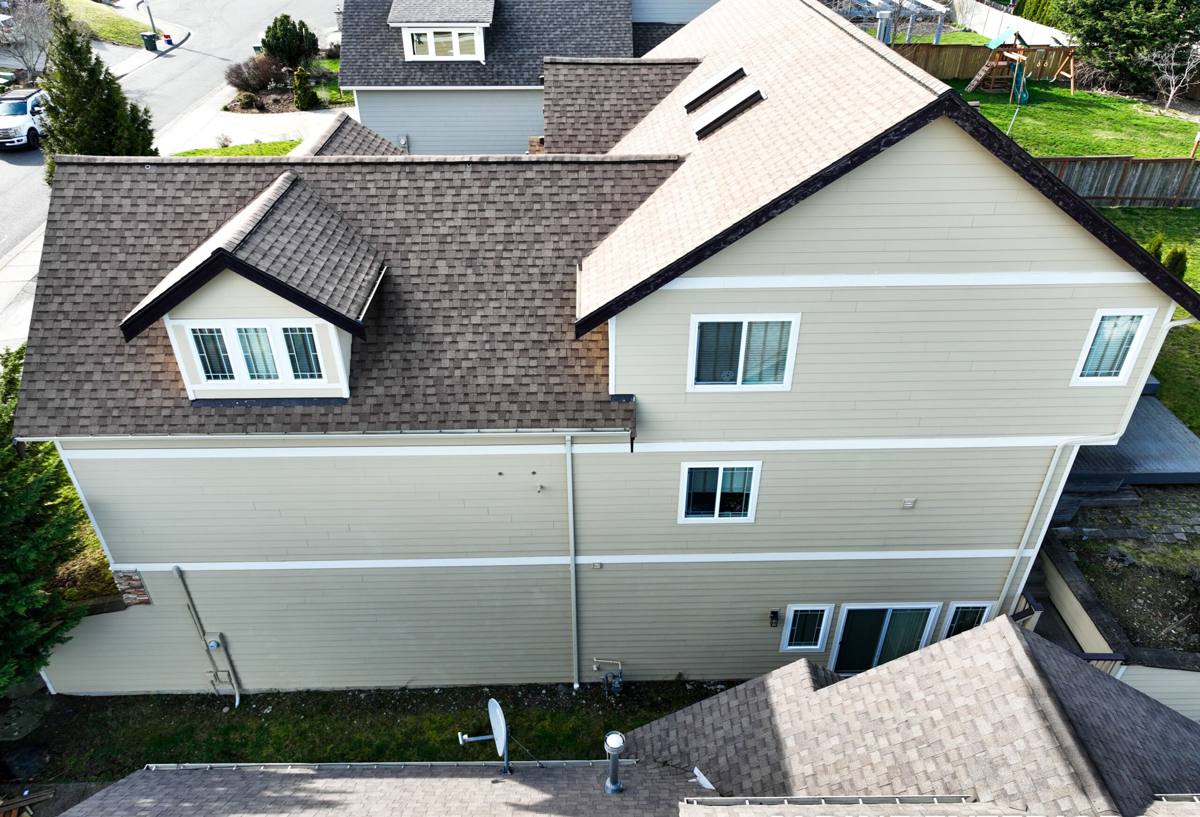
Signs a Deck Needs Replacement, Not Another Repair
Repair makes sense when the problem is isolated. Replacement makes sense when the structure itself is compromised. Here's what we look for during an assessment:
- Soft or spongy spots underfoot, especially near the house or stair landing
- Visible gaps or rust streaking where the ledger board meets the house
- Fasteners that are rusted, backing out, or leaving black stains around the screw heads
- Persistent moss or algae growth on the deck surface that returns within weeks of cleaning
- Railing posts that flex or wobble when pushed
- Joists that show dark staining, delamination, or a screwdriver sinks in easily when tested
- A deck more than 20-25 years old that has never had its structural connections upgraded
If you're seeing two or more of these, it's worth having someone look at the framing before spending money on cosmetic fixes that won't hold up through another Skagit County winter.
What a Correct Deck Replacement Actually Involves
Starting With the Ledger and Flashing
The single most common failure point on decks in this climate is the ledger board connection — where the deck attaches to the house. If that flashing wasn't installed correctly, or wasn't installed at all, water gets driven behind it by wind-blown rain and rots the rim joist from the inside. A correct replacement always includes proper ledger flashing, not just a new coat of caulk over the old connection.
Framing and Fasteners That Match the Environment
We frame with pressure-treated lumber rated for ground contact where it matters, and we use fasteners and structural hardware rated for the corrosion exposure this area sees — standard electro-galvanized hardware doesn't hold up long near the salt air here. Joist hangers, post bases, and structural screws all need to be matched to the environment, not just to the lumber.
Decking, Railings, and Stairs
Once the frame is sound, we move to decking material, railing systems, and stair construction — areas where the homeowner has real choices to make, covered below.
Choosing Decking Material for a Marine Climate
There's no single "best" decking material — there's a best fit for how you use the deck, your maintenance appetite, and your budget. Here's how the common options actually perform in a salt-air, high-rain environment like Cap Sante:
| Material | Moisture & Salt Air Behavior | Maintenance | Typical Lifespan |
|---|---|---|---|
| Pressure-treated wood | Performs fine if fasteners and gaps are correct; prone to moss without upkeep | Annual cleaning, periodic sealing | 10-15 years |
| Cedar | Naturally moisture-resistant but softer surface; can gray and check near salt air | Cleaning and oiling every 1-2 years | 15-20 years |
| Capped composite | Excellent resistance to salt and moisture; low water absorption | Occasional washing, no sealing needed | 25-30 years |
| PVC decking | Fully synthetic, no wood fibers to absorb moisture or feed moss | Lowest maintenance of the group | 25-30+ years |
We install all of these. Our job is to walk you through the honest trade-offs — composite and PVC cost more upfront but cut down dramatically on the moss scrubbing and refinishing that wood decks need in this climate. Wood costs less initially but asks more of you every year it's out here.
Why We're Careful About Which Composite Products We Recommend
Not all composite boards are built the same. Some early-generation composites without a full cap layer can absorb moisture at the core over time, which is a real problem in a place that sees this much sustained rain. Our standard is to spec fully-capped composite or PVC products with manufacturer warranties that specifically cover moisture and mold performance in marine or coastal conditions — not just general wear.
Railings, Stairs, and Code Requirements
Anacortes deck replacements fall under the same structural and safety rules as new construction when the work is substantial enough to require a permit — which most full replacements are. That means railing height, baluster spacing, guard requirements, and stair rise-and-run all need to meet current code, even if the deck you're replacing was built to an older standard. This isn't paperwork for its own sake: railing and guard failures are one of the more common causes of deck-related injuries, and code minimums exist because of that.
We handle permitting as part of the job and build to current code as a baseline, not an upsell.
Our Deck Replacement Process
- On-site assessment — we inspect the existing structure, ledger connection, and framing to confirm replacement is the right call and identify any hidden damage
- Scope and material walkthrough — we go over decking, railing, and structural hardware options with honest cost and maintenance trade-offs for your specific deck
- Permit and code review — we confirm what's required for your project size and handle the permit application
- Demolition — full removal of the old deck surface, railings, and framing where needed, with care taken around the house siding and foundation
- Structural rebuild — ledger flashing, framing, and hardware installed to hold up under this area's rain and salt exposure
- Decking, railing, and stair installation — installed per manufacturer spec, since composite and PVC products are sensitive to gapping and fastening errors
- Final walkthrough — we go over the finished deck with you, including basic care guidance for your specific material
What It Costs to Replace a Deck Here — and What Drives the Number
Deck replacement costs vary a lot based on size, material, and how much structural work is needed. Rather than quote a number that won't match your situation, here's what actually moves the price:
| Factor | Why It Matters |
|---|---|
| Deck size and layout | Multi-level decks and non-rectangular shapes need more framing and cutting |
| Decking material chosen | Pressure-treated wood costs less upfront than composite or PVC |
| Condition of the ledger and framing | Hidden rot found during demo can add structural repair work |
| Railing style | Cable, glass, and metal railing systems cost more than standard baluster railing |
| Height and stair requirements | Elevated decks need more substantial footings and stair structures |
| Site access | Tight side yards or waterfront lots can slow demolition and material staging |
We give a firm, itemized quote after the on-site assessment — not a phone estimate — because the ledger and framing condition genuinely isn't knowable until we're looking at it.
Caring for a New Deck Through Anacortes Winters
Whatever material you choose, a few habits make a real difference in how long a Cap Sante deck stays solid:
- Keep gutters and downspouts clear so runoff isn't draining directly onto the deck surface
- Sweep leaves and debris off the boards before the wet season settles in — trapped moisture is what feeds moss
- Rinse salt residue off periodically, especially on hardware and railing posts
- Check that furniture feet and planters aren't trapping moisture against the decking
- Have the structure looked at every few years, even if the surface looks fine
Why Local Experience in Cap Sante Matters
A crew that's worked decks throughout Anacortes and Skagit County knows which fastener grades and flashing details actually hold up against this specific combination of salt air and sustained rain — because we've gone back and seen what fails and what doesn't. That's different from following a generic install manual written for a dry inland climate. We also know the local permitting process, which keeps your project from stalling on paperwork.
If your deck is showing signs of age, or you're just not sure whether repair or replacement makes sense, we're happy to take a look and give you a straight answer. Reach out for a free, no-pressure estimate using the form below — there's no obligation, just an honest read on where your deck stands.