 Anacortes Exterior
 Why Burlington Siding Takes a Different Kind of Beating
Burlington sits inland in the Skagit Valley, but "inland" doesn't mean sheltered. Air moving off Padilla Bay and the Salish Sea carries salt and moisture well past the shoreline, and that mix settles into the valley alongside fog and standing damp that can linger for days at a time. Add driving rain that comes in sideways during winter storms, and siding here is working harder than siding in drier parts of the state.
Then there's moss. Skagit County's long, wet stretch from fall through spring gives moss and algae months to take hold on anything that stays damp — north-facing walls, shaded elevations, areas under eaves that don't get direct sun. On the wrong siding material, that moss isn't just cosmetic. It holds moisture against the surface, which accelerates rot, paint failure, and swelling at the seams.
None of this means Burlington homes need exotic materials or gimmicks. It means the siding has to be genuinely rated for sustained moisture exposure, and it has to go on correctly the first time — because a mediocre install shows its weaknesses fast in this climate, not years down the road.
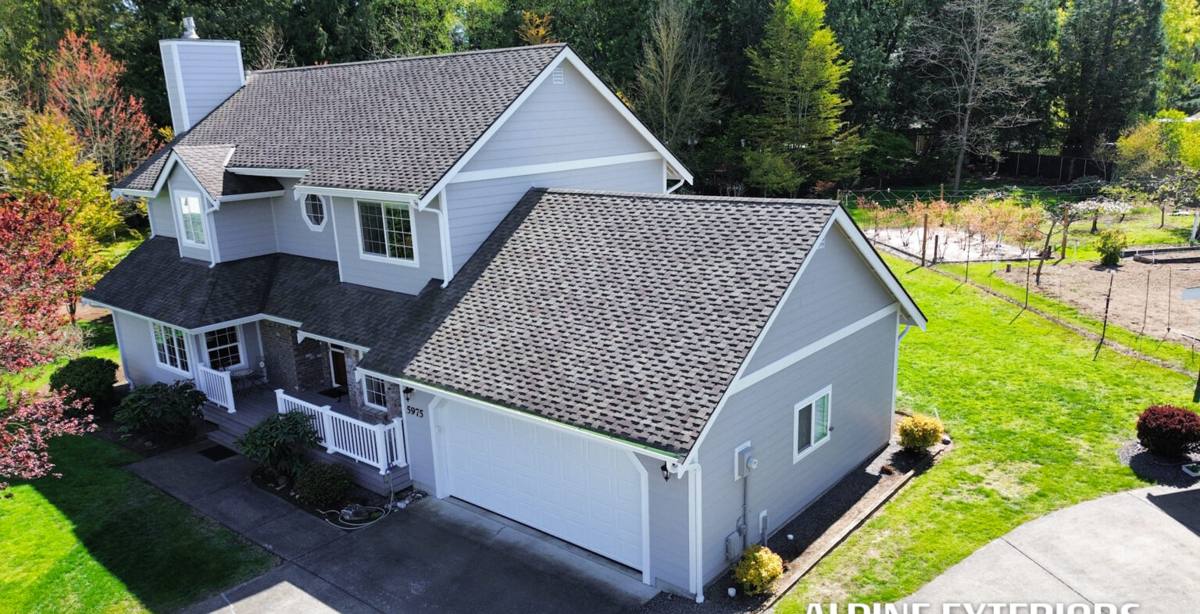
Signs Your Burlington Home's Siding Is Overdue for Replacement
Some siding problems are obvious. Others hide behind paint or under trim until they've done real damage. Before you decide whether you're looking at a repair or a full replacement, walk your home's exterior and check for these:
- Cracking, buckling, or warping boards, especially on walls that face prevailing wind and rain
- Soft or spongy spots when you press on the siding — a sign moisture has reached the substrate
- Paint that's peeling, bubbling, or needing repainting far more often than it used to
- Persistent moss or algae staining that comes back within a season of cleaning
- Gaps opening up at trim boards, corners, or window and door casings
- Visible warping or separation at seams and lap joints
- Rising heating bills with no other explanation — often a sign the wall assembly behind the siding has lost its integrity
- Water stains or musty odors on interior walls near exterior corners
One or two of these on their own might point to a localized repair. Several together, especially combined with visible rot at the bottom courses or around window openings, usually mean the siding system as a whole has reached the end of its useful life.
What a Correct Siding Replacement Actually Involves
Siding replacement is not simply pulling off old boards and nailing up new ones. In a climate like Skagit County's, what happens underneath the siding matters as much as the siding itself.
Tear-Off and Sheathing Inspection
Once the old siding comes off, the sheathing underneath gets inspected for rot, delamination, or soft spots — problems that are invisible until the wall is opened up. Any damaged sheathing needs to be cut out and replaced before anything new goes back on. Skipping this step is one of the most common reasons a "new" siding job fails within a few years.
Weather-Resistive Barrier and Flashing
A correctly installed weather-resistive barrier, with properly lapped and sealed seams, is what keeps wind-driven rain from working its way behind the siding in the first place. Flashing at windows, doors, and other penetrations has to be integrated with that barrier in the right order — flashing behind the barrier at the top, over it at the bottom — so water is always directed outward, never trapped.
Fastening and Installation to Manufacturer Spec
Fiber cement siding has specific requirements for fastener type, placement, spacing, and clearance from grade, decks, and roof lines. Installing outside those specs doesn't just void the manufacturer's warranty — it creates the exact conditions that let moisture in around fasteners and board edges, which is where premature failure starts.
Why We Install Only James Hardie Fiber Cement
We made a deliberate decision as a company to install James Hardie fiber cement siding exclusively. We don't install vinyl, LP SmartSide, Cemplank, Allura, primed spruce, or cedar. That's not brand loyalty for its own sake — it's a standard we set after weighing what each of those products asks of a homeowner over the long run in a climate like this one.
Vinyl is affordable and low-maintenance in mild conditions, but it can become brittle in cold snaps and distort under sustained heat or improper installation, and it's a combustible material in a state where wildfire risk is a growing concern even outside the immediate coastal zone. Wood-based products like primed spruce, cedar, and OSB-based engineered siding depend heavily on an intact factory coating and flawless field caulking to keep moisture out — and in a climate that stays wet as long as Skagit County's does, any gap in that coating is an invitation for swelling and rot. Fiber cement alternatives to Hardie can be reasonable products, but we standardized on one manufacturer so our crews install one system, to one spec, with one warranty structure, every time — instead of switching techniques and maintaining familiarity across half a dozen different products.
James Hardie fiber cement is non-combustible, dimensionally stable across temperature and humidity swings, and finished with a factory-applied ColorPlus coating that's engineered to hold up to UV and moisture exposure far better than field-applied paint. Their HZ5 product line is specifically engineered for climates like the Pacific Northwest, where sustained moisture and freeze-thaw cycles are part of the picture. That combination — a non-combustible material, factory finish, and a real transferable warranty — is why it's the only siding we put on Burlington homes.
James Hardie Product Lines That Fit Skagit County
Not every Hardie product is used the same way, and part of doing this job right is matching the right line to the right part of the house.
| Product | Best Use | Why It Fits Here |
|---|---|---|
| HardiePlank Lap Siding | Primary wall covering, most home styles | Traditional lap profile sheds driving rain effectively when installed with correct overlap |
| HardiePanel Vertical Siding | Accent walls, gables, modern or farmhouse styles | Clean vertical lines that pair well with board-and-batten detailing |
| HardieTrim | Corners, window and door casings, fascia | Matches the durability of the field siding so trim doesn't fail first |
| HardieSoffit | Eaves and overhangs | Resists the moisture that collects under eaves during long wet stretches |
ColorPlus finishes come in a range of tones that hold their color far longer than field-applied paint, which matters in a climate where repainting is a real recurring cost. We'll walk through which colors and textures suit your home's style and your neighborhood during the estimate.
Our Siding Replacement Process
- On-site assessment. We inspect current siding, look for signs of trapped moisture or sheathing damage, and take measurements.
- Detailed estimate. You get a clear, written scope of work and pricing before anything is scheduled — no surprise change orders for work we could have identified up front.
- Tear-off and sheathing repair. Old siding comes off, sheathing is inspected, and any compromised material is replaced.
- Weather barrier and flashing installation. The building gets a properly lapped, sealed weather-resistive barrier with correctly integrated flashing at every penetration.
- Hardie siding installation. Panels or planks go on to manufacturer fastening and clearance specs, by crews who install this system regularly.
- Trim, caulking, and finish details. Corners, trim, and joints are finished to shed water, not just to look clean.
- Final walkthrough. We review the completed work with you before calling the job done.
What Affects the Cost of a Siding Replacement
Every home is different, so we don't quote pricing without seeing the house — but these are the factors that most often move the number up or down:
| Factor | Why It Matters |
|---|---|
| Home size and number of stories | More square footage and taller walls mean more material and labor, and taller work requires additional staging |
| Condition of existing sheathing | Rot or water damage found during tear-off requires repair before new siding goes on |
| Complexity of the home's shape | Dormers, bump-outs, and multiple gables add cutting, fitting, and trim work |
| Product line and finish selection | Panel versus lap profiles and different ColorPlus finishes carry different material costs |
| Amount of trim and accessory work | Full trim replacement adds cost but keeps the whole exterior on one warranty and one finish system |
| Access and site conditions | Tight lots, landscaping, or limited equipment access can affect labor time |
Why Hiring a Crew That Already Works in Burlington Matters
Siding installation instructions look the same on paper everywhere. What differs is how those instructions get applied in a place where the wall assembly has to deal with salt-tinged air, sustained wet seasons, and moss pressure most of the year. A crew that already works Skagit County homes knows to pay extra attention to flashing details on the walls that catch the worst of the weather, understands local permitting expectations, and isn't guessing at how a wall assembly here behaves over time.
There's also a practical side to hiring local: if a warranty question or a follow-up item comes up after the job is done, you're not waiting on a crew that has to drive in from out of the region. We're already working in Burlington and the surrounding area, which means service after the install is straightforward, not an afterthought.
If your Burlington home's siding is showing its age — or you just want a straight answer about whether repair or full replacement makes sense — we're happy to take a look. Reach out for a free, no-pressure estimate using the form below.