 Anacortes Exterior
 Burlington sits in the low, flat stretch of Skagit County between the Skagit River and the foothills, close enough to the water that salt air and marine moisture reach every yard, and low enough that drainage is a constant issue for anything built at ground level. A deck here isn't just an outdoor living space — it's a structure that has to survive standing water, driving rain off the valley, and a moss season that can run eight months out of the year. Decks built with materials or details that work fine in a drier climate tend to fail early here, and the failures are usually hidden until they're expensive.
We build and replace decks for homeowners throughout Burlington and the surrounding Skagit County area, and most of what separates a deck that lasts twenty-plus years from one that needs major repair in five comes down to decisions made before the first board goes down — framing, fasteners, drainage, and ventilation. This page covers what actually matters for a Burlington deck project, from planning through the build.
What Burlington's Climate Actually Does to a Deck
Skagit County weather is milder than the mountains but wetter, on balance, than a lot of homeowners expect. The combination that causes the most deck damage isn't any single factor — it's the layering of several:
- Sustained rainfall: Long stretches of steady, low-intensity rain keep wood and composite surfaces wet for days at a time, which matters more than short heavy downpours because it's the duration of moisture contact that drives rot and mold, not the volume.
- Salt-influenced air: Proximity to Puget Sound and the Skagit tidal flats means airborne salt reaches fasteners, flashing, and any exposed metal, accelerating corrosion on hardware that isn't rated for it.
- Low sun angle and shade: Many Burlington lots have mature trees or sit low relative to neighboring structures, so decks don't get the direct sun exposure that would otherwise dry them out between rain events.
- Moss and algae growth: The same conditions that keep lawns green year-round turn deck surfaces slick and dark within a season or two if the material and slope don't shed water properly.
None of these issues are dramatic on their own. The problem is that they compound quietly under the deck — in the framing, ledger connection, and fastener points — long before anything shows on the surface.
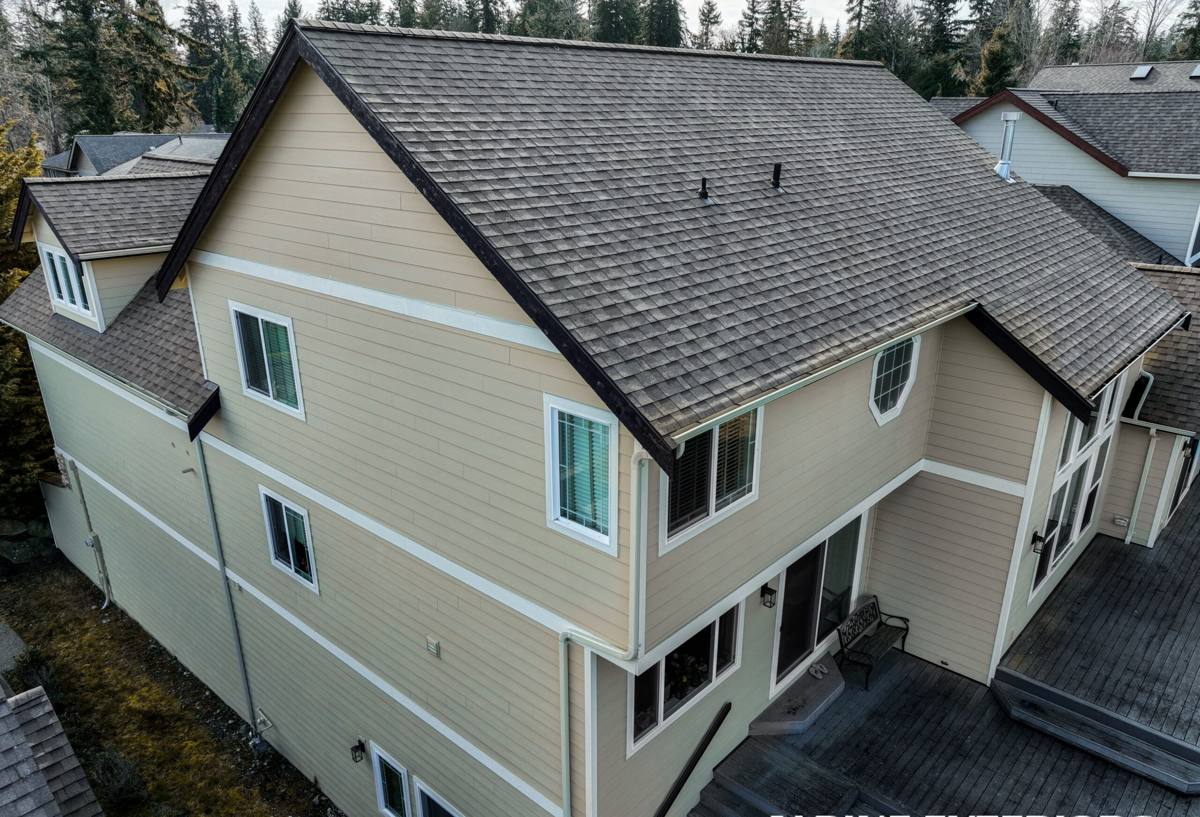
Where Burlington Decks Actually Fail
When we're called out to look at a failing deck in this area, the damage is almost never random. It shows up in the same handful of places, over and over:
The Ledger Board Connection
Where the deck attaches to the house is the single highest-risk point on any deck in this climate. Without correct flashing, water works behind the ledger and into the house's rim joist, which can rot both the deck's structural connection and the home's framing at the same time. This is the detail we check first on any inspection, and it's the one most often done wrong on older or budget builds.
Joist Tops and Cut Ends
Every cut end and every joist top is an entry point for water once the factory-applied treatment is compromised. In a climate with this much sustained moisture, uncapped joists start absorbing water within a couple of seasons, and rot spreads along the joist from the inside out — often invisible until a board fails underfoot.
Fasteners and Hardware
Standard hot-dip galvanized hardware can hold up in drier regions but corrodes faster here, especially on decks closer to open water or exposed to prevailing wind. Corroded fasteners lose holding strength gradually, which is part of why deck collapses tend to happen without much warning.
Low-Slope and No-Slope Decking
Decking installed dead level, or worse, sloped back toward the house, holds standing water after every rain. That water feeds moss growth on the surface and rot in the framing below. A proper slope away from the structure is a small detail in the plans that has an outsized effect on how the deck ages.
What a Correctly Built Deck Looks Like in This Climate
A deck built for Burlington's conditions isn't a different style of deck — it's the same design decisions most homeowners want, executed with the right materials and sequencing underneath. The visible parts (decking, railing, stairs) get the attention during design, but the parts that determine lifespan are mostly out of sight.
| Component | What we use / do | Why it matters here |
|---|---|---|
| Ledger flashing | Corrosion-resistant flashing integrated with the house's water-resistive barrier, not just caulked on | Stops the #1 cause of hidden structural rot in this climate |
| Joist protection | Cap tape or equivalent moisture barrier on joist tops and cut ends | Sustained rain means uncapped wood absorbs water for months at a time |
| Fasteners & hardware | Stainless or high-corrosion-rated hardware, matched to the decking manufacturer's requirements | Salt-influenced air corrodes standard galvanized hardware faster than inland installs |
| Framing material | Pressure-treated framing rated for ground contact where applicable, with correct spacing for airflow | Airflow under the deck is what allows framing to dry between rain events |
| Decking slope | Slight slope away from the house, verified during layout | Prevents standing water and reduces moss buildup on the surface |
| Footings | Sized and set below frost depth with attention to local soil drainage | Skagit County's flatter, often wetter soils need footings that account for poor drainage, not just frost line |
Choosing Materials: Wood vs. Composite for Burlington Homes
Both wood and composite decking can perform well here, but each has trade-offs worth understanding rather than just picking based on price.
Pressure-Treated and Cedar
Wood decking costs less upfront and can look excellent, but it requires real maintenance in this climate — cleaning, sealing, and periodic re-staining to keep moisture out of the grain. Skip a season of maintenance in an eight-month moss season and the surface starts showing it. Cedar resists rot better than standard framing lumber but still needs the same upkeep on a horizontal, foot-traffic surface.
Composite and PVC Decking
Composite decking doesn't absorb water the way wood does, which is a real advantage in a climate this wet, and it doesn't need staining or sealing. The trade-off is a higher upfront cost and the fact that composite still needs periodic cleaning — moss and algae will grow on any horizontal surface that stays damp, composite included. We install composite the same way regardless of brand: full attention to substructure ventilation and hidden fastening, because composite failures we see are almost always a framing or installation issue, not a product defect.
Our Standard on Product Choice
We don't push one material over another as a blanket rule — we walk through the maintenance commitment, budget, and how the deck will be used, and make a recommendation based on that. What we won't do is install decking over framing that skips moisture protection, regardless of which material sits on top, because that's where premature failure actually starts.
Our Process for a Burlington Deck Project
The steps are the same whether it's a full rebuild or new construction, but the details we check are shaped by what we've seen fail locally.
- On-site assessment. For replacements, we check the existing ledger connection, footings, and framing condition before quoting anything — this tells us if there's hidden rot that changes the scope.
- Design and layout. We plan slope, joist spacing, and stair/railing placement together, accounting for drainage direction and how the deck sits relative to the house's water-resistive barrier.
- Permitting. Most deck projects in Skagit County require a permit, particularly for decks over a certain height or attached to the structure — we handle this as part of the process rather than leaving it to the homeowner.
- Framing and flashing. This is the stage that determines whether the deck lasts. Ledger flashing, joist protection, and correct fastener selection happen here, before any decking is visible.
- Decking, railing, and finish work. Surface material goes down last, set to the planned slope, with attention to gapping for expansion and drainage.
- Final walkthrough. We go over maintenance expectations specific to the material chosen, so homeowners know what upkeep (if any) is needed heading into the wet season.
Maintenance That Actually Matters Here
Regardless of material, a few habits make a measurable difference in how long a deck lasts in Burlington's climate:
- Clear leaves and debris from between deck boards regularly — trapped organic matter holds moisture against the surface and accelerates moss growth.
- Check and clear any gaps around the ledger board area each fall, before the heaviest rain sets in.
- For wood decks, plan on cleaning and re-sealing on a multi-year cycle rather than waiting until the surface visibly grays or cups.
- For composite decks, a periodic wash with a soft-bristle brush handles moss and algae before it embeds in the surface texture.
- Keep an eye on stair stringers and any ground-contact posts — these dry out slower than elevated framing and are worth a visual check each year.
Why It Matters to Hire a Crew That Already Works in Burlington
Deck-building fundamentals don't change much from region to region, but the priority order does. A crew that mostly builds in a dry climate will get the visible parts of a deck right and can still miss the ledger flashing detail or joist protection that matters most here. We work throughout Skagit County, including Burlington, and the details we've outlined above — ledger flashing, fastener selection, framing ventilation — aren't extras we upsell. They're the baseline for a deck that's actually going to hold up to a Pacific Northwest wet season, year after year.
Local experience also means we're not guessing at what fails first. We've seen enough Burlington-area decks at the ten and twenty year mark to know which shortcuts show up as problems and which details are worth the extra step during framing.
Get a Straightforward Estimate
If you're planning a new deck or need to replace one that's showing its age, we're happy to take a look and give you a straightforward, no-pressure estimate. Use the form below to get in touch, and we'll walk through your options based on your home, your budget, and what actually holds up in Burlington's climate.