 Anacortes Exterior
 Siding Repair Built for Bow's Coastal-Valley Climate
Bow sits in one of the more demanding pockets of Skagit County for exterior siding. Homes here get pushed from two directions at once: salt-laden air moving in off the water, and the long, wet stretch of Pacific Northwest weather that keeps siding damp for weeks at a time. Add in the shade cover common on wooded and semi-rural lots around Bow, and you have near-perfect conditions for moss, algae, and slow moisture damage to take hold on siding that isn't holding up its end of the job.
Siding repair in this area isn't just cosmetic patchwork. Done right, it's about finding where water is actually getting in, fixing that root cause, and restoring the section of siding so it matches and performs like the rest of the wall. Done wrong — caulk smeared over a crack, a mismatched board nailed up without checking what's behind it — it buys a homeowner a year or two before the same spot fails again, often worse.
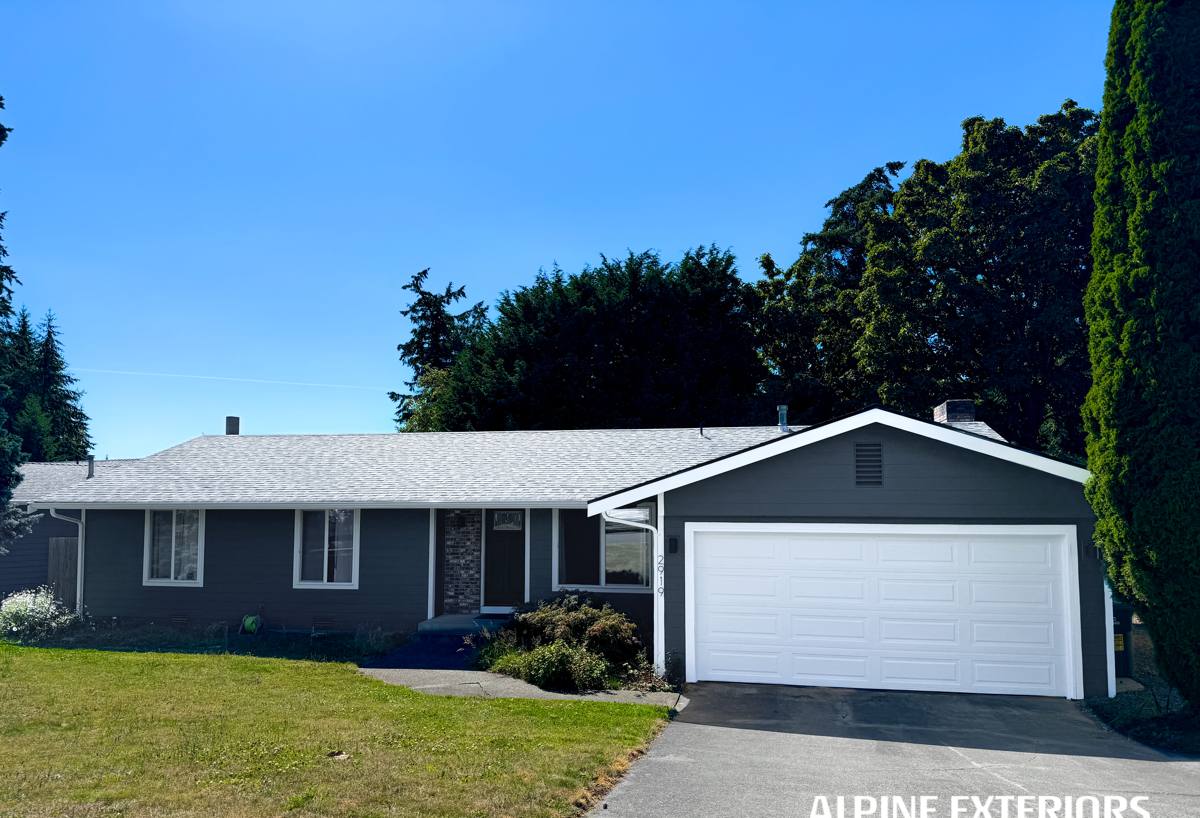
Signs Your Bow Home's Siding Needs Attention
Most siding problems don't show up as a hole in the wall. They show up as small tells that homeowners often write off as normal aging until the damage has spread behind the surface. Around Bow, watch for these:
- Dark streaking or a fuzzy green-black film, especially on north- and west-facing walls that stay shaded and damp longest
- Cracked, split, or bowed boards, particularly near corners, window trim, and anywhere siding meets a roofline or deck
- Soft or spongy spots when you press on the siding — a strong sign moisture has already gotten past the surface
- Paint that's peeling, bubbling, or chalking unevenly rather than wearing uniformly across the wall
- Rust streaks below fasteners, which points to corroding nails or staples reacting with salt-laden coastal air
- Gaps opening up at seams, corner boards, or trim where caulking has shrunk, cracked, or pulled away
- Visible impact damage from storms, fallen branches, or yard equipment that's gone unrepaired
Any one of these on its own might be minor. Several showing up in the same area, or the same problem recurring in the same spot year after year, usually means there's a moisture or flashing issue behind the siding that a surface patch won't fix.
What a Correct Siding Repair Actually Involves
Diagnosing the Real Problem, Not Just the Symptom
Before any board comes off, a proper repair starts with figuring out why that section failed in the first place. Was it a flashing detail that never shed water correctly? A caulk joint that was never sealed to begin with? A sprinkler head hitting the same three feet of wall every day for years? Trim that was installed without the gap siding needs to drain and dry? Skipping this step is the single biggest reason siding repairs fail twice.
Once we know the cause, we check how far the damage has traveled. Water rarely stays where you can see it — it follows gravity and seams, so a stain the size of a dinner plate on the outside can mean rot that extends a foot in either direction behind the wall. We open up enough of the wall to see clean, undamaged material on all sides before we consider the repair complete, not just enough to cover the visible spot.
Matching Materials the Right Way
A repair that stands out visually is still a repair the homeowner has to look at every day. For Hardie fiber cement siding, that means matching not just the board profile and reveal, but the ColorPlus factory finish, so patched sections don't fade or weather differently than the surrounding wall over time. For older or non-Hardie siding still on a home, we'll match as closely as materials allow and are upfront if a perfect match isn't realistic — that's a factor worth knowing before deciding between a spot repair and a longer-term plan.
Common Repair Scenarios We See Around Bow
The mix of shoreline exposure, farmland, and tree-covered lots around Bow produces a fairly consistent set of repair calls:
- Moss and algae buildup on shaded walls that trap moisture against the siding surface long after a storm has passed
- Corroded or popped fasteners where salt air has accelerated rust on nails, letting boards work loose over time
- Wind-driven rain intrusion at gable ends and upper stories, where storms off the water push water sideways into seams that would stay dry in a calmer climate
- Rot at ground-contact areas on homes with lower siding courses close to grade, garden beds, or standing water after heavy rain
- Trim and corner failures where caulking wasn't maintained and repeated wet-dry cycles opened gaps for water to track in
None of these are unusual for the region — they're the predictable result of a wet, salt-influenced climate meeting siding that either wasn't installed with enough drainage detail or hasn't been maintained in a few years.
Repair or Replace? A Bow Homeowner's Cost-Factor Guide
Not every damaged section needs full replacement, and not every repair is worth doing if the underlying siding is on its way out. These are the factors that actually drive the decision:
| Factor | Leans toward repair | Leans toward replacement |
|---|---|---|
| Extent of damage | Isolated to one or two sections | Recurring in multiple areas or spreading |
| Age and material of existing siding | Hardie fiber cement in otherwise good condition | Aging vinyl, LP, or wood past its useful life |
| Underlying structure | Sheathing and framing test solid once opened up | Soft, rotted sheathing found behind the siding |
| Root cause | Identifiable and fixable (flashing, caulk, sprinkler) | Systemic — poor original install or wrong product for the climate |
| Cosmetic match | Color and profile can be matched closely | Discontinued product or heavy fading makes matching impractical |
When a repair reveals the underlying problem is bigger than the visible damage — soft sheathing, siding that's failed the same way in several spots, or a product that was never well suited to this climate — we'll say so directly. That's also the point where James Hardie fiber cement, installed to spec with the right drainage and flashing details, becomes the more honest long-term answer than patching the same failure a third time.
Our Repair Process
- Inspection — we walk the exterior, check moisture readings where damage is suspected, and identify the cause, not just the visible symptom
- Scope and quote — a clear written estimate covering what will be opened up, repaired, and matched, with no surprise add-ons hidden in vague line items
- Removal — damaged siding, trim, and any compromised sheathing or framing come out until we're working with sound material
- Correction — flashing, house wrap, caulking, or fastener issues get fixed at the source, not just covered over
- Reinstallation — new siding is installed to manufacturer spec, with proper fastening, gapping, and sealing for this climate
- Finish and walkthrough — we match the finish as closely as materials allow and walk the repair with the homeowner before calling it done
Why a Hardie-Only, Local Crew Matters for Repair Work
Repair work is where cut corners show up fastest. A crew that installs whatever product a homeowner brings them has less reason to be honest about whether a repair will actually hold — there's no standard they're measuring the job against. Because we install James Hardie fiber cement exclusively on new work, we know exactly what a correct Hardie repair looks like: the right fasteners, the right gap and caulk details, the right prep before a ColorPlus-matched patch goes up. That standard doesn't disappear when the job is a repair instead of a full re-side.
Being local to the Anacortes and Bow area matters just as much. We've seen how this specific stretch of Skagit County weather — the combination of salt air, driving rain, and long moss season — actually behaves on real homes, not in a manual. That's the difference between a repair that's cosmetically fine for a season and one that's still solid five years later.
Materials and Products We Use for Repairs
| Repair need | What we use |
|---|---|
| Board and panel replacement | James Hardie fiber cement, matched to existing profile where possible |
| Factory-finish matching | ColorPlus finished product to minimize visible patch lines |
| Fasteners | Corrosion-resistant fasteners rated for coastal, high-moisture exposure |
| Moisture barrier and flashing | Manufacturer-spec house wrap and flashing tape at all seams and penetrations |
| Sealants | Exterior-grade, paintable sealant rated for freeze-thaw and prolonged wet exposure |
Ready When You Are
If you're seeing moss, staining, soft spots, or storm damage on your Bow home's siding, it's worth getting it looked at before another wet season passes. We offer free, no-pressure estimates — we'll walk the exterior, tell you honestly what we find, and give you a straight answer on whether it's a repair or something bigger. Fill out the form below to get started.