 Anacortes Exterior
 Bow sits in the rural stretch of Skagit County along Samish Bay and the Chuckanut corridor, part of the broader service area we cover out of Anacortes. It's farmland, shoreline, and forested hillside all within a few miles of each other, and that mix means houses here take on more weather than a similar home tucked into a sheltered subdivision farther inland. This page is specifically about fiber cement siding for Bow homes — what the local climate demands from a wall system, what a correctly done installation actually involves, and why we only install James Hardie fiber cement rather than the cheaper or more familiar alternatives.
What Bow's Climate Does to Siding
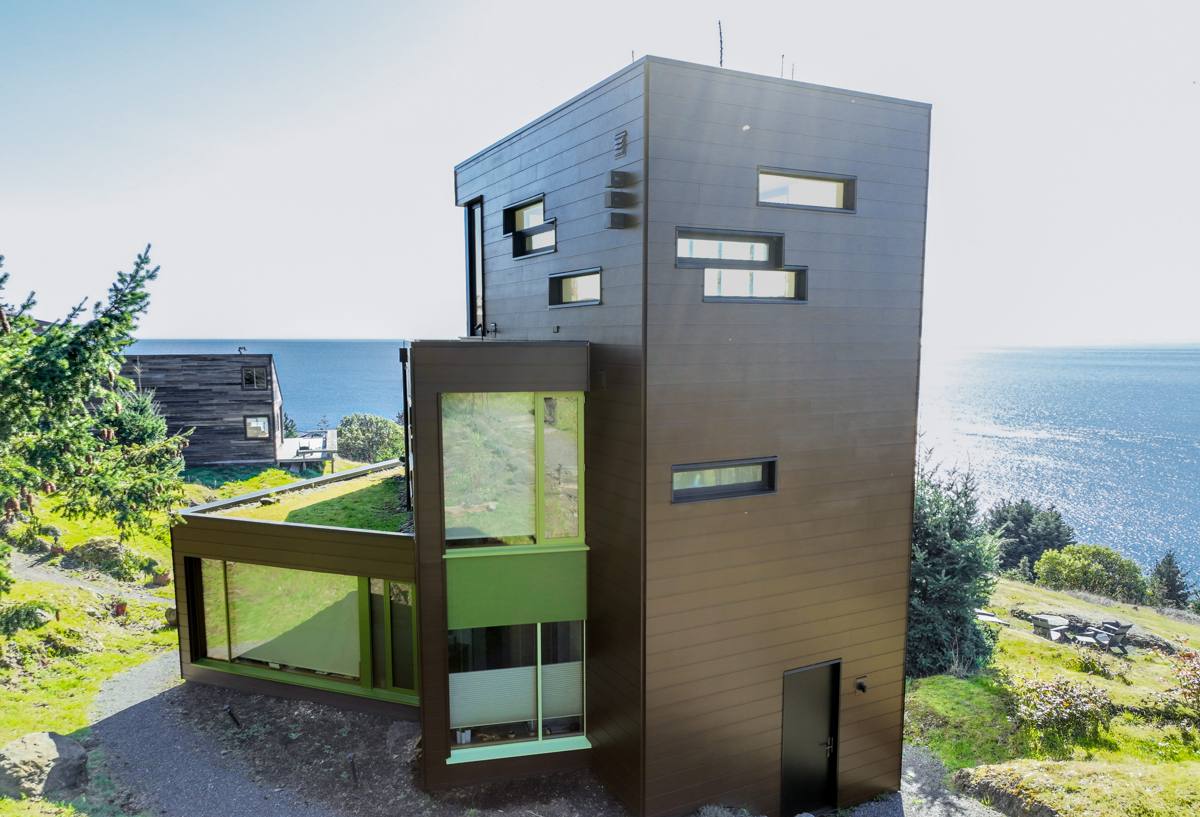
Three things define exterior work in this part of Skagit County, and all three show up on Bow properties regularly: salt-laden air moving in off Samish Bay, driving rain that hits walls at an angle instead of falling straight down, and a moss season that runs long through the wet months. None of these are dramatic on their own, but stacked together year after year, they wear down materials that weren't built to handle sustained exposure.
Salt Air and Corrosion
Salt in the air off the bay doesn't stay near the water. It travels inland on the wind and settles on siding, trim, fasteners, and flashing, where it accelerates corrosion on anything metal and speeds up UV breakdown on anything plastic. Vinyl siding, for example, tends to become brittle faster in this kind of environment, and fasteners that aren't corrosion-rated can start failing well before a homeowner expects them to.
Driving Rain and Water Intrusion
Open farmland and water frontage mean Bow properties often catch wind-driven rain with little to break it up before it reaches the house. That kind of rain doesn't just run down a wall — it gets pushed sideways and upward into seams, laps, and penetrations that would stay dry in calmer weather. Any gap in flashing, caulking, or the water-resistive barrier behind the siding becomes a real entry point, not a theoretical one.
A Long Moss Season
Western Washington's wet season is long to begin with, and shaded or north-facing walls in a tree-lined, low-lying area like Bow can stay damp for extended stretches without much drying time in between. That's exactly the condition moss and algae need to establish themselves. Left alone, moss holds moisture directly against a wall surface, which is a slow but real threat to any siding material that isn't built to shrug it off.
Why Fiber Cement Is the Right Answer Here
We install James Hardie fiber cement siding exclusively. We don't install vinyl, LP SmartSide, Cemplank, Allura, primed spruce, or cedar, and in a climate like Bow's, that's a practical decision, not a brand preference. Fiber cement has no organic core for moisture to work into, which takes rot off the table in a way that wood-based products can't match. It's also dimensionally stable, meaning it doesn't expand and contract with wet-dry cycles the way wood does, which keeps caulk joints and paint lines intact longer.
What We Don't Install, and Why
Vinyl is inexpensive and easy to install, and it has a legitimate place in the market — but it depends entirely on the barrier behind it staying intact, since vinyl itself isn't a true water seal, and it can grow brittle with age under sustained UV and salt exposure. LP SmartSide, Cemplank, and Allura are engineered or fiber-cement-adjacent wood products with strand or wood-fiber cores; if moisture reaches a cut edge, fastener hole, or damaged spot, that core is vulnerable in a way solid fiber cement isn't. Primed spruce and cedar are both real wood, and real wood needs an ongoing maintenance commitment — recoating, caulk renewal, moss treatment — to keep performing, and that schedule only gets tighter in a climate that stays damp as long as Bow's does. None of these products are junk everywhere they're used. We just don't think they hold up as well as fiber cement on this stretch of Skagit County, and we'd rather explain that plainly than sell a product we don't believe will last on your house.
Choosing the Right Hardie System
James Hardie makes several distinct products, and picking the right one for a Bow home depends on the house's style, exposure, and the look a homeowner wants. Here's how the main options break down.
| Product | Best Use | Why It Fits Bow |
|---|---|---|
| HardiePlank Lap Siding | Most homes, traditional and modern styles | Wide color range, smooth or cedar-textured finish, the standard workhorse for full re-sides |
| HardiePanel Vertical Siding | Gable ends, accent walls, modern facades | Clean lines, pairs well with lap siding on mixed-style homes |
| HardieTrim Boards | Window and door surrounds, corners, fascia | Won't rot or swell at cut ends the way wood trim does under constant moisture |
| HZ5 Climate-Engineered | Homes with regular wind, rain, or humidity exposure | Formulated specifically for wetter climate zones, including western Washington |
For most Bow properties, we're looking at HardiePlank in the HZ5 formulation as the core material, with HardieTrim around openings and HardiePanel where a homeowner wants a vertical accent. The ColorPlus factory finish is worth calling out on its own — it's baked on under controlled conditions rather than sprayed or brushed on site, which means more consistent coverage and better resistance to fading and cracking than a field-applied paint job.
What a Correct Installation Actually Involves
Fiber cement performs the way it's supposed to only when it's installed to spec. A rushed or shortcut installation can undercut even the best material, and this is where a lot of the long-term problems with siding jobs actually start — not with the product, but with how it went on the wall.
The Details That Matter
- A properly installed weather-resistive barrier behind the siding, with seams lapped correctly so water sheds outward instead of tracking in
- Correct starter strip installation at the base of the wall, which sets the plane for every course above it
- Proper fastener type, spacing, and placement — Hardie specifies this closely, and getting it wrong affects both appearance and long-term performance
- Flashing integrated at every window, door, and penetration, tied into the weather barrier rather than just caulked over
- Correct joint treatment between boards, including gapping and sealing per Hardie's published installation guidelines
- Adequate clearance between the bottom of the siding and grade, decks, or roof lines to avoid wicking moisture from below
Every one of these details matters more in a place like Bow than it would in a drier, calmer climate, because driving rain and sustained moisture will find any shortcut eventually. A flashing detail that's "close enough" in a sheltered inland town can become an active leak point on an exposed Skagit County property within a few wet seasons.
Our Process, Start to Finish
We keep the process straightforward and try not to surprise homeowners partway through a project.
Assessment and Estimate
We start with a walk-around of the house, looking at current siding condition, trim, window and door flashing, and anything already showing wear — moss, cracked caulk, staining, or soft spots. That inspection shapes an honest scope: sometimes it's a full re-side, sometimes it's a more targeted repair.
Tear-Off and Prep
Once a project moves forward, we remove the old siding down to the sheathing, check for any hidden moisture damage or rot that needs addressing before new material goes up, and correct anything we find rather than covering it over.
Weather Barrier and Flashing
This is the stage that determines whether the finished job actually keeps water out. We install the weather-resistive barrier and flashing at every opening and penetration before a single piece of siding goes up, since this layer does the real waterproofing work — the siding is the second line of defense, not the first.
Installation
Hardie siding, trim, and panels go up per manufacturer specification — correct fastener spacing, proper joint gapping, and starter strip alignment from the bottom up. We check for level and plane as we go rather than only at the end.
Final Walkthrough
We finish with a walkthrough of the completed exterior, covering care and maintenance expectations, and make sure any punch-list items are addressed before we consider the job done.
What Fiber Cement Siding Costs in Bow
Pricing depends on the size and complexity of the house, the amount of trim and detail work, and whether the project is a full re-side or a partial repair. Rather than quote a number that won't fit every property, here's what actually drives the cost up or down.
| Factor | Effect on Cost |
|---|---|
| Home size and wall complexity | More square footage and more corners, gables, or dormers means more material and labor |
| Existing siding removal | Tear-off and disposal of old material adds labor beyond a fresh install |
| Hidden damage found during tear-off | Rotted sheathing or framing found underneath old siding needs repair before new siding goes on |
| Trim and detail work | Extensive window/door trim, vertical accents, or custom detailing adds time and material |
| Siding profile and finish | Smooth vs. textured finishes and standard vs. custom ColorPlus colors carry different material costs |
| Site access | Rural lots with tree cover, gravel driveways, or limited staging area can affect scaffolding and logistics |
The only way to get an accurate number is a walk-through of the actual property, which is what a free estimate is for.
Signs Your Current Siding Is Already Struggling
A lot of siding problems build slowly and don't get noticed until they've progressed. On an exposed Bow property, it's worth checking for these periodically rather than waiting for something obvious.
- Moss or algae building up on shaded or north-facing walls, especially near the base or under eaves
- Caulk joints that have cracked, shrunk, or pulled away from trim and corners
- Paint that's chalking, peeling, or fading unevenly, particularly on the side of the house that takes the most weather
- Soft spots, staining, or discoloration near windows, doors, or anywhere siding meets a roofline or deck
- Warping, buckling, or visible gaps between boards that weren't there when the siding was new
- Rusted or discolored fasteners showing through the surface
Any one of these on its own might not mean much. Several showing up together, especially on the weather-facing side of the house, usually means it's worth having someone take a closer look.
Why a Crew That Already Works Bow Matters
Bow isn't uniform — waterfront lots, farmland properties, and homes set back in tree cover all sit differently relative to wind, sun, and moisture, and that changes what a given wall needs. A crew that works this part of Skagit County regularly gets a feel for which walls take the worst of the weather, how far salt air actually reaches inland here, and which flashing and installation details are worth extra attention versus which ones are code minimum. That's the kind of judgment that comes from doing the work here repeatedly, not from a crew passing through on its way to a job somewhere else.
It also matters for practical logistics — rural lots, longer driveways, and limited staging space are more common in Bow than in a dense in-town neighborhood, and a local crew plans around that instead of being surprised by it on install day.
Get a Straight Answer About Your Home
Every Bow property is a little different, and the right scope of work depends on the specific house — its age, exposure, and the real condition of what's on it now. We're not going to recommend a full re-side when a targeted repair will do, and we're not going to install a product we don't think will hold up against this climate.
If you're considering fiber cement siding for a Bow home, we're happy to take a look and give you a straight, no-pressure answer. Reach out for a free estimate below.