 Anacortes Exterior
 Board & Batten Siding Built for La Conner's Waterfront Climate
La Conner sits right on the water, and that changes what a siding job has to survive. Homes along the Swinomish Channel and throughout the surrounding Skagit County lowlands take on salt-laden air, wind-driven rain that comes in sideways off the water, and long stretches of gray, damp weather that keep exterior surfaces wet far longer than homes even a few miles inland. Add in a moss season that can run most of the year in shaded, north-facing spots, and you have an environment that is genuinely tough on siding materials and on sloppy installation work alike.
Board and batten is one of the more visually striking siding styles you can put on a house — bold vertical lines, deep shadow reveals, a look that reads as both historic and current. It's also less forgiving of shortcuts than standard lap siding, because the vertical boards and the battens covering each seam create more joints, more fastener penetrations, and more opportunities for water to find its way behind the cladding if the details aren't right. In a climate like La Conner's, that's not a small distinction.
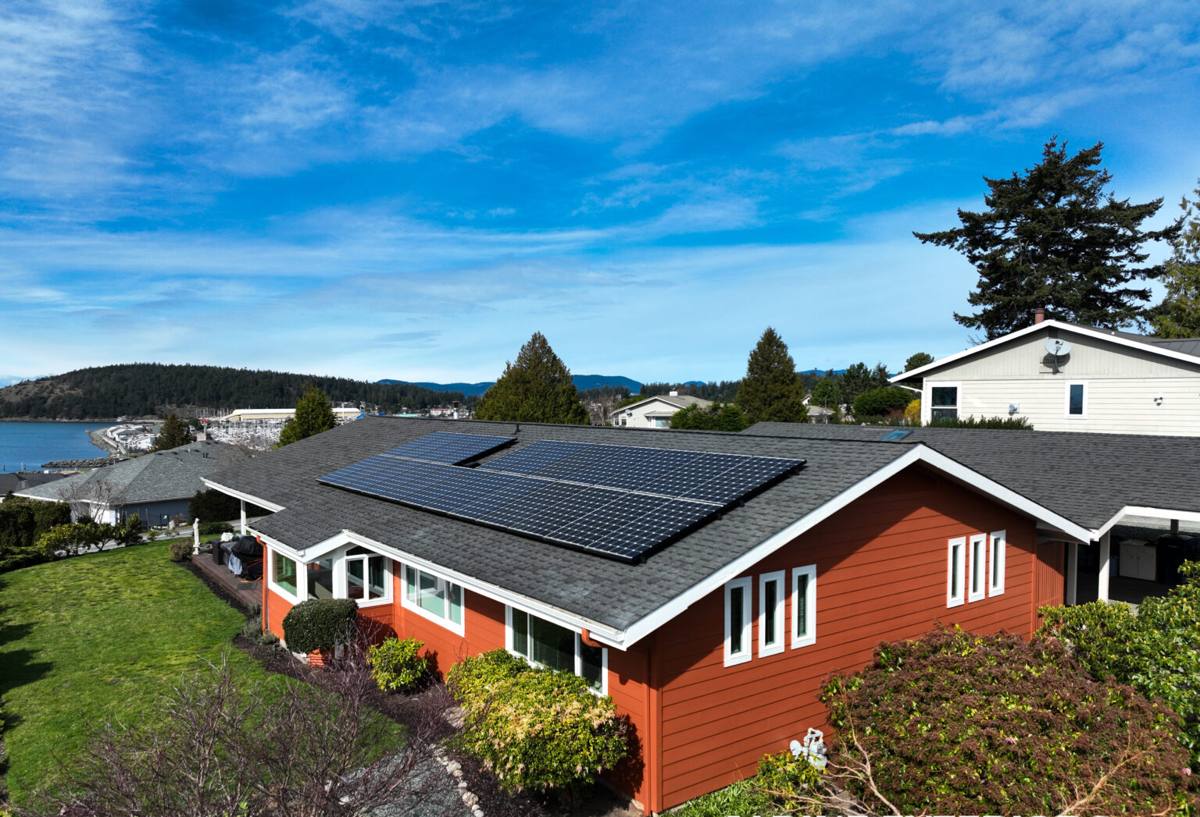
Why Board & Batten Suits La Conner Homes
Board and batten has deep roots in Pacific Northwest building tradition — it was used on farmhouses, barns, and waterfront cottages long before it became a popular architectural accent again. In a town like La Conner, with its mix of historic character and newer waterfront construction, the style fits naturally. It works equally well as a full exterior treatment or as an accent on gables, dormers, and entry features paired with horizontal lap siding elsewhere on the house.
Beyond the look, the vertical board orientation has a practical benefit in a wet climate: water sheds down the face of the boards rather than pooling on horizontal ledges, which is one reason the style has stuck around in rainy regions for generations. That said, the style's performance depends entirely on what's behind the boards and how the seams are handled — the aesthetic advantage doesn't count for much if moisture management underneath is an afterthought.
Where We See It Used Most
- Full-facade treatments on farmhouse and modern-farmhouse style homes
- Gable ends and dormers as a textural accent above lap siding
- Garage and shop exteriors matched to the main house
- Porch and entry surrounds where a defined architectural moment is wanted
What Correct Board & Batten Installation Involves
Board and batten looks simple from the curb — vertical boards, narrow strips covering the seams — but the assembly behind that simple look is where a job either holds up for decades or starts failing within a few years. In a marine climate like La Conner's, every one of the following details matters more than it would in a drier region.
Drainage Plane and Rainscreen
Behind any board and batten assembly there needs to be a continuous water-resistive barrier, properly lapped and sealed at every penetration, with a drainage gap that lets any moisture that does get past the cladding drain and dry out instead of sitting against the sheathing. This is arguably the single most important layer of the whole system, and it's completely invisible once the siding is up — which is exactly why it's the layer most likely to get shortchanged by crews trying to move fast.
Panel and Batten Layout
Batten spacing needs to be planned before the first board goes up, not adjusted on the fly, so that seams land where they're supposed to and reveals stay consistent across the wall. Panel joints need proper flashing or a shiplap-style detail behind the batten — caulk alone is not a joint treatment, it's a backup, and treating it as the primary defense against water intrusion is one of the most common mistakes we see on both new installs and older homes we're asked to repair.
Fastening
Fastener type, spacing, and placement all follow the manufacturer's engineering, not a crew's habit from the last job. Over-driven or under-driven nails, fasteners placed too close to board edges, or fastening patterns that don't account for expansion and contraction all show up later as cracking, popped fasteners, or water staining — usually after the crew that installed it is long gone.
Finish
Factory-applied finish holds up dramatically better than field-applied paint in a climate this wet, because it cures under controlled conditions and bonds to the substrate in a way a job-site paint job can't fully replicate. In an area with La Conner's moss and mildew pressure, finish quality has a direct effect on how the siding looks five and ten years out.
Why We Install Only James Hardie Board & Batten
We install James Hardie fiber cement exclusively — no vinyl, no engineered wood, no primed spruce or cedar boards. For board and batten specifically, that means Hardie's vertical panel and trim board systems, engineered as fiber cement, not as a wood product with a coating on top.
A few reasons this matters for a project in La Conner:
- Non-combustible material — fiber cement doesn't feed a fire the way wood-based products can, which matters to both homeowners and insurers.
- HZ5 climate engineering — Hardie manufactures regional formulations for different climate zones, and the HZ5 line is engineered for the Pacific Northwest's wet, temperate conditions rather than a one-size-fits-all national product.
- ColorPlus factory finish — baked-on, UV-cured color that resists fading and holds up to the region's damp, low-light conditions far better than field-applied paint, and comes with its own finish warranty.
- Dimensional stability — fiber cement doesn't swell, warp, or cup the way wood-based boards can when they take on repeated moisture cycles, which is exactly the stress pattern a waterfront climate creates.
- Transferable warranty backing — a real manufacturer warranty structure, not a one-off promise, which matters if the home changes hands.
We're not going to tell you every other product on the market is worthless — cedar has real appeal, and engineered wood and vinyl both have their place in some applications. But for the moisture, salt air, and moss exposure a La Conner home deals with year-round, we've made fiber cement our standard because it's the product we're confident holding up without repeat maintenance calls.
Comparing Board & Batten Material Options
| Material | Moisture & Salt Air Behavior | Maintenance | Typical Lifespan |
|---|---|---|---|
| James Hardie fiber cement | Dimensionally stable, engineered finish resists moisture and salt exposure | Occasional wash; no repainting on ColorPlus finish | Multi-decade, backed by manufacturer warranty |
| Cedar boards | Natural but absorbs moisture; prone to cupping and checking in wet, salty conditions | Regular refinishing/sealing needed | Shorter without diligent upkeep |
| Engineered wood (e.g. LP-type) | Wood-based core sensitive to sustained moisture exposure at cut edges and joints | Careful joint sealing and periodic inspection | Variable, install-quality dependent |
| Vinyl | Doesn't rot, but can warp/fade with UV and temperature swings; seams are a moisture path | Low, but limited repair options if damaged | Moderate; appearance degrades over time |
Problems We Commonly See on Existing La Conner Board & Batten Homes
When we're called out to look at an older or poorly installed board and batten exterior in this area, a handful of issues come up repeatedly. Moss and dark streaking collect on north- and shade-facing walls where boards stay damp longest — a cosmetic issue on a quality material, but a sign of deeper trouble on a product with weaker moisture resistance. Caulk joints that were relied on as the primary seal crack and fail well before the siding itself would otherwise need replacing, letting water track behind the boards. Battens that were face-nailed without accounting for wood movement split or pull away over a few seasons. And on wood-based products, we sometimes find soft, delaminating material at the base of boards near grade — exactly where splashback and standing moisture do the most damage over time.
Our Process for a Board & Batten Project in La Conner
- On-site assessment — we look at your home's exposure (waterfront wind, shade patterns, drainage around the foundation) and existing siding condition before recommending anything.
- Layout planning — batten spacing and reveal are planned to the wall dimensions and window/door openings, not improvised as we go.
- Tear-off and inspection — where we're replacing existing siding, we check sheathing condition underneath before closing anything back up.
- Water-resistive barrier and drainage gap — installed and inspected before a single board goes up.
- Panel and batten installation — fastened and flashed to Hardie's specifications for our climate zone.
- Final walkthrough — trim, caulking at true transitions (not as a substitute for flashing), and a full review with you before we call it done.
Keeping Board & Batten Siding in Good Shape in a Marine Climate
Even correctly installed fiber cement benefits from a little seasonal attention in an environment like La Conner's. Here's what we recommend homeowners keep an eye on:
- Rinse siding annually to clear salt residue and slow moss/algae buildup, especially on shaded walls
- Check caulking at trim transitions and penetrations once a year and re-caulk any cracked joints promptly
- Keep gutters clear so overflow doesn't run down the siding face repeatedly
- Trim back vegetation and landscaping that keeps siding shaded and damp longer than necessary
- Watch for any soft spots, staining, or fastener issues near grade and along the roofline, and address them early
If you're weighing board and batten for a home in La Conner, we're happy to walk the property with you, talk through layout options, and give you a straight answer on what the job actually involves. Reach out for a free, no-pressure estimate using the form below.