 Anacortes Exterior
 Building Decks for West Anacortes' Marine Climate
A deck on Fidalgo Island lives a different life than one built inland. West Anacortes homes sit close enough to the water that salt-laden air is part of the daily weather, not an occasional event. Add Skagit County's long wet season, frequent driving rain off the Strait, and a moss season that can stretch from fall through spring, and you have a set of conditions that punishes shortcuts. Fasteners corrode faster. Framing that never fully dries stays damp for months at a time. Flat or shaded deck boards grow moss and algae that turn slick and start to hold moisture against the wood underneath.
None of this means a deck can't last for decades here — it means the build has to account for the environment from the footings up, not just the decking you can see. That's the difference between a deck that looks good for a season and one that holds up through fifteen or twenty Anacortes winters.
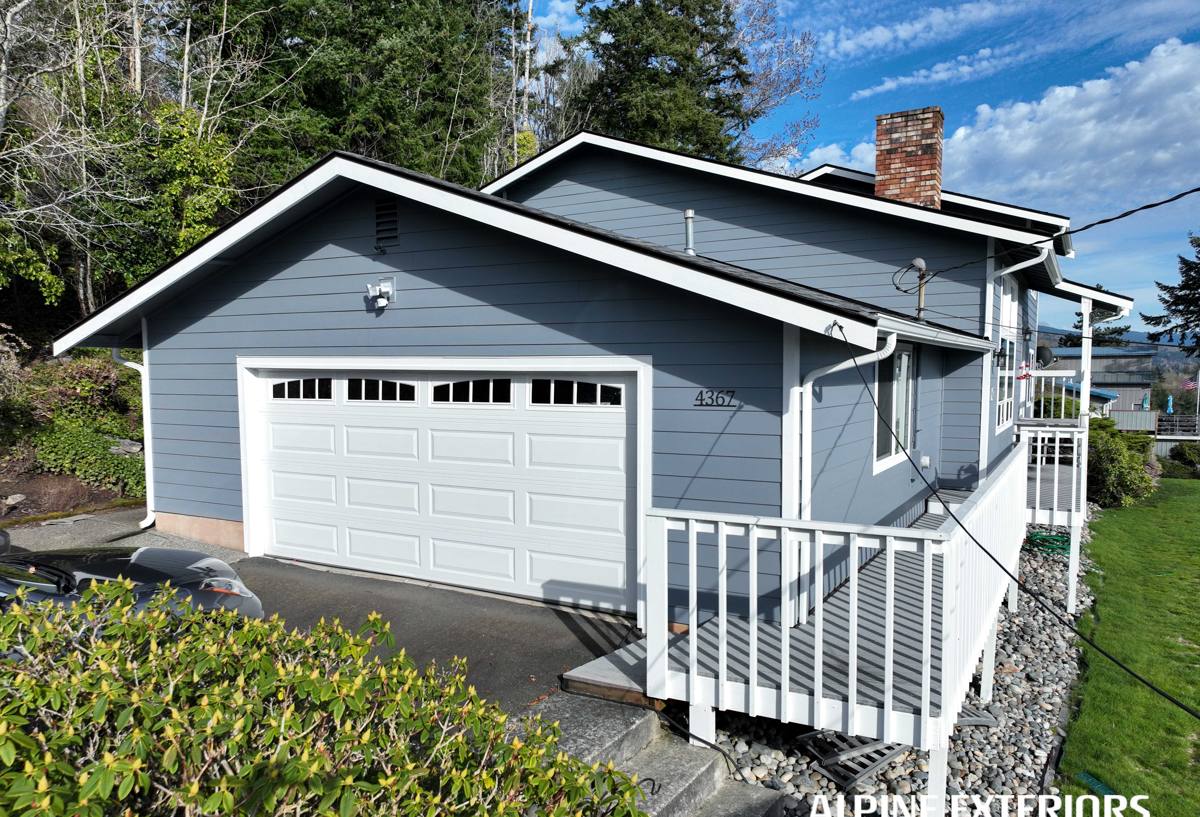
What West Anacortes Homes Actually Need From a Deck
Every deck has to handle structural load, but a deck in this part of Skagit County also has to handle constant moisture cycling and airborne salt. That changes several decisions before a single board goes down:
- Fasteners and hardware rated for coastal or corrosive exposure, not standard interior-grade hardware
- Footings sized and placed for our clay-heavy, often saturated soils
- Framing with enough airflow underneath to actually dry out between rain events
- Ledger board flashing that keeps wind-driven rain from tracking behind the siding
- Decking spacing and orientation that resists moss buildup rather than trapping moisture
Skip any one of these and the deck may still pass a casual look, but the problems show up in year three or four — soft spots near the ledger, rust streaks bleeding from screw heads, or a slick green film that shows up every fall and never fully leaves.
Choosing the Right Decking Material
There's no single "best" decking material for every West Anacortes property — it depends on how much sun the deck gets, how close it sits to the water, and how much upkeep the homeowner actually wants to do. We walk through the honest trade-offs rather than pushing one product line.
| Material | How It Handles This Climate | Maintenance |
|---|---|---|
| Pressure-treated fir/hem-fir | Affordable, structurally solid; needs sealing to resist moisture and moss in shaded, damp spots | Annual cleaning, re-sealing every 2-3 years |
| Cedar | Naturally rot-resistant, ages well visually; still needs finish maintenance in constant damp shade | Cleaning and finish renewal every 1-2 years |
| Composite decking | Resists moisture absorption and moss staining better than wood; performance varies by brand and board density | Periodic washing, no sealing or staining |
| PVC/cellular decking | Fully moisture-resistant surface; good for shaded, low-sun areas prone to standing moisture | Low — occasional washing |
Composite and PVC products cost more up front but remove the sealing/staining cycle entirely, which matters on decks that sit in shade for much of the day and stay damp longer than a sunnier lot would. Wood costs less initially but only performs as well as the maintenance schedule behind it. We'll give you a straight read on which fits your specific lot and budget rather than a one-size answer.
Why We're Selective About Certain Composite Lines
Not every composite board is built the same. Some early-generation and budget composite products absorb more moisture at the cut ends and can swell, stain, or support mold growth faster than the brand's marketing suggests — especially in a climate where a board rarely gets a full week to dry out. Our standard is to install boards with solid moisture-performance track records and proper end-cap or sealing details at every cut, rather than the cheapest composite on the shelf. It's a maintenance and warranty decision, not a brand preference.
Framing and Fasteners: The Part You Don't See
Most of what determines whether a deck lasts is buried under the decking boards. In a marine climate, that hidden structure is where corners get cut most often — and where it costs the most to fix later.
What a Correct Frame Includes
- Joist tape or equivalent protection on top of every joist to stop water intrusion at fastener holes
- Stainless steel or heavy-coated hot-dip galvanized fasteners rated for coastal exposure, not standard exterior screws
- Joist hangers and structural hardware matched in corrosion rating to the fasteners — mixing metals invites galvanic corrosion
- Proper ledger flashing with a drainage gap, so water sheds away from the house rather than behind the siding
- Footings set below frost depth and sized for our often-saturated soil, not just poured to minimum code
Galvanic corrosion is a real, common problem in wet coastal climates: pairing the wrong hardware and fastener metals together accelerates rust at every connection point, sometimes within a few years. It's an easy thing to get wrong and an expensive thing to fix once the deck is finished, since it usually means pulling boards back up.
Moss, Drainage, and Long-Term Deck Health
Moss doesn't just make a deck look neglected — it holds moisture against the wood or decking surface and creates a slip hazard, especially on shaded sections and stair treads that don't get direct sun through the winter. The fix starts in the build, not the maintenance schedule:
- Board spacing that allows water to drain through rather than pool between boards
- Under-deck airflow so the framing bay can actually dry after storms
- Grading and gutter placement that keeps roof runoff from sheeting directly onto the deck surface
- Surface texture and material choices that resist algae adhesion in low-sun areas
A deck built with good drainage and airflow will still need periodic cleaning in our climate — that's true of any exterior surface in Skagit County — but it won't be fighting a losing battle against standing moisture from day one.
Our Deck Building Process
We keep the process straightforward and give you a clear look at what's happening at each stage, since most of the important work happens before the visible decking goes down.
- On-site assessment — we look at sun exposure, drainage patterns, soil conditions, and how the deck will tie into the house
- Design and material selection — sizing, layout, and an honest conversation about material trade-offs for your specific lot
- Permitting — we handle the paperwork through the appropriate local jurisdiction before any digging starts
- Footings and framing — footings set to proper depth, framing built with coastal-rated hardware and fasteners throughout
- Flashing and waterproofing — ledger and any deck-to-house connections sealed against wind-driven rain
- Decking installation — boards installed with spacing and fastening appropriate to the chosen material
- Final walkthrough — we go over maintenance expectations specific to your deck's material and exposure
Permits and Local Requirements
Deck construction in and around Anacortes typically requires a building permit once the structure passes a certain height or size threshold, and inspections happen at key stages — footings, framing, and final. Requirements can vary depending on whether the property falls under City of Anacortes jurisdiction or unincorporated Skagit County, and whether the lot has any shoreline or critical-area overlay that affects setbacks. We confirm the specifics for your property and handle the permit process directly, so you're not the one tracking down which department to call.
Maintaining Your Deck After It's Built
Even a well-built deck needs some seasonal attention in this climate. A simple, honest checklist we give every client:
- Sweep debris off the deck surface regularly, especially in fall when leaves and needles trap moisture
- Clean moss and algae buildup at least once a year, more often on shaded sections
- Check fastener heads and hardware annually for early signs of corrosion or loosening
- Re-seal or re-stain wood decking on the schedule appropriate to the product used
- Confirm gutters and downspouts near the deck are directing water away, not onto the surface
- Inspect the ledger board connection yearly for any signs of water intrusion behind the siding
None of this is difficult, but skipping it is exactly how a well-built deck starts developing the same problems a poorly-built one has from day one — just a few years later.
Why Local Experience on This Job Matters
A deck built the same way you'd build one in a dry inland climate will not perform the same way in West Anacortes. The fastener choices, the drainage detailing, the framing airflow — all of it gets adjusted based on years of seeing how decks actually age here, not just how they look on installation day. A crew that already works this area knows which shaded lots grow moss fastest, which exposures take the worst of the winter storms off the water, and which hardware combinations hold up versus which ones start rusting within a few seasons.
That local track record is worth more than a lower bid from a crew building to a generic spec. The extra attention to fasteners, flashing, and drainage doesn't show up as a line item — it shows up as the difference between a deck that's still solid in year fifteen and one that needs structural repair in year six.
If you're planning a new deck or replacing one that's showing its age, we're happy to take a look and talk through what your specific lot needs. Reach out for a free, no-pressure estimate using the form below.