 Anacortes Exterior
 Similk Beach Homes Face a Different Kind of Weather Than Inland Skagit County
Similk Beach sits close to the water, and that changes what siding has to survive. Homes just a few miles inland in Skagit County deal with rain and cold; homes here deal with rain, cold, and salt-laden air moving off the bay. That combination is harder on exterior materials than most homeowners realize until they've owned a house near the water for a few winters.
Salt air accelerates corrosion on fasteners, trim hardware, and any exposed metal. Driving rain, pushed sideways by wind off the water, finds its way into seams, laps, and trim joints that would stay dry on a more sheltered lot. And the tree cover and moisture that keep this stretch of Fidalgo Island green also feed a moss and algae season that runs longer here than in drier parts of the state. Siding that isn't engineered for this exposure — or wasn't installed with these specifics in mind — tends to show problems years before it should.
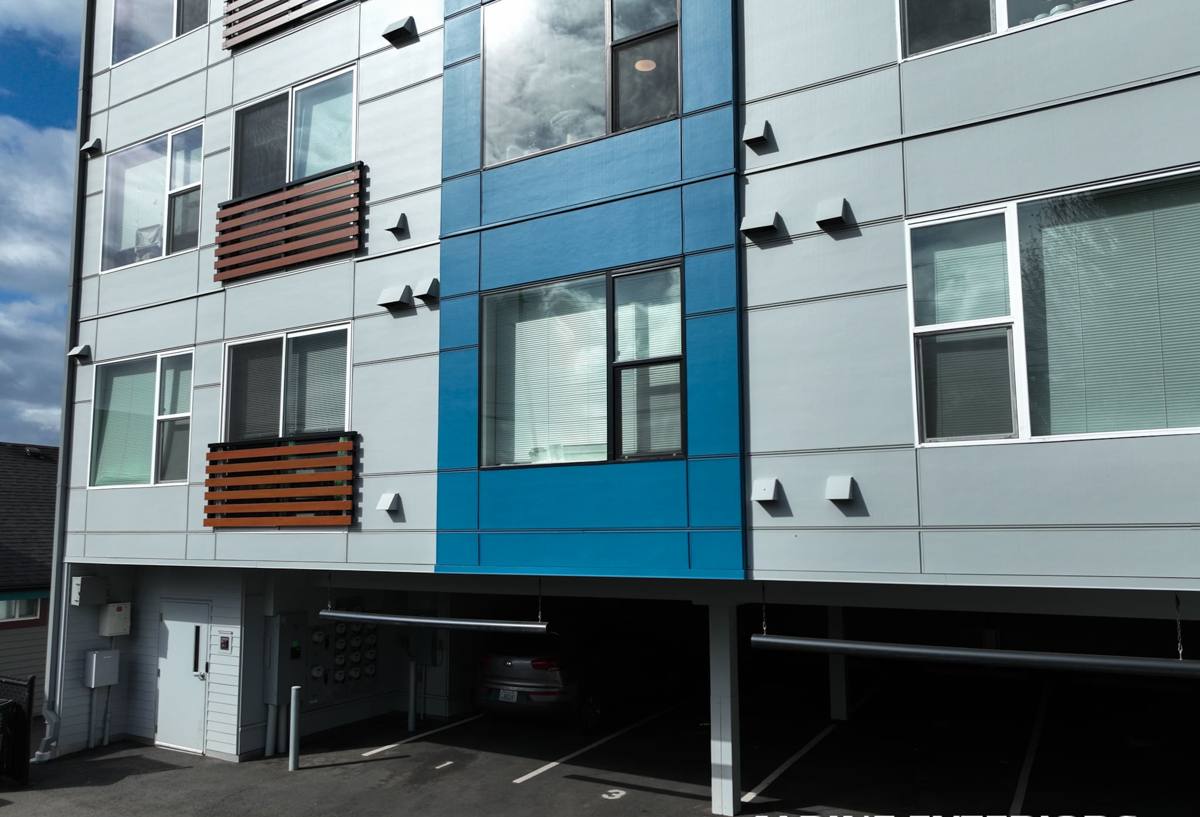
What "Correct" Siding Replacement Actually Involves
Siding replacement isn't just pulling off old material and nailing up new panels. Done right, it's a full envelope job. Skipping steps is how a home ends up with rot hiding behind brand-new siding.
The steps that actually matter
- Full tear-off — old siding comes off completely so the sheathing underneath can actually be inspected, not guessed at.
- Sheathing inspection and repair — any water-damaged or soft sheathing gets replaced before anything new goes up. This is the step that gets skipped on cut-rate jobs, and it's the one that causes the most expensive failures later.
- Weather-resistive barrier — a properly lapped and sealed housewrap or building paper, installed so water sheds down and out, not into the wall cavity.
- Flashing at every penetration — windows, doors, hose bibs, light fixtures, and vents all need flashing detailed correctly, with kickout flashing at roof-wall intersections so runoff doesn't dump straight into the wall.
- Correct fastening pattern and gapping — manufacturer-specified nailing, proper joint gaps, and factory-caulked or capped seams so the siding can expand and contract without opening cracks.
Any one of these steps done wrong shortens the life of the whole system, no matter how good the siding itself is.
Why We Install Only James Hardie Fiber Cement
We don't install vinyl, LP SmartSide, primed spruce, cedar, or other fiber cement brands. That's a deliberate standard, not a sales pitch. In a marine-influenced climate like Similk Beach, the material has to hold up to sustained moisture exposure, salt air, and a moss season that can run most of the year in shaded spots.
James Hardie fiber cement is non-combustible, doesn't rot or delaminate the way wood-based products can when moisture gets past the finish, and holds its shape in freeze-thaw and wet-dry cycling far better than vinyl, which can warp, fade, or crack in cold, wind-driven conditions. The ColorPlus factory finish is baked on under controlled conditions and backed by its own finish warranty — a meaningful advantage over field-applied paint, which has to fight moss growth and salt exposure from day one and needs repainting on a much shorter cycle. Hardie's HZ5 product line is specifically engineered for climates like ours, with moisture and freeze-thaw performance that isn't an afterthought.
We've made the call that installing anything else on a home this close to the water is setting the homeowner up for problems we'd rather not have our name on.
Choosing the Right Hardie Line for This Exposure
Not every Hardie product is used the same way on every home, and the right combination depends on the house.
Common choices for water-adjacent homes
- HardiePlank lap siding (HZ5) — the standard field material for most homes, engineered for the wetter, harsher side of Hardie's climate zoning.
- HardieShingle — used for accent gables or a more traditional coastal look, without the maintenance burden of real cedar shingles.
- HardieTrim — matched trim boards that resist the same moisture and rot issues as wood trim, which is often the first thing to fail on an otherwise sound exterior.
- HardieSoffit — pre-vented or non-vented panels for eaves, an area that takes a lot of abuse from wind-driven rain and salt spray but rarely gets attention until it's already failing.
Color matters here too. Darker ColorPlus finishes can show water spotting and salt residue differently than lighter tones, and some homeowners prefer finishes that hide the film of airborne salt and moss spores between cleanings. We walk through these tradeoffs during the estimate rather than defaulting to whatever's easiest to install.
Our Process From Estimate to Finished Job
The process is the same whether the home is a block from the water or further inland, but the details we check are shaped by the site.
- On-site walkthrough — we look at the current siding, trim, and any visible water staining, moss buildup, or soft spots, and check exposure direction relative to prevailing wind and rain.
- Written scope and estimate — a clear breakdown of tear-off, expected sheathing condition, product line, trim, and color, with no vague allowances hiding surprise costs later.
- Tear-off and sheathing repair — old material comes off, sheathing gets inspected and repaired as needed, and we don't cover up anything without addressing it.
- Barrier, flashing, and installation — installed to Hardie's published specifications, not shortcuts specific to our crew.
- Final walkthrough — a punch list review with the homeowner before we call the job done.
What Siding Replacement Typically Costs — And What Drives the Range
We don't publish flat prices because every home is different, but these are the factors that actually move the number up or down.
| Cost Factor | Why It Matters |
|---|---|
| Home size and story count | More surface area and taller walls mean more material and more time, plus added scaffolding or lift costs on multi-story homes. |
| Sheathing condition | Rot or water damage found during tear-off has to be repaired before new siding goes up — this is the most common source of a revised estimate. |
| Trim and architectural detail | Gables, dormers, and multiple roof-wall intersections all add flashing and trim work beyond flat wall area. |
| Product line and profile | Lap width, shingle accents, and trim choices all carry different material and labor costs. |
| Color and finish | Standard ColorPlus colors versus premium or custom finishes affect material cost. |
| Site access | Waterfront and hillside lots can limit staging space and equipment access, which affects labor time. |
Signs a Similk Beach Home Needs Replacement Now, Not Later
Some warning signs are easy to write off as cosmetic when they're actually structural.
- Soft or spongy spots when you press on the siding, especially near the bottom courses or under windows
- Moss or algae growth on the siding itself, not just the roof or north-facing fences
- Paint or finish that keeps peeling in the same spots no matter how often it's redone
- Visible gaps, warping, or buckling at seams and corners
- Past patch repairs that keep failing in the same location
- A musty smell or interior wall staining near exterior walls
Any one of these is worth a look. Several at once usually means the siding, and possibly the sheathing behind it, is past the point of patching.
Why Hiring a Crew That Already Works This Area Matters
A contractor who mostly works drier, inland jobs can still do competent general siding work, but they may not think about kickout flashing at every roof intersection, or how much longer moss has to establish itself on a shaded, water-adjacent wall, until it's already a problem. A crew that regularly works Similk Beach and the surrounding Anacortes area has already seen how these houses age and knows where water actually gets in on this type of site, not just in a textbook.
There's also a practical side: familiarity with Anacortes and Skagit County permitting, realistic scheduling around the weather patterns that actually happen here, and a crew that's answerable to a local reputation, not passing through for one job.
Living With Your New Siding
Correctly installed Hardie siding doesn't need much, but a little attention keeps it looking right in this climate. An occasional rinse to knock off salt film and early moss growth, prompt attention to any caulking that separates at trim joints, and keeping vegetation trimmed back from walls to reduce shade and moisture retention all go a long way. None of this is heavy maintenance — it's the same kind of upkeep any exterior surface needs near the water, just slightly more consistent than a home set back from the shoreline.
If your Similk Beach home's siding is showing its age, we're glad to take a look and give you a straightforward, no-pressure estimate — just fill out the form below.