 Anacortes Exterior
 Roof Repair Built for Where Similk Beach Actually Sits
Similk Beach sits right up against the water, tucked between Fidalgo Island and the mainland along Similk Bay, and that location shapes everything about how a roof ages here. Homes in this part of Skagit County take on a steady mix of salt-laden air, wind-driven rain coming off the water, and long stretches of damp, shaded conditions that keep moss and moisture active for most of the year. A roof repair that works fine in a drier, inland part of Washington often doesn't hold up the same way out here — the materials, the flashing details, and the timing all need to account for the marine environment.
We work on roofs throughout Anacortes and the surrounding waterfront communities, and Similk Beach roofs consistently show a specific pattern of wear: fastener corrosion, moss intrusion at shaded valleys and north-facing slopes, and flashing failures around chimneys, vents, and skylights where wind-driven rain gets pushed sideways instead of running straight off. This page walks through what that means for repair work specifically — not a full tear-off, but the kind of targeted fix that stops a problem before it becomes a bigger one.
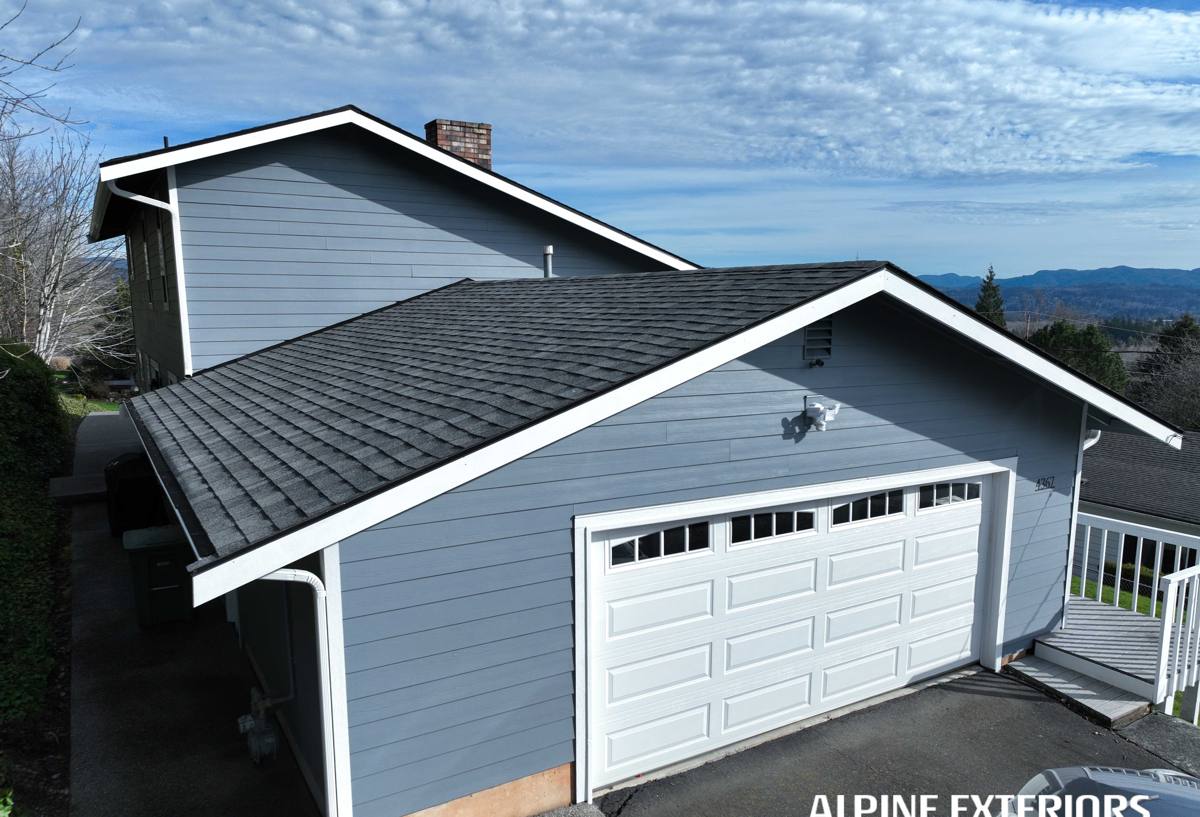
Why Salt Air, Rain, and Moss Change the Repair Approach
Salt Air and Corrosion
Even a few miles from open saltwater, airborne salt accelerates corrosion on exposed metal — nail heads, flashing seams, gutter fasteners, and vent boots all wear faster here than they would inland. A repair that reuses corroded fasteners or unsealed metal is a repair that fails again within a season or two. We factor salt exposure into what hardware and sealants we use on every Similk Beach job, not just what's fastest to install.
Wind-Driven Rain
Rain that comes in at an angle behaves differently than rain that falls straight down. It can work its way under shingle edges, around chimney step-flashing, and through poorly lapped underlayment — spots that would stay dry in calmer weather. Waterfront and near-waterfront homes see this kind of wind-driven exposure more often, which is why so many of the leaks we find here trace back to flashing and edge details rather than the field of the roof itself.
Moss and Shade
Trees, marine humidity, and long shaded periods on north- and east-facing slopes give moss exactly what it needs to establish itself. Once moss takes hold, it holds moisture against the roofing material, lifts shingle edges, and slowly works its way into seams — turning a surface issue into a leak if it's left alone long enough.
Signs Your Roof Needs Repair — Not a Full Replacement
Not every problem means a new roof. Most of the calls we get from Similk Beach homeowners turn out to be legitimate repair situations, especially when caught early. Common signs include:
- A stain or discoloration on an interior ceiling, especially near a chimney, skylight, or exterior wall
- Visible moss buildup concentrated in one area rather than spread evenly across the whole roof
- Cracked, curled, or missing shingles in a limited section, often the side that faces prevailing wind and rain
- Rust streaking or gaps around flashing at chimneys, vents, and roof-to-wall transitions
- Granules collecting in gutters from a specific slope rather than the whole roof shedding evenly
- Soft or spongy decking felt underfoot in one localized spot during an inspection
If the damage is contained to one or two areas and the roof deck underneath is still sound, repair is almost always the right call — both financially and practically. Replacement becomes the better option when damage is widespread, the decking has failed in multiple places, or the roof is already near the end of its expected service life.
What a Correct Repair Actually Involves
A repair that actually holds up isn't just patching the spot where water is showing up inside the house. Water rarely leaks straight down — it travels along the underlayment or decking before it finds a way in, so the visible stain and the actual entry point are often a few feet apart. Doing this correctly means:
- Tracing the leak to its real source, not just the ceiling stain, by inspecting the roof from above and checking flashing, seams, and penetrations upslope of the interior damage.
- Removing damaged material fully — shingles, underlayment, and flashing — rather than layering a patch over compromised material.
- Checking the decking underneath for soft spots or rot before anything new goes down, since fastening new roofing to a weakened deck just sets up the next failure.
- Rebuilding flashing details correctly, with proper laps and step-flashing at walls, chimneys, and penetrations, since this is where most wind-driven leaks originate.
- Matching materials as closely as possible so the repair blends in and performs consistently with the surrounding roof rather than creating a new weak seam.
Skipping any of these steps is how a "fixed" leak reappears eight months later during the next heavy storm.
Moss and Algae: The Maintenance Cycle That Comes With Living Near Water
Moss removal and roof repair go hand in hand out here. Simply scraping moss off the surface without addressing the underlying moisture and shade conditions means it comes right back. A proper approach includes gentle removal that doesn't tear or lift shingle granules, treatment to slow regrowth, and — where it's actually causing damage — repair of the shingles or underlayment moss has already compromised. We're honest about which roofs need repair work versus which just need a cleaning and treatment cycle; not every mossy roof is a damaged roof, and we won't sell repair work a roof doesn't need.
Repair Cost Factors: What Actually Drives the Price
Every repair is different, but the same handful of factors determine scope and cost on nearly every job we do in this area. Broad ranges below are for general planning — an accurate number requires an actual look at the roof.
| Factor | Why It Matters | Typical Impact |
|---|---|---|
| Extent of decking damage | Rotten or soft decking must be replaced before new roofing goes on | Can move a job from minor to moderate repair |
| Number of penetrations involved | Each vent, chimney, or skylight needs its own flashing detail | More penetrations mean more labor and material |
| Material match availability | Older or discontinued shingle lines are harder to blend | May require a wider repair area for a consistent look |
| Roof pitch and access | Steeper slopes and limited access add time and safety setup | Affects labor cost more than material cost |
| Moss or algae involvement | Removal and treatment may be needed alongside the repair itself | Adds a maintenance step, generally modest in cost |
| Underlying leak history | A long-standing leak often means hidden damage beyond the visible spot | Can expand scope once the roof is opened up |
Most straightforward repairs — a section of damaged shingles, a flashing rebuild, a localized leak fix — fall in a range of a few hundred to a couple thousand dollars. Jobs that uncover deck rot or span multiple penetrations run higher. We give a firm number after an on-site look, not a guess over the phone.
Repair vs. Replacement: Making the Right Call
We'd rather do an honest repair that lasts than push a replacement a roof doesn't need yet — and we'd rather tell you it's time to replace than keep patching a roof that's past the point of cost-effective repair. Here's roughly how we think about it:
| Situation | Usually Points To |
|---|---|
| Isolated leak, roof under 15 years old, deck sound | Repair |
| Multiple leak areas, scattered shingle failure | Repair now, plan for replacement in the next few years |
| Widespread granule loss, brittle shingles across the whole roof | Replacement likely more cost-effective long term |
| Deck rot found in more than one area | Replacement, since repeated deck repairs add up fast |
| Roof near or past manufacturer's expected lifespan | Replacement, since repair value drops sharply |
Why Working With a Crew That Already Knows Similk Beach Matters
Roofing crews unfamiliar with this stretch of Skagit County sometimes underestimate how much the marine environment affects material choice and detailing. A repair approach that works in a dry, inland neighborhood can fall short here within a year or two. Working with a crew that's already handled roofs in Similk Beach and the surrounding Anacortes area means:
- Familiarity with how salt air and wind-driven rain affect flashing and fastener choices locally
- Realistic expectations about moss regrowth cycles and how to plan maintenance around them
- Knowledge of how local permitting and inspection requirements apply to repair-scale work
- Faster response when weather causes an active leak, since we're already working in the area
We also know that homes near the water often have older roofing systems with materials that aren't standard stock anymore, which affects how we plan a repair to blend in rather than stand out.
Mistakes We Commonly Fix in This Area
A fair number of the repair calls we get in Similk Beach are actually second repairs — fixing work that didn't hold up the first time. The recurring issues we see:
- Sealant or caulk used in place of proper flashing, which fails within a season or two in this climate
- New shingles layered directly over moss-damaged material instead of removing it first
- Patches that address the interior stain location but miss the actual upslope entry point
- Standard fasteners used in a high-salt-exposure area, leading to early corrosion and repeat leaks
These aren't complicated fixes to do right the first time — they just require taking the extra step instead of the fastest one.
A Simple Pre-Winter Checklist for Similk Beach Homeowners
Between our visits, a quick homeowner check twice a year — ideally before the wet season ramps up — can catch small issues early:
- Look for moss concentrated in shaded areas, especially north-facing slopes
- Check gutters for granule buildup, which can signal shingle wear
- Scan interior ceilings near chimneys and skylights for new staining after a heavy storm
- Note any visibly lifted, cracked, or missing shingles from ground level with binoculars
- Clear debris and branches that hold moisture against roof valleys
None of these require climbing on the roof yourself — they're just things to notice so a small repair doesn't turn into a bigger one over a winter of Pacific storms.
Get a Straight Answer on Your Roof
If you're dealing with a leak, visible moss, or storm damage on a Similk Beach home, we're happy to take a look and give you a clear, no-pressure assessment of what it actually needs — repair, maintenance, or otherwise. Fill out the form below for a free estimate, and we'll walk you through exactly what we find and what it would take to fix it right.