 Anacortes Exterior
 Edison Sits in One of Skagit County's Toughest Climates for Siding
Edison is a small farming and arts community tucked into the Samish Valley near the tidal flats of Samish Bay, and homes out here take a different kind of weather beating than houses closer to town. The open farmland offers little wind break, salt-laden marine air drifts in off the bay, and the low-lying, poorly-draining ground around much of the valley keeps humidity high for long stretches of the year. Add in Skagit County's long, gray, wet winters and you get a climate that is genuinely hard on exterior building materials — not dramatic, just relentless.
That combination of salt air, driving rain, and a long moss season is exactly why siding decisions matter more here than in a lot of Western Washington neighborhoods. Salt air accelerates corrosion on fasteners and trim, wind-driven rain finds every gap in a weather barrier, and shaded, damp siding grows moss and algae faster than siding that gets regular sun and airflow. A siding job that would hold up fine in a drier inland town can fail early in Edison if it wasn't built for this specific environment.
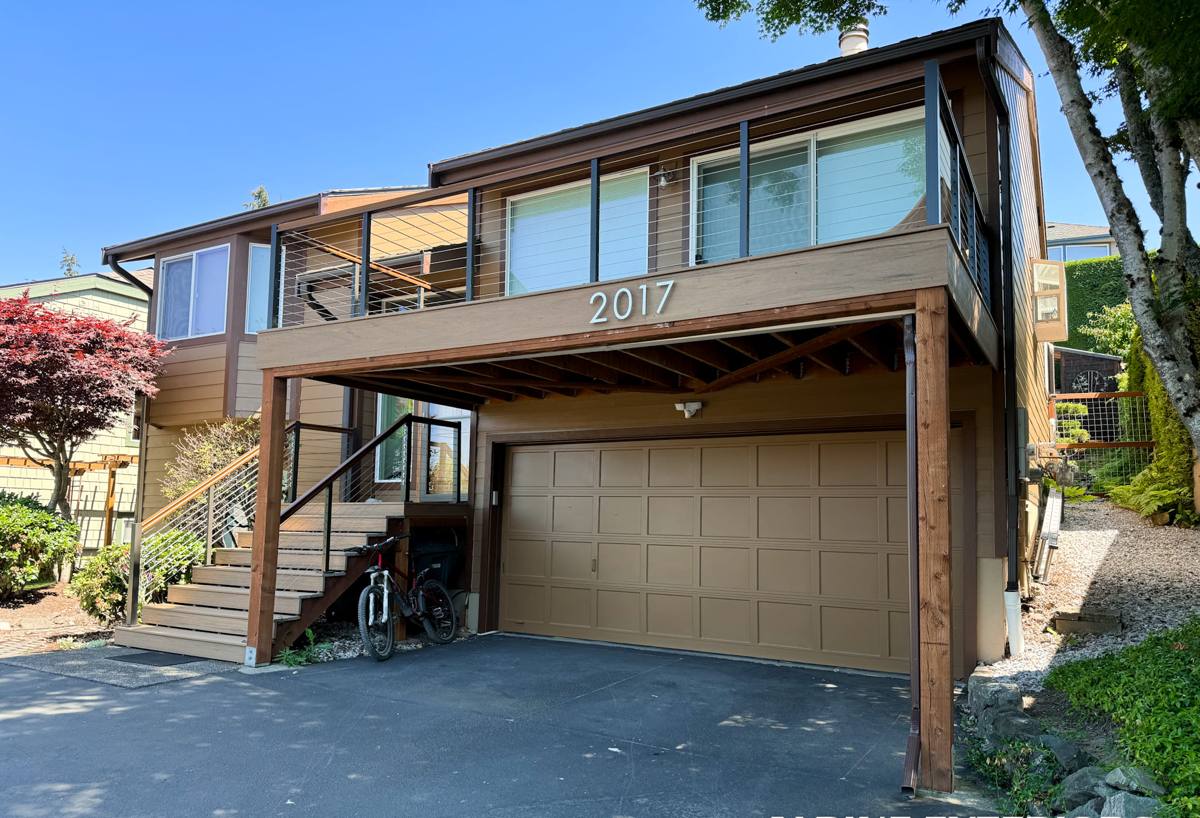
What Siding Actually Needs to Do on an Edison Home
Homeowners often think about siding in terms of looks first. Out here, performance has to come first, because the consequences of getting it wrong show up as rot, mold, and expensive repairs — not just faded paint. Siding on an Edison home needs to:
- Shed wind-driven rain without letting water track behind the panels
- Resist moss, algae, and mildew growth in shaded or low-airflow areas
- Hold paint and color through repeated wet-dry cycles without peeling or checking
- Stand up to salt-influenced air without accelerated fastener or trim corrosion
- Stay dimensionally stable through Skagit County's swings between soggy winters and dry summer heat
Rural properties also tend to get less frequent attention than in-town homes — siding on a farmhouse or acreage isn't something most people inspect twice a year. That makes low-maintenance performance even more important, because small problems have more time to turn into big ones before anyone notices.
Why This Company Installs Only James Hardie Fiber Cement
We standardized on James Hardie fiber cement siding and don't install vinyl, LP SmartSide, Cemplank, Allura, primed spruce, or cedar. That's not a marketing position — it's a decision based on what actually holds up in this climate. Fiber cement is non-combustible, doesn't absorb and swell with moisture the way wood-based products can, and doesn't soften or warp in sustained heat and cold the way vinyl can. James Hardie also builds climate-specific HZ product lines engineered for wet, marine-influenced regions like ours, which matters more in Edison than in places with milder weather swings.
The factory-applied ColorPlus finish is another piece of it. Because the color and finish are baked on in a controlled factory process rather than painted on site, the finish holds up better against the wet-dry cycling and moss growth that field-painted products struggle with over time. Hardie also backs its siding with a strong, transferable warranty — but that warranty only means something if the installation itself is done to spec, which is where a lot of siding jobs quietly go wrong.
What We Don't Install, and Why
Vinyl siding is affordable and low-maintenance in mild climates, but it can become brittle and crack in cold snaps and can distort in sustained heat, and its seams and J-channels give wind-driven rain more places to work its way behind the wall. LP SmartSide and other engineered wood products perform well when kept dry, but a wood-strand core is inherently more vulnerable to long-term moisture exposure than fiber cement, which matters in a climate with as many wet months as Skagit County sees. Primed spruce and cedar look great and are traditional choices, but they demand a repainting and maintenance schedule most homeowners underestimate, and moss and mildew take hold on wood surfaces faster in shaded, damp conditions like much of the Samish Valley offers. None of these are "bad" products — they're just not the right fit for what this climate does to a house over 15, 20, or 30 years, which is why we put James Hardie on homes instead.
What a Correct Siding Replacement Job Actually Involves
Tear-Off and Sheathing Inspection
Replacement starts with full removal of the old siding, not installation over the top of it. This is the point where hidden problems get found — soft or rotted sheathing, old flashing that was never installed correctly, or moisture staining that tells us water has been getting behind the wall for a while. Any damaged sheathing gets repaired or replaced before anything new goes up. Skipping this step is the single most common shortcut that leads to premature siding failure, because new siding over a compromised wall assembly just hides the problem instead of fixing it.
Weather-Resistive Barrier and Flashing
A correctly built wall gets a continuous weather-resistive barrier with properly lapped seams, and flashing at every window, door, and horizontal trim transition — the places wind-driven rain actually gets in. In a climate that sees as much sideways rain as Edison does, flashing details are not optional extras; they're the difference between a wall that sheds water and one that slowly absorbs it.
Installation to Manufacturer Spec
James Hardie siding has specific requirements for fastener type and spacing, minimum clearance from grade, roof lines, and decks, and butt-joint treatment — and those specs exist because they're what makes the product perform and what keeps the warranty valid. Installing Hardie siding like it's any other siding product is how homeowners end up with a good material doing a mediocre job.
Finish and Trim Details
The last stage is trim, caulking at appropriate joints, and a final check of every seam and penetration. In a salt-air environment, we also pay attention to fastener and trim material choices that resist corrosion better over time, since small metal failures are often what age a siding job before the siding itself actually wears out.
Our Process, Start to Finish
- On-site assessment — we look at your current siding, sheathing condition where accessible, drainage around the foundation, and sun/shade exposure that affects moss and moisture patterns.
- Product and color selection — choosing the right HardiePlank, HardiePanel, or trim profile and ColorPlus finish for your home and setting.
- Tear-off and repair — full removal of old siding, sheathing inspection, and any necessary repairs before new material goes up.
- Weather barrier and flashing installation — the unglamorous work that determines whether the job holds up in year ten, not just year one.
- Siding installation to manufacturer spec — correct fastening, spacing, and clearances throughout.
- Trim, caulking, and final walkthrough — finishing details and a full inspection with you before we call it done.
Signs Your Edison Home May Need Siding Replacement Now
- Visible moss or algae growth that keeps coming back after cleaning
- Paint that's peeling, bubbling, or chalking, especially on shaded walls
- Soft spots, warping, or delamination in wood-based siding
- Cracked or missing siding sections after windstorms
- Staining or discoloration near seams, windows, or trim joints
- A musty smell or visible mold on interior walls that back up to exterior siding
- Rising heating bills that suggest the wall assembly isn't performing the way it should
Any one of these can be minor on its own. Several together, or any of them combined with soft sheathing you can feel by pressing on the wall, usually means it's time for a real inspection rather than a patch job.
How Siding Materials Compare for a Climate Like This
| Material | Moisture Behavior | Maintenance | Typical Longevity |
|---|---|---|---|
| James Hardie fiber cement | Does not absorb and swell; resists moisture-driven warping | Low — factory finish resists moss/algae staining | Decades with correct install and upkeep |
| Vinyl | Sheds water on the face but seams and channels can let wind-driven rain track behind | Low, but can crack in cold and distort in heat | Moderate; performance varies with climate exposure |
| Engineered wood (e.g. LP SmartSide) | Performs well dry; vulnerable if moisture reaches the wood-strand core | Moderate — edge sealing and touch-up matter | Good when consistently maintained |
| Cedar / primed spruce | Absorbs moisture readily; prone to moss and mildew in shaded, damp conditions | High — regular repainting and sealing needed | Shorter without consistent upkeep |
What Affects the Cost of a Siding Replacement
Every Edison property is a little different, so we don't quote broad numbers without seeing the home, but a few factors consistently drive cost up or down: the amount of sheathing repair needed once old siding comes off, the home's size and number of stories, the complexity of trim and architectural detail, and whether the job is a straightforward re-side or includes additional work like window trim replacement or added drainage detailing. Rural access — long driveways, gravel, or limited staging space common on Skagit County acreage — can also factor into project logistics. We walk through all of this during the on-site estimate so there are no surprises once work starts.
Why a Crew That Already Works Edison Matters
Edison isn't a subdivision — it's a scattered rural community with farmhouses, acreage lots, and properties that back up to fields and tidal land. That setting comes with practical differences from an in-town job: longer material staging distances, wind exposure across open farmland that affects how siding and trim need to be secured, and permitting that runs through Skagit County rather than a city building department. A crew that's worked in the area knows to check for these things up front instead of discovering them mid-project. It's also worth knowing your local moss and algae patterns — which sides of a house in this valley stay damp longest, and where drainage tends to collect — so the job accounts for the way your specific property behaves, not just a generic checklist.
If your Edison home's siding is showing its age, or you're planning ahead before a small problem becomes a big one, we're glad to take a look. We offer a free, no-pressure estimate — walk the property with us, ask questions, and get a straight answer about what your home actually needs.