 Anacortes Exterior
 Siding Built for Cap Sante's Waterfront Exposure
Cap Sante sits close enough to the water that its homes take a different kind of weathering than houses even a few miles inland in Skagit County. Salt-laden air off Fidalgo Bay and the marina settles onto siding, trim, and fasteners year-round. Add Anacortes' long stretch of driving rain and the extended gray, damp season that lets moss and algae get a foothold, and you have a climate that punishes the wrong siding choice quickly and rewards the right one for decades. When we install siding in Cap Sante, we're not just matching a color to a house — we're building an exterior that has to hold up to salt corrosion, wind-driven moisture, and constant humidity without curling, swelling, or feeding mold.
This page is specifically about siding installation for Cap Sante homes — what the local conditions demand, what a correct installation actually involves, and why it matters to hire a crew that already understands this particular stretch of Anacortes rather than one working from a generic playbook.
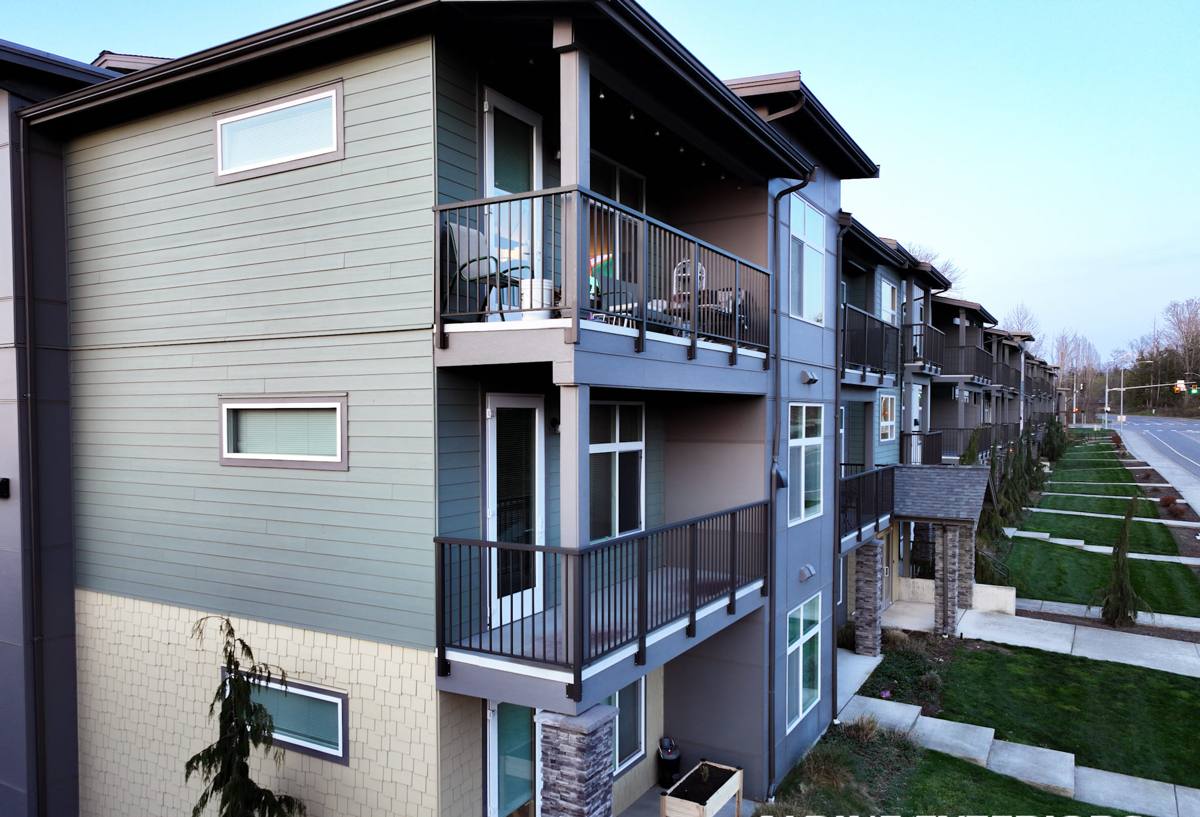
What Cap Sante's Climate Does to Siding Over Time
Three environmental factors converge on this neighborhood harder than in most of Skagit County:
- Salt air corrosion: Airborne salt from the bay accelerates the breakdown of fasteners, metal flashing, and lower-grade coatings. Anything not rated for coastal exposure ages faster here than it would a few miles inland.
- Driving rain: Wind off the water pushes rain sideways into wall assemblies, not just straight down. Siding systems that rely on caulk and face-sealing rather than proper water-shedding details are the first to fail.
- Extended moss and algae season: Cool, damp conditions persist for much of the year, giving organic growth long windows to establish on siding that holds moisture at the surface or in seams.
None of these factors are unique to Cap Sante in isolation, but the combination — direct water exposure, salt, and a long wet season — is more concentrated here than on the inland side of Anacortes. That combination is exactly why we don't treat every siding job in this city the same way.
Why We Install Only James Hardie Fiber Cement Here
We've made a standing decision not to install vinyl, LP SmartSide, primed wood, cedar, or comparable fiber cement alternatives like Cemplank or Allura. That's not a marketing position — it's a reflection of what actually holds up under Cap Sante's specific exposure:
- Vinyl can warp and become brittle with UV and temperature cycling, and its seams give wind-driven rain more chances to find a way behind the panel.
- Wood-based products (LP SmartSide, primed spruce, cedar) rely on an intact factory or field-applied coating to keep moisture out. In a climate this consistently damp, any coating breach becomes an entry point for rot, and salt air accelerates wear on exposed fasteners and edges.
- Other fiber cement brands may perform reasonably, but we standardized on one product line so our crew's installation detailing, caulk and flashing practices, and warranty knowledge stay consistent and sharp, rather than split across several systems.
James Hardie fiber cement is non-combustible, dimensionally stable in wet-dry cycling, and available in HZ5 formulations engineered for cold, wet, coastal-adjacent climates like ours. Its ColorPlus factory finish is baked on and warranted separately from the substrate, which matters directly in a salt-air environment where field-applied paint finishes wear faster.
What a Correct Cap Sante Siding Installation Involves
Water Management Comes First
Before a single piece of siding goes up, the wall needs a water-resistive barrier, correctly lapped and taped seams, and flashing at every window, door, and penetration that directs water outward and down — never behind the barrier. In a driving-rain environment like Cap Sante, this layer does more work than the siding itself. Skipping or rushing it is the single most common cause of hidden rot behind siding that still looks fine from the street.
Proper Clearances and Fastening
Hardie board needs correct clearance from grade, roof lines, and horizontal surfaces to avoid wicking moisture, along with fasteners installed to the manufacturer's spacing and depth specifications. In coastal-adjacent settings we use fasteners rated to resist the corrosion that salt air accelerates — an easy detail to get wrong if a crew isn't used to building this close to the water.
Joint and Seam Detailing
Every butt joint, corner, and trim intersection is a potential entry point for wind-driven rain. Correct installation means back-flashing or shingling laps so water sheds outward at every seam, not relying on caulk alone to do that job — caulk is a backup, not a water management strategy.
Finish Coating for Moss Resistance
ColorPlus factory finish resists the kind of moisture retention at the surface that lets algae and moss establish. It won't make a house immune to organic growth in a climate this damp, but it gives homeowners a meaningfully longer stretch between the kind of soft, porous surface wear that untreated or field-painted products develop.
Our Installation Process
- On-site assessment: We walk the exterior, check the current siding and sheathing condition, and identify any moisture damage or water-management issues that need to be addressed before new siding goes on.
- Tear-off and sheathing check: Old siding comes off and we inspect the sheathing underneath. Any soft or water-damaged sheathing gets repaired or replaced — covering it up is how problems get hidden, not solved.
- Water-resistive barrier and flashing: A new barrier is installed with correctly lapped seams, and flashing is set at every window, door, and penetration point.
- Hardie panel or plank installation: Siding is installed to Hardie's fastening and clearance specifications, with attention to joint detailing given the driving-rain exposure in this neighborhood.
- Trim, caulk, and final detailing: Trim is fitted, and caulk is applied as a secondary seal, not the primary water barrier.
- Final walkthrough: We review the finished job with the homeowner and confirm everything meets spec before calling it done.
Comparing Siding Options for a Cap Sante Home
| Factor | Vinyl | Wood-Based (LP/Cedar) | James Hardie Fiber Cement |
|---|---|---|---|
| Salt air resistance | Moderate — can become brittle over time | Depends heavily on coating integrity | Strong — non-combustible, dimensionally stable |
| Driving rain performance | Seam-dependent, relies on face sealing | Vulnerable if coating breaches | Strong when installed with proper flashing detail |
| Moss/algae resistance | Moderate | Lower — porous surface once coating wears | Higher — factory finish resists surface moisture retention |
| Finish warranty | Color can fade under UV | Field-applied, wears with climate exposure | Factory ColorPlus finish, separately warranted |
| Fire rating | Combustible | Combustible | Non-combustible |
Signs Cap Sante Homeowners Should Watch For
Because this neighborhood's exposure is more aggressive than average, it's worth knowing what to look for before a small issue becomes a structural one:
- Soft or spongy spots when pressing on siding near the base of walls or below windows
- Persistent moss or algae streaking that reappears quickly after cleaning
- Visible gaps, cracking, or warping at seams and corners
- Rust staining around fasteners or trim, a common early sign of salt-air corrosion
- Peeling or bubbling paint, which often points to moisture trapped behind the surface
- A musty smell in interior rooms along exterior walls
Why Hiring a Crew That Already Works Cap Sante Matters
Siding installation isn't a one-size-fits-all trade. A crew that mostly works drier, inland jobs may not default to the fastener corrosion resistance, flashing sequencing, or clearance details that matter most a few blocks from the water. Working repeatedly in Anacortes' coastal-adjacent neighborhoods means those details become standard practice, not an afterthought — and it means we've already seen how James Hardie siding performs here specifically over years of local installs, not just in a manufacturer's spec sheet.
It also means we understand the practical side of working in this neighborhood: proximity to the water, typical lot layouts, and the kind of access and staging considerations that come with waterfront-adjacent properties in Skagit County.
What to Expect From an Estimate
A useful estimate for a Cap Sante home should include an honest look at your current siding and sheathing condition, not just a square-footage quote. Before you commit to any siding project, it's worth confirming a few things with whoever you hire:
- Will they inspect and address sheathing condition before installing new siding, not just cover it up?
- Do they specify corrosion-resistant fasteners appropriate for coastal-adjacent exposure?
- Can they explain their water-resistive barrier and flashing approach in plain terms?
- Do they carry manufacturer certification for the specific siding product they're installing?
- Is the warranty — both material and labor — written down, not just described verbally?
If you're weighing a siding project for a Cap Sante home, we're happy to take a look and walk you through what your specific house needs — no pressure, no obligation. Fill out the form below for a free estimate.