 Anacortes Exterior
 Ship Harbor's Siding Environment Is Tougher Than Most Homeowners Realize
Ship Harbor sits right where Fidalgo Island meets the water, and that location cuts both ways. The views and the marine climate that make this part of Anacortes desirable are the same conditions that wear down exterior siding faster than almost anywhere else in Skagit County. Homes here take a steady diet of salt-laden air, wind-driven rain that hits siding at an angle instead of falling straight down, and a long, damp moss season that keeps north- and west-facing walls wet for weeks at a time.
None of that is a reason to avoid siding it's a reason to be deliberate about what goes on the wall and how it's installed. Siding that's rated for a dry inland climate, or installed with shortcuts that would be fine 50 miles east of here, tends to show problems early in a location like Ship Harbor: swelling at panel edges, streaking and staining from trapped moisture, fastener corrosion, and moss or algae taking hold in seams that never fully dry out.
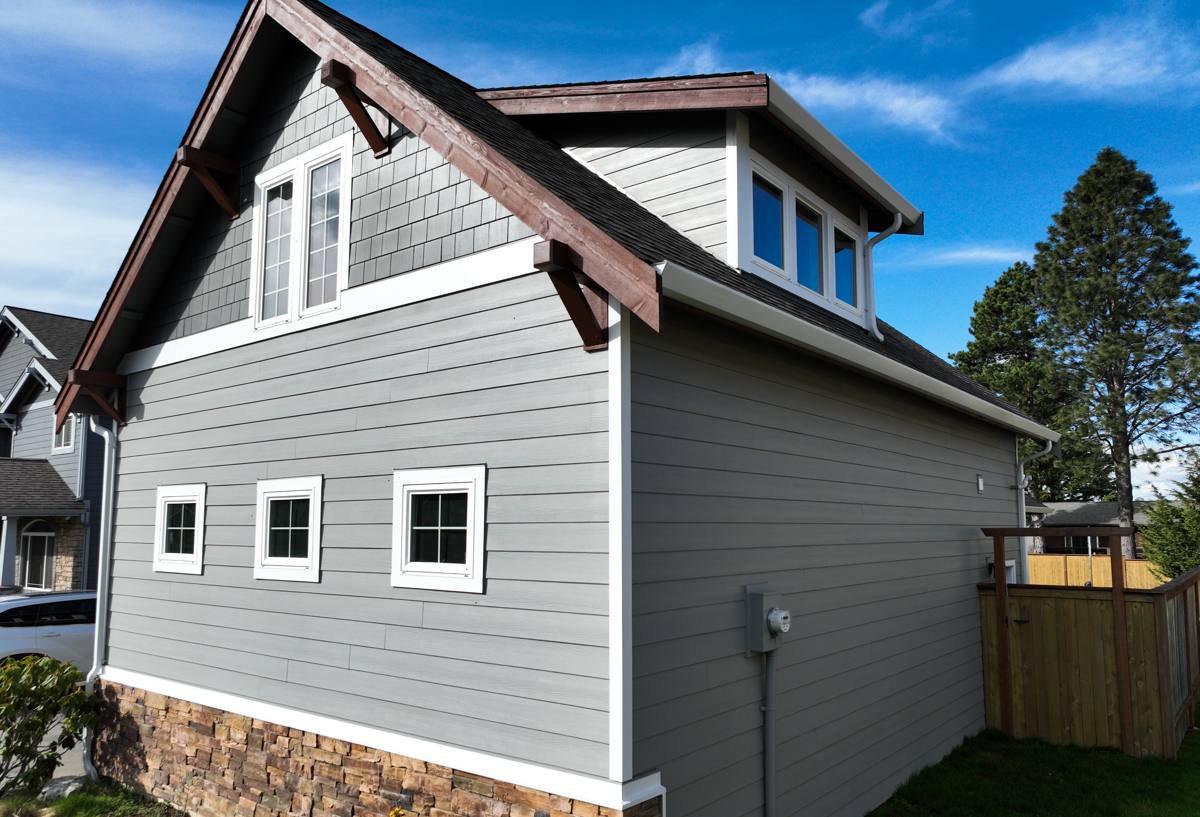
What "Correct" Siding Installation Actually Means Here
A lot of siding problems on the water side of Anacortes aren't product failures they're installation failures. The material can only perform as well as the assembly behind it. For a marine-exposed home in Ship Harbor, that means paying close attention to details that matter less in a sheltered inland yard:
Water Management Behind the Siding
Every wall needs a continuous weather-resistive barrier with properly lapped and taped seams, correctly integrated flashing at every window, door, and penetration, and a drainage plane that lets any water that does get behind the siding find its way back out instead of sitting against the sheathing. In a driving-rain climate, this layer matters as much as the siding itself.
Fastening and Clearances
Corrosion-resistant fasteners, correct nailing patterns, and proper clearance between siding and grade, roofing, decks, and hardscape all keep moisture from wicking into the bottom of the wall. Skipping these details doesn't show up as a problem on install day it shows up two or three winters later.
Caulking and Sealant Discipline
Where siding meets trim, corners, and penetrations, the right sealant applied in the right place and skipped where it shouldn't be used (siding needs to breathe and drain, not be sealed up like a fish tank) is a detail that separates a durable installation from one that traps moisture.
Why We Install Only James Hardie Fiber Cement in Ship Harbor
We don't install vinyl, LP SmartSide, Cemplank, Allura, or primed wood siding. That's a deliberate standard, not a lack of options. In a coastal environment like Ship Harbor, the trade-offs of those products become more pronounced, not less:
- Vinyl can warp and become brittle with UV exposure and temperature swings, and its seams give wind-driven rain more opportunities to work behind the panel.
- Wood-based products (LP SmartSide, primed spruce, cedar) depend on an intact factory or field-applied coating to keep moisture out. In a climate this damp, any breach in that coating opens the door to swelling and rot at a faster rate than a drier region would see.
- Other fiber cement brands (Cemplank, Allura) are reasonable products, but we've standardized on one system so our crews install it the same correct way on every job, every warranty claim runs through one manufacturer, and every homeowner gets the same climate-engineered product line.
James Hardie fiber cement is non-combustible, doesn't support moss and algae growth the way wood-based products can, and holds its ColorPlus factory finish without the repainting cycle that wood and some composite sidings require. For a home absorbing salt air and months of damp shade, that combination matters more than it does in a drier inland neighborhood.
HardieZone Engineering: Why the Product Line Matters Here
James Hardie builds its siding in different formulations for different climates, sold as HZ5 and HZ10 product lines. The Pacific Northwest, including Anacortes and Skagit County, falls into the wetter, harsher HZ10 zone. That means the boards installed on a Ship Harbor home are engineered for freeze-thaw cycling, sustained moisture exposure, and the kind of driving coastal rain this area gets it's not the same product sold to a contractor in Arizona or Texas with a generic label. Installing the climate-correct product line is one of the reasons manufacturer specification matters as much as workmanship.
Signs Your Current Siding Is Falling Behind
Because Ship Harbor's climate accelerates wear, it's worth knowing what early trouble looks like before it becomes a structural issue:
- Persistent dark streaking or green/black staining, especially on north- and west-facing walls
- Soft or spongy spots when pressed, particularly near the bottom courses or trim
- Paint that's failing faster than the repaint cycle you were told to expect
- Visible gaps, warping, or separation at panel seams and corners
- Moss buildup that keeps returning within a season of cleaning
- Musty odors or moisture staining on interior walls that share an exterior wall
Any one of these on its own isn't necessarily an emergency, but on a home this close to the water they're worth having looked at before the next wet season rather than after.
Our Installation Process for Ship Harbor Homes
The steps don't change from house to house, but the attention paid to each one does, based on a given wall's sun, wind, and rain exposure.
- On-site assessment. We look at the home's specific exposure prevailing wind direction, shade patterns, roofline drainage, and grade clearance before recommending a plan.
- Removal and sheathing inspection. Old siding comes off and the sheathing underneath gets checked for hidden rot or moisture damage before anything new goes up.
- Weather-resistive barrier and flashing. A continuous, properly lapped barrier goes on first, with flashing detailed at every window, door, and penetration.
- Hardie panel or plank installation. Installed to manufacturer specification for fastening, gapping, and clearance the details that determine how the siding performs in year ten, not just year one.
- Trim, caulking, and finish detailing. Correct sealant placement where it should drain versus where it should seal, consistent with proper fiber cement practice.
- Final walkthrough. We go over the finished work with the homeowner and explain what maintenance, if any, to expect going forward.
Siding Options Compared for a Marine Climate
| Factor | James Hardie Fiber Cement | Vinyl | Wood-Based (LP SmartSide, cedar) |
|---|---|---|---|
| Moisture behavior in driving rain | Engineered for wet climates (HZ10); doesn't absorb water into its core | Seams can allow water intrusion behind panels | Depends entirely on an intact coating; vulnerable once breached |
| Moss/algae resistance | Doesn't support growth the way organic-based products can | Doesn't feed growth, but seams trap debris | More susceptible, especially in shaded, damp areas |
| Finish longevity | Factory ColorPlus finish, long repaint interval | Color molded in, but can fade/chalk with UV over time | Requires a repaint or recoat cycle to stay protected |
| Fire resistance | Non-combustible | Combustible | Combustible |
| Typical lifespan when correctly installed | Multiple decades | Multiple decades, but seams/warping can shorten effective life | Shorter, coating-dependent |
Living With Fiber Cement Siding in a Salt Air, Moss-Prone Climate
Correctly installed Hardie siding is low-maintenance, not no-maintenance. A few habits go a long way on a home in Ship Harbor's environment:
- Rinse salt residue and grime off exterior walls once or twice a year, especially wind-exposed sides
- Keep gutters clear so overflow doesn't run down and pool against siding
- Trim back vegetation and tree cover that keeps a wall shaded and damp longer than necessary
- Address caulking or trim gaps promptly rather than waiting for the next dry stretch
- Have siding and flashing details checked periodically, particularly after a hard windstorm off the water
Why Hiring a Crew That Already Works Ship Harbor Matters
Siding installation isn't a one-size-fits-all trade, and a marine-exposed neighborhood like Ship Harbor isn't a generic jobsite. A crew that regularly works this stretch of Anacortes already understands how wind off the water behaves against a wall, which sides of a house take the worst of the rain, and how aggressively moss and moisture move in during the wet months here. That translates into flashing details, fastening choices, and drainage planning that account for real conditions instead of a generic textbook install.
It also means a warranty and a working relationship with a contractor who isn't a stranger to this specific climate if a question comes up five or ten years down the road, you're not starting from zero explaining where you live and what your home has been through.
If you're weighing a siding project for a home in Ship Harbor, we're happy to take a look and talk through what your specific walls need no pressure, no upsell, just a straight assessment and a free estimate.