 Anacortes Exterior
 Roof Repair Built for Sedro-Woolley's Climate
Sedro-Woolley sits inland from the water, tucked against the Skagit River valley with more tree cover than the coastal parts of Skagit County. That changes what a roof deals with here compared to a roof a few miles west toward Anacortes. Homes closer to the water take more direct salt air and wind-driven rain off the Sound. Homes in Sedro-Woolley get less salt exposure but more shade, more standing moisture under the canopy, and rain that sits on a roof longer before it dries. Both situations wear a roof down — just in different ways, and a repair crew needs to know the difference before they ever get on the ladder.
We work roofs across Skagit County, and Sedro-Woolley's mix of older single-family homes, tree-lined lots, and a long wet season means moss, trapped moisture, and slow leaks show up more often here than storm-blown damage. That's the starting point for how we approach repairs in this area.
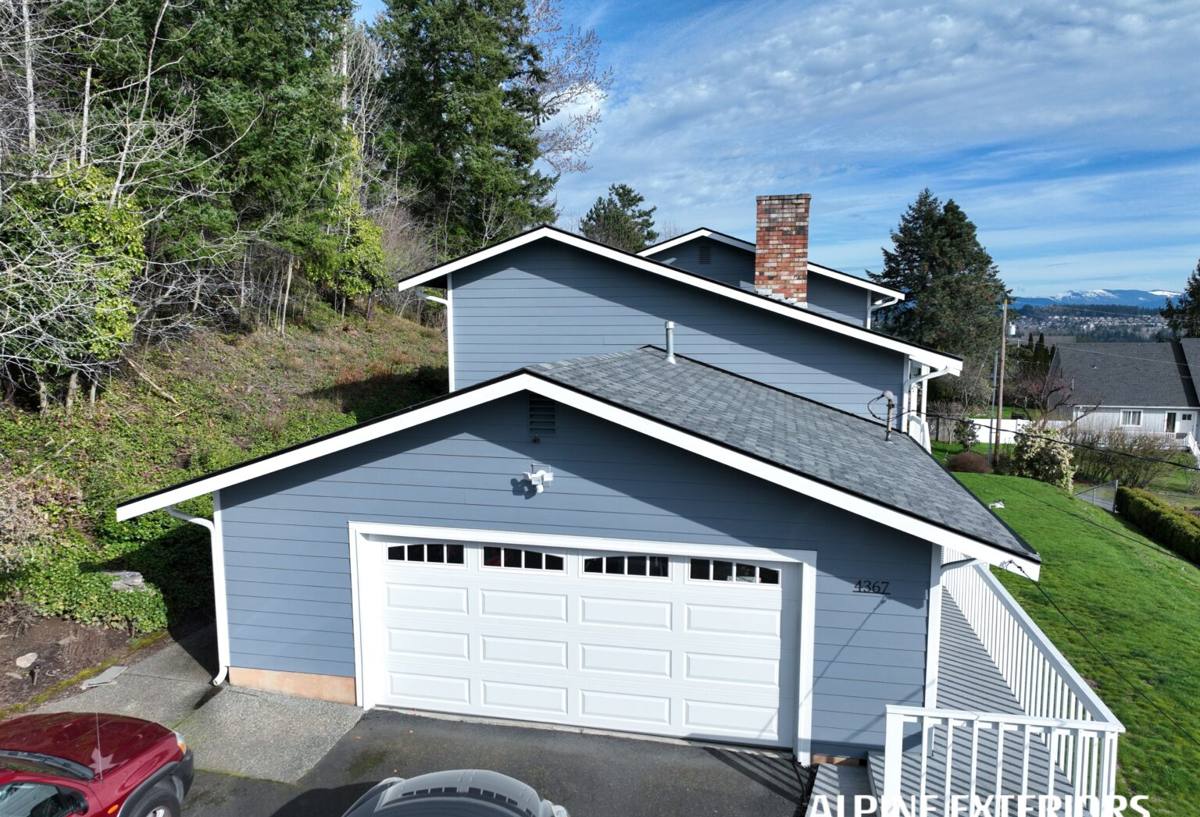
Why Local Roofs Need Attention Here Specifically
Three things drive most of the repair calls we get from Sedro-Woolley homeowners:
- Shade and moisture retention — mature trees keep roof surfaces cooler and damper for longer stretches after rain, which is exactly what moss and moisture-loving growth need to take hold.
- A long moss season — in this part of the county, moss growth isn't a summer or winter problem, it's close to year-round. Left alone, it lifts shingle edges and holds water against the roof deck.
- Driving rain — even without direct salt exposure, the Pacific Northwest storm pattern pushes rain sideways under normal flashing gaps and worn shingle tabs. Where a roof is dry-climate "fine," it's not fine here.
None of this means Sedro-Woolley roofs fail faster — it means the failure points are different, and repairs need to account for moss and moisture more than wind uplift or salt corrosion.
Signs You Need Repair, Not a Full Replacement
Most roofs don't fail all at once. They show localized problems first, and catching those early is what keeps a repair a repair instead of a replacement. Watch for:
- Moss concentrated on the shaded (usually north-facing) slope, with shingle granules collecting in gutters below it
- Dark streaking or a spongy feel when walking a section of roof
- Water stains on ceilings or in the attic near a chimney, vent pipe, or valley
- Curling, cracked, or missing shingles in one area rather than across the whole roof
- Daylight visible through the roof deck from inside the attic
- Rusted or lifted flashing around chimneys, skylights, and wall-to-roof transitions
If the damage is contained to one slope, one valley, or one penetration point, a targeted repair is almost always the right call. Full replacement makes sense when the underlayment has failed broadly, the deck has soft spots in multiple areas, or the roof is old enough that repair costs start rivaling replacement.
Moss: Treat the Cause, Not Just the Symptom
Pressure-washing moss off a roof without addressing what's holding moisture there just buys a season or two. A proper moss job includes gentle removal that doesn't strip granules, treatment to slow regrowth, and — where it's the real driver — recommending branch trimming to get more light and airflow onto the affected slope. On Sedro-Woolley's more shaded lots, that airflow conversation matters as much as the roof work itself.
What a Correct Roof Repair Actually Involves
A repair that holds up through another wet season isn't just swapping a shingle. It starts with figuring out how water actually got in, because the visible damage and the entry point are often in different spots — water travels along the deck before it drips through.
Diagnosis First
We check the roof surface, the flashing, the attic side of the deck, and the gutter and ventilation system together. A leak that looks like a bad shingle is sometimes actually a clogged gutter backing water up under the edge, or a bathroom vent dumping warm, moist air into the attic where it condenses on cold sheathing.
Matching Materials
Repairs should match the existing roofing material in type, profile, and as close to color as the product line allows. Mismatched patches are the clearest sign of a rushed job, and they also age differently, which can create new weak points.
Flashing and Underlayment Get Real Attention
Most recurring leaks trace back to flashing — around chimneys, skylights, dormers, and where roof planes meet walls — not the shingles themselves. A repair that replaces shingles but reuses failing flashing is a repair that comes back.
Common Repair Types We Handle in Sedro-Woolley
| Repair Type | Typical Cause Locally | What's Involved |
|---|---|---|
| Moss removal & treatment | Shade, tree canopy, long wet season | Careful removal, anti-moss treatment, airflow recommendations |
| Flashing repair | Age, thermal movement, prior poor install | Remove and replace flashing, reseal transitions |
| Leak tracing & deck repair | Water traveling along deck from a distant entry point | Open affected area, dry and repair deck, reroof section |
| Valley repair | High water volume concentration in valleys | Replace valley material and adjacent shingles |
| Vent & penetration reseal | Aged boots and seals around pipes and vents | Replace boots/seals, check surrounding shingles |
| Storm damage patch | Wind-lifted or torn shingles, debris impact | Section replacement matched to existing material |
Our Repair Process
- Inspection. We look at the whole roof system, not just the spot you're worried about — moss patterns, flashing condition, attic ventilation, and gutter flow all factor in.
- Honest scope and estimate. You get a clear explanation of what's actually wrong, what it takes to fix it right, and what it costs — including a straight answer if replacement makes more sense than repair.
- The repair itself. Matched materials, proper flashing work, and attention to the moisture source, not just the visible symptom.
- Cleanup and walk-through. We clear debris and moss from the site and walk you through what was done and what to watch going forward.
Repair vs. Replacement: What Drives the Decision
| Factor | Favors Repair | Favors Replacement |
|---|---|---|
| Roof age | Roof is under two-thirds of its expected lifespan | Roof is near or past its expected lifespan |
| Damage spread | Isolated to one area or slope | Present across multiple slopes or the whole roof |
| Deck condition | Solid, dry deck under the damaged section | Soft, delaminated, or rotted deck in multiple spots |
| History | First repair, or an isolated recurring issue now traced to cause | Repeated repairs to the same area without lasting results |
| Underlayment | Still intact in unaffected areas | Failing broadly, not just at the damage site |
Cost for a repair generally runs a small fraction of a full replacement, but the right number depends entirely on scope — a flashing reseal and a deck rebuild after a long-term leak are very different jobs even though both get called "roof repair."
Why Hire a Crew That Already Works Sedro-Woolley
A roofer who mainly works drier, more open areas can miss what's specific to a shaded, wet inland Skagit County property — how fast moss comes back under a given tree canopy, which flashing details actually hold up through a Northwest winter, or when a "leak" is really a ventilation problem caused by trapped moisture rather than a hole in the roof. We work this area regularly, which means we're not guessing at how local conditions behave — we've seen the pattern before on roofs like yours.
It also means we can give you a realistic read on urgency. Not every issue needs to be fixed this week, and we'll tell you plainly when something can wait for a scheduled visit versus when it needs attention before the next storm system moves through.
Between-Repair Maintenance Checklist
Good repairs last longer when the roof gets basic upkeep in between. A few things worth doing yourself, or asking us to check on a visit:
- Clear gutters and downspouts at least twice a year, more often under heavy tree cover
- Trim back branches that overhang the roof to cut down on shade and debris buildup
- Look for moss starting on shaded slopes before it spreads across the whole section
- Check attic insulation and ventilation — poor airflow speeds up moisture problems from the inside
- Have flashing around chimneys and skylights checked every few years, since it wears faster than the field shingles around it
- Address small leaks promptly — a stain the size of a dinner plate is cheaper to fix than the deck damage it becomes if ignored for a season
If you're dealing with moss, a leak, or storm damage on a Sedro-Woolley roof, we're happy to take a look and give you a straight answer on what it needs. The estimate is free, there's no pressure to sign anything on the spot, and you'll get a clear explanation of the problem along with the options to fix it.