 Anacortes Exterior
 Roofing on the West Side of Fidalgo Island Takes a Different Kind of Beating
West Anacortes sits closer to the water than most of the rest of town, and that changes what a roof has to survive year after year. Homes facing Rosario Strait or Guemes Channel take on salt-laden air that most inland Skagit County roofs never see. That salt air accelerates corrosion on fasteners, flashing, and metal edge trim long before the shingles themselves wear out. Add in driving rain that comes sideways off the water during winter storms, and you've got a roof assembly that needs better sealing at every penetration, valley, and edge than a textbook installation manual assumes.
Many West Anacortes lots also carry heavier tree cover than the more open parts of town, which brings its own problem: shaded roof sections that stay damp for days after a storm, feeding a long moss season that runs from fall through spring. A roof replacement out here isn't just about swapping old shingles for new ones. It's about specifying materials and details that address salt exposure, wind-driven moisture, and moss all at the same time.
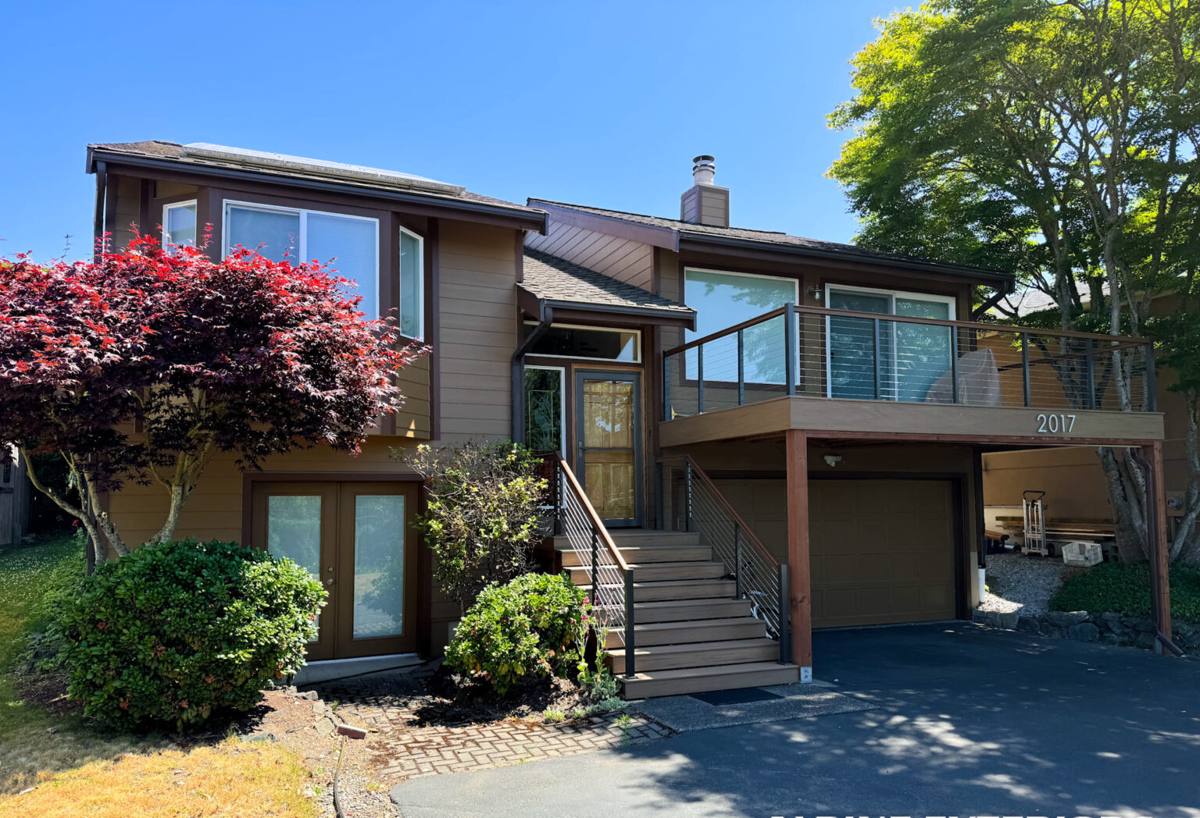
Signs a West Anacortes Roof Is Past the Point of Patching
Roofs rarely fail all at once. They tell you first, usually through a combination of small signs that add up. On homes near the water, watch for these together rather than any single symptom in isolation:
- Granule loss showing up as bald patches or heavy grit in gutters and downspouts
- Curling, cupping, or cracked shingle tabs, especially on south- and west-facing slopes that get the most sun and wind exposure
- Rust staining or visible corrosion at flashing, vent boots, and drip edge — a marine-exposure roof shows this years before an inland roof would
- Moss mats thick enough that you can't see the shingle surface underneath, particularly on shaded north-facing sections
- Soft or spongy decking felt underfoot in the attic, or daylight visible through the roof deck
- Interior water stains, musty attic smell, or visible mold on rafters and sheathing
If a roof is under about ten years old and only showing isolated moss or a few damaged shingles, a repair often makes sense. Past that age, or with several of the signs above showing up together, patching usually just delays a full tear-off while the deck underneath keeps absorbing moisture.
Why Age Alone Isn't the Whole Story
Two roofs installed the same year in Anacortes can age very differently depending on tree cover, slope orientation, and how close the home sits to open water. A shaded, moss-prone roof on a wooded West Anacortes lot may need replacement years ahead of a similar roof on a sunnier, more open street across town. That's why we look at the actual condition of the deck, flashing, and ventilation during an inspection rather than relying on the installation date alone.
What a Correct Replacement Actually Involves
A roof replacement done right in this part of town goes well beyond stripping old shingles and nailing down new ones. Each of the following steps matters for how long the new roof holds up against salt air and moisture:
Full Tear-Off and Deck Inspection
We remove existing roofing down to the deck rather than layering over it. That's the only way to actually see the sheathing, check for rot or delamination, and replace any soft or compromised sections before anything new goes down. Covering over a hidden problem just guarantees a repeat failure sooner.
Underlayment and Ice-and-Water Protection
Valleys, eaves, and any low-slope transitions get self-adhered ice-and-water membrane rather than standard felt alone. With the wind-driven rain this area sees, water can be pushed uphill under shingles in ways a drier climate roof was never designed to handle. Synthetic underlayment across the rest of the deck adds a second line of defense if wind ever lifts a shingle edge.
Corrosion-Resistant Flashing and Fasteners
This is the detail that gets skipped most often, and it's the one that matters most this close to salt water. We spec stainless steel or heavy hot-dip galvanized fasteners and flashing rather than standard electro-galvanized hardware, which can start showing rust streaks within a few years of marine exposure.
Ventilation That Actually Balances
Balanced intake and exhaust ventilation keeps the attic dry and the roof deck temperature even, which slows moss regrowth and prevents the trapped moisture that leads to premature deck rot. A lot of older Anacortes homes were built with intake or exhaust that doesn't match, and we correct that during the replacement rather than reusing whatever vents were already up there.
Choosing a Roofing Material for a Salt-Air, Moss-Prone Lot
There's no single "best" material for every West Anacortes home — it depends on the home's exposure, roof pitch, budget, and how much long-term maintenance the owner wants to take on. Here's how the common options actually compare for this specific climate:
| Material | Salt Air / Corrosion Behavior | Moss & Algae Resistance | Typical Lifespan Here |
|---|---|---|---|
| Architectural asphalt shingles (algae-resistant line) | Good, with stainless/galvanized flashing and fasteners | Good — copper- or zinc-infused granules slow algae and moss growth | 20-30 years |
| Standard 3-tab asphalt shingles | Fair — shorter lifespan overall reduces long-term exposure risk | Poor without added treatment; moss takes hold faster on shaded slopes | 15-20 years |
| Standing seam metal | Excellent when specified with marine-grade coatings and fasteners | Excellent — smooth surface sheds moisture and resists moss | 40-50+ years |
| Cedar shake | Requires diligent maintenance near salt air; fasteners corrode faster | Poor without regular treatment — shakes hold moisture and feed moss | 20-25 years with upkeep |
For most West Anacortes homes, we steer owners toward algae-resistant architectural asphalt as the practical middle ground, or standing seam metal when the budget allows and the owner wants to largely stop thinking about the roof for decades. We generally advise against cedar shake on shaded, moisture-heavy lots — not because it can't perform, but because the maintenance burden to keep it moss-free and watertight in this specific climate is higher than most owners want to sign up for.
Our Replacement Process, Start to Finish
- On-site inspection and estimate — we walk the roof and attic, document existing damage, and measure for material quantities.
- Material selection — we go over the trade-offs above based on your roof's exposure, pitch, and budget, with no pressure toward any one product.
- Permit and scheduling — we pull the required City of Anacortes permit and schedule around the weather window that gives us the best shot at a dry tear-off.
- Tear-off and deck repair — old roofing comes off, the deck gets inspected, and any damaged sheathing is replaced before anything new is installed.
- Underlayment, flashing, and ventilation install — ice-and-water membrane, synthetic underlayment, corrosion-resistant flashing, and balanced ventilation go in per the details above.
- Roofing material installation — shingles or panels are installed to manufacturer spec, with attention to nailing patterns and exposure at eaves and valleys.
- Cleanup and final walkthrough — site and gutters are cleared of debris, and we walk the finished roof with you before calling the job done.
Permits, Wind Exposure, and Skagit County Code
Roof replacements in Anacortes require a building permit, and inspectors will check underlayment, flashing details, and ventilation as part of that process — not just the finished shingle layer. Homes on the west side of the island also fall into a higher wind-exposure category than more sheltered inland lots, which affects required nailing patterns and, in some cases, shingle wind ratings. We handle the permit and make sure the installation meets the code requirements for your specific exposure, so you're not left with a roof that looks finished but wouldn't pass inspection.
Keeping Moss and Algae From Coming Right Back
A new roof on a shaded, wooded lot can start showing moss again within a couple of years if nothing changes about the conditions that caused it the first time. A few things make a real, lasting difference:
- Choosing shingles with built-in algae- and moss-resistant granules rather than standard product
- Installing zinc or copper strips at the ridge on heavily shaded slopes, which release trace metals that inhibit regrowth over time
- Trimming back overhanging branches where practical to let more sun and airflow reach the roof surface
- Keeping gutters clear so water doesn't back up under the shingle edge and stay trapped
- Scheduling a gentle rinse rather than pressure-washing, which can strip granules and shorten shingle life
None of these steps eliminate moss entirely on a shaded West Anacortes lot, but together they stretch the time between treatments considerably compared to doing nothing.
Why It Matters That We Already Work This Side of Town
A crew that mostly works drier, more sheltered neighborhoods can still do competent work, but they won't necessarily default to stainless fasteners, marine-rated flashing, or algae-resistant shingles unless someone specifically flags the exposure. Working West Anacortes regularly means we spec those details as standard practice, not an upsell, because we've seen what standard hardware looks like out here after a handful of winters. We're also familiar with the tighter, tree-lined access on some of these lots and plan equipment staging and material delivery accordingly, rather than figuring it out on arrival.
What Roof Replacement Typically Costs in This Area
Pricing depends on roof size, pitch, number of layers being removed, deck condition, and material choice — we won't quote a number without seeing the roof. In general terms, here's what tends to move the price up or down:
| Factor | Effect on Cost |
|---|---|
| Steep pitch or multiple roof planes | Increases labor time and safety equipment needs |
| Extensive deck rot found during tear-off | Adds material and labor for sheathing replacement |
| Upgrade to standing seam metal vs. asphalt | Higher material cost, offset by much longer lifespan |
| Difficult site access (steep driveway, tree cover) | Can add setup and material-handling time |
| Number of existing layers to remove | More layers means more tear-off labor and disposal cost |
Most straightforward asphalt shingle replacements on typical West Anacortes homes land in the mid-to-high five figures range, with metal roofing running higher up front but lower over the long run given how few replacements it needs across a homeowner's time in the house.
If your roof is showing granule loss, heavy moss, rust at the flashing, or you just want an honest read on how much life it has left, we're glad to come take a look. Fill out the form below for a free, no-pressure estimate — we'll walk the roof, tell you what we actually see, and give you options rather than a single hard sell.