 Anacortes Exterior
 Why Ship Harbor Roofs Wear Differently Than Roofs Further Inland
Ship Harbor sits close enough to the water that its roofs live under different conditions than homes just a few miles inland. The salt air off the water accelerates corrosion on exposed metal — nails, flashing, vent caps, and gutter hardware all take a beating faster here than in drier parts of Skagit County. Add in wind-driven rain that comes off the water at an angle instead of falling straight down, and you get water finding its way into gaps that would stay dry on a more sheltered roof.
Then there's moss. Anacortes gets a long, damp shoulder season most years, and shaded or north-facing roof slopes near the water barely get a chance to dry out between rains. Moss doesn't just sit on top of shingles looking bad — it holds moisture against the roofing material, lifts shingle edges as it grows, and works its way into seams over time. A roof that would go a decade without issues in a drier climate can develop real problems in five or six years here if moss and moisture aren't kept in check.
None of this means Ship Harbor homes need constant repairs. It means the repairs that do happen need to account for these conditions specifically, not just patch the visible damage and move on.
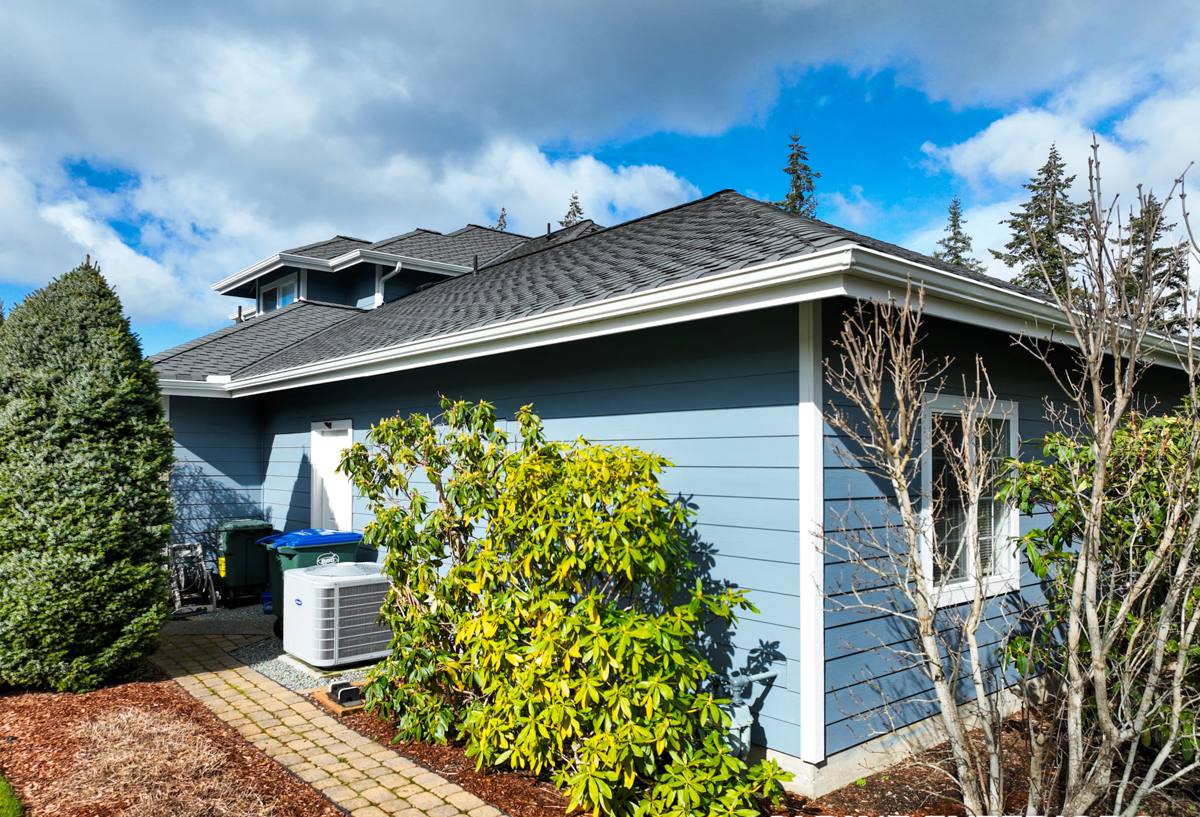
Signs a Ship Harbor Roof Needs Repair — Not Just a Watchful Eye
Most roof problems don't start as leaks. They start as small, easy-to-miss signs that get worse over a wet season or two. Here's what we tell Ship Harbor homeowners to watch for:
- Moss buildup on shaded or north-facing slopes, especially green or dark streaking along shingle edges
- Granules collecting in gutters or at downspout outlets — a sign shingles are wearing thin
- Curling, cupping, or lifted shingle edges, particularly on slopes that face prevailing wind and rain
- Rust staining or visible corrosion around flashing, vent boots, or nail heads
- Water stains on ceilings or in the attic, even faint ones — these often trace back to flashing, not the shingle field itself
- Daylight visible through the roof deck from inside the attic
- Sagging spots anywhere on the roof plane, which usually means deck damage underneath
Any one of these on its own might be minor. Two or three together, especially after a stretch of wind and rain, are worth a real inspection before the next wet season sets in.
What a Correct Roof Repair Actually Involves
Diagnosis Before Patching
The most common mistake in roof repair isn't bad workmanship — it's fixing the visible symptom instead of the actual source. A stain on a bedroom ceiling might trace back to a flashing gap ten feet away, not the spot directly above the stain. Water travels along the underlayment and rafters before it shows up inside, so a repair that doesn't trace the path backward often "fixes" the wrong spot and the leak returns.
We start every repair by getting on the roof, not just looking at it from the ground. That means checking the deck condition, the flashing at every penetration, and the underlayment where it's exposed, not just the shingles themselves.
Matching Materials and Technique
A patch that uses the wrong shingle profile, a mismatched nailing pattern, or the wrong fastener metal creates a weak point that fails again — often sooner than the original damage did. We match the existing shingle type and exposure where possible, and we're upfront when an exact match isn't available and a repair will be visible.
Flashing, Underlayment, and the Water Path
Most leaks near the coast start at a transition point — a chimney, a valley, a wall intersection, a vent pipe — not out in the open field of shingles. A correct repair rebuilds that transition properly: new step or valley flashing where corrosion has set in, underlayment that laps correctly with the water flow, and sealant used as a backup, not as the primary defense.
Treating Moss as Part of the Repair, Not an Afterthought
If moss caused or contributed to the damage, removing it and stopping there just resets the clock. We remove moss carefully — scraping and low-pressure rinsing rather than pressure-washing, which strips granules and shortens shingle life — and address what's letting it take hold in the first place, whether that's overhanging branches, poor airflow, or a section of roof that never gets direct sun.
Common Repair Types We Handle in Ship Harbor
| Repair Type | What Usually Causes It Here | What the Repair Involves |
|---|---|---|
| Flashing replacement | Salt air corrosion, age, poor original installation | Remove old flashing, inspect deck underneath, install new step/valley flashing, reseal properly |
| Moss and algae damage repair | Shaded slopes, long damp season, poor airflow | Moss removal, damaged shingle replacement, treatment to slow regrowth |
| Wind-lifted or missing shingles | Storm gusts off the water, aging adhesive seal strips | Replace missing/damaged shingles, re-seal adjacent tabs, check underlayment exposure |
| Vent boot and penetration repair | Rubber boot cracking from UV and salt exposure | Replace boot or full flashing collar, check surrounding shingles for water tracking |
| Deck repair under damaged shingles | Long-term undetected leak | Cut back shingles, replace rotted decking section, rebuild underlayment and shingle layers |
Repair or Replace? How We Help You Decide
Not every damaged roof needs full replacement, and not every repair is a good long-term answer. The honest answer usually comes down to age, extent of damage, and how many separate issues are stacking up.
| Factor | Leans Toward Repair | Leans Toward Replacement |
|---|---|---|
| Roof age | Under 15-18 years, one problem area | Nearing or past expected shingle lifespan |
| Damage extent | Isolated to one slope or penetration | Spread across multiple slopes or recurring in different spots |
| Deck condition | Solid, no rot found | Soft spots or rot found in more than one area |
| Moss history | First significant moss event | Repeated moss damage over several seasons |
| Granule loss | Minor, localized | Widespread bald patches across the roof field |
We'll always tell you honestly which side of that line your roof falls on. A repair that's really a temporary patch on a roof near the end of its life isn't a favor to you — it just delays a bigger bill and risks interior damage in the meantime.
Our Process, Start to Finish
1. Inspection
We get on the roof, not just the ladder at the eave. That includes checking the attic from inside when access allows, since interior signs often tell us more than what's visible from outside.
2. Written Scope and Straight Answer
You get a clear explanation of what's actually wrong, what we recommend, and why — including if that recommendation is "this is minor, keep an eye on it" instead of a repair sale.
3. The Repair Itself
Work is done to the same standard whether it's a small flashing fix or a multi-slope repair — proper tie-in with existing roofing, correct fastener spacing, and flashing details that actually shed water instead of just covering the gap.
4. Cleanup and Walkthrough
Old material, nails, and moss debris get cleared from the roof and the ground around the house. We'll walk you through what was done and what to watch for going forward.
Why It Matters That We Already Work Ship Harbor
A roofing crew that mostly works drier inland areas can still do competent general roofing — but they may not think about salt-air corrosion on fasteners, or know which slopes in a shoreline neighborhood hold moss longest through a Skagit County winter. Those details change what "correct repair" looks like in practice, not just in theory.
There's also a practical side: knowing the local permitting process through the City of Anacortes, understanding typical roof pitches and construction common to homes in this area, and being able to respond quickly after a wind event without a long drive across the county. When a storm off the water takes shingles off a roof, the gap between damage and a tarp matters, and being local means that gap is measured in hours, not days.
Keeping a Ship Harbor Roof Healthy Between Repairs
A repair fixes what's already gone wrong. A few habits help slow down how fast new problems start, especially in a marine climate like this one:
- Clear gutters and downspouts before the fall rains start, so water isn't backing up under the roof edge
- Trim back overhanging branches that keep a section of roof shaded and damp longer than the rest
- Have moss removed before it spreads, rather than waiting until it's covering a full slope
- Get a walk-on inspection every couple of years, not just after a storm or a visible leak
- Address small flashing or sealant issues early — they're inexpensive fixes until they aren't
None of this replaces a proper inspection, but it stretches the time between repairs and helps catch small issues while they're still small.
If you're dealing with a leak, visible moss damage, or just want an honest read on where your roof stands, we're happy to take a look. The estimate is free, there's no pressure attached to it, and you'll get a straight answer either way — use the form below to get started.