 Anacortes Exterior
 Roof Repair Built for Old Town Anacortes Conditions
Old Town Anacortes sits close to the water, and that proximity shapes everything about how a roof ages here. The homes in this part of town tend to be older, with roofs that have already been through decades of Skagit County weather before we ever get a call. When something finally goes wrong — a leak in a back bedroom, a stain spreading across a ceiling, shingles blowing off in a January windstorm — it's rarely a simple, isolated problem. It's usually the roof telling you it's been fighting salt air, wind-driven rain, and shade-grown moss for longer than it should have to.
We repair roofs across Anacortes, but Old Town's mix of older construction, mature trees, and marine exposure means repairs here call for a slightly different eye. This page walks through what actually wears these roofs down, what a correct repair looks like, and how we approach the work so you're not paying for the same fix twice.
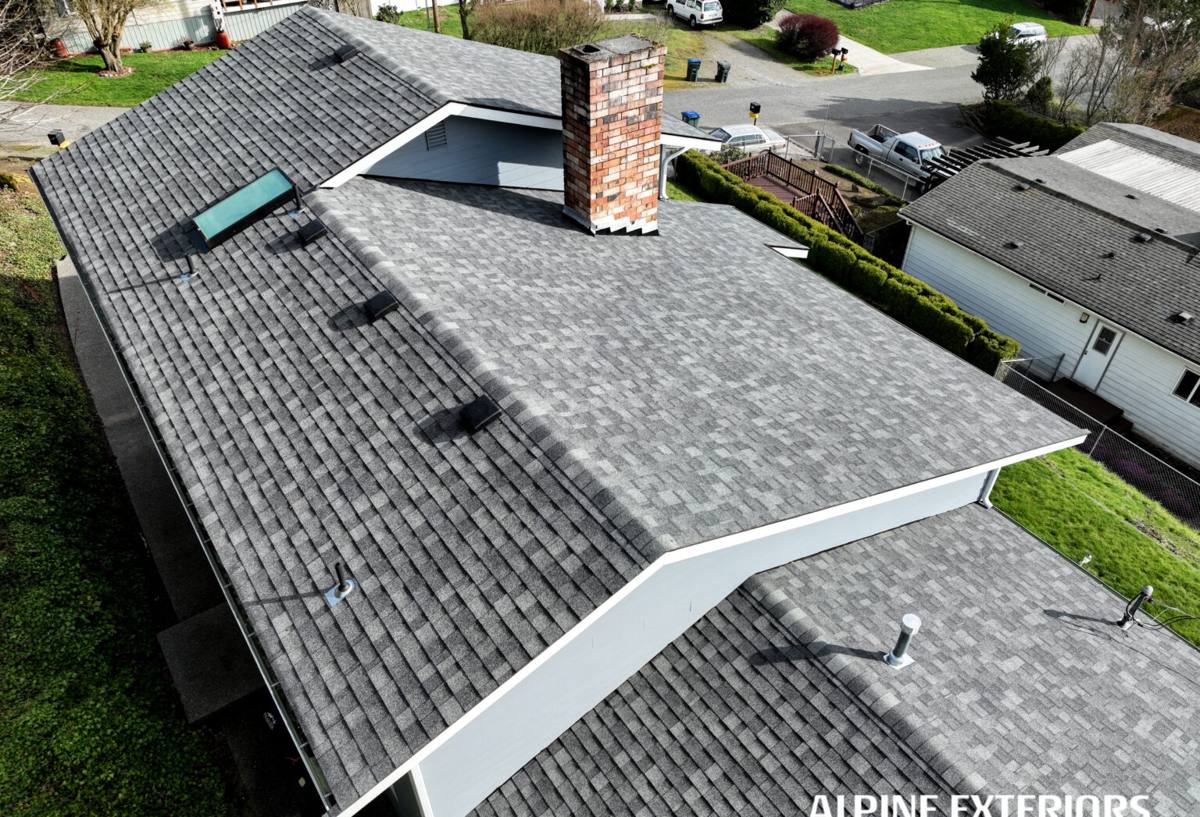
What Salt Air, Rain, and Moss Actually Do to a Roof
It's easy to think of roof damage as just "wear and tear," but in Old Town Anacortes there are three specific forces doing most of the damage, and each one attacks a different part of the roof system.
Salt Air and Metal Corrosion
Anacortes' waterfront location means the air carries fine salt particles that settle on every exposed surface, including your roof. Salt accelerates corrosion on exposed fasteners, flashing, gutter hardware, and any exposed metal roofing components. A nail head that would last twenty years inland can start rusting and backing out much sooner here, and a small rust spot on flashing is often the first crack in an otherwise sound roof.
Driving Rain and Wind-Driven Water
Storms coming off the water don't just drop rain straight down — they push it sideways, up under shingle edges, and into joints that were never designed to handle water moving against gravity. This is why leaks in Old Town homes so often show up at valleys, chimney flashing, and roof-to-wall transitions rather than in the open field of the roof. Those are the spots where wind-driven rain finds the smallest gap and works it wider over time.
Moss, Algae, and Shaded Roof Sections
Old Town's tree canopy and the region's long wet season give moss and algae plenty of time to establish themselves, especially on north-facing slopes that stay damp longer. Moss doesn't just look bad — its root structure lifts shingle edges, holds moisture against the roof deck, and creates channels for water to travel sideways under the shingle instead of shedding off the roof the way it's supposed to. A roof that looks "mostly fine" from the ground can have real moisture damage building underneath a moss mat.
Signs Your Old Town Home Needs Roof Repair
Not every roof problem means replacement. Most of what we see in Old Town Anacortes is fixable if it's caught before the underlying deck and structure are compromised. Watch for:
- Ceiling stains or bubbling paint, especially after a windy rainstorm rather than a calm one
- Granules collecting in gutters or at downspout outlets
- Visible moss growth, especially thick mats on shaded slopes
- Rust streaking below metal flashing or exposed fasteners
- Shingles that are curling, cracked, or missing after a storm
- Soft or spongy spots when walking the roof deck (we check this, not homeowners)
- Daylight visible through the attic roof deck, or damp insulation below it
- Flashing that's separated from a chimney, skylight, or wall
Any one of these on its own might be a straightforward, contained repair. Several together, or a leak that's been active for more than one season, usually means we need to open things up and look at the roof deck before quoting anything.
What a Correct Roof Repair Actually Involves
A lot of roof "repairs" fail early because they treat the symptom instead of the cause — a leak gets caulked over instead of the failed flashing underneath being replaced. We diagnose first, then repair the actual failure point, not just the spot where water happens to be showing up inside the house.
| Repair Type | What It Actually Fixes | Typical Scope |
|---|---|---|
| Flashing repair/replacement | Water intrusion at chimneys, skylights, valleys, and wall transitions | Localized — remove old flashing, repair any deck damage, install new flashing correctly lapped |
| Shingle replacement | Wind, impact, or age damage to individual courses or sections | Section-specific, matched as closely as possible to surrounding material |
| Moss and algae treatment | Ongoing moisture retention and shingle lift on shaded slopes | Removal, treatment, and often zinc or copper strip installation to slow regrowth |
| Deck repair | Soft or rotted sheathing found once shingles are pulled back | Varies — sometimes a small patch, sometimes a larger section replacement |
| Fastener and hardware correction | Rust-weakened or backed-out nails from salt exposure | Spot repair unless corrosion is widespread |
| Gutter and drainage correction | Water backing up under the roof edge instead of draining away | Cleaning, resealing, or reslope depending on the cause |
Repair or Replace? How We Help You Decide
We don't default to recommending replacement, and we don't stretch a repair past the point where it makes sense. The honest answer usually comes down to a few factors.
| Factor | Leans Toward Repair | Leans Toward Replacement |
|---|---|---|
| Roof age | Under 15-20 years, or a newer roof with an isolated issue | Nearing or past its expected service life |
| Extent of damage | Localized to one section, valley, or penetration | Widespread across multiple slopes |
| Deck condition | Solid, dry sheathing found on inspection | Soft, rotted, or repeatedly repaired decking |
| Moss/algae history | First occurrence or early-stage growth | Repeated regrowth despite past treatment |
| Underlayment condition | Still intact and functional | Brittle, torn, or failing in multiple spots |
We'll always show you what we find during the inspection — including photos of the actual damage, not just a verbal summary — so the decision is yours to make with real information, not a sales pitch.
Our Roof Repair Process
- Inspection first. We get on the roof (or use a camera when access or safety requires it) and identify the actual source of the problem, not just where the water is showing up inside.
- Clear, written scope. You get a straightforward explanation of what's damaged, why, and what fixing it correctly requires — before any work starts.
- Repair the cause, not the symptom. We address the failed flashing, damaged shingles, or deck issue directly, matching materials as closely as possible to what's already on your roof.
- Address moss and drainage. If moss or poor drainage contributed to the damage, we treat it as part of the repair so the same failure doesn't come back next wet season.
- Final walkthrough. We show you the completed work and explain anything you should keep an eye on going forward.
Roofing Materials We Work With in Old Town Anacortes
Old Town's housing stock includes a mix of roofing types, and we repair what's already on your home rather than pushing a one-size-fits-all product. Architectural asphalt shingles are the most common material we repair in this neighborhood — they hold up reasonably well to the marine climate when properly flashed and ventilated. Metal roofing shows up on some homes and outbuildings; it resists moss well but needs careful attention to fastener corrosion given the salt air. Older cedar shake roofs still exist on some Old Town homes, and while we can repair them, we're upfront that shake requires more frequent maintenance in a wet, moss-prone climate than asphalt or metal — that's a maintenance trade-off worth knowing about, not a reason to panic if you have one.
Whatever material is on your roof, correct flashing detail and ventilation matter more to long-term performance in this climate than the shingle brand itself. A well-flashed, well-ventilated roof in mediocre material will often outlast a premium material installed with shortcuts.
Why a Crew That Already Works Old Town Anacortes Matters
Roof repair isn't just about swinging a hammer — it's about recognizing patterns. A crew that regularly works this neighborhood already has a sense of which roof ages and construction types are common here, where wind-driven rain tends to find its way in on this style of home, and how aggressively moss grows on a given slope orientation given the tree cover typical of the area. That familiarity shortens the diagnostic process and helps us catch secondary damage — like a soft deck section behind a leaking flashing — before it becomes a bigger job than it needed to be.
It also matters for permitting and code compliance. Roof repair work in the City of Anacortes and unincorporated Skagit County can have different requirements depending on the scope of work, and a local crew already knows how to navigate that instead of learning it on your project.
Maintaining Your Roof Between Repairs
A repair fixes what's broken now. A little regular attention keeps the next repair further out. Between service visits, it helps to:
- Clear gutters and downspouts each fall before the wet season peaks
- Trim back branches that keep a roof section shaded and damp
- Have moss treated at the first sign of growth rather than waiting for a full mat to form
- Check the attic after major windstorms for new staining or daylight
- Have flashing and fasteners inspected every few years given the accelerated corrosion from salt air
- Address small leaks immediately rather than waiting for "roof season" to come around
If you're noticing signs of trouble, or it's simply been a while since anyone's actually been up on your roof, we're happy to take a look. We offer free, no-pressure estimates for Old Town Anacortes homeowners — just an honest look at what's going on and what it would take to fix it right.