 Anacortes Exterior
 Why Composite Decking Makes Sense for Old Town Anacortes
Old Town Anacortes sits close to the water on Fidalgo Island, which means the homes here deal with a different set of conditions than a deck ten miles inland in Skagit County. Salt-laden air, long stretches of driving rain from fall through spring, and a moss season that seems to start earlier every year all work against wood decking in particular. Composite decking was developed largely to solve exactly this kind of problem — it doesn't absorb moisture the way wood does, it won't rot, and it isn't a food source for the algae and moss that thrive in our shaded, damp yards.
That doesn't mean composite decking is maintenance-free or foolproof. It still has to be installed correctly for the local conditions, on framing that's built to handle our rainfall and drainage, with hardware that won't corrode in salt air. A lot of the composite deck problems we get called out to look at aren't material failures — they're installation shortcuts that only show up after a wet Anacortes winter or two.
The Salt Air and Moss Problem
Proximity to Puget Sound means airborne salt settles on everything outdoors, including fasteners, flashing, and railing hardware. Standard steel screws and brackets that might last a decade in a drier inland climate can start showing rust in a few seasons here. Moss and algae are the other constant — anywhere a deck stays shaded and damp for long stretches, especially under mature trees or on the north side of a house, organic growth will find a foothold on any surface, composite included, if water isn't shedding the way it should.
Older Homes, Established Lots
Old Town's housing stock tends to be older, with mature landscaping, established grade changes, and decks that were often added or rebuilt at some point after the original construction. That means we frequently find ledger boards attached without proper flashing, undersized joists from an earlier code era, or drainage that was never planned for a full-width deck. Any composite decking project on one of these homes has to start with an honest look at what's underneath the old surface, not just a swap of the walking boards.
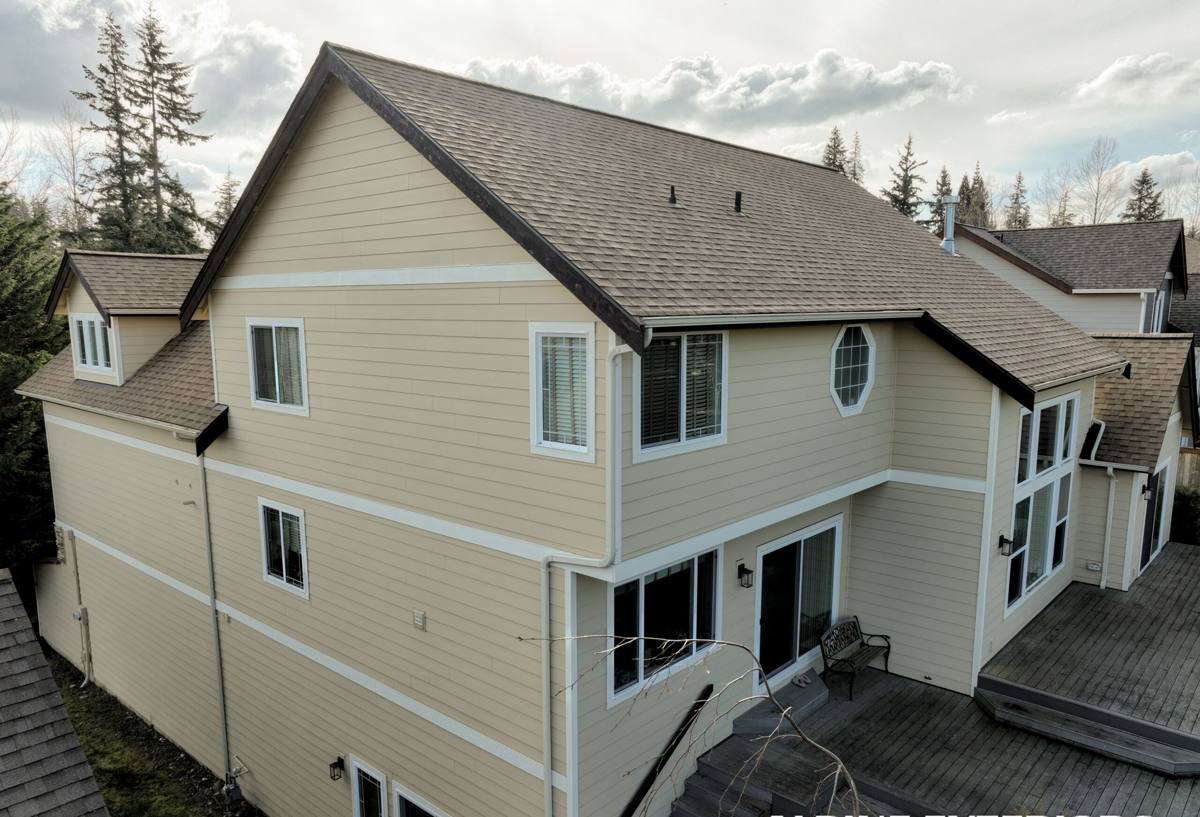
What a Correct Composite Deck Installation Actually Involves
Composite boards themselves are fairly forgiving to work with, which is part of why the material has gotten so popular. But the parts of the job that determine whether a deck lasts are almost all things you won't see once it's finished.
Framing and Structure Come First
Composite decking is heavier than most wood decking, board for board, so joist spacing and beam sizing need to match the manufacturer's span tables for the specific product — not generic lumber spacing. On older Old Town homes we often find joists spaced for a wood deck built decades ago that won't meet current span requirements for composite. We check this before board selection even comes up.
Fasteners and Hardware That Match the Climate
Given the salt exposure here, we use stainless steel or coated fasteners rated for coastal use, along with hidden fastening systems designed for the specific composite product going down. Mixing hardware — using whatever screws happen to be in the truck — is one of the most common shortcuts we see, and it's usually the first thing to fail, showing up as rust streaks or loose boards within a few years.
Hidden Moisture Management
Every ledger board gets proper flashing where it meets the house, and every joist gets protective tape before boards go down. This matters everywhere, but it matters more here because of how much rain Skagit County sees over a typical year. Joist tape keeps water from sitting in fastener holes and wicking into the wood framing underneath the composite surface — the framing is still ordinary lumber, even under a composite deck, and it still needs to be protected.
Choosing the Right Composite Board
Not all composite decking is built the same way, and the differences matter more in a marine climate than they would somewhere drier. The main categories homeowners in Old Town Anacortes end up comparing are capped composite, PVC, and older uncapped composite or traditional wood.
| Material | Moisture Resistance | Moss/Algae Resistance | Maintenance | Typical Lifespan |
|---|---|---|---|---|
| Capped Composite | High — cap layer blocks water absorption | Good, especially with textured caps | Occasional wash | 25–30+ years |
| PVC Decking | Very high — no wood content | Very good | Occasional wash | 25–30+ years |
| Uncapped Composite | Moderate — can absorb moisture over time | Fair, more prone to staining | Regular cleaning, occasional sealing | 15–20 years |
| Pressure-Treated Wood | Low without upkeep | Poor without regular treatment | Annual cleaning/sealing | 10–15 years with upkeep |
We steer most Old Town Anacortes clients toward capped composite or PVC for exactly the reasons in that table — the cap layer is what keeps moisture and organic growth from getting a grip on the board surface itself, which matters in a climate where a deck can stay damp for days at a time. Uncapped composite and untreated wood aren't bad products, but they ask more of the homeowner in ongoing maintenance than most people realize when they're comparing sticker prices.
Color and Heat Considerations
Darker composite boards absorb more heat on the rare hot summer days we get, and they also tend to show pollen, dust, and moss spores less than very light colors — but light colors hide less dirt between cleanings. Neither is "wrong" for this climate; it's a tradeoff worth thinking through based on how much sun a particular deck actually gets, since many Old Town lots have significant shade from mature trees.
What Drives the Cost of a Composite Deck Here
Composite decking costs more upfront than pressure-treated wood, board for board, but the real cost of a project is driven by more than just material choice. A few factors tend to move the number the most on Old Town Anacortes homes specifically.
| Cost Factor | Why It Matters Here |
|---|---|
| Existing framing condition | Older decks often need joist or beam repair before new decking goes down |
| Ledger and flashing work | Many older attachments need to be redone to current standards |
| Deck footprint and access | Established landscaping and tighter lots can slow material staging and demo |
| Railing and stair complexity | Composite or aluminum railing systems add cost but reduce long-term upkeep |
| Permitting | Anacortes permitting requirements apply based on deck size, height, and attachment |
We give a firm number after we've actually looked at what's underneath the existing deck or evaluated the build site, not before. On older homes, the framing condition alone can shift a bid more than the composite brand chosen.
How We Approach a Composite Decking Project
- On-site assessment of the existing deck or build area, including framing, ledger attachment, drainage, and grade
- Honest conversation about what needs to be repaired or replaced versus what can be reused
- Board and railing selection based on sun exposure, budget, and how the space gets used
- Permit handling where required for the scope of work
- Framing repair or construction, with proper flashing and joist protection before any decking goes down
- Composite installation with fasteners and hardware suited to a salt-air environment
- Final walkthrough covering how the specific product should be cleaned and maintained
We don't skip the framing and flashing steps to get to the visible decking faster. That's usually where corners get cut on rush jobs, and it's exactly the part of the deck that determines whether it's still solid in ten years.
Maintaining Composite Decking in a Marine Climate
Composite decking cuts down on maintenance dramatically compared to wood, but "low maintenance" isn't "no maintenance" — especially with the moss season Skagit County gets. A little seasonal attention keeps a composite deck looking and performing the way it should for the long haul.
- Sweep debris and organic matter (needles, leaves, pollen) off the deck regularly, especially in shaded areas
- Wash the deck surface at least once or twice a year with a soft-bristle brush and a cleaner made for composite decking — avoid pressure washers on high settings, which can damage the cap layer
- Check and clear gaps between boards where debris can trap moisture
- Trim back overhanging branches and vegetation to cut down on shade and falling debris that feed moss growth
- Inspect railing posts and stair connections annually for any loosening, especially after a hard winter
- Address standing water or poor drainage under the deck promptly — it affects the framing even if the composite surface looks fine
Most of this is basic homeowner upkeep, not specialized work. The bigger point is that even the best composite board will hold moss if it sits shaded and wet without ever being cleaned — the material resists damage from moss far better than wood, but it isn't immune to growth sitting on its surface.
Why a Crew That Already Works Old Town Anacortes Matters
A lot of composite decking advice online is written for a national audience and doesn't account for what a marine climate and an older neighborhood actually throw at a project. Working in Old Town Anacortes regularly means we already know what to expect from the housing stock here — decks that were added on after the original build, ledger attachments that predate current flashing standards, and lots where drainage was never planned around a full deck footprint.
It also means we're familiar with Anacortes permitting requirements and don't have to learn them mid-project, and we're not guessing at what hardware holds up against salt air over time because we've seen what does and doesn't a few years down the road on decks we've already built in this same area. That local track record is worth more than a brand name on the decking itself.
Getting Started
If you're weighing composite decking for a home in Old Town Anacortes, we're happy to take a look at what you have — whether that's an aging wood deck ready for replacement or bare ground ready for a first build — and give you an honest, no-pressure estimate. There's no obligation, and you'll get a straight answer about what your specific site actually needs. The form below is the quickest way to get that conversation started.