 Anacortes Exterior
 Building New on Guemes Island Means Building for Water and Salt First
Guemes Island sits right off Anacortes across the channel, and that short crossing changes the building equation more than most people expect before they start a new-construction project out there. Homes on the island face the same driving winter storms as the rest of Skagit County, but with more direct saltwater exposure, fewer windbreaks, and weather that tends to hit harder off the water before it ever reaches the mainland side. When windows go into a new build on Guemes Island, they aren't just a finish item on a punch list — they're one of the first lines of defense the house has, and mistakes made during framing and window rough-in tend to show up as leaks, stains, or failed seals years down the road, long after the crew has moved on to the next job.
We install new-construction windows on Guemes Island as part of our regular Anacortes-area work, not as a special trip we make once in a while. That matters because the details that make a window installation hold up out there — flashing sequence, material choice, fastening pattern — are things you learn by doing the work repeatedly in that specific environment, not by reading a manufacturer's install sheet once.
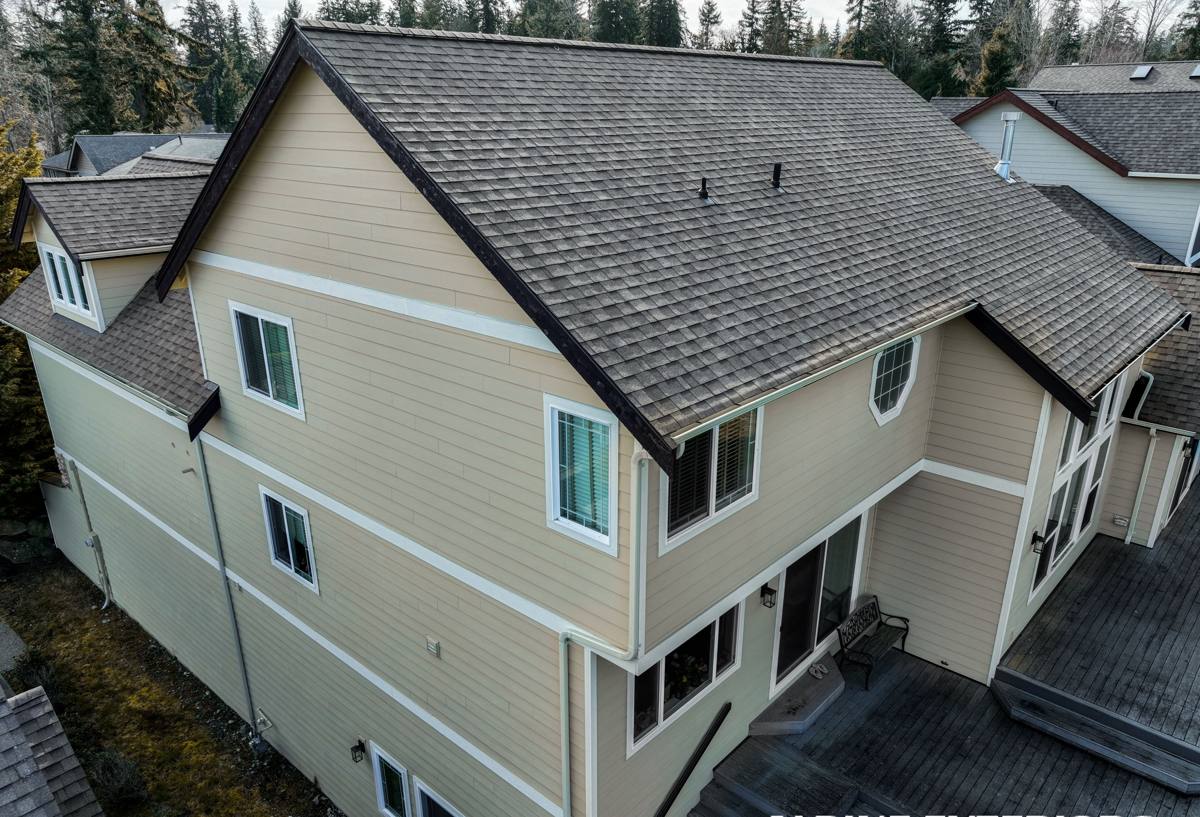
What Guemes Island's Climate Actually Does to a Window Installation
Salt Air and Corrosion
Salt-laden air moves inland off the Guemes Channel and Rosario Strait and settles on everything, including window hardware, fasteners, and exposed metal trim. Over time it accelerates corrosion on hardware that isn't rated for coastal exposure — hinges, locks, and cranks can seize or pit years earlier than they would a few miles inland. This is why the specific fastener grade and hardware finish matter more on an island build than they would in a subdivision on the mainland side of Anacortes.
Wind-Driven Rain and Water Management
Rain on Guemes Island rarely falls straight down. Storms coming off the water push rain sideways into wall assemblies, which means every window opening has to shed water actively, not just passively keep it out. A window that would perform fine in a sheltered inland location can leak on a west- or south-facing wall on the island if the flashing details, sill pan, and weather-resistive barrier integration aren't done correctly the first time.
The Long Damp Season
Skagit County's stretch of gray, wet months means moss, mildew, and standing moisture are a fact of life for a good chunk of the year. Wood trim and sills that stay damp for weeks at a time are what feeds moss and rot. New construction gives you a real opportunity here — you can choose materials and details up front that shed water and resist that damp season, instead of fighting it later with a replacement project.
New-Construction Windows vs. Replacement Windows — Why the Job Is Different
A lot of homeowners planning a Guemes Island build assume window installation is window installation. It isn't. New-construction windows are installed into a raw, unfinished rough opening before siding and interior finishes go on, which is a completely different sequence than a retrofit into an existing wall.
- Access to the framing: the rough opening, sheathing, and weather-resistive barrier are all exposed, so flashing can be integrated properly in the correct shingle-lap order.
- Nail-fin attachment: most new-construction windows use a nailing flange that fastens directly to the sheathing, which requires the WRB and flashing tape to be sequenced around it correctly — get this order wrong and you build a leak path into the wall.
- Coordination with the build schedule: windows go in at a specific point in the framing sequence, tied to when the WRB is on and before siding starts, which means the window crew has to work on the general contractor's timeline, not on its own.
- One shot to get it right: once siding and interior finishes cover the opening, correcting a flashing mistake means tearing back finished work. A retrofit replacement, by comparison, is working around an opening that's already framed and finished.
Choosing a Window Material for a Guemes Island Build
Material choice matters more on the island than it does for an equivalent build a few miles inland, mainly because of salt exposure and the amount of direct weather the house takes. There's no single right answer for every project — it depends on the home's design, exposure, and budget — but here's how the common options stack up for a coastal Skagit County build.
| Material | How it handles salt air | Maintenance | Typical fit |
|---|---|---|---|
| Vinyl | Good — won't corrode, though dark colors absorb heat and can stress the frame over time | Low | Budget-conscious builds, most orientations |
| Fiberglass | Excellent — very stable, resists pitting and doesn't expand/contract much with temperature swings | Low | Exposed, weather-facing walls; long-term durability priority |
| Aluminum-clad wood | Good on the exterior clad surface, but any exposed or damaged cladding lets moisture reach the wood core | Moderate — cladding needs to stay intact | Homes wanting a wood interior look with exterior protection |
| Bare aluminum | Poor without a quality powder-coat finish — untreated aluminum pits and corrodes faster in salt air | Moderate to high | Only with marine-grade coating specified |
We don't push one brand or material on every project. Our job is to walk through the home's actual exposure — which walls take the weather, whether it's waterfront or set back in the trees, what the design calls for — and recommend a product that will actually hold up rather than one that just looks good on day one.
What a Correct New-Construction Window Installation Involves
Because a window opening only gets covered once, the sequence has to be right the first time. This is the general order we follow, and it's worth knowing even if you're vetting a different contractor:
- Rough opening checked for square, level, and correct sizing before the window ever shows up on site
- Sill pan flashing installed to direct any water that gets past the window back out, not into the wall cavity
- Weather-resistive barrier integrated with the flashing in proper shingle-lap order — each layer overlapping the one below so water sheds down and out
- Window set plumb, level, and square in the opening, not just tacked to match the rough framing
- Nailing flange fastened per the manufacturer's schedule, with corrosion-resistant fasteners appropriate for a coastal environment
- Head flashing installed above the window, lapped over the WRB above it
- Gaps insulated and air-sealed without over-packing, which can bow the frame and cause operational problems
- Interior and exterior sealants matched to the substrate and rated for the temperature and moisture swings of a marine climate
Our Process for Guemes Island Builds
Working on the island adds a logistics layer that mainland Anacortes jobs don't have, and we plan around it rather than treating it as a surprise.
Site Visit and Coordination
We walk the framing with the general contractor or homeowner before window delivery to confirm rough openings, exposure orientation, and the flashing plan for each elevation. On a new build, this is also when we flag anything in the framing that needs correcting before it becomes a bigger problem once siding goes on.
Material and Delivery Planning
Getting windows and flashing materials onto the island means working around the ferry schedule, so we plan deliveries and crew days in advance rather than trying to make last-minute runs. This is one of the more overlooked parts of an island build — a mainland crew that hasn't planned for the crossing can lose a full day to a missed sailing.
Install Day
Windows go in following the sequence above, on the schedule the general contractor sets for that phase of the build. We work efficiently because we're not relearning the site each visit — the crew that scouted the job is the crew doing the install.
Final Check
Before we leave, every opening gets a final check for plumb, level, square operation, and sealant coverage, so nothing gets covered by siding with an open question mark on it.
Why a Crew That Already Works Guemes Island Matters
A window installer who mostly works sheltered, inland sites can do fine work and still get caught off guard by an island build — underestimating how hard wind-driven rain hits a west-facing wall off the channel, or not accounting for the ferry when scheduling delivery. Those aren't skill problems, they're exposure problems, and they get solved by doing the work in that specific environment repeatedly.
We treat Guemes Island as part of our regular Anacortes service area, not a special case. That means our crew already knows what a saltwater-facing wall assembly needs, already plans around the ferry crossing instead of losing a day to it, and already has a track record of flashing details that hold up through a full Skagit County wet season — not just details that look right the day the siding goes on.
Cost Factors for New-Construction Window Installation on Guemes Island
Every build is different, so we won't quote a number without seeing the plans and the site, but these are the main factors that move the price on an island new-construction window job:
| Factor | Why it affects cost |
|---|---|
| Number and size of openings | More openings and larger units mean more material and labor hours |
| Window material selected | Vinyl, fiberglass, and clad-wood carry different material costs and installation requirements |
| Exposure and elevation | Weather-facing walls typically call for more robust flashing and sealant detailing than sheltered elevations |
| Site access and logistics | Ferry scheduling, staging area, and how materials get from the landing to the build site |
| Coordination complexity | How closely the window install has to sync with framing, WRB, and siding subcontractors on the schedule |
If you're planning a new build on Guemes Island and want windows installed by a crew that already knows the island, the ferry logistics, and what the marine climate demands from the details, we're happy to take a look at the plans and walk the site with you. Reach out for a free, no-pressure estimate through the form below.