 Anacortes Exterior
 Roofing Built for the Skagit Valley, Not a Generic Climate
Mount Vernon sits inland from Anacortes but still lives under the same weather pattern that defines Skagit County roofing: long wet stretches from fall through spring, humid air pulled up the Skagit River valley, and enough tree cover in older neighborhoods to keep roofs shaded and damp for weeks at a time. Add the salt-laden air that moves in off the Sound and up the valley on a west wind, and you've got a combination that ages a roof faster here than it would in a drier inland climate. A roof replacement in Mount Vernon isn't just about swapping old shingles for new ones — it's about building a roof system that can shed driving rain, resist moss colonization, and hold up to slow, steady moisture exposure year after year.
We work Mount Vernon and the surrounding Skagit County communities regularly, which means we're not guessing at what fails here. We know which roof details tend to let water in first, which materials handle constant damp without breaking down, and where the previous generation of roofing on a lot of local homes cut corners that eventually caught up with the owners.
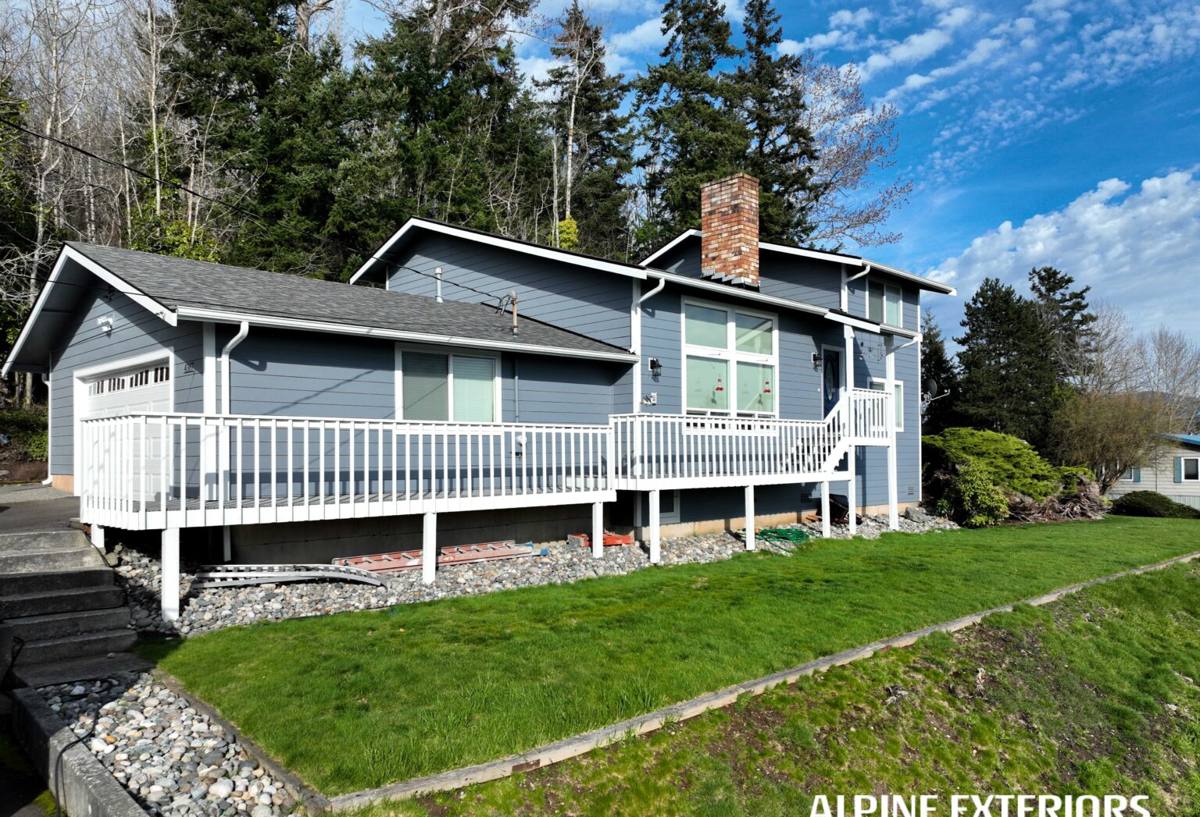
Signs a Mount Vernon Roof Needs Replacement, Not Just Repair
Not every roofing problem means a full replacement. But there are signs that tell us a roof has reached the point where patching is a short-term fix on a system that's already failing underneath.
- Shingles that are cupping, curling at the edges, or losing granules in visible patches
- Moss or algae streaking that keeps coming back within a season or two of cleaning
- Soft or spongy spots on the roof deck when walked, which usually means water has reached the wood
- Daylight visible through the attic roof boards, or damp insulation below the roof deck
- Repeated leaks in different spots each winter rather than one isolated failure
- A roof that's 20+ years old on asphalt shingle, or showing granule loss consistent with the end of its service life
- Flashing around chimneys, skylights, or valleys that's rusted, lifted, or was never properly step-flashed to begin with
If you're only seeing one or two of these and the roof deck is still solid, a repair or a targeted re-flash may be the honest answer. We'll tell you that directly rather than pushing a full tear-off a roof doesn't need yet.
Why Moss Season Matters More Here Than Almost Anywhere
Skagit Valley's combination of shade, moisture, and mild temperatures is close to ideal moss-growing conditions for a good chunk of the year. Moss isn't just cosmetic — its root structure works into shingle granules and seams, holding moisture against the roof surface long after the rest of the neighborhood has dried out. On an aging roof, that constant dampness accelerates granule loss and can work its way into fastener holes and laps. A roof that's replaced with the right underlayment, ventilation, and edge details will resist moss far longer than one that's just re-shingled the same way it was built the first time.
What a Correct Roof Replacement Actually Involves
A roof replacement is more than the shingles you see. The parts that determine whether a roof lasts 15 years or 30 in this climate are mostly hidden once the job is done.
Tear-Off and Deck Inspection
We remove the old roofing down to the deck rather than layering over it. That's the only way to actually see the plywood or sheathing underneath — and in a wet climate, hidden deck rot is common enough that skipping this step means guessing at the condition of the thing holding your whole roof up. Any soft or delaminated sheathing gets replaced before anything new goes down.
Underlayment and Ice-and-Water Protection
In a region with driving, wind-blown rain, underlayment choice matters more than most homeowners realize. We use synthetic underlayment as the standard water-resistive barrier, with self-adhering ice-and-water membrane at the vulnerable points — eaves, valleys, around penetrations, and low-slope transitions — where wind-driven rain is most likely to work its way under the shingle field.
Flashing
Flashing failure is the single most common cause of "mystery leaks" we get called out for on existing roofs. Chimneys, skylights, sidewalls, and valleys all need properly lapped, corrosion-resistant flashing installed in the correct sequence with the underlayment and shingles — not just caulked over old metal.
Ventilation
A roof deck that can't breathe traps moisture from inside the house against the underside of the sheathing, which leads to rot, mold, and shortened shingle life from below — a problem that shows up regardless of how good the shingles on top are. We check intake (soffit) and exhaust (ridge or other) ventilation balance as part of every replacement and correct it where it's inadequate.
Comparing Roofing Materials for Mount Vernon Homes
Most homes in Mount Vernon are well served by architectural asphalt shingle, but it's worth understanding the real trade-offs before deciding.
| Material | Typical Lifespan Here | Moss/Moisture Resistance | Relative Cost |
|---|---|---|---|
| 3-tab asphalt shingle | 15-20 years | Lower — thinner profile holds less resistance to prolonged damp | Lowest |
| Architectural (dimensional) asphalt shingle | 25-30 years | Good, especially with algae-resistant granules | Moderate |
| Standing seam metal | 40-50+ years | Excellent — sheds moss and moisture better than any shingle | Highest upfront |
| Composite/synthetic shake or slate | 30-50 years | Good to excellent depending on product | High |
We install architectural asphalt with algae-resistant (AR) granules as our standard recommendation for most Mount Vernon roofs — it strikes the right balance of upfront cost, moss resistance, and proven performance in this climate. Metal is a strong option for homeowners planning to stay long-term and wanting to minimize moss and moisture concerns almost entirely, but it's a bigger investment and not always the right fit for every roof shape or budget. We'll walk through the honest trade-offs for your specific roof rather than steering everyone toward the same product.
What Drives Roof Replacement Cost
Every roof is priced from an in-person inspection, but a few factors consistently move the number up or down on Mount Vernon homes:
| Factor | Why It Matters |
|---|---|
| Roof pitch and complexity | Steep or multi-valley roofs take longer and require more safety setup |
| Number of layers to remove | Multiple existing layers add tear-off labor and disposal cost |
| Deck condition | Rotted sheathing found during tear-off adds material and labor to replace it |
| Material choice | Asphalt, metal, and composite products carry different material costs per square |
| Ventilation and flashing corrections | Fixing inadequate ventilation or old flashing adds scope beyond a straight re-shingle |
| Access | Tree cover, tight lot lines, or steep driveways can affect staging and cleanup time |
How Our Roof Replacement Process Works
- Inspection and estimate. We walk the roof (or use a lift/drone when pitch or access requires it), check the attic for ventilation and moisture signs, and give you a written estimate that spells out material and scope.
- Material selection. We go over shingle or material options, color, and warranty terms so you know exactly what's being installed and what's covered.
- Scheduling around Skagit weather. We plan the tear-off for a dry weather window whenever possible and stage materials so your home isn't left exposed longer than necessary if conditions shift.
- Tear-off and deck repair. Old roofing comes off, the deck is inspected, and any compromised sheathing is replaced before anything new goes down.
- Underlayment, flashing, and ventilation install. This is where the roof's actual long-term performance gets built — done right, before a single shingle is nailed.
- Shingle or material installation. Installed to manufacturer spec so your warranty is valid, with attention to nailing pattern and exposure — details that matter more in high-wind, high-rain conditions than people expect.
- Cleanup and final walkthrough. Magnetic sweep for stray nails, gutter and yard cleanup, and a walkthrough so you can see the finished work before we consider the job done.
Permits and Timeline
Roof replacements in Mount Vernon typically require a permit through the appropriate local jurisdiction, which we handle as part of the job rather than leaving it to the homeowner. Most straightforward residential re-roofs take one to three days on-site once weather cooperates; steeper or more complex roofs, or jobs with deck repair, can run longer. We'll give you a realistic timeline up front rather than an optimistic one that slips.
Before You Hire: A Practical Checklist
Roofing draws more fly-by-night operators than almost any other trade, especially after storm season. Before you sign a contract for a Mount Vernon roof replacement, it's worth checking:
- Is the contractor licensed and insured in Washington State, and will they show you proof without hesitation?
- Does the estimate specify the exact shingle or material line, not just "architectural shingle" with no brand or product named?
- Is tear-off to the deck included, or is the quote for a layover?
- Does the scope explicitly cover underlayment type, ice-and-water placement, flashing replacement, and ventilation — or are those left vague?
- Is there a written warranty covering both materials and workmanship, and do you understand what voids it?
- Does the crew have current, verifiable local experience — not just a truck with a new decal?
Why a Crew That Already Works Mount Vernon Matters
Roofing crews that mostly work drier inland climates or come through Skagit County only occasionally tend to build to a generic spec — because that's what works where they usually operate. A roof that's technically up to code but not built with this valley's rain load, humidity, and moss pressure in mind will underperform here, even with good materials. We work Mount Vernon and the surrounding Anacortes-area communities as a normal part of our business, not a one-off job between other regions. That means we know which flashing details tend to fail first on local roof styles, which ventilation setups actually keep decks dry through a wet Skagit winter, and how to sequence a tear-off around a weather window that can close fast this time of year.
It also means we're still local when the job is finished. Warranty follow-up, a question about maintenance, or a concern after a hard storm — you're calling a crew that's still working in your area, not chasing down a company that moved on to the next region.
Maintaining a New Roof in a Wet Climate
A correctly installed roof still benefits from basic upkeep in this climate. Keeping gutters clear so water doesn't back up under the roof edge, trimming back branches that shade and dampen sections of the roof, and having moss growth addressed early rather than left to spread all extend the service life of a new roof system. We're happy to walk you through a simple maintenance routine specific to your roof and lot when the job is complete.
If your Mount Vernon roof is showing its age, or you just want a straight answer on whether it needs replacing or can be repaired, we're glad to take a look. Request a free, no-pressure estimate using the form below and we'll give you an honest read on where your roof stands.