 Anacortes Exterior
 Building New in Mount Vernon? The Windows Deserve as Much Attention as the Foundation
When a new home is going up in Mount Vernon, most of the early attention goes to the foundation, framing, and roofline. Windows often get treated as a finish item — something to pick from a catalog once the shell is closed in. That's a mistake in Skagit County. The window openings in a new build are where the building envelope is most vulnerable, and they're being sealed into a wall system that has to perform for decades against salt-laden air off the Sound, wind-driven rain, and a moss season that stretches longer here than in drier parts of the state. Get the window installation right during new construction and you rarely think about it again. Get it wrong, and it shows up years later as staining, soft trim, or a slow leak that's already done hidden damage by the time anyone notices.
We install new-construction windows for builds in and around Mount Vernon on a regular basis, working directly with builders, GCs, and owner-builders. This page covers what that job actually involves, what the local climate demands from the window and the installation, and what to look for in a crew before you hand over the rough openings.
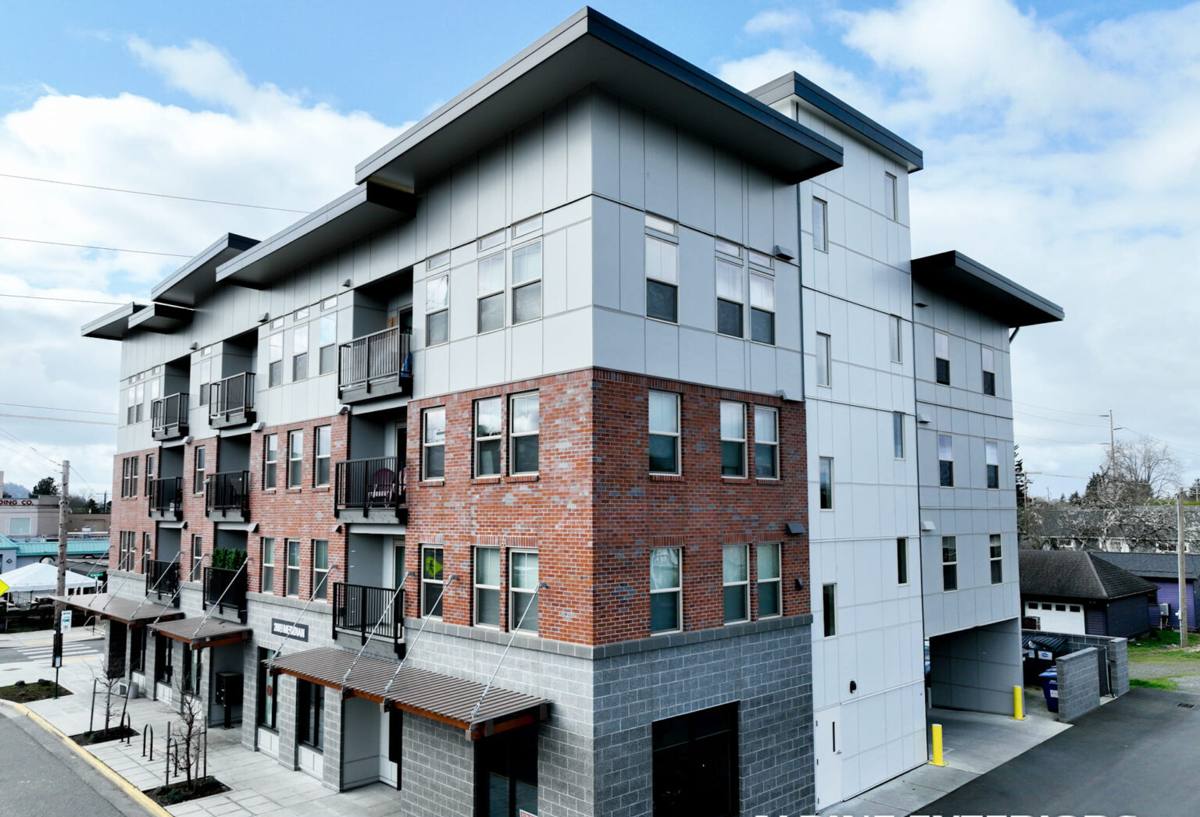
What Skagit County's Climate Demands from New-Construction Windows
Mount Vernon sits inland from Anacortes and the coast, but it's still well within reach of the marine air that defines this part of Skagit County. That combination — salt-tinged moisture, frequent wind-driven rain off the water, and long stretches of overcast, damp weather that keep moss and algae active most of the year — puts specific demands on both the window unit and how it's installed.
- Wind-driven rain resistance: Storms here don't just fall straight down; rain gets pushed sideways into wall assemblies. A window with a weak water-penetration rating, or one flashed incorrectly, will let water in during a hard blow long before it ever shows a visible leak indoors.
- Salt-air corrosion: Hardware, screen frames, and some metal components degrade faster in coastal-influenced air. Material choice and finish quality matter more here than in inland Washington.
- Moss and organic growth: Shaded north and west elevations, common on wooded Mount Vernon lots, stay damp longer. Sills, tracks, and weep systems that don't drain freely become growth traps.
- Sustained damp cycles, not flash floods: The bigger risk isn't a single storm — it's weeks of low-grade moisture exposure that finds any weak point in the flashing or sealant over time.
None of this means Mount Vernon needs exotic, oversized windows. It means the standard details — flashing sequence, sill pan, weep path, sealant selection — have to be done correctly and consistently, on every opening, not just the ones that are easy to reach.
New-Construction vs. Replacement: Why the Opening Changes Everything
New-construction windows are built with a nailing fin (or flange) around the perimeter of the frame, meant to be installed before the exterior cladding goes on, over a weather-resistive barrier that's been prepped for the opening. This is a fundamentally different installation than a replacement window going into an existing, finished wall.
The advantage of new construction is that you get the opening right the first time — proper sill pan flashing, correct integration with the house wrap, and a fin that's fully fastened and sealed before siding or stucco ever covers it up. The risk is the opposite: because it's covered up so quickly, a mistake made during new-construction window install can sit hidden behind the exterior finish for years before it surfaces as a problem. There's no going back to fix a bad sill pan once the siding is on. This is exactly why the installation crew matters as much as the window brand.
What "Correct" Actually Looks Like
A properly installed new-construction window in this climate follows a sequence, not a shortcut:
- Rough opening is checked for square, level, and correct dimensions before the window ever shows up on site.
- A sloped sill pan is installed at the bottom of the opening so any water that gets past the window has somewhere to go — out, not into the wall cavity.
- Weather-resistive barrier is cut and folded into the opening correctly, integrating with the sill pan rather than just taped over it.
- The window is set, shimmed for square and plumb, and fastened per the manufacturer's instructions — over-driven or under-driven fasteners both cause problems later.
- Flashing tape is applied at the sides and head in the correct shingle-lap order — bottom to top — so water always sheds outward and downward, never behind the layer below it.
- Interior and exterior sealant is applied where specified, and nowhere it isn't — sealing the wrong spot can trap moisture instead of keeping it out.
Frame Materials and Glass: What We Recommend for Skagit County Builds
There's no single "best" window for every new build, but there are real tradeoffs worth understanding before you commit to a package for a Mount Vernon home.
| Frame Material | How It Handles Local Conditions | Maintenance |
|---|---|---|
| Vinyl | Good moisture and salt-air resistance, no repainting; performs well in most Mount Vernon builds | Low — occasional cleaning, no refinishing |
| Fiberglass | Very stable in temperature and moisture swings, strong resistance to warping over time | Low — durable finish, minimal upkeep |
| Aluminum-clad wood | Attractive interior wood look with an exterior shell; performs well if the cladding and seals are intact, but any breach exposes wood to our damp cycles | Moderate — seals and cladding joints should be checked periodically |
| Bare wood | Classic appearance but the most exposed to our moisture and moss conditions; we're honest that this is the highest-maintenance option for this climate | High — regular repainting/sealing required |
For glass, we typically recommend dual-pane, low-E, argon-filled units as the baseline for new construction here, meeting or exceeding Washington's current energy code requirements for this climate zone. On elevations that take the brunt of our weather — generally west and south-facing walls — we'll talk through whether a higher-performance glass package is worth the upgrade for that specific home and lot.
Our New-Construction Window Installation Process
For builders and homeowners working on a new build in Mount Vernon, our process is built around not being the crew that causes a callback two years down the line.
1. Plan Review and Take-Off
Before anything is ordered, we review the window schedule against the plans, confirm rough opening sizes, and flag anything that looks off — undersized headers, awkward egress requirements, or openings that don't match the elevation drawings.
2. Sequencing With the Build
We coordinate directly with the builder or GC so windows arrive and get installed at the right point in the schedule — after the weather-resistive barrier is up and openings are prepped, but before siding or trim closes them in.
3. Installation to Manufacturer Spec
Every opening gets the sill pan, flashing sequence, and fastening described above. We don't vary the sequence to save time on openings that are hard to reach or awkwardly placed — those are usually the ones most exposed to wind-driven rain.
4. Documentation
On new builds we can document flashing and sill pan installation before it's covered by siding, which is useful for the builder's own records and for anyone who wants a visual reference of what's behind the wall.
5. Final Check and Operation Test
Every window is checked for square operation, smooth locking, and a clean seal before we consider a house complete.
Flashing and Weather-Barrier Integration: The Detail That Prevents Callbacks
If there's one thing that separates a window installation that lasts from one that fails quietly, it's how the flashing integrates with the rest of the wall's water-management system — not the window brand. A premium window installed with a reversed flashing lap or a sill pan that doesn't actually drain will leak just as surely as a budget window. Given Skagit County's rain patterns, we treat this integration as the most important part of the job, not a formality to move past quickly.
This is also where hiring locally pays off. A crew that installs windows in dry climates most of the year may not instinctively over-build the water management on a Mount Vernon home the way a crew that works this specific weather pattern every week will.
Choosing a Window Contractor for a New Build in Mount Vernon
Because new-construction window mistakes get covered up fast, vetting the installer matters more here than almost anywhere else in the build. Before hiring, it's worth asking:
- Do they install new-construction (flanged) windows regularly, not just retrofit/replacement units?
- Can they describe their flashing sequence without hesitation — sill pan, WRB integration, shingle-lap order?
- Are they licensed and insured to work in Washington, and can they provide proof on request?
- Will they coordinate directly with your builder or GC on scheduling, rather than working in isolation?
- Do they have experience with this region's climate specifically, not just general window installation?
- Will they document the flashing and sill pan work before it's covered by siding?
A contractor who answers these questions clearly and specifically, without vague reassurances, is usually one who's done this enough times in this climate to know exactly where things go wrong.
Cost Factors for New-Construction Window Packages
Every new build is different, so we don't quote broad packages sight unseen, but a few factors consistently drive cost on Mount Vernon projects:
- Number and size of openings — more openings and larger units mean more material and labor.
- Frame material — vinyl is typically the most budget-friendly, fiberglass and clad-wood cost more upfront but offer different long-term tradeoffs.
- Glass package — standard dual-pane low-E versus upgraded performance glass for exposed elevations.
- Site access and timing — scheduling around other trades and site conditions can affect labor time.
- Custom shapes or sizes — anything outside standard dimensions adds lead time and cost.
We provide detailed, itemized estimates once we've reviewed actual plans rather than quoting a flat number for "a house" — new construction pricing depends too much on the specifics to do it responsibly any other way.
Why a Locally Experienced Crew Matters for This Job
A window installed correctly on paper can still fail if the crew doesn't understand how water actually moves across a wall in a place like Skagit County. We work new-construction projects in and around Mount Vernon and the wider Anacortes area regularly, which means the flashing sequence, sill pan detail, and material choices described here aren't theoretical for us — they're what we do on every opening, on every house, because it's what this climate requires.
If you're planning a new build in Mount Vernon and want windows installed right the first time, we're happy to review your plans and walk through options. Reach out through the form below for a free, no-pressure estimate.