 Anacortes Exterior
 Similk Beach Homes Face a Tougher Roof Environment Than Most of Skagit County
Similk Beach sits close to the water on Fidalgo Island, which means homes there catch a version of Anacortes weather that inland neighborhoods don't get as hard. Wind off the bay carries salt, driving rain comes in sideways during winter storms, and the tree cover that gives the area its shade also keeps roofs damp and shaded for long stretches of the year. That combination — salt exposure, wind-driven moisture, and moss pressure — is exactly the environment metal roofing was built to handle, but only when the system and the installation are matched to it correctly.
A roof that would perform fine in a drier, more sheltered part of Skagit County can wear out faster here. Homeowners near the water often tell us they're replacing roofs sooner than they expected, or that moss keeps coming back no matter how often they clean it. Both of those problems trace back to the same root cause: a roofing system that wasn't specified for coastal, shaded, wet-climate conditions in the first place.
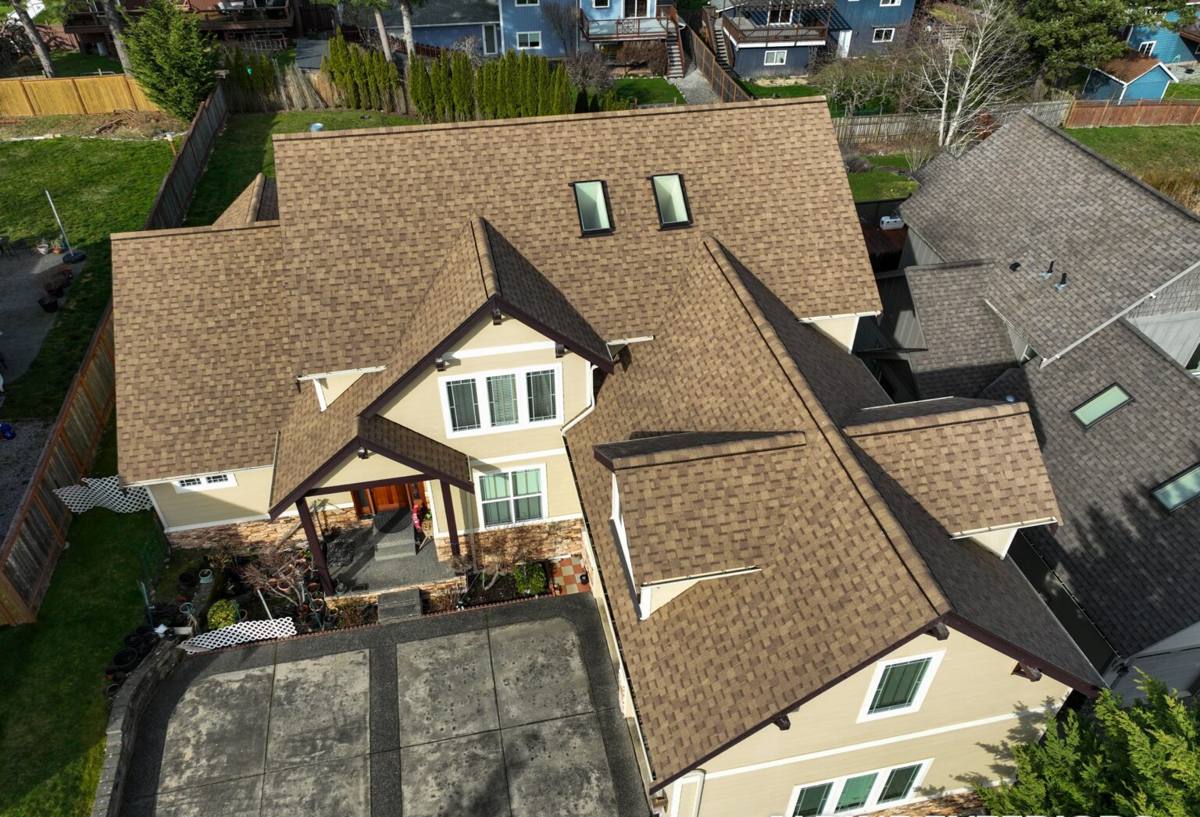
What Salt Air Actually Does to a Roof Over Time
Salt air is corrosive, and it doesn't need direct ocean spray to do damage — a steady breeze off Similk Bay carrying fine salt particles is enough over years. On roofing materials, this shows up as accelerated corrosion of exposed metal fasteners, flashing, and any uncoated or poorly coated metal components. Galvanized steel that would last decades inland can start showing rust streaks and pitting years earlier in a coastal setting like this one.
This is why the metal, the coating, and the fastener hardware all matter more here than they would in a drier part of the state. It's not enough to install "a metal roof" — the specific alloy, finish, and fastener grade need to be chosen for salt exposure, or you're just delaying the same corrosion problem by a few years instead of solving it.
Moss and Moisture Add a Second Layer of Wear
Skagit County's long wet season, combined with shade from surrounding evergreens, gives moss and algae plenty of time to establish themselves on a roof surface. On asphalt shingles, moss roots into the granules and lifts them, shortening the roof's life. On a properly installed metal roof, moss has almost nothing to grip — the smooth, hard surface and the slope of most metal panel profiles shed both water and debris far more effectively. That's one of the clearest, most practical advantages metal has for a property like this.
Why Metal Roofing Fits This Stretch of the Coast
Metal roofing isn't the right fit for every house or every budget, but for a Similk Beach property dealing with salt air, wind-driven rain, and heavy moss pressure, it addresses more of the actual problems than most alternatives:
- Sheds water fast on steep and shallow slopes alike, reducing the time moisture sits on the surface
- Gives moss and algae very little to root into compared to a granulated or porous surface
- Handles wind-driven rain well when flashing and seams are done correctly, since there are far fewer edges for water to work under
- Holds up to freeze-thaw cycles without the cracking or granule loss that shortens shingle life
- Lasts significantly longer than asphalt when the coating and fasteners are matched to a coastal environment
None of that is automatic, though. A metal roof only delivers on these advantages when the panel system, coating, and installation details are right for this specific climate — which is where a lot of the value of hiring a crew that already works this coastline comes in.
Choosing the Right Metal System for a Coastal Skagit County Home
There isn't one "best" metal roof — there's a best fit for a given house, budget, and exposure level. For a property near Similk Beach, we walk homeowners through the real trade-offs rather than defaulting to whatever is easiest to install.
| Option | How It Performs Near Salt Air | Best Fit For |
|---|---|---|
| Standing seam steel (PVDF/Kynar-type finish) | Concealed fasteners avoid the most common corrosion entry point; premium coatings resist salt exposure well over time | Homeowners planning to stay long-term and wanting the lowest-maintenance option |
| Exposed-fastener metal panels | More affordable, but exposed screws need higher-grade fasteners and periodic checking near the coast | Budget-conscious projects, secondary structures, or shorter ownership horizons |
| Aluminum panel systems | Naturally corrosion-resistant even without a heavy coating, good option directly exposed to salt air | Properties with the most direct shoreline exposure |
| Standard galvanized steel, uncoated or lightly coated | Corrodes noticeably faster in salt air; not a system we recommend this close to the water | Not advised for Similk Beach-area exposure |
We'll be direct with you: on a lot with heavy salt exposure, the cheapest panel and fastener combination usually isn't the right call. It's not that any of these products are bad — it's that some are built for inland use, and installing them here just shifts the maintenance burden onto you a few years down the road.
The Installation Details That Actually Determine How Long It Lasts
Metal panels themselves are durable, but most metal roof failures we see aren't about the panel — they're about flashing, fastening, and ventilation choices made during installation. This is where experience with coastal Anacortes conditions specifically pays off.
Flashing and Seams
Every valley, wall transition, chimney, and vent penetration is a potential entry point for wind-driven rain. Flashing has to be sized, lapped, and sealed correctly for the wind and rain angles this exposure actually sees — not just built to a generic minimum standard.
Fastener Selection
On exposed-fastener systems, the screws are only as strong as their coating. We use fastener grades rated for coastal and marine-adjacent exposure, because standard hardware can start corroding well before the panels themselves show any wear.
Ventilation and Underlayment
Metal roofs need proper attic and roof-deck ventilation to manage condensation, and a high-quality underlayment adds a second line of defense under the panels. In a climate this wet, skipping or underspecifying either one sets the roof up for hidden moisture problems that won't show up until there's already damage underneath.
How We Approach a Metal Roofing Project in This Neighborhood
Every roof gets evaluated on its own, but the process for a Similk Beach home generally follows the same steps:
- On-site assessment — we look at the roof's exposure to wind and water, existing moss or moisture damage, ventilation, and the condition of the decking underneath
- System recommendation — we walk you through panel, gauge, and finish options suited to your specific exposure and budget, with honest trade-offs, not a single default option
- Tear-off and deck inspection — old roofing is removed and the decking is checked for rot or soft spots before anything new goes down, since covering a damaged deck just hides the problem
- Underlayment, flashing, and panel installation — done in the sequence and detail level that coastal wind-driven rain actually requires
- Final walkthrough — we go over the finished roof, the fastener and coating warranty terms, and what maintenance (if any) you should expect
What Maintenance a Metal Roof Actually Needs Here
One of the appeals of metal roofing is how little upkeep it needs compared to asphalt — but "low maintenance" isn't "no maintenance," especially this close to the water. A simple annual routine goes a long way:
- Clear needles, leaves, and debris out of valleys and off panel surfaces, especially after fall and winter storms
- Check gutters and downspouts for buildup that can back water up under the roof edge
- Look at exposed fasteners (if applicable) for early signs of rust or backing out
- Rinse off salt residue and organic buildup periodically, particularly on roof sections shaded by trees
- Have flashing around chimneys, vents, and walls checked every few years, since that's where most leaks actually start
Why Local Experience on This Coastline Matters
A metal roofing system that's correctly specified for a dry inland town can be the wrong call a few miles away on the water. Wind direction, salt exposure, tree cover, and moisture patterns all vary within Skagit County, and Similk Beach's proximity to the bay puts it toward the harder end of that range. A crew that's worked roofs in this specific setting knows which coatings hold up, which fastener grades are worth the extra cost, and which flashing details matter most for the way weather actually hits homes here — not just what a general spec sheet recommends.
That local knowledge is also why we're straightforward about what a given house actually needs. Not every Similk Beach home needs the top-tier system, and we'd rather tell you that upfront than oversell a project. The goal is a roof that holds up to this environment for the long haul, installed once, correctly.
If you're weighing metal roofing for a home in the Similk Beach area, we're happy to take a look and talk through what fits your house and budget — no pressure, no obligation. Use the form below to request a free estimate.