 Anacortes Exterior
 Why March Point Siding Takes More Punishment Than Most
March Point sits out on its own peninsula, wrapped by water on more sides than most Anacortes neighborhoods. That location is part of what makes it a desirable place to live, but it also means every wall on every home is dealing with a heavier dose of what Puget Sound weather can throw at a building envelope: salt-laden air moving off the bay, wind-driven rain that hits siding at an angle instead of falling straight down, and long stretches of gray, damp weather that never quite let a wall dry out between storms.
None of that is unique to March Point in isolation — it's the reality across Skagit County's waterfront and near-waterfront areas. But the combination is more constant here than a few miles inland, and it shows up in the siding first. Salt air accelerates corrosion on fasteners and trim metal. Driving rain finds every gap in flashing and caulking that a calmer climate would never expose. And the long moss season that defines a Pacific Northwest fall through spring gives organic growth months at a time to take hold on anything that stays damp and shaded.
We install siding on homes across Anacortes, but a March Point job gets planned with that combination specifically in mind — not as an afterthought, but as the starting point for material choice, detailing, and sequencing.
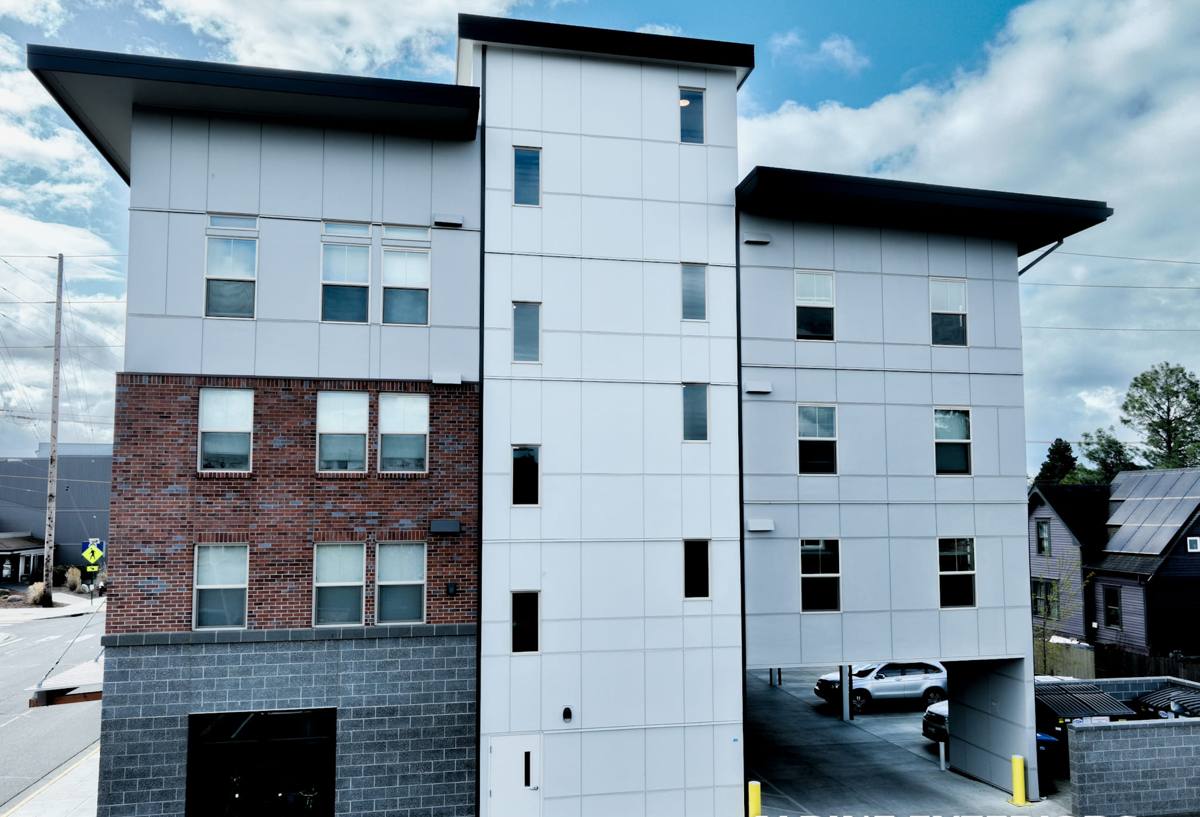
What Salt Air, Rain, and Moss Actually Do to a Wall
Salt Air
Airborne salt is corrosive to unprotected metal and can gradually break down finishes that aren't formulated to resist it. Over years, homes closer to open water tend to show fastener bleed-through, corroded trim, and faded or chalky paint faster than homes set back from the shoreline. It's a slow process, which is exactly why it's easy to underestimate until a home is 10-15 years in and the siding looks tired well ahead of schedule.
Driving Rain
Wind off the water doesn't just bring rain — it pushes it sideways and upward into laps, corners, and penetrations that a still-air rain would never reach. Siding systems that rely on face-sealing (caulk alone, with no drainage path behind it) are the ones most likely to let that water find its way behind the cladding, where it can sit against sheathing and framing unseen.
Moss Season
Western Washington's moss season effectively runs most of the year on north-facing and shaded walls. Moss and algae need moisture and organic material to grow, and they thrive on surfaces that hold onto both. Wood and wood-based siding products give moss more to grab onto and more organic material to feed on than a properly finished fiber cement surface does.
Why We Install Only James Hardie in This Neighborhood
James Hardie fiber cement is engineered from cement, sand, and cellulose fibers — it's non-combustible and doesn't rot, swell, or feed insects the way wood-based products can. For March Point specifically, three things matter most:
- Moisture stability: Fiber cement doesn't absorb and release water the way wood or wood-based composites do, so it isn't cycling through expansion and contraction every time a system blows through with rain.
- Factory-applied ColorPlus finish: Hardie's ColorPlus finish is baked on at the factory under controlled conditions, giving a more consistent, UV- and moisture-resistant top coat than field-applied paint on raw material — which matters when siding is facing years of salt-tinged, wet weather.
- Climate-engineered HZ product lines: Hardie makes region-specific formulations (HZ5 for markets like ours, versus HZ10 for hot-dry climates) so the product is actually matched to Pacific Northwest moisture exposure rather than a one-size-fits-all mix.
That's also why we don't install vinyl, LP SmartSide, Cemplank, Allura, primed spruce, or cedar. Each of those products has legitimate uses somewhere, and some look good on day one. But vinyl can warp and fade under UV and temperature swings and doesn't hold paint well if you ever want to change the color. Wood-based products, including engineered wood, still rely on their moisture barrier and finish staying intact for the life of the product — and in a climate that rarely gives a wall time to fully dry, that's a harder bar to clear over 20-plus years. Real wood and cedar are beautiful but need real, ongoing maintenance to fend off exactly the rot and moss we described above. We'd rather put one product on every home, know it cold, and stand behind it — which is why James Hardie is the only siding we install.
What a Correct James Hardie Installation Involves
Fiber cement siding is only as good as the installation behind it. Hardie's own installation manual is specific for a reason — most siding failures we get called out to inspect trace back to shortcuts during install, not a problem with the material itself. A correct job includes:
- A proper water-resistive barrier installed and lapped correctly, with flashing integrated at every window, door, and penetration — not caulk used as a substitute for flashing.
- Correct clearances: siding held up off the roofline, decks, and grade per Hardie's minimum gap requirements, so the bottom edge isn't sitting in standing water or snow.
- Proper fastener type, spacing, and depth — corrosion-resistant fasteners set correctly, not overdriven or underdriven, since either mistake compromises the plank's seal and finish.
- Correct joint treatment at butt joints and corners, using the sealants and gaps Hardie specifies rather than face-nailing planks tight together.
- Painted or factory-finished cut edges — every field cut sealed before installation so raw fiber cement edges aren't left exposed to moisture.
- Ventilation behind the cladding (a rainscreen gap where appropriate) so any moisture that does get behind the siding has a way to dry out instead of sitting against the sheathing.
Skip any one of those steps and you can end up with a wall that looks fine for a few years and then starts showing problems that are expensive to trace and fix — swelling at butt joints, staining below fasteners, or moisture damage behind the siding that isn't visible until it's serious.
Signs Your Current Siding Is Already Losing the Fight
If your March Point home still has its original siding, or an older re-side, a few warning signs are worth checking for before they turn into structural issues:
| What You See | What It Usually Means |
|---|---|
| Dark green or black staining, especially on north and shaded walls | Moss/algae growth taking hold — a sign the surface is staying damp longer than it should |
| Soft or spongy spots when pressed | Possible moisture intrusion or rot behind or within the siding material |
| Peeling, chalking, or bubbling paint | Finish failure — often accelerated by salt air and UV exposure near the water |
| Visible gaps, warping, or cupping in boards | Material reacting to repeated wet/dry or hot/cold cycling |
| Rust streaks below fasteners | Fastener corrosion, common in salt-air locations with non-coated or undersized fasteners |
None of these mean a home needs siding replaced tomorrow, but they're worth having looked at before a small problem becomes a sheathing or framing repair.
How James Hardie Compares in This Climate
This isn't about any one product being "bad" — it's about which trade-offs make sense for a peninsula home dealing with salt air, driving rain, and a near year-round moss season.
| Factor | Vinyl | Wood / Cedar | Engineered Wood | James Hardie Fiber Cement |
|---|---|---|---|---|
| Moisture resistance | Doesn't absorb water, but can warp/gap over time | Absorbs moisture; needs an intact finish to resist rot | Better than raw wood, but still moisture-sensitive at cut edges | Doesn't rot, swell, or absorb water the way wood-based products do |
| Salt air / coastal exposure | Can fade and become brittle under UV/salt exposure over years | Vulnerable without diligent, repeated refinishing | Depends heavily on maintaining the factory coating | ColorPlus finish engineered to hold up to UV and moisture exposure |
| Moss / organic growth | Smooth surface resists organic growth but can still stain | More susceptible; wood grain gives moss more to hold onto | Similar exposure to moisture-driven growth as other wood products | Dense, factory-finished surface is inhospitable to moss/algae |
| Fire resistance | Can soften or melt under heat | Combustible | Combustible | Non-combustible cement-based material |
| Ongoing maintenance | Low, but limited repair/repaint options | High — regular refinishing required | Moderate — coating maintenance matters | Low when installed correctly; occasional wash and repaint over decades |
Our Process for a March Point Job
Every project starts with an on-site look at the specific exposure your home faces — how close you are to open water, which walls take the most wind-driven rain, and where existing moss or moisture damage is already showing. From there:
- Assessment and measurement: We walk the exterior, check existing siding and trim condition, and note any areas with prior water intrusion or rot that need addressing before new siding goes on.
- Product and color selection: We go over Hardie's plank profiles, textures, and ColorPlus color options so you land on something that fits the home and holds up to this specific climate.
- Written estimate: A clear scope covering removal, any sheathing or moisture-barrier repair needed, and the full installation — no vague allowances.
- Installation to Hardie's specifications: Correct flashing, clearances, fastening, and joint treatment — the details that determine whether the job holds up in 15 years, not just in the first photo.
- Final walkthrough: We go over the finished work together before we consider the job done.
Maintenance That Actually Keeps Up With This Climate
Correctly installed James Hardie siding is low-maintenance, not zero-maintenance. A simple annual routine goes a long way in a salt-air, high-moisture environment:
- Rinse siding down once a year (a garden hose is usually enough) to clear salt residue and organic buildup before it takes hold.
- Check caulking at trim, windows, and joints annually and have any cracked or missing sealant redone promptly.
- Keep gutters clear and downspouts directed away from the wall so runoff isn't cascading down the siding face.
- Trim back vegetation and tree cover that keeps a wall section shaded and damp longer than the rest of the house.
- Have any impact damage or chipped finish touched up rather than left exposed to the weather.
Why Local Experience on This Peninsula Matters
A siding crew that only occasionally works near open water treats every job the same way, regardless of exposure. A crew that regularly works March Point and the rest of Anacortes already knows which walls in a peninsula home take the worst of the wind-driven rain, where moss shows up first, and how much clearance and flashing detail actually holds up here versus what a generic install manual assumes for a drier climate. That local pattern-recognition is often the difference between a job that looks right at handoff and one that's still performing correctly at year fifteen.
We're also familiar with Skagit County permitting and the practical realities of scheduling work around this area's weather windows — which affects when tear-off and installation can safely happen without exposing your home's sheathing to an open stretch of rain.
If you're weighing a siding replacement or want an honest read on how your current siding is holding up, we're happy to take a look. Reach out for a free, no-pressure estimate using the form below — we'll walk the exterior with you and tell you plainly what we see.