 Anacortes Exterior
 Why Bow Homes Need Siding Built for This Exact Climate
Bow sits in a stretch of rural Skagit County shaped by open water, farmland, and a marine layer that never really goes away. Homes here take a slower, quieter kind of beating than houses further inland: salt-laced air drifting off Samish Bay and the surrounding tidal flats, driving rain that comes in sideways off the water during winter storms, and long stretches of overcast, humid weather that let moss and algae get comfortable on north-facing walls and anything shaded by trees. None of that is dramatic on its own. It's the accumulation over years that separates siding that holds up from siding that quietly fails behind a coat of paint.
Salt air is corrosive to fasteners and trim hardware, and it accelerates the breakdown of coatings that aren't formulated to handle it. Driving rain finds every gap in flashing and every under-caulked seam, and once water gets behind a wall assembly it can sit there for months before anyone notices a soft spot. Moss and algae growth isn't just cosmetic — organic growth holds moisture against the siding surface, which is exactly the condition that rots wood-based products and delaminates poorly bonded ones. A siding system for a Bow property has to be evaluated against all three of these stressors at once, not just against "Pacific Northwest weather" in the abstract.
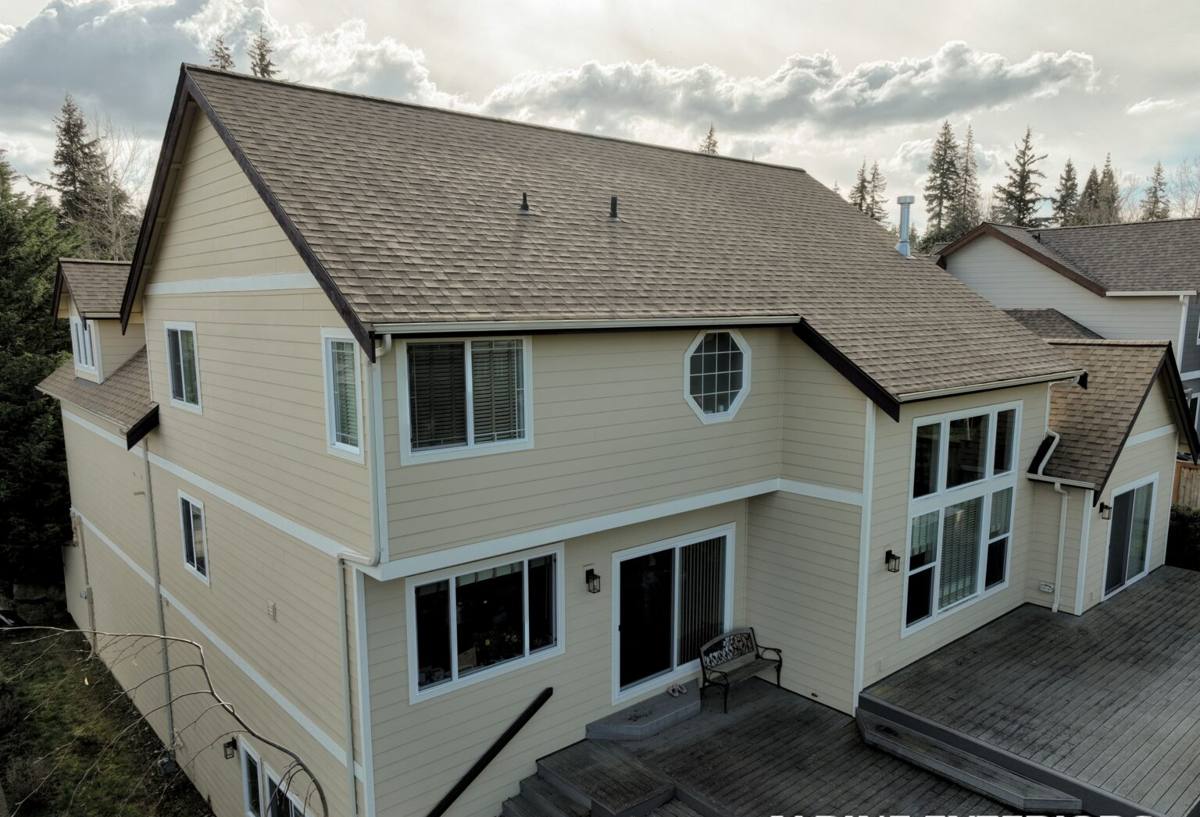
Why We Only Install James Hardie
We standardized on James Hardie fiber cement for every home we side, including out here in the Bow area, because it's the one product line engineered specifically for the failure modes this climate produces. Hardie's fiber cement is non-combustible, doesn't rot, and doesn't feed moss and algae the way organic siding materials can. The ColorPlus finish is baked on at the factory under controlled conditions, which gives it far better resistance to fading, chalking, and moisture intrusion than field-applied paint — a real advantage when a house is getting salt spray and near-constant humidity for months at a time. We don't install LP SmartSide, vinyl, Cemplank, Allura, primed spruce, or cedar. Each of those has legitimate uses somewhere, but none of them stack up against fiber cement's combination of moisture stability, factory-cured finish, and long-term structural performance in a coastal Skagit County environment, and we'd rather stand behind one product we trust completely than split our attention across several.
What Homeowners Sometimes Assume, and What's Actually True
- "Vinyl is maintenance-free" — it resists rot, but it becomes brittle and can crack in cold snaps, and it fades unevenly in UV exposure over time.
- "Cedar looks better and that's worth the upkeep" — it does look great fresh, but in a climate this wet it needs re-sealing on a tight cycle to keep moisture and moss from taking hold.
- "Primed wood siding is fine if it's painted well" — paint is a surface treatment; once a seam opens up from swelling or a fastener rusts, water gets behind it regardless of how good the paint job was.
- "All fiber cement is basically the same" — bonding process, factory finish quality, and climate-specific product engineering vary a lot between manufacturers.
What Correct Installation Involves Out Here
Fiber cement siding is only as good as the assembly it's installed into, and in a high-moisture, salt-exposed area like Bow, the details matter more than they would in a drier inland town.
The Rainscreen Gap
A drainage gap behind the siding lets any moisture that does get past the outer layer drain and dry out instead of sitting against the wall sheathing. On a property exposed to driving rain off open water, skipping this detail is one of the most common reasons siding jobs fail early — not because the siding itself was bad, but because the wall behind it never had a way to dry.
Flashing and Water Management
Every window, door, and roofline transition needs flashing that's lapped correctly so water is always directed outward and down, never trapped behind trim. This is where a lot of siding failures actually originate, and it's invisible once the job is finished — which is exactly why it has to be done right the first time.
Fastening and Panel Layout
James Hardie specifies fastener type, spacing, and placement for a reason: correct fastening keeps panels secure through wind-driven rain events without over-compressing the board or leaving it loose enough to work moisture in at the nail line. Butt joints and corners need to be treated as deliberately as the field of the wall, not as an afterthought.
Caulking and Sealant Discipline
In a salty, humid environment, the wrong sealant — or the right sealant applied in the wrong places — breaks down faster and can trap moisture instead of shedding it. We seal only where Hardie's specifications call for it, using products rated for the exposure.
HZ5 vs. HZ10: Which Product Line Fits a Bow Property
James Hardie engineers its siding in climate-specific formulations. For a Skagit County property exposed to salt air and sustained moisture, the difference between product lines is worth understanding rather than skipping past.
| Factor | HZ5 Line | HZ10 Line |
|---|---|---|
| Designed for | Mixed and moderately wet climate zones | Wet, humid, and coastal-exposure climate zones |
| Moisture and freeze-cycle resistance | Strong, standard formulation | Enhanced formulation for sustained damp exposure |
| Typical fit for Bow | Sheltered or inland-facing walls | Water-facing and salt-exposed elevations |
| Finish system | ColorPlus factory finish available | ColorPlus factory finish available |
On many Bow homes, we'll spec HZ10 for the elevations most exposed to weather off the bay and use HZ5 where the home is more sheltered by terrain or tree cover. That's a judgment call made on site, not a one-size answer — it's one of the things a proper estimate should walk you through.
How Our Process Works
- On-site assessment. We walk the exterior, check the current siding and wall assembly where accessible, and note exposure differences between elevations — the wall taking the worst of the weather off the water isn't always the same wall a homeowner assumes.
- Product and line selection. We recommend HZ5 or HZ10 by elevation, plan color and profile, and confirm trim details.
- Prep and moisture check. Old siding comes off, sheathing is inspected for hidden rot or existing moisture damage, and any needed repairs happen before a single new panel goes up.
- Rainscreen and flashing installation. The drainage gap and all flashing details go in first, since this is the part of the job that's permanent and invisible once siding covers it.
- Siding installation to spec. Panels, fastening, and joints follow James Hardie's published installation requirements, not shortcuts.
- Final walkthrough. We review the finished exterior with the homeowner and confirm everything matches what was scoped.
Why Hiring a Crew That Already Works in Bow Matters
Skagit County covers a lot of different microclimates, and a crew that mostly works drier, more sheltered towns can genuinely misjudge what a bay-exposed property in Bow needs. We work this area regularly, which means we already understand which elevations tend to take the worst of winter storms coming off the water, how fast moss establishes itself on shaded north walls in this specific stretch of county, and what wall assemblies we tend to find underneath older siding out here. That local pattern recognition shows up in small decisions — where we spec HZ10 versus HZ5, how much attention a particular corner or roofline transition needs — that a crew unfamiliar with the area might not think to make.
There's also a practical permitting and code side to it. Skagit County's building requirements and any relevant shoreline or environmental considerations for properties near the water are things we're already familiar with from other jobs in the area, so there are fewer surprises mid-project.
Living With James Hardie Siding in a Moss-Prone Environment
Correctly installed Hardie siding is genuinely low-maintenance, but "low-maintenance" doesn't mean "ignore it forever" — especially with the moss and algae pressure a shaded, humid property like this can see.
- Rinse siding down once or twice a year, more often on shaded or north-facing walls, using a garden hose and soft brush rather than a pressure washer at close range.
- Keep gutters clear so overflow doesn't run down the face of the siding and feed moss growth in a concentrated stripe.
- Trim back trees and shrubs that keep a wall shaded and damp longer than the rest of the house.
- Check caulking at trim and penetrations every year or two and have any cracked or missing sealant redone promptly.
- Watch for any soft spots, dark staining, or bubbling at the base of walls or around windows — these are early signs of a moisture problem behind the siding, not the siding itself failing.
What Drives the Cost of a Bow Siding Project
| Factor | Why It Matters Here |
|---|---|
| HZ5 vs. HZ10 mix | Water-facing elevations may need the higher-spec line, which affects material cost by wall |
| Condition of existing wall sheathing | Hidden rot or moisture damage found during tear-off adds repair scope |
| Home size and elevation complexity | Dormers, multiple rooflines, and trim detail add labor time |
| Color and profile selection | Factory ColorPlus finishes and certain profiles vary in material cost |
| Access and site conditions | Rural lots, tree cover, and driveway access can affect setup and staging time |
We won't quote a number without seeing the house, but we'll always walk you through which of these factors are actually driving your estimate, so you understand what you're paying for and why.
Signs Your Current Siding Is Already Behind
A lot of siding problems in this climate develop slowly enough that homeowners get used to them before recognizing what they mean.
- Persistent moss or dark streaking that returns within weeks of cleaning, especially on north or shaded walls
- Paint that's peeling, bubbling, or chalking faster than it should for its age
- Soft or spongy spots when you press on the siding near the bottom of walls or below windows
- Visible warping, cupping, or gaps opening up at seams and corners
- Rusting or failing fasteners and trim hardware, which salt air accelerates
Any of these are worth a look before they turn into a wall repair project on top of a siding project.
If you own a home in Bow and want a straight answer about what your walls actually need — not a generic estimate — we're glad to come take a look. The estimate is free, there's no pressure, and you'll get a clear breakdown of what correct James Hardie installation would involve on your specific property. Use the form below to get started.