 Anacortes Exterior
 Windows on Guemes Island Take a Different Kind of Beating
Guemes Island sits right in the path of everything the Salish Sea throws at Skagit County — salt-laden air off the water, wind-driven rain that hits siding and window frames sideways instead of straight down, and a wet season that stretches long enough for moss and algae to get a real foothold on anything that stays damp. A window that performs fine twenty minutes inland in Anacortes can start showing corrosion, seal failure, or soft framing years earlier out on the island if it wasn't installed with that exposure in mind.
This page covers what window installation actually requires for Guemes Island homes specifically — not a generic rundown of window types, but the details that matter when the house is exposed to salt spray, sustained wind-driven rain, and a moss season that doesn't let up.
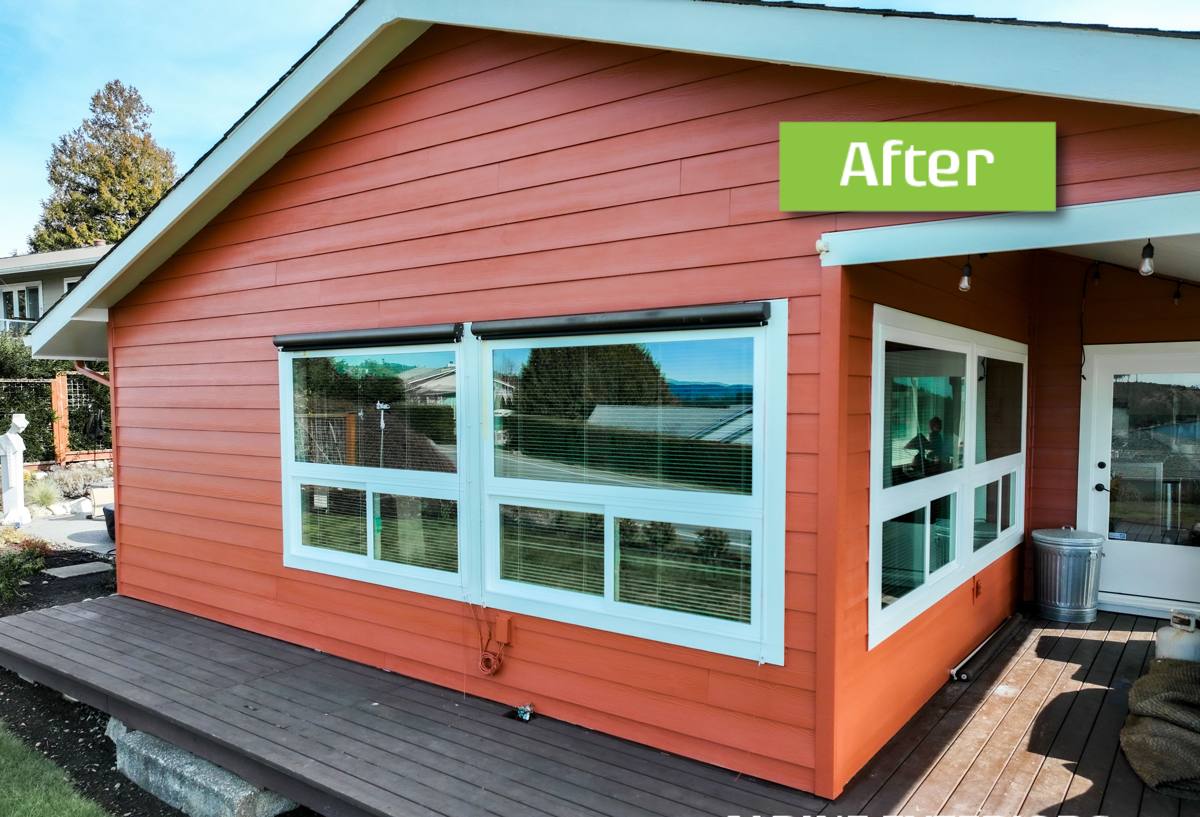
What Salt Air and Driving Rain Actually Do to Windows
Salt air is corrosive to metal hardware — hinges, cranks, locks, and even some window frame components — well before it does visible damage to the glass or the wall around it. Left unaddressed, corroded hardware leads to windows that won't latch tight, which in turn lets more moist air in and accelerates everything else.
Driving rain is a different problem. On an exposed island lot, wind pushes rain into gaps that would never see water on a sheltered inland site. That means the flashing and sealant details around a window — the parts nobody sees once the trim is back on — matter more here than almost anywhere else in Skagit County. A window that's slightly under-flashed on a protected lot might never leak. The same installation on an exposed Guemes Island wall can leak within a season or two.
Where Water Actually Gets In
In our experience, window leaks almost never come through the glass or the sash itself. They come from:
- Missing or improperly lapped flashing at the header, where wind-driven rain is forced upward and behind the trim
- Sealant applied over old, failed sealant instead of a fully cleaned and prepped surface
- Nailing fins or flanges that weren't fully bedded against the water-resistive barrier
- Sill pans that are missing entirely, or that don't extend far enough to catch water that gets past the sash
- Trim boards that trap moisture against the frame instead of shedding it
What a Correct Installation Involves Here
A window installation done right for island exposure isn't a different product — it's a more disciplined process. The window itself matters less than what happens in the two inches around it.
The Non-Negotiables for Guemes Island Homes
- A sloped sill pan under every window opening, so any water that gets past the sash drains back outside instead of into the wall cavity
- Flashing tape or flexible flashing integrated with the house wrap in the correct shingle-lap order — top piece always overlapping the one below it
- Corrosion-resistant fasteners and hardware, since standard-grade screws and hinges are exactly the parts salt air attacks first
- A continuous, high-quality exterior sealant bead with proper backer rod where gaps are too wide for sealant alone
- Weep holes and drainage paths left clear, not caulked shut — a surprisingly common mistake that traps water instead of releasing it
None of this is exotic. It's standard best practice for window installation everywhere. The difference on Guemes Island is that there's very little room for a shortcut here to go unnoticed — the exposure finds the weak point faster.
Choosing Windows Built for This Exposure
Frame material matters more on an exposed island lot than it does on a sheltered inland property. There's no single "best" material for every home, but the trade-offs are worth understanding before you decide.
| Frame Material | Salt Air / Moisture Behavior | Maintenance | Typical Cost Position |
|---|---|---|---|
| Vinyl | Won't corrode; performs well in salt air with quality hardware | Low — occasional cleaning | Lower to mid-range |
| Fiberglass | Very stable in temperature swings and moisture; strong long-term performer near water | Low | Mid to upper-range |
| Aluminum-clad wood | Attractive, but relies on the clad seal staying intact — vulnerable if that seal is compromised near salt spray | Higher — clad seams and any exposed wood need monitoring | Upper-range |
| Bare wood | Poor fit for direct salt/wind exposure without constant upkeep | Highest | Varies |
We tend to steer island clients toward vinyl or fiberglass for exposed elevations, not because other materials are bad products, but because they hold up with less ongoing maintenance in conditions where upkeep is genuinely harder to stay on top of. Where a homeowner wants the look of a clad or wood window on a more sheltered side of the house, that's a reasonable call — it just needs a maintenance conversation up front, honestly, not after a problem shows up.
Glass Package Considerations
Double-pane, low-E glass is the baseline we recommend for this area regardless of exposure — it helps with condensation control, which matters in a climate where humidity sits high for long stretches. On more exposed sides of a Guemes Island home, upgraded seal systems and impact-rated hardware are worth discussing, since replacing a window that's failed prematurely costs more than getting the spec right the first time.
Our Process for Guemes Island Projects
Working on Guemes Island means planning around the ferry schedule, not just the weather. We build that into how we quote and schedule the job so it doesn't turn into wasted trips or delays mid-project.
- On-site assessment: We look at existing window condition, framing behind the trim where visible, and which elevations take the worst of the wind and salt exposure.
- Material and scheduling plan: We batch material deliveries and crew trips around the ferry schedule so the job runs efficiently once we start, rather than stopping and starting.
- Removal and inspection: Old windows come out carefully so we can check the framing and sheathing underneath for hidden moisture damage before anything new goes in.
- Flashing and sill pan installation: This is the step that actually determines whether the window stays dry for the next twenty years — it happens before the new window is ever set.
- Window installation and sealing: Set, shimmed level and plumb, fastened, and sealed with attention to the drainage details above.
- Trim and cleanup: Interior and exterior trim finished, site cleaned, and a walk-through so you know what to watch for going forward.
Because we already work on Guemes Island regularly, this logistics planning isn't something we're figuring out for the first time on your job — it's built into how we bid the work.
Moss Season and What It Means for Your Windows
Skagit County's long wet season gives moss and algae plenty of time to establish on north-facing walls, trim, and anywhere moisture sits without much sun exposure. On windows, this usually shows up as green or black staining on sills, trim boards, and the bottom edge of frames.
Moss itself doesn't rot a window frame, but it holds moisture against the surface for longer than the surface would otherwise stay wet — and that prolonged dampness is what eventually gets to trim, sealant, and any exposed wood. Choosing frame and trim materials that don't give moss much to grip, keeping drainage paths clear, and not letting organic debris build up in window tracks and sills all help slow this down.
Simple Maintenance That Extends Window Life Here
- Rinse salt residue and organic buildup off frames and sills a couple of times a year
- Keep weep holes and tracks clear of moss, debris, and leaf litter
- Check exterior sealant annually for cracking or separation, especially on the sides that face prevailing wind and rain
- Operate hardware periodically even on windows you don't open often, so cranks and locks don't seize from corrosion
Signs Your Current Windows Are Already Struggling
If you're not sure whether replacement makes more sense than repair, these are the signs we look for first on island homes:
- Fogging or moisture between panes — the seal has failed and the insulating gas is gone
- Sashes that stick, drop, or won't latch fully
- Visible corrosion or white/green buildup on hinges, cranks, or locks
- Soft or discolored wood at the sill, jamb, or trim
- Persistent moss or algae staining that keeps returning shortly after cleaning
- Noticeable drafts or a cold spot near the window in winter
- Condensation forming on the interior frame, not just the glass
Any one of these on its own might just need attention. Several together, especially on a wind-exposed elevation, usually means the installation or the window itself has reached the end of its useful life.
Why Hiring a Crew That Already Works Guemes Island Matters
A window installer who mostly works sheltered inland lots will build the same way whether the house is in a protected neighborhood or right on the water — and that's exactly where problems start. A crew that regularly works Guemes Island homes already treats flashing, sill pans, and hardware selection as non-negotiable, because they've seen what happens when those details get skipped on an exposed site.
There's also the practical side: knowing the ferry schedule, planning material deliveries accordingly, and not treating an island job as an afterthought squeezed between mainland stops. That planning is part of what keeps an island project on schedule and on budget instead of dragging out over missed sailings and repeat trips.
Get a Straight Answer on Your Windows
If you're dealing with drafty, fogged, or corroding windows on your Guemes Island home, or you're planning ahead before the next wet season sets in, we're happy to take a look and give you an honest read on repair versus replacement. Reach out for a free, no-pressure estimate — we'll walk the exterior with you, point out what we see, and lay out real options without any pressure to upsize the job.