 Anacortes Exterior
 Building Decks for Guemes Island's Climate
Guemes Island sits out in the salt air off Anacortes, and that changes what a deck needs to survive. Homes here deal with a steady mix of salt-laden wind off the water, long stretches of driving rain through fall and winter, and a moss season that can run most of the year on shaded, tree-covered lots. A deck built to a generic spec sheet from a mainland subdivision often struggles here — fasteners corrode faster, decking traps moisture, and moss gets a foothold within a season or two. Building correctly for Guemes Island means choosing materials, fasteners, and framing details specifically suited to a wet, salt-exposed, heavily wooded island environment, not just following a standard build.
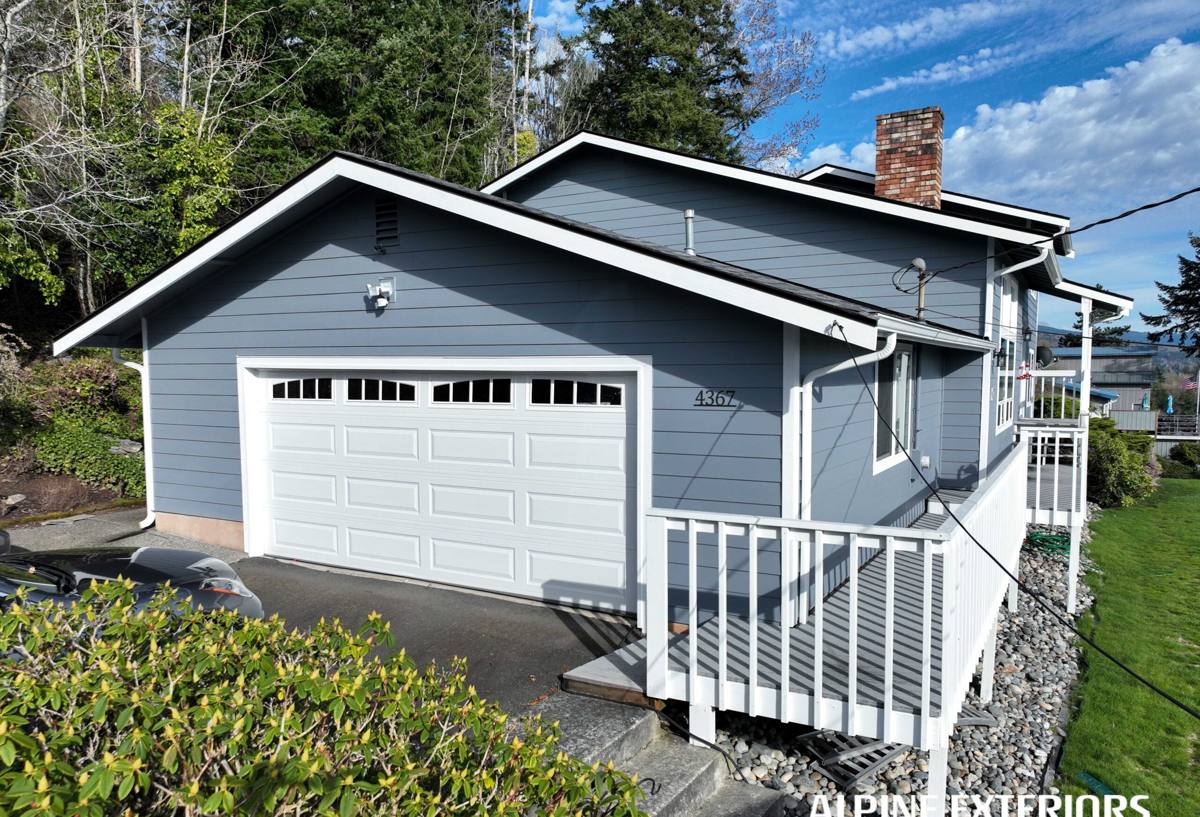
What Guemes Island Homes Actually Need From a Deck
Every deck we build on the island has to account for three things working against it at once: salt air corroding metal, near-constant rain finding every gap and seam, and shade from mature trees that keeps surfaces damp long enough for moss to take hold. A deck that ignores any one of these tends to show problems within a few years — rust streaks bleeding from fastener heads, soft spots where water pooled against the house, or a green film that makes boards slick underfoot.
Salt Air and Fastener Corrosion
Standard hot-dip galvanized fasteners hold up fine in most inland settings, but on Guemes Island's salt-exposed sites they can start showing rust bleed within a few years, especially on decks with a clear line to the water. For coastal builds we specify stainless steel fasteners — typically 305 or 316 grade — for structural connections and visible decking screws. It costs more upfront than standard galvanized hardware, but it's the difference between a deck that still looks tight in ten years and one that's staining its own boards with rust by year five.
Driving Rain and Water Management
Rain here doesn't just fall straight down — wind-driven rain gets pushed sideways into ledger connections, stair stringers, and any spot where the deck meets the house. The ledger board — where the deck attaches to your home — is the single most important water-management detail on the entire structure. It needs proper flashing and a self-adhering waterproof membrane behind it, not just caulk, because caulk fails long before flashing does. We also gap decking boards for drainage and make sure the substructure isn't trapping water against end grain, which is where rot usually starts.
Moss and Shaded, Wooded Lots
Many Guemes Island properties sit under fir and cedar canopy, which keeps decks shaded and damp — ideal conditions for moss. Moss isn't just a cosmetic problem; it holds moisture against the decking surface and makes boards genuinely slippery. Board spacing, airflow underneath the deck, and choosing a decking surface that doesn't hold water in a textured or embossed pattern all matter more here than they would on an open, sunny lot.
Choosing the Right Decking Material
There's no single "best" decking material for every Guemes Island home — it depends on how much shade the site gets, how close it is to the water, and how much upkeep you want to do. Here's how the common options actually perform in this climate:
| Material | Upfront Cost | Maintenance in Wet, Salty Climate | Moss Resistance |
|---|---|---|---|
| Pressure-treated lumber | Lowest | Needs staining/sealing every 1–2 years or it grays and checks | Poor if shaded — moss takes hold quickly without regular cleaning |
| Western red cedar | Moderate | Naturally rot-resistant but still benefits from periodic sealing | Fair — better than PT lumber but still needs airflow underneath |
| Composite decking | Higher | No staining or sealing; occasional wash-down | Good on smooth/grooveless profiles; textured boards can hold grime in deep shade |
| Tropical hardwood (ipe and similar) | Highest | Very durable but needs periodic oiling to hold its color | Good — dense grain resists moisture penetration |
On heavily shaded island lots, we lean toward composite or hardwood for the walking surface because they handle sustained dampness better than softwoods. On sunnier, more open sites, cedar remains a solid, honest choice — it just asks more of the homeowner in upkeep.
The Framing and Substructure Details That Matter
A deck's surface gets all the attention, but the framing underneath is what determines whether it's still solid in fifteen years. A few details we treat as non-negotiable on every Guemes Island project:
- Joist tape or butyl flashing tape on top of every joist, so screw penetrations don't become entry points for water into the wood
- Proper ledger flashing and membrane at the house connection — the single most common source of hidden rot on older decks
- Stainless or coated structural hardware rated for the exposure, not just whatever's cheapest at the yard
- Footings sized and set to Skagit County's frost and load requirements, not guessed at
- Deck boards gapped and, where the design allows, spaced up off grade enough for airflow underneath to discourage moss and mildew
- Stair and rail connections built to current code, with hardware matched to the same corrosion resistance as the rest of the structure
None of this is visible once the deck is finished, which is exactly why it's worth asking a contractor about before work starts rather than after.
Permitting on Guemes Island
Guemes Island is unincorporated Skagit County, so deck permits go through the county rather than a city building department. Most new decks and significant deck replacements need a permit, and if your property is near the shoreline, the county's shoreline regulations may add an extra layer of review. We handle the permit application and inspection scheduling as part of the job — it's one less thing you have to chase down, and it means the finished deck is documented and won't cause problems if you ever sell or refinance.
Why Island Logistics Change the Job
Guemes Island is only reachable by ferry, and that shapes how a deck project actually runs. Material deliveries, crew trips, and equipment all have to work around ferry scheduling instead of just driving over. A contractor unfamiliar with the island often treats every trip as a special hassle — tacking on surcharges, under-ordering materials and making extra runs, or scheduling loosely and leaving a job half-finished for days at a time. A crew that already works Guemes Island regularly plans differently: materials get ordered and staged in full before the first ferry crossing, crew schedules are built around the ferry timetable rather than fighting it, and the trip itself stops being a line-item surprise on your estimate.
It also means fewer callbacks. A crew that's already built and maintained decks on the island knows which lots sit in heavy shade, which are exposed to direct salt wind, and which need extra attention to drainage because of the terrain — knowledge that only comes from doing the work here repeatedly, not from a single visit.
Our Process for a Guemes Island Deck
Every project starts with an on-site assessment — we walk the lot, note sun and shade exposure, look at how close the site is to the water, and check existing drainage patterns before recommending materials or a layout. From there:
- Design and material selection based on the site's actual exposure, not a one-size-fits-all default
- Permit application through Skagit County, including shoreline review if the property requires it
- Material ordering and staging, planned around ferry logistics so the crew isn't waiting on supplies mid-job
- Framing with corrosion-appropriate hardware, proper ledger flashing, and joist protection
- Decking installation with attention to gapping, airflow, and drainage
- Final walkthrough and county inspection sign-off
We build in the maintenance conversation at the end of every project, too — what to expect from your specific decking material in this climate, and roughly how often it'll need attention to stay ahead of moss and weathering.
Keeping a Guemes Island Deck in Good Shape
Whatever material you choose, a little seasonal attention goes a long way here. A soft wash (not high-pressure, which can damage wood fibers and composite surfaces) once or twice a year keeps moss and grime from building up. Wood decking needs its sealer or stain refreshed on a regular cycle — skipping it is the most common reason a cedar or PT deck starts failing early in this climate. Composite and hardwood decks need less intervention, but it's still worth checking fastener heads and rail connections periodically for early signs of corrosion, especially on decks with direct water exposure.
What to Ask Before Hiring a Deck Contractor for Guemes Island
- Have they built or repaired decks on the island before, and can they speak to specific site conditions like shade and salt exposure?
- Do they specify stainless steel or otherwise corrosion-rated fasteners for coastal exposure, or just standard galvanized hardware?
- Will they handle the Skagit County permit and any shoreline review, or leave that to you?
- How do they plan material delivery and crew scheduling around the ferry?
- What ledger flashing and joist protection do they use, and will they explain it plainly if you ask?
If you're planning a new deck or replacing one that's not holding up to island weather, we'd be glad to take a look and put together a straightforward estimate — no pressure, no upsell. Use the form below to tell us about your project and we'll get back to you.