 Anacortes Exterior
 Building New on Fidalgo Island Means Building for the Marine Climate
Putting new windows into a house under construction is a one-shot opportunity. Once the siding goes on and the drywall is hung, the flashing and sealing work underneath is hidden for good — for better or worse. On Fidalgo Island, "for worse" tends to show up fast. The island sits surrounded by saltwater, catches driving rain off the water, and holds enough shade and moisture in the tree-covered lots to grow moss on almost anything that stays damp. New-construction windows here need to be installed with that environment in mind from the very first rough opening, not treated as an afterthought once the framing crew moves on.
This page covers what we look at specifically for new-construction window installation on Fidalgo Island — the parts of the job that matter more here than they would on a dry-climate build, and what a homeowner or builder should expect from a crew that installs windows correctly the first time.
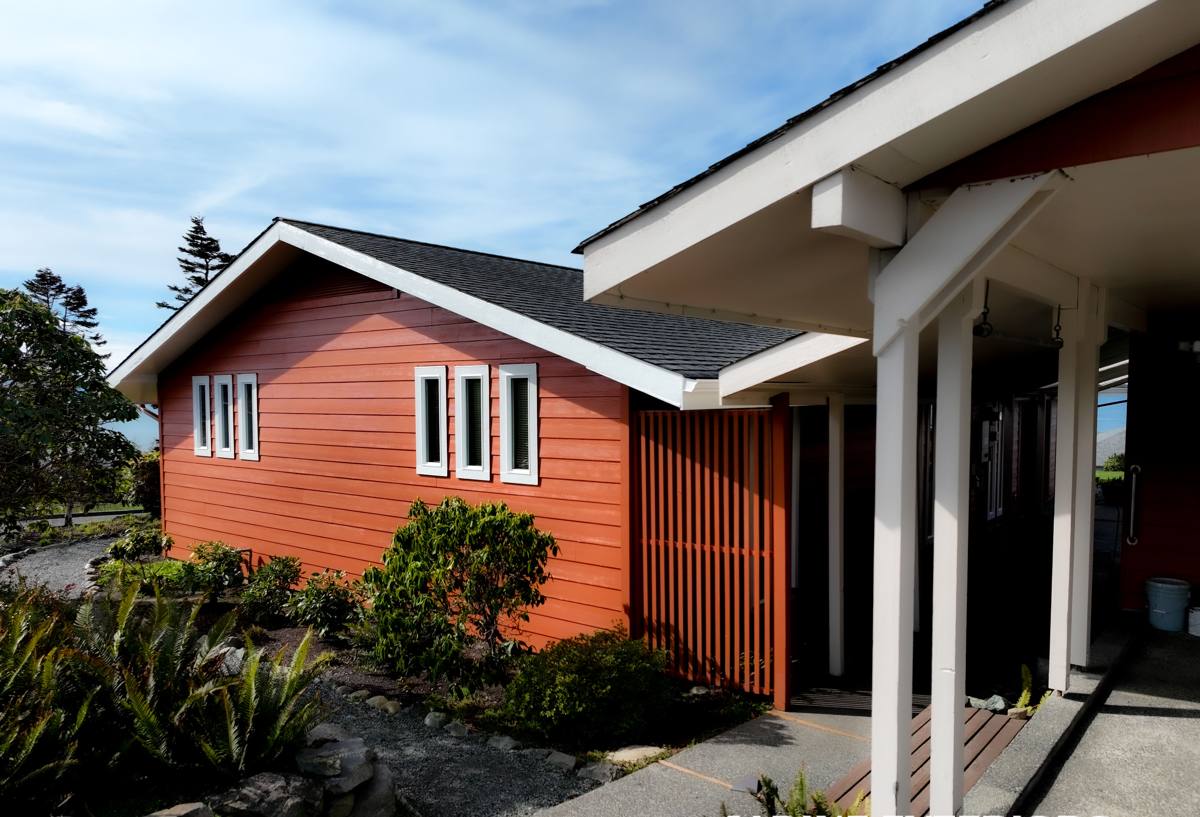
New-Construction Windows vs. Replacement Windows — Why the Job Is Different
New-construction windows have a nailing flange that fastens directly to the wall sheathing before the weather-resistive barrier (WRB) and siding go on. That's different from a replacement or "pocket" window, which fits into an existing opening after the original frame is cut out. New-construction installs give us full access to the rough opening, the sheathing, and the building wrap — which is an advantage, because it means every layer of water management can be built in correctly instead of retrofitted around an existing wall.
But that advantage only pays off if the sequencing is right. New-construction installation is really a coordination job as much as a carpentry job: it has to happen at the right point in the framing schedule, in the right order relative to the WRB and flashing tape, and with materials that are compatible with whatever siding is going on next. Get the sequence wrong and you can end up with a window that looks fine on day one but leaks behind the wall within a few wet seasons.
What Fidalgo Island's Weather Actually Does to a Window Opening
Salt Air and Corrosion
Homes near the water on Fidalgo Island are exposed to salt-laden air more consistently than inland Skagit County properties. Salt air accelerates corrosion on unprotected metal fasteners, some aluminum components, and lower-grade hardware. It doesn't ruin a window outright, but it shortens the life of the wrong materials and makes fastener and flashing choice a real decision, not a formality.
Driving Rain and Wind-Driven Water
Storms coming off the water push rain sideways into wall assemblies, not just straight down. A window that would perform fine in a sheltered inland lot can leak on an exposed Fidalgo Island site if the flashing isn't lapped to shed wind-driven water rather than just vertical rainfall. This is one of the biggest reasons we treat flashing detail as the most important part of the install, not the window unit itself.
Moss, Shade, and Prolonged Moisture
Tree cover and long stretches of overcast, damp weather mean surfaces around window openings can stay wet longer here than in drier parts of the state. Moss and mildew growth on sills, trim, and cladding near a window is usually a sign that water is sitting somewhere it shouldn't, or that a surface isn't drying out between rains. Building in proper drainage and slope from day one keeps this from becoming a long-term maintenance problem.
The Anatomy of a Correct New-Construction Window Installation
Rough Opening and Sill Pan
Before a window ever goes in, the rough opening gets checked for square, level, and correct dimensions against the window schedule. On a coastal build we also install a sloped sill pan flashing at the bottom of the opening. This is a small detail with an outsized job: it catches any water that gets past the window and directs it back outside the wall instead of letting it pool against the sheathing.
Flashing Sequence and the Weather-Resistive Barrier
Flashing tape and the WRB have to go on in a specific shingle-lap order — bottom, sides, then top — so that water draining down the wall always moves over the top of the layer below it, never underneath. The window's nailing flange integrates into this same sequence. Skipping a step or reversing the order is one of the most common causes of hidden leaks in new construction, and it's invisible from the outside once siding is installed.
Sealant, Backer Rod, and Fastening
Interior and exterior sealant beads, backer rod where gaps are too wide for sealant alone, and fasteners spaced per the manufacturer's instructions all affect both performance and warranty coverage. We use sealants and flashing tapes that are compatible with the specific window frame material and the siding that's going over top — not every product pairs well with every substrate.
Choosing Window Frame Materials for a Fidalgo Island Build
There's no single "best" frame material for every project — it depends on budget, exposure, and the look you're going for. Here's how the common options hold up in this climate:
| Frame Material | Performance in Salt Air / Driving Rain | Maintenance | Typical Fit |
|---|---|---|---|
| Vinyl | Good — won't corrode; UV and gasket quality matter over time | Low | Budget to mid-range new construction |
| Fiberglass | Very good — stable in temperature swings and moisture, resists corrosion | Low | Mid to higher-end builds, exposed sites |
| Wood, aluminum-clad | Good exterior protection if clad and sealed correctly; wood core still needs protection from interior condensation | Moderate | Higher-end builds wanting a wood interior look |
| Aluminum (uncoated or thin-coat) | Weaker in salt air unless properly finished; conducts cold and can condensate | Higher | Limited use — we're selective about where we recommend it here |
We're upfront when a material choice is a poor match for a specific site — for example, an unclad aluminum frame on a directly water-facing wall is a maintenance commitment we'll flag before you commit to it, not something we install and stay quiet about.
How We Work With Your Builder or General Contractor
Most new-construction window jobs on Fidalgo Island come through us via the framing or GC schedule rather than as a standalone call. Our process is built around that:
- Review the window schedule and rough opening sizes against the plans before framing is finalized, catching sizing conflicts early.
- Confirm timing with the framing and WRB installation so windows go in at the correct point in the sequence — not before the wall is ready, not so late that it holds up siding.
- Install sill pans, flashing, and the window unit per manufacturer instructions, with attention to the site's specific wind and water exposure.
- Document the install (photos of flashing layers before they're covered) so there's a record of what's behind the finished wall.
- Coordinate the handoff to the siding or exterior finish crew so nothing gets covered before it's inspected.
If you're a homeowner working directly with us rather than through a GC, we can manage that same sequencing conversation with your builder on your behalf.
Common Installation Mistakes We Correct For
Most window problems we get called out to look at later trace back to a handful of preventable issues. On a new build, these are the things worth double-checking before the wall gets closed up:
- Flashing tape applied in the wrong order relative to the WRB, so water can work its way behind a layer instead of over it
- No sloped sill pan, leaving flat wood or sheathing directly under the window where water can sit
- Sealant used where backer rod and a proper joint were needed, or the wrong sealant for the frame material
- Fasteners skipped or over-driven, compressing the frame and affecting how the window operates
- Shims left in place without proper insulation, creating a cold spot and a condensation risk
- Window units installed out of square, which shows up later as doors that won't latch or sashes that bind
What Affects the Cost of a New-Construction Window Package
Every build is different, but the same handful of factors drive most of the price variation we see on Fidalgo Island projects:
| Factor | Why It Moves the Price |
|---|---|
| Number and size of window openings | More glass and larger units mean more labor and material |
| Frame material selected | Vinyl, fiberglass, and clad-wood carry different unit costs |
| Glass package | Dual-pane vs. triple-pane and low-E coating options affect both price and long-term energy performance |
| Wall height and access | Second-story or hard-to-scaffold openings take longer to install safely |
| Site exposure | Directly water-facing or wind-exposed walls may call for upgraded flashing details and sealants |
| Scheduling with the framing crew | Tight coordination avoids delay costs; last-minute changes to openings add rework |
We'll walk through these with you or your builder before work starts, so there aren't surprises once the windows are on order.
Why Hire a Crew That Already Works Fidalgo Island
A window installed correctly in a dry, inland climate can still fail here if the crew doesn't adjust for wind-driven rain and sustained salt air exposure. We work new-construction and exterior projects across Anacortes and the rest of Skagit County regularly, which means we already know which flashing details, sealants, and fastening approaches hold up on this specific stretch of coastline — and which ones we've seen fail on homes that weren't built with it in mind. That local pattern recognition is worth more on a new build than it is on almost any other kind of exterior work, because a new-construction window install is one of the few chances you get to do it right before it's sealed behind the wall for decades.
If you're planning a new build or working with a general contractor on Fidalgo Island, we're happy to walk the plans, talk through window and material choices, and give you a straightforward, no-pressure estimate — just fill out the form below.