 Anacortes Exterior
 Windows Built for Conway's Climate, Not a Showroom in Phoenix
Conway sits in the low-lying Skagit Valley, close enough to the water and the river bottoms that homes here deal with a different set of stresses than a subdivision fifty miles inland. Damp air off the Salish Sea, driving rain that comes in sideways during fall and winter storms, and a moss season that seems to stretch longer every year all work on a home's exterior year-round. Windows are one of the first places that shows up — as fogged glass, soft trim, drafts around the frame, or a sash that won't seat right anymore. A window that's rated for "energy efficiency" on a spec sheet from a big-box store isn't automatically the right window for a house that sits in this kind of weather. The rating matters, but so does the installation, the frame material, and whether the person putting it in understands what Skagit County moisture does to a wall assembly over ten or twenty years.
This page is specifically about replacing or upgrading windows for homes in and around Conway. It's not a general window brochure — it's what we look at, what we recommend, and why, for houses in this particular corner of Skagit County.
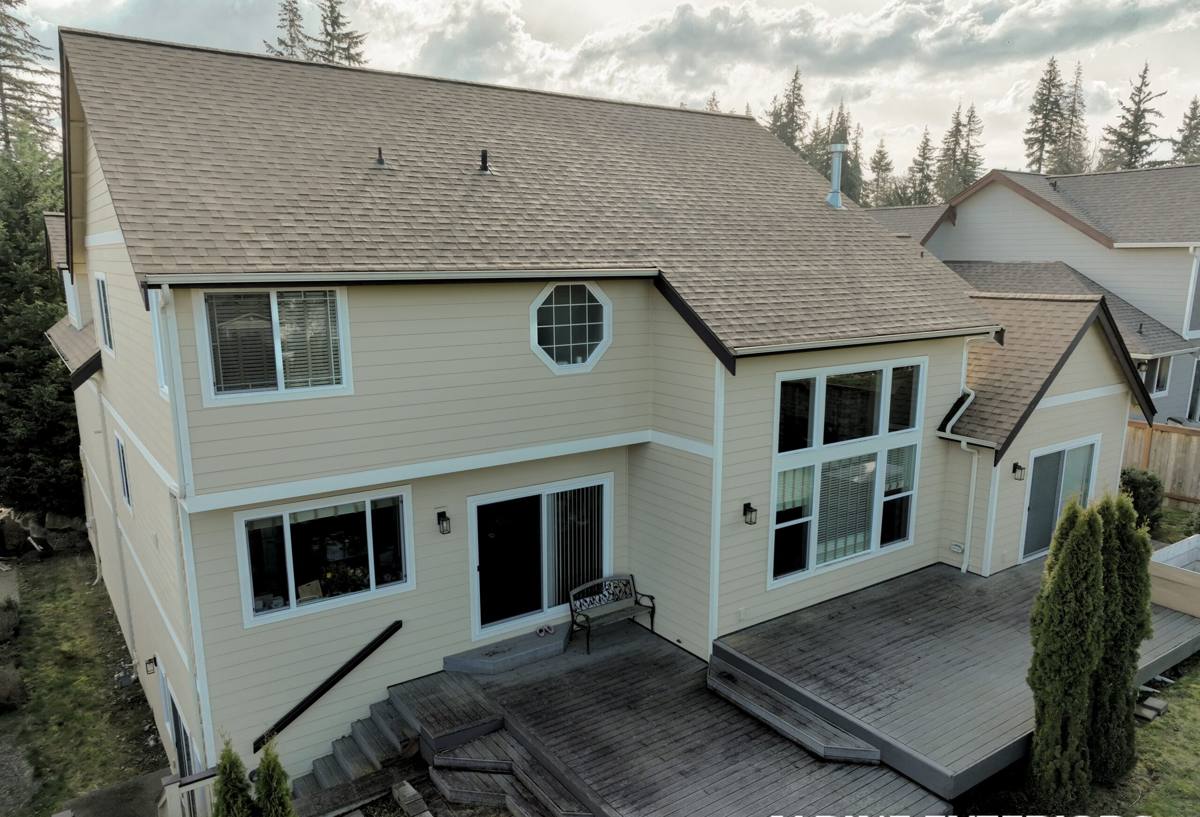
What Local Homes Are Actually Up Against
Anacortes and the surrounding Skagit County coastline get a steady dose of salt-laden marine air, and even inland toward Conway that moisture doesn't disappear — it just shows up differently, as persistent humidity, morning condensation, and slower drying times after a storm. A window system that can't manage that moisture load, inside and out, will eventually let it in.
The three things we watch for
- Salt and moisture in the air — accelerates corrosion on hardware, hinges, and lesser-quality frame components, and speeds up failure of poor seals.
- Driving, wind-driven rain — tests flashing and sill details far harder than a light, straight-down rain would. A window that's merely "watertight" on a calm day can still leak under a Skagit County winter storm.
- Long moss and algae season — organic growth holds moisture against wood trim, sills, and cladding for months at a time, which is exactly the condition that rots wood and stains vinyl if surfaces aren't detailed to shed water and dry out.
None of this means Conway homes need exotic materials. It means the window, the flashing, and the installation all have to be chosen and built assuming they'll be wet often and need to dry out fast.
What "Energy-Efficient" Actually Means Here
Energy efficiency in a window comes down to a handful of measurable properties, and in a marine climate like ours, two of them matter more than most homeowners realize.
U-factor
This measures how well the window resists heat transfer — lower is better. In a climate with mild but persistent damp cold for much of the year, a low U-factor keeps heat inside where it belongs instead of bleeding out through the glass and frame all winter.
Solar Heat Gain Coefficient (SHGC)
This measures how much solar heat passes through the glass. Western Washington doesn't get the intense direct sun that drives SHGC decisions in hotter climates, so this number matters less here than U-factor does — but it still affects comfort on the clear days we do get, especially on south- and west-facing walls.
Gas fill and Low-E coatings
Argon gas between panes and a Low-E coating on the glass both improve insulating performance without changing how the window looks. These are standard on any decent double-pane window today and worth confirming on the spec sheet rather than assuming.
None of these numbers matter if the window isn't sealed into the wall correctly. A high-performing window installed with a poor seal will underperform a mid-grade window installed right — that's true everywhere, but it's especially true where wind-driven rain and constant humidity are testing that seal every week of the year.
Common Window Problems We Run Into in Conway
Older farmhouses, homes on larger rural lots, and houses built in earlier decades before modern window standards are common throughout this part of Skagit County. The problems we see most often include:
- Fogged or hazy glass — the seal between panes has failed and the insulating gas has escaped, so the window is no longer doing its job even if it still opens and closes fine.
- Soft or discolored wood trim and sills where moisture has been sitting against the frame, often worsened by moss or algae holding water against the surface.
- Noticeable drafts or a cold spot near the window in winter, usually a sign the original flashing or sealant has failed, not necessarily that the glass itself is bad.
- Swollen sashes that stick or won't latch, common on older wood windows that have absorbed moisture over multiple wet seasons.
- Visible gaps or daylight around the frame from the interior, which usually means the original installation didn't account for how much the house has settled or shifted.
Any one of these is worth a look before it turns into a bigger repair — trapped moisture behind a window frame doesn't stay contained to the window for long.
What a Correct Installation Actually Involves
Replacing a window is not just popping the old one out and setting a new one in the same hole. In a climate that's wet as often as ours, the details around the window matter as much as the window itself.
- Remove and inspect. We pull the old window and check the surrounding framing, sill, and sheathing for hidden rot or moisture damage before anything new goes in. Fixing that now is far cheaper than fixing it after a new window is already sealed on top of it.
- Flashing and moisture barrier. Proper flashing at the head, jambs, and sill directs water away from the wall assembly rather than letting it collect. This is the single most important step for long-term performance in a driving-rain climate.
- Set the window level, plumb, and square. A window that's slightly out of square will bind, leak, and wear its seals unevenly, undercutting the manufacturer's warranty performance no matter how good the glass package is.
- Insulate the gap correctly. Too little insulation leaves a cold, drafty perimeter. Too much (or the wrong material, packed too tight) can bow the frame and cause operational problems. This is a place where experience shows.
- Seal and finish. Interior and exterior sealant, trim, and caulking are finished to shed water on the outside and provide an air seal on the inside — two different jobs that both have to be done right.
Skipping or rushing any one of these steps is how a brand-new, well-rated window ends up with the same drafts and moisture problems as the one it replaced.
Choosing a Frame Material for This Climate
There's no single "best" window material for every home — it depends on the house, the budget, and how much upkeep you want to take on. Here's how the common options generally compare for a damp, salt-influenced climate like ours:
| Frame Material | Moisture Behavior | Maintenance | General Notes |
|---|---|---|---|
| Vinyl | Won't rot; handles moisture well | Low — occasional cleaning | Cost-effective, wide range of quality tiers, good all-around choice for most homes here |
| Fiberglass | Very stable in wet, temperature-swinging conditions | Low | Higher upfront cost, holds paint well if a custom color is wanted, strong long-term option |
| Wood | Attractive but vulnerable to moisture without diligent upkeep | High — regular painting/sealing required | Best suited to sheltered exposures or homeowners committed to maintenance; higher risk in constant damp |
| Wood-clad (wood interior, metal or vinyl exterior) | Exterior sheds moisture well; interior still needs some care | Moderate | Good compromise when interior wood look is important |
| Aluminum | Prone to condensation without a thermal break | Low | Generally not our recommendation for this climate unless it's a thermally-broken, higher-end product |
For most Conway homes, we lean toward vinyl or fiberglass because they hold up to constant moisture with the least ongoing effort — that's a professional judgment based on how these materials age in this climate, not a knock on any particular brand or product line. Wood and wood-clad windows can absolutely work here, but they come with a real maintenance commitment that we'll be upfront about before you commit to them.
What Affects the Cost
Every home is different, so we won't quote a number without seeing the job, but the main variables that move price up or down are consistent:
| Factor | Why It Matters |
|---|---|
| Number and size of openings | More or larger windows means more material and labor |
| Frame material chosen | Vinyl, fiberglass, and wood carry different material costs |
| Condition of existing framing | Hidden rot or moisture damage found during removal adds repair work |
| Full-frame vs. insert replacement | Full-frame replacement costs more but is often the right call on older or damaged openings |
| Access and site conditions | Second-story or hard-to-reach openings take more time to do safely |
We'll walk through these with you on-site so you understand exactly what's driving the number, rather than handing you a flat per-window price that doesn't reflect your actual house.
Our Process
We keep the process straightforward from the first visit to the final walkthrough:
- On-site assessment of existing windows, framing condition, and any moisture or rot issues before we recommend anything.
- A clear, itemized estimate that explains what's included — no vague allowances.
- Careful removal and inspection of the wall assembly around each opening.
- Proper flashing, insulation, and sealing at every window, not just the ones that are easy to reach.
- Cleanup of the work area each day, and a final walkthrough so you can see and test every window before we call the job done.
A Quick Checklist Before You Call Anyone
- Do any windows show fogging or haze between the panes?
- Is there visible moss, algae, or dark staining around window trim or sills?
- Do you feel a draft near a closed window in cold weather?
- Do any sashes stick, stay stuck, or fail to latch fully?
- Is there soft, spongy, or discolored wood anywhere around a window frame?
- Has it been more than 20-25 years since the current windows were installed?
If you checked more than one of these, it's worth having someone take a real look rather than waiting for a small problem to become a wall repair.
Why Hire a Crew That Already Works This Area
A contractor who works Skagit County regularly already knows what driving rain and a long moss season do to a wall assembly, and builds the installation around that instead of learning it on your house. That familiarity shows up in small but important decisions — how much flashing overlap to use, which sealants actually hold up to sustained damp instead of just looking good on install day, and how to handle an older Conway-area home where the original framing may not be perfectly square or may have hidden moisture history from decades of exposure. It also means straightforward answers about permitting, realistic timelines that account for our weather windows, and a crew that isn't guessing at what this climate requires.
If your windows are drafty, fogged, hard to operate, or just due for an upgrade, we're glad to come take a look. We'll give you a straightforward, no-pressure estimate and an honest read on what your home actually needs — use the form below to get started.